![Nuit De Noël [christimas Night] — Μαλίκ Sidiμπέ](/media/artworks/images-full/3a/6b/3a6b907972fa2c0e72a1d0a6d3b6bb6b.jpg)
 Προεπισκόπηση σε πραγματική κλίμακα
 Αποστολή
 Κοινοποίηση
 Λεπτομέρειες
 Οδηγός

 Λήψη
Λήψη
 Παρόμοια αντικείμενα συλλογής
 Ακτινογραφία
 Παρουσίαση
 Ερωτήσεις & Απαντήσεις
 Στατιστικά
Nuit de Noël [Christimas Night]

- 46.0 x 43.0 cm


 Περισσότερα
Το έργο τέχνης που εμφανίζεται σε αυτή τη σελίδα προστατεύεται από τους νόμους περί πνευματικών δικαιωμάτων, γεγονός που σημαίνει ότι δεν μπορούμε νομικά να δημιουργήσουμε ή να πουλήσουμε μια ταυτόσημη αναπαραγωγή του. Αυτή η προστασία επιβάλλεται βάσει διεθνών συμφωνιών, όπως η Σύμβαση της Βέρνης καθώς και από τους εθνικούς νόμους, συμπεριλαμβανομένων αυτών που ορίζονται από το Νομοθεσία περί πνευματικών δικαιωμάτων των ΗΠΑ - Τίτλος 17. Όλα τα δικαιώματα κατοχυρωμένα. Απαγορεύεται η αναπαραγωγή χωρίς άδεια.
Αυτή η μέθοδος συμμορφώνεται πλήρως με τους κανονισμούς περί πνευματικών δικαιωμάτων, καθώς δεν περιλαμβάνει την αντιγραφή ή την αναπαραγωγή του προστατευόμενου έργου. Αντίθετα, πρόκειται για μια δημιουργική ερμηνεία — ένα νέο έργο που επηρεάζεται από το πρωτότυπο, χωρίς όμως να είναι πανομοιότυπο με αυτό.
Giclée / Εκτυπώσεις Τέχνης
Εκτύπωση giclée ή σε καμβά ποιότητας μουσείου με γρήγορη παραγωγή και ευέλικτες επιλογές φινιρίσματος. ( Αγορά χειροποίητου πίνακα Μετάβαση σε Ψηφιακή Αποτέλεσμα)




P118B €10

P118H €10

P118W €10

P438Z €10

P508JH €12

P508YH €12

P805H €10

P805Z €10

P919BZ €10

P919G €10

P919XJ €10

P959ZH €10

P968JZ €12

W106C €8

W218G €10

W218JH €8

W218Y €10

W307PJ €10

W316G €10

W316PJ €8

W316Y €10

W398PJ €8

W4111J €10

W500HY €15

W500JH €15

W692G €12

W849H €8

W940BG €15

W953PJ €8




Επιλέξτε από τις προκαθορισμένες διαστάσεις μας που διατηρούν τις αρχικές αναλογίες του έργου τέχνης.

Εισάγετε το πλάτος και το ύψος που επιθυμείτε, ώστε να ταιριάζουν στο κάδሮ ή στον τοίχο σας. Μια εκτύπωση μπορεί μόνο να υποστεί κοψίμό και ποτέ να μην γίνει μεγαλύτερη από την αρχική εικόνα, επομένως η επιλογή μεγέθους με διαφορετικό σχήμα συνεπάγεται απώλεια ενός μέρους της εικόνας. Σας στέλνουμε ένα ψηφιακό mockup για έγκριση πριν προχωρήσουμε σε οποιαδήποτε εκτύπωση. Η εικόνα που εμφανίζεται σε αυτή τη σελίδα δεν δείχνει την πραγματική κοπή — μόνο το mockup την παρουσιάζει.
Παγκόσμια Αποστολή () σε 2 εβδομάδες αντί για τις συνήθεις 4/5 εβδομάδες. (8 Νοέμβριος)

Δωρεάν γρήγορη διεθνής αποστολή

Κάμβας από Λινό Υψηλής Ποιότητας

Πλήρης ασφάλιση μεταφοράς

Εγγύηση επιστροφής δασμών και φόρων εισαγωγής

Εγγύηση Απόλυτης Ομοιότητας Χρωμάτων

Πολιτική Επιστροφής 100 Ημερών (Μόνο σε περίπτωση ελαττωμάτων)

Εγγύηση επιστροφής 100% των χρημάτων

Προσφορά για πολλαπλές παραγγελίες
 Η επιλογή με γυαλί είναι διαθέσιμη μόνο για μεγέθη κάτω από 110 εκ.
![Nuit de Noël [Christimas Night]](/static/images/originaluniqueart/artworks/painting.a1e74a1cb7dc.png)
Nuit de Noël [Christimas Night]
Giclée / Εκτυπώσεις Τέχνης
Διαστάσεις Αναπαραγωγής
-


Τελική Τιμή
€ 72
Malick Sidibé: A Chronicle of Joy
Malick Sidibé’s work transcends mere documentation; it's an embodiment of Bamako’s vibrant spirit during the 1960s, a period marked by burgeoning independence and youthful exuberance. Born in Sologo, Mali, in 1936, Sidibé’s formative years instilled within him a profound connection to his cultural heritage—a sensitivity that would become the cornerstone of his artistic vision. His early education, facilitated by the generosity of the village chief, opened doors to formal schooling and ignited an initial fascination with drawing, setting the stage for his remarkable career as a photographer. Recognizing his talent, Guillat invited him into Yanfolila’s Institut National des Arts de Bamako, where he honed his craft alongside fellow artists and embraced the transformative influence of modern art movements. This pivotal encounter cemented Sidibé's commitment to capturing the essence of African culture through a distinctly humanist lens.- Subject Matter: Sidibé’s photographs depict scenes from Bamako nightlife—dancing couples, lively gatherings, and celebrations of youthful freedom. These images aren’t simply snapshots; they are portraits of individuals brimming with energy and optimism, reflecting the aspirations of a nation striving for progress.
- Style & Technique: Sidibé's signature style is characterized by its uncompromising simplicity—black and white gelatin silver prints executed with meticulous attention to detail. He favored tungsten lighting in his studio sessions, prioritizing natural light when possible. The grainy texture of the film captures the immediacy of the moment, conveying a palpable sense of spontaneity and authenticity.
- Historical Context: Sidibé’s work emerged during Mali's post-colonial era, coinciding with significant social and cultural shifts. His images powerfully communicate the optimism and dynamism of this transformative period, documenting the emergence of new forms of expression and celebrating the spirit of youthful rebellion against traditional constraints.
- Symbolism: Dancing itself symbolizes liberation, connection, and shared experience—themes that resonate deeply within Sidibé’s oeuvre. The figures in his photographs are often posed with a deliberate grace, conveying both vulnerability and confidence, embodying the hopes and dreams of an entire generation.
Nuit de Noël (Christmas Eve): A Celebration of Connection
“Nuit de Noël” – Christmas Eve – encapsulates Sidibé’s artistic ethos: capturing fleeting moments of joy and connection amidst the backdrop of urban life. The photograph depicts a couple dancing passionately on a street at night, illuminated by flickering street lamps. The composition is subtly tilted, adding to the sense of dynamism and spontaneity. Blurred elements in the background underscore the energy of the scene, emphasizing the movement of the dancers and creating depth within the frame. Sidibé’s masterful use of light and shadow sculpts the figures' forms, highlighting their contours and conveying a profound emotional resonance. The photograph serves as a testament to Sidibé’s ability to distill complex emotions into simple visual elements—a celebration of love, companionship, and the transformative power of music.Material & Craftsmanship: The Legacy of Film Photography
Sidibé's artistic process relied on traditional photographic techniques honed over decades of experience. He utilized an Agfa 6 × 6 camera with bellows to achieve precise framing and ensure optimal image quality. Careful calibration was paramount, reflecting Sidibé’s dedication to mastering his craft. The resulting prints were executed on photographic paper—a medium known for its archival stability and ability to reproduce tonal nuances faithfully. This deliberate choice underscores Sidibé's commitment to preserving the essence of his vision—a timeless portrayal of human emotion captured through the enduring legacy of film photography.Beyond Image: The Artist’s Vision
Malick Sidibé wasn’t merely documenting reality; he was crafting narratives—visual poems that conveyed profound truths about human experience. His work stands as a beacon of artistic integrity, demonstrating how observation and empathy can coalesce into powerful expressions of cultural identity. Sidibé's enduring influence stems from his unwavering belief in the transformative potential of art—a conviction that continues to inspire artists and collectors alike.Ερωτήσεις και Απαντήσεις
Τα χρώματα του "Nuit de Noël [Christimas Night]" φαίνονται έντονα ή απαλά;
Τα χρώματα στο έργο "Nuit de Noël [Christimas Night]" του Μαλίκ Sidiμπέ έχουν ένταση Monochromatic.
Πόσο γνωστό είναι το "Nuit de Noël [Christimas Night]" του Μαλίκ Sidiμπέ;
Το έργο "Nuit de Noël [Christimas Night]" ταξινομείται ως Iconic.
Ποια ατμόσφαιρα αποπνέει το "Nuit de Noël [Christimas Night]";
Το έργο "Nuit de Noël [Christimas Night]" αποπνέει μια Serene ατμόσφαιρα.
Βιογραφικό Καλλιτέχνη
A Chronicler of Joy: The Life and Legacy of Malick Sidibé
Malick Sidibé emerged from the rural heartland of Mali, a landscape steeped in tradition and ancient rhythms, to become one of Africa’s most celebrated photographers – a visual poet who captured a nation undergoing profound transformation with an unparalleled eye for intimacy and dynamism. Born in 1936 in Sologo, his early life was far removed from the bustling urban center of Bamako; he spent his formative years herding animals, working the land, intimately connected to the rhythms of rural Malian existence – a connection that would profoundly shape his artistic vision. A pivotal moment arrived when he was selected by the village chief to attend school in Yanfolila, an opportunity that opened doors to education and ignited within him a nascent passion for art, a desire to translate the world around him onto paper. His talent for drawing quickly became apparent, leading to commissions for official events and ultimately securing his acceptance into the Institut National des Arts de Bamako, where he encountered Gérard Guillat-Guignard, a French photographer who would become his mentor, guiding him through the technical intricacies of the medium not through formal instruction, but through observation and practical experience – a method that prioritized capturing life as it unfolded, rather than staging contrived scenes.Bamako in Bloom: Documenting a Generation
In 1952, Sidibé relocated to Bamako, a city pulsating with energy and undergoing rapid transformation as Mali approached independence. This shift brought with it new freedoms, impacting not only the political landscape but also profoundly altering social and cultural life. He began his formal photographic training under Guillat-Guignard at the Gégé la Pellicule photo service boutique in 1955, honing his skills before acquiring his first camera – a humble Brownie Flash – in 1956. By 1957, he had established Studio Malick, becoming an immediate fixture in Bamako’s social landscape. Sidibé didn't merely document the city; he immersed himself within it, drawn to the vibrant youth culture that was blossoming in the wake of colonial rule – a generation eager to embrace modernity and express themselves through music, fashion, and dance. His lens focused on capturing these moments with remarkable sensitivity, documenting sporting events, lively beach gatherings, pulsating nightclubs, and intimate courtship scenes – all imbued with an infectious energy and a sense of liberation. He eschewed the formality of traditional studio portraiture, preferring instead to capture his subjects in candid moments, amidst the energetic backdrop of Bamako’s social life, creating images that felt immediate, authentic, and deeply human.Style and Substance: A Unique Photographic Vision
Sidibé's artistic style is characterized by a remarkable blend of technical skill and empathetic observation. His background in drawing profoundly influenced his approach to portraiture; he carefully considered composition, posing subjects not for static representation but to convey a sense of life and movement. He possessed an innate ability to connect with his subjects, fostering a relaxed atmosphere that allowed their personalities to shine through – a key element contributing to the warmth and intimacy found in his photographs. A recurring theme throughout his work is the celebration of post-colonial joy and the burgeoning youth culture of Mali during the 1960s and 70s; music played an integral role in this era, and Sidibé’s images frequently depict scenes of dancing and revelry, capturing the liberating spirit of a generation embracing newfound freedoms. His photographs are inextricably linked to music – not merely as a backdrop, but as a driving force that united people and expressed their collective identity. Nuit de Noël (Christmas Eve), perhaps his most iconic image, exemplifies this perfectly: a smiling couple lost in dance, radiating an infectious energy that transcends cultural boundaries. The use of simple props—a brightly patterned textile, a vintage camera—added layers of meaning to the scenes, subtly referencing both traditional Malian culture and the influences of Western modernity.Studio Malick: A Hub of Creativity
Alongside his celebrated documentary photographs of Bamako nightlife, Sidibé created iconic portraits within his studio – Studio Malick, located in the Bagadadji neighborhood. This space functioned as an important meeting place for the city’s youth, a vibrant hub where people could gather, socialize, and have their portraits taken. “The studio was like no other,” he recalled: “It was… relaxed. I did formal family shots, too, but often it was like a party. People would drop by, stay, eat. I slept in the developing room.” The portraits created in Sidibé’s studio reflected the changes that were happening in society; unlike the official photographs used for identification during French rule, these images allowed Malians to represent themselves freely. According to Candace M. Kelle, a specialist in modern African art and photography, “in the newly independent country, photography provided Malians with a new medium and venue in which to invent and preserve personal and collective identities.” Through incorporating particular commodities – cars, cameras, radios, or Western clothing – the subjects were seeking to stress their position as successful and modern. Photography functioned as an important tool in expressing belonging (actual or desired) to particular social and economic classes, allowing people to reclaim agency over their image and construct their identities.International Recognition and Enduring Legacy
Malick Sidibé’s work gained international recognition in the 1990s thanks to the efforts of photographer Françoise Haguier and curator André Magnin, who were dispatched by collector Jean Pigozzi to explore West African art. His photographs began appearing in exhibitions around the globe, garnering critical acclaim and establishing him as a major figure in contemporary photography. He received numerous prestigious awards throughout his career, culminating in the Golden Lion Award for Lifetime Achievement at the Venice Biennale in 2007 – a historic moment that made him both the first photographer and the first African to receive this honor. Other accolades included the Hasselblad Award, the International Center of Photography Infinity Award, and a World Press Photo Award. His work is now held in prominent collections worldwide, including the Contemporary African Art Collection (CAAC), the J. Paul Getty Museum, and the Museum of Modern Art in New York. Sidibé’s influence extends beyond the art world; his distinctive style has been acknowledged in popular culture, most notably inspiring Janet Jackson's 1997 music video "Got 'Til It's Gone," and Inna Modja’s 2015 video for “Tombouctou,” filmed within Studio Malick itself. Malick Sidibé passed away in April 2016, leaving behind a profound legacy as one of Mali’s most important photographers and a pivotal figure in the history of African art. His photographs serve as an invaluable visual record of post-colonial Malian society, offering a unique perspective on a period of rapid social and cultural change – a testament to his ability to capture not just images, but also the spirit of a nation.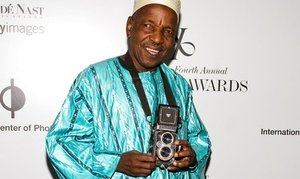
Μαλίκ Sidiμπέ
1936 - 2016 , Μάλι
Γρήγορα στοιχεία
- Artistic Movement Or Style: Τεκμηρίωση φωτογραφίας
- Artists Or Movements Influenced By This Artist:
- Inna Modja
- Janet Jackson
- Artists Who Influenced This Artist: ['Gérard Guillat-Guignard']
- Date Of Birth: 1936
- Date Of Death: 2016
- Full Name: Malick Sidibé
- Nationality: Μαλιάνος
- Notable Artworks:
- James Brown Fans
- Rosita - Club
- Nuit de Noël
- Place Of Birth: Sologo, Μάλι
Σχετικά άρθρα

Οι 10 πιο διάσημες πίνακες με λευκό χρώμα: Ιστορία, τέχνη & διακόσμηση
Ανακαλύψτε τους 10 πιο διάσημους πίνακες με κυρίαρχο το λευκό χρώμα! Ιμπρεσιονισμός, μοντερνισμός & η ιστορία των μεγάλων καλλιτεχνών όπως ο Monet και ο Van Gogh. Βρείτε την τέλεια αναπαραγωγή πίνακα για τον χώρο σας στην OriginalUniqueArt.com.

Οι 10 πιο διάσημοι πίνακες με κυρίαρχο το μαύρο χρώμα | OriginalUniqueArt.gr
Ανακαλύψτε τους 10 πιο διάσημους πίνακες με κυρίαρχο το μαύρο χρώμα! Από Rembrandt και Goya, εξερευνήστε την ιστορία, τις τεχνικές & τα συναισθήματα που κρύβουν αυτά τα αριστουργήματα. Βρείτε αναπαραγωγές υψηλής ποιότητας στο OriginalUniqueArt.com.

Shadow & Soul: Why Black & White Photography Remains the Ultimate Power Move in Modern Art
Discover why black & white photography remains a powerful force in contemporary art. Explore the impact of light, shadow, and texture through a visual journey of monochrome mastery and learn how to elevate your space with timeless grayscale aesthetics.

Timeless & Chic: Elevating Your New Home with the Sophistication of Black and White Photography
Transform your new home with the timeless allure of black and white photography. OriginalUniqueArt.com specializes in elegant monochrome decor and custom hand-painted wedding portraits that turn cherished milestones into lasting, soulful masterpieces. Elevate your space with ease.

Monochrome Visions: Exploring the Aesthetic & Historical Significance of Black & White Photography
Explore the rich history & artistic power of black and white photography. From early techniques to iconic masters like Ansel Adams, discover why monochrome continues to captivate art lovers today. Expert insights for collectors.