Προεπισκόπηση σε πραγματική κλίμακα
 Αποστολή
 Κοινοποίηση
 Λεπτομέρειες
 Οδηγός

 Λήψη
Λήψη
 Παρόμοια αντικείμενα συλλογής
 Ακτινογραφία
 Παρουσίαση
 Q&A
Q&A Στατιστικά
St Augustine Altarpiece (left wing)
 Oil On Canvas
- WallArt
- High Renaissance
 1498
1498 146.0 x 76.0 cm
 Στατιστικές Μουσεία
 Περισσότερα
Giclée / Εκτυπώσεις Τέχνης
Εκτύπωση giclée ή σε καμβά ποιότητας μουσείου με γρήγορη παραγωγή και ευέλικτες επιλογές φινιρίσματος. ( Αγορά χειροποίητου πίνακα Μετάβαση σε Ψηφιακή Αποτέλεσμα)




P118B €10

P118H €10

P118W €10

P438Z €10

P508JH €12

P508YH €12

P805H €10

P805Z €10

P919BZ €10

P919G €10

P919XJ €10

P959ZH €10

P968JZ €12

W106C €8

W218G €10

W218JH €8

W218Y €10

W307PJ €10

W316G €10

W316PJ €8

W316Y €10

W398PJ €8

W4111J €10

W500HY €15

W500JH €15

W692G €12

W849H €8

W940BG €15

W953PJ €8




Επιλέξτε από τις προκαθορισμένες διαστάσεις μας που διατηρούν τις αρχικές αναλογίες του έργου τέχνης.

Εισάγετε το πλάτος και το ύψος που επιθυμείτε, ώστε να ταιριάζουν στο κάδሮ ή στον τοίχο σας. Μια εκτύπωση μπορεί μόνο να υποστεί κοψίμό και ποτέ να μην γίνει μεγαλύτερη από την αρχική εικόνα, επομένως η επιλογή μεγέθους με διαφορετικό σχήμα συνεπάγεται απώλεια ενός μέρους της εικόνας. Σας στέλνουμε ένα ψηφιακό mockup για έγκριση πριν προχωρήσουμε σε οποιαδήποτε εκτύπωση. Η εικόνα που εμφανίζεται σε αυτή τη σελίδα δεν δείχνει την πραγματική κοπή — μόνο το mockup την παρουσιάζει.
Παγκόσμια Αποστολή () σε 2 εβδομάδες αντί για τις συνήθεις 4/5 εβδομάδες. (29 Οκτώβριος)

Δωρεάν γρήγορη διεθνής αποστολή

Κάμβας από Λινό Υψηλής Ποιότητας

Πλήρης ασφάλιση μεταφοράς

Εγγύηση επιστροφής δασμών και φόρων εισαγωγής

Εγγύηση Απόλυτης Ομοιότητας Χρωμάτων

Πολιτική Επιστροφής 100 Ημερών (Μόνο σε περίπτωση ελαττωμάτων)

Εγγύηση επιστροφής 100% των χρημάτων

Προσφορά για πολλαπλές παραγγελίες
 Η επιλογή με γυαλί είναι διαθέσιμη μόνο για μεγέθη κάτω από 110 εκ.

St Augustine Altarpiece (left wing)
Giclée / Εκτυπώσεις Τέχνης
Διαστάσεις Αναπαραγωγής
-


Τελική Τιμή
€ 71
Luca Signorelli’s St Augustine Altarpiece (Left Wing): A Window into Renaissance Devotion
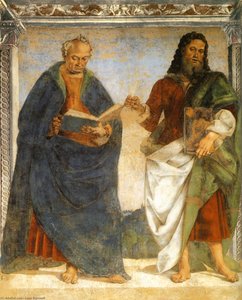
The left wing of Luca Signorelli's “St Augustine Altarpiece,” completed in 1498 for the Bichi Chapel within the church of Sant’Agostino in Siena, is more than just a beautiful painting; it’s a profound meditation on faith, charity, and the intertwined destinies of earthly and divine figures. Measuring a modest 146 x 76 centimeters, this panel offers an intimate glimpse into the artistic sensibilities of a master navigating the complexities of late Renaissance Italy. Signorelli, already establishing himself as a draftsman of exceptional skill – evidenced by his early work in Arezzo and Castelli – here demonstrates a remarkable ability to imbue a seemingly simple scene with layers of meaning and emotional resonance.
The composition immediately draws the eye to the central trio: three women draped in rich crimson robes, their gestures conveying both solemnity and profound compassion. The woman on the left cradles a baby, a potent symbol of innocence and new life – a direct reference to Mary holding infant Jesus. Beside her stands another woman, supporting a child, mirroring the Virgin’s protective embrace. The third figure, positioned slightly further back, gazes downwards with an expression of quiet contemplation, perhaps reflecting on the spiritual journey or offering solace to those she observes. These women are not merely decorative elements; they represent key figures in Christian iconography – Mary Magdalene, Saint Catherine of Siena, and Saint Jerome, each embodying a specific virtue and contributing to the altarpiece’s overarching theme of divine grace.
Adding depth to this devotional tableau are two men, subtly integrated into the scene. One stands near the center, engaged in conversation with the women, while the other is positioned on the left side, seemingly observing the proceedings. Their presence suggests a community united by faith and shared devotion – a microcosm of Renaissance society reflecting upon spiritual matters. Signorelli’s masterful use of foreshortening, a technique he honed during his time in Florence under Piero della Francesca, creates a sense of spatial realism, drawing the viewer into this intimate tableau. The figures appear to be caught in a moment of genuine interaction, their expressions conveying a palpable sense of warmth and connection.
Technique and Style: High Renaissance Refinement
Signorelli’s style within this altarpiece is firmly rooted in the High Renaissance, yet it possesses a distinctly Italian character. He skillfully blends classical influences with his own innovative approach to composition and color. The use of *sfumato*, a technique popularized by Leonardo da Vinci, softens the edges of the figures and creates an atmospheric haze that enhances the sense of depth and realism. The rich crimson robes are rendered with meticulous detail, their textures suggesting luxurious fabrics while simultaneously conveying a sense of solemnity. Signorelli’s palette is restrained yet vibrant, dominated by earthy tones – ochres, siennas, and umbers – punctuated by flashes of red and gold.
Signorelli's mastery of drawing is immediately apparent in the precise rendering of the figures’ anatomy and drapery. He demonstrates a deep understanding of human form, capturing both its beauty and vulnerability with remarkable accuracy. The subtle gradations of light and shadow – *chiaroscuro* – further enhance the sense of realism, creating a three-dimensional effect that draws the viewer into the scene. The composition is carefully balanced, with each figure occupying a specific space within the frame, contributing to the overall harmony and visual impact of the work.
Historical Context: Siena and the Renaissance
To fully appreciate the “St Augustine Altarpiece,” it’s crucial to understand its historical context. Siena in the late 15th century was a thriving center of commerce, art, and religious devotion. The Bichi Chapel, where the altarpiece resided, served as a focal point for community life, reflecting the city's wealth and piety. The commission itself underscores the importance of religious patronage during this period – wealthy families like the Piccolominis sought to demonstrate their faith through lavish displays of art and architecture.
Signorelli’s work reflects the broader trends of the High Renaissance, which emphasized humanism, classical learning, and a renewed interest in naturalism. However, unlike some of his contemporaries who embraced Mannerist styles characterized by elongated figures and distorted perspectives, Signorelli maintains a sense of balance and clarity. His altarpiece embodies a harmonious blend of tradition and innovation, reflecting the artistic sensibilities of a master navigating the complexities of his time.
A Timeless Reflection on Faith and Humanity
The “St Augustine Altarpiece (Left Wing)” is more than just a beautiful painting; it’s a poignant meditation on faith, charity, and the enduring power of human connection. Signorelli's masterful composition, skillful technique, and profound understanding of religious iconography combine to create an image that continues to resonate with viewers centuries after its creation. Reproductions capture the essence of this work, allowing us to experience its beauty and emotional depth in our own homes. It serves as a reminder of the enduring legacy of Renaissance art – a testament to the power of human creativity to express profound spiritual truths.
Ερωτήσεις και Απαντήσεις
Για ποιο δωμάτιο προτείνεται το έργο "St Augustine Altarpiece (left wing)" του Λουκά Σιγνορέλλι, δεδομένης της χρωματικής του παλέτας;
Λαμβάνοντας υπόψη τα χρώματα της παλέτας του, το "St Augustine Altarpiece (left wing)" προτείνεται για ένα Living Room, με βάση το Earthy.
Πώς μπορώ να ανακαλύψω έργα τέχνης παρόμοια με το "St Augustine Altarpiece (left wing)" του Λουκά Σιγνορέλλι;
Στη σελίδα Παρόμοια έργα του έργου μπορείτε να βρείτε œuvres παρόμοιες με το "St Augustine Altarpiece (left wing)" του Λουκά Σιγνορέλλι.
Πού θα μπορούσε να τοποθετηθεί μια αναπαραγωγή του "St Augustine Altarpiece (left wing)" του Λουκά Σιγνορέλλι;
Με το σχήμα του (Tall), μια αναπαραγωγή του "St Augustine Altarpiece (left wing)" προτείνεται για ένα Living Room.
Βιογραφικό Καλλιτέχνη
Early Life and Training
Luca Signorelli, μια από τις σημαντικότερες φιγούρες της Αναγέννησης, γεννήθηκε στην Κορτόνα της Τοσκάνης γύρω στο 1450. Η ακριβής ημερομηνία γέννησής του παραμένει ασαφής, αλλά πιστεύεται ότι ήταν μεταξύ 1441 και 1445. Από νωρίς, ο Luca έδειξε εξαιρετική δεξιοτεχνία στην σκίψη και την κατανόηση της προοπτικής, στοιχεία που θα διακρίνουν το έργο του. Η εκπαίδευσή του ξεκίνησε στην Πέργαμο, όπου επηρεάστηκε από τους στυλ των καλλιτεχνών Benedetto Bonfigli, Fiorenzo di Lorenzo και Pinturicchio. Σύμφωνα με τον Giorgio Vasari, ο Luca έγινε μαθητής του Piero della Francesca μέσω του συγγενή του, Lazzaro Vasari. Η πρώιμη εμπειρία του με την τέχνη στην Πέργαμο έθεσε τις βάσεις για την ανάπτυξη του μοναδικού του στυλ.Artistic Career and Early Works
Η καλλιτεχνική πορεία του Luca Signorelli άρχισε στην Αρέτσο το 1472 και στη συνέχεια συνέχισε στην Città di Castello το 1474. Κατά τη διάρκεια αυτών των περιόδων, ο Luca ανέπτυξε την τεχνική του και εξασκρήθηκε στην απεικόνιση της ανθρώπινης μορφής με ακρίβεια και ζωντάνια. Ένα από τα πιο σημαντικά έργα του εκείνη την εποχή ήταν το "Σχολείο του Παν" (School of Pan), το οποίο προσφέρθηκε στον Λόρετζο ντε Μεδίτσι. Το έργο αυτό, που διακρίνεται για την ρεαλιστική απεικόνιση των μορφών και τη χρήση της σκίασης, αποτελεί μια από τις πρώτες σημαντικές στιγμές του Luca. Η δεξιοτεχνία του στην κατανόηση της προοπτικής και της χρωματικής αντίθεσης ήταν ήδη εμφανής.Major Masterpieces and Innovations
Η κορυφαία στιγμή στην καλλιτεχνική του πορεία είναι αναμφίβολα η σειρά από φρεσκόχεις (frescoes) που ζωγράφισε στον Καθεδρικό Ναό της Ουρμπίντο μεταξύ 1499 και 1503. Η "Τελευταία Κρίση" (Last Judgment) είναι ένα έργο τεράστιου μεγέθους, το οποίο παρουσιάζει με δραματικό τρόπο την κατακλυσμική ημέρα του Δευτέρου Θανάτου. Ο Luca επέδειξε εξαιρετική ικανότητα στην απεικόνιση της ανθρώπινης μορφής, καθώς και στην κατανόηση των αρχών της προοπτικής και της χρωματικής αντίθεσης. Επιπλέον, η χρήση του είναι εντυπωσιακή για την απεικόνιση των μυϊκών διαμορφώσεων και την έκφραση συναισθημάτων. Ένα άλλο σημαντικό έργο είναι η Πλύστακτο του Αγίου Μενάρδου (Polyptych of St. Medard) που βρίσκεται στο μουσείο San Medardo στην Αρτσέβια, μια απόδειξη της ικανότητάς του να δημιουργεί σύνθετες και λεπτομερείς εικόνες.Influence and Legacy
Ο Luca Signorelli ανήκε στην Αναγεννησιακή κίνηση της Ιταλίας, η οποία σηματοδότησε τη μετάβαση από τον Μεσαίωνα στην Εποχή του Διαφωτισμού. Η κίνηση αυτή χαρακτηριζόταν από μια νέα έμφαση στις κλασικές παραδόσεις, την ρεαλιστική απεικόνιση και την ανθρωπιστική ιδέα. Ο Luca επηρέασε πολλούς καλλιτέχνες που ακολούθησαν τα βήματά του, κυρίως λόγω της δεξιοτεχνίας του στην σκίψη και της ικανότητάς του να απεικονίζει την ανθρώπινη μορφή με ζωντάνια και ακρίβεια. Η χρήση της προοπτικής και η ικανότητα του να δημιουργεί δυναμικές σύνθεσεις ήταν ιδιαίτερα σημαντικές για την εποχή του. Η κληρονομιά του Luca Signorelli είναι αδιαμφισβήτητη, καθώς τα έργα του συνεχίζουν να εκτίθενται σε μουσεία και καθεδρικούς ναούς σε όλη την Ιταλία, αποτελώντας μια από τις σημαντικότερες πηγές έμπνευσης για τους καλλιτέχνες.
Λουκά Σιγνορέλλι
1450 - 1523 , Ιταλία
Γρήγορα στοιχεία
- Artistic Movement Or Style: Ρενεσαρίσμα
- Artists Or Movements Influenced By This Artist: ['Φρά Αντζελό']
- Artists Who Influenced This Artist: ['Πιερρό δελλα Φραντσέσκου']
- Date Of Birth: 1445/50, Cortona
- Date Of Death: 16 Οκτ 1523, Cortona
- Full Name: Luca d’Egidio di Ventura Signorelli
- Nationality: Ιταλός
- Notable Artworks:
- Η τελευταία κρίση
- Σχολή του Παν
- Place Of Birth: Cortona, Τuscany
Σχετικά άρθρα

The Enduring Muse: Women as Subject & Symbol in Art History
Explore the rich history of women in art – from iconic muses to groundbreaking artists. Discover feminist movements, global perspectives & reclaim female narratives with OriginalUniqueArt.
Sacred Expressions: A Journey Through Devotional Art Across Cultures & Eras
Explore the rich history of devotional art across cultures & eras with expert insights! Discover iconic masterpieces, symbolism, and artistic techniques. A guide for collectors & enthusiasts.
Sacred Expressions: A Journey Through Devotional Art Across Cultures & Eras
Explore the rich history of devotional art across cultures & eras. Discover iconic masterpieces, symbolism, and artistic techniques. Expert insights for collectors & enthusiasts.
The Enduring Muse: Women as Subject & Symbol in Art History
Explore the rich history of women in art – from archetypal representations to contemporary voices challenging norms. Discover iconic artists & movements, and learn about reclaiming female narratives through painting and beyond.

Sacred Narratives on Canvas: Exploring Devotional Imagery Across Art History
Explore the rich history of devotional art! Discover iconic masterpieces, symbolism & techniques from antiquity to the Renaissance. Expert insights for collectors & enthusiasts at OriginalUniqueArt.