

 Προεπισκόπηση
 Αποστολή
 Κοινοποίηση
 Λεπτομέρειες
 Οδηγός

 Λήψη
Λήψη
 Παρόμοια αντικείμενα συλλογής
 Ακτινογραφία
 Παρουσίαση
 Στατιστικά
Revolving
 Acrylic On Canvas
- WallArt
- Dada Merz Collage
 1919
1919 123.0 x 89.0 cm
 Μουσείο Μοντέρνας Τέχνης
 Περισσότερα λεπτομέρεια
Χειροποίητη Αναπαραγωγή σε Έλαιο
Χειροποίητη ελαιογραφία σε καμβά στο δικό σας μέγεθος και πλαίσιο, κατά παραγγελία από τους καλλιτέχνες μας. ( Μετάβαση σε Εκτυπώσεις Μετάβαση σε Ψηφιακή Εικόνα)




P118B $10

P118H $10

P118W $10

P438Z $10

P508JH $12

P508YH $12

P805H $10

P805Z $10

P919BZ $10

P919G $10

P919XJ $10

P959ZH $10

P968JZ $12

W106C $8

W218G $10

W218JH $8

W218Y $10

W307PJ $10

W316G $10

W316PJ $8

W316Y $10

W398PJ $8

W4111J $10

W500HY $15

W500JH $15

W692G $12

W849H $8

W940BG $15

W953PJ $8




Επιλέξτε από τις προκαθορισμένες διαστάσεις μας που διατηρούν τις αρχικές αναλογίες του έργου τέχνης.

Μπορείτε να ορίσετε δικές σας διαστάσεις ώστε το έργο να ταιριάζει σε ένα συγκεκριμένο πλαίσιο ή χώρο. Εάν το επιλεγμένο μέγεθος δεν συμπίπτει με τις αναλογίες της αρχικής εικόνας, θα περικοψούμε το έργο ή θα επεκτείνουμε τη ζωγραφιά με πρόσθετα χειρόγραφα στοιχεία. Ένα ψηφιακό προσχέδιο θα σας αποσταλεί για έγκριση πριν την έναρξη της παραγωγής.
Παρακαλούμε σημειώστε ότι η προεπισκόπηση στην οθόνη δεν αντικατοπτρίζει την πραγματική περικοπή ή επέκταση. Μόνο το προσχέδιο θα δείξει με ακρίβεια την τελική σύνθεση.
Παρόλο που είναι διαθέσιμα προσαρμοσμένα μεγέθη, συνιστούμε να επιλέξετε μια διάσταση από τη λίστα των προκαθορισμένων μεγεθών για τη διατήρηση των αρχικών αναλογιών.
Μετά την παραγγελία, η ομάδα του OriginalUniqueArt.com θα στείλει email στον πελάτη με οδηγίες και θα παρέχει μια προεπισκόπηση προσχεδίου
Παγκόσμια Αποστολή () σε 3-4 εβδομάδες αντί για τις συνήθεις 5 εβδομάδες. (26 Σεπτέμβριος). Χωρίς συμβιβασμούς στην ποιότητα.

Δωρεάν γρήγορη διεθνής αποστολή

Κάμβας από Λινό Υψηλής Ποιότητας

Πλήρης ασφάλιση μεταφοράς

Εγγύηση επιστροφής δασμών και φόρων εισαγωγής

Εγγύηση Απόλυτης Ομοιότητας Χρωμάτων

Πολιτική Επιστροφής 100 Ημερών (Μόνο σε περίπτωση ελαττωμάτων)

Εγγύηση επιστροφής 100% των χρημάτων

Έκπτωση για πολλαπλές παραγγελίες
 Η επιλογή με γυαλί είναι διαθέσιμη μόνο για μεγέθη κάτω από 110 εκ.

Revolving
Τεχνική Αναπαραγωγής
Διαστάσεις Αναπαραγωγής
-


Συνολικό Κόστος
$ 300
A Dance with Chaos: Kurt Schwitters’ “Revolving”
Kurt Schwitters' "Revolving," painted in 1919, isn’t merely a painting; it’s an embodiment of the tumultuous spirit of the post-World War I era. Emerging from the wreckage of established order and grappling with the profound anxieties of a rapidly changing world, Schwitters created a visual language that rejects traditional representation in favor of raw emotion and fragmented experience. This work, executed in oil and mixed media on canvas within a wooden frame, is a cornerstone of his “Merz” project – a lifelong exploration into the possibilities of assemblage and abstraction, born from the debris of war and the desire to forge something new from the remnants of the old.
The painting immediately assaults the senses with its vibrant, almost frenetic energy. Bold circles dominate the composition, swirling and intersecting in a dynamic dance that suggests perpetual motion – hence the title. These aren’t serene, idealized forms; they are rough-hewn, imperfect, and imbued with an unsettling sense of instability. Scattered amongst these central motifs are smaller, more fragmented shapes: triangles, squares, and irregular patches of color—blues, greens, yellows, and oranges—that seem to be caught in a perpetual state of flux. Schwitters deliberately avoids precise lines or defined edges, opting instead for a technique that blends brushstrokes with the application of found materials – cord, wire mesh, cardboard, and even small objects – creating a textured surface that invites tactile exploration.
The Genesis of Merz: A Response to Rupture
To understand “Revolving,” one must delve into the context of Schwitters’ artistic development. Prior to 1918, he worked primarily in an expressionist style, influenced by artists like Kandinsky and Munch. However, the devastation of World War I irrevocably shattered his previous aesthetic sensibilities. He felt that traditional academic training was utterly inadequate for confronting the societal collapse and psychological trauma of the time. As Schwitters himself described it, “Everything had broken down and new things had to be made out of the fragments; and this is Merz.”
The term "Merz" – derived from a fragment of text in the phrase “Commerz und Privatbank” (commerce and private bank) – represents Schwitters’ innovative approach to art-making. He began collecting discarded materials—odds and ends, scraps of paper, broken objects—and incorporating them into his paintings, sculptures, and installations. This process wasn't about creating beautiful objects; it was a deliberate act of dismantling and reassembling the world around him, reflecting the fractured state of society and the artist’s own internal turmoil. “Revolving” exemplifies this perfectly – a chaotic yet strangely compelling composition built from the discarded fragments of modern life.
Symbolism in Motion: Circles and the Wheel
The recurring motif of circles within "Revolving" is particularly significant. Schwitters himself described his fascination with the “wheel,” viewing it as a metaphor for human activity, progress, and even destruction. The large central circle can be interpreted as representing the cyclical nature of time, the relentless turning of events, or perhaps the dizzying speed of modern life. The smaller circles orbiting this dominant form suggest a sense of contained energy, hinting at potential movement and transformation.
Furthermore, the painting’s title – “Revolving” – is not merely descriptive; it carries a profound symbolic weight. It speaks to the constant state of flux, the perpetual motion of ideas and emotions, and the inescapable feeling that everything is in a state of becoming. The work invites us to contemplate our own place within this dynamic system, questioning notions of stability and permanence.
A Legacy of Fragmentation: Schwitters and Modernism
"Revolving" stands as a pivotal work in Kurt Schwitters’ oeuvre and a crucial document in the development of modern art. It foreshadows the principles of Dadaism and Surrealism, emphasizing abstraction, chance, and the exploration of subconscious imagery. Schwitters' embrace of found objects and his rejection of traditional artistic conventions paved the way for later artists working with assemblage and collage, including Max Ernst and Joseph Cornell.
Today, “Revolving” continues to resonate with viewers, offering a powerful meditation on themes of chaos, transformation, and the enduring human need to find meaning in a world perpetually in motion. Its vibrant colors, dynamic composition, and evocative symbolism make it a captivating work of art that invites repeated contemplation and offers a glimpse into the mind of one of the 20th century’s most innovative artists.
Βιογραφικό Καλλιτέχνη
Kurt Schwitters: A Life in Merz
Early Life and Education
- Born: June 20, 1887, in Hanover, Germany.
- Schwitters was the only child of Eduard and Henriette Schwitters. His father co-owned a ladies' clothing shop.
- The family’s financial situation improved after selling the business in 1898, allowing them to live off rental income from properties they acquired.
- He studied art at the Dresden Academy from 1909-1915 alongside artists like Otto Dix and George Grosz, though he seemingly remained unaware of their work at the time.
- Schwitters suffered his first epileptic seizure in 1901, which later exempted him from military service for a period during World War I.
Artistic Development and the Birth of Merz
- Initially, Schwitters worked in a post-impressionist style. His early work reflected this influence.
- The devastation of World War I profoundly impacted his artistic direction. He felt traditional academic training was irrelevant in the face of societal collapse.
- “In the war, things were in terrible turmoil…everything had broken down and new things had to be made out of the fragments; and this is Merz.”
- Around 1918, he began creating abstract collages using found objects – scraps of paper, tickets, and other discarded materials.
- The term “Merz” itself came from a fragment of text (“Commerz und Privatbank”) cut from an advertisement and incorporated into one of his early works, *Das Merzbild* (1918-19).
Key Works and Artistic Styles
- Merz Pictures: These collages are arguably Schwitters’ most famous contribution. They represent a radical departure from traditional art, embracing chance and the aesthetics of everyday life.
- Merzbau: A monumental architectural construction within his home in Hanover, continuously evolving over decades. It was a three-dimensional embodiment of Merz principles – a labyrinthine space filled with niches, grottoes, and found objects.
- Assemblage & Installation Art: Schwitters pioneered these forms, blurring the boundaries between painting, sculpture, and architecture.
- He also worked in poetry, sound, graphic design, and typography, exploring a wide range of artistic media.
Influences and Connections
- Early influences included post-impressionism, but he quickly moved beyond these conventions.
- He came into contact with members of the Berlin avant-garde – Raoul Hausmann, Hannah Höch, and Hans Arp – through Herwarth Walden’s *Der Sturm* gallery.
- While associated with Dadaism, Schwitters maintained a distinct artistic identity. He was initially rejected by some Dadaists for his ties to expressionism.
Later Life and Legacy
- Facing increasing persecution under the Nazi regime due to his “degenerate art,” Schwitters fled Germany in 1937.
- He spent time in Norway and England, continuing to create Merz works despite challenging circumstances. He was briefly interned as an enemy alien during World War II.
- Died: January 8, 1948, in Ambleside, England.
- Kurt Schwitters’ work profoundly influenced subsequent generations of artists, particularly those involved in Pop Art, Minimalism, and Conceptual Art.
- His innovative use of found objects and his exploration of the relationship between art and everyday life continue to resonate with contemporary audiences.
Historical Significance
- Schwitters’ Merz aesthetic challenged traditional notions of artistic beauty and authorship.
- He expanded the definition of art by incorporating non-art materials and blurring the lines between different disciplines.
- His work remains a powerful testament to the creative potential of fragmentation, reconstruction, and the embrace of chance.

kurt schwitters
1887 - 1948
Στοιχεία καλλιτέχνη
- Birth Date: June 20, 1887
- Birth Place: Hanover, Germany
- Death Date: 1948
- Movement:
- Dadaism
- Constructivism
- Surrealism
- Merz
- Name: Kurt Schwitters
- Nationality: German
- Notable Works:
- Merz pictures
- Merzbau
Σχετικά άρθρα

Lyrical Abstraction: The High-Energy Soul of Modern Art’s Most Vibrant Movement
Dive into the high-energy world of Lyrical Abstraction. Explore how bold colors, fluid motion, and emotional depth define this modern masterpiece movement. Discover iconic artists and learn to bring this vibrant, soulful energy into your contemporary space.

Γεωμετρική Αφαίρεση: 10 Έργα που Άλλαξαν την Τέχνη | OriginalUniqueArt.gr
Ανακαλύψτε τα 10 κορυφαία έργα της Γεωμετρικής Αφαίρεσης! Μοντριάν, Καντίνσκι & άλλοι. Ιστορίες, τεχνικές και έμπνευση για τη διακόσμηση του σπιτιού σας. Βρείτε αναπαραγωγές υψηλής ποιότητας στο OriginalUniqueArt.com.

Top 10 Έργα που καθόρισαν τον Αφηρημένο Εκφρασισμό | OriginalUniqueArt.gr
Ανακαλύψτε τα 10 εμβληματικά έργα που καθόρισαν τον Αφηρημένο Εκφρασισμό! Jackson Pollock, Mark Rothko & άλλοι. Ιστορίες, τεχνικές και έμπνευση για τη διακόσμηση του σπιτιού σας με πίνακες υψηλής ποιότητας. Εξερευνήστε την πλήρη συλλογή στο OriginalUniqueArt.com

Βασίλι Καντίνσκι: Τα 25 Κορυφαία Έργα Τέχνης για Διακόσμηση & Έμπνευση
Ανακαλύψτε τα 25 κορυφαία έργα τέχνης του Βασίλι Καντίνσκι! Εξερευνήστε την αφηρημένη τέχνη, τον εξπρεσιονισμό & τα εμβληματικά χρώματα του ιδιοφυούς ζωγράφου. Αναπαραγωγές υψηλής ποιότητας για διακόσμηση και έμπνευση στο OriginalUniqueArt.com.
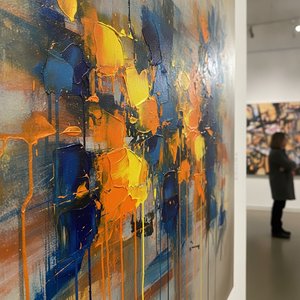
Beyond the Lines: Mastering the High-Impact World of Contemporary Abstraction
Master the high-impact world of contemporary abstraction. Discover how bold colors, textures, and modern movements like Abstract Expressionism can transform your space with premium, high-energy art curated for the design-conscious professional.