
() ·
Ένα έργο ζωγραφικής φτιαγμένο για εσάς, με το χέρι
Χειροποίητη Αναπαραγωγή σε Έλαιο
Χειροποίητη ελαιογραφία σε καμβά στο δικό σας μέγεθος και πλαίσιο, κατά παραγγελία από τους καλλιτέχνες μας. ( Μετάβαση σε Εκτυπώσεις Μετάβαση σε Ψηφιακή Αποτέλεσμα)
Περιγραφή Συλλεκτικού Αντικειμένου
Admire Josef Hoffmann’s ‘Chair - Nr. 511,’ a stunning Art Nouveau masterpiece! Hand-carved wood & woven cane create elegant comfort. Explore this unique 1901 design.
Βιογραφικό Καλλιτέχνη
Josef Hoffmann (1870-1956) was a pioneering Austrian architect & designer of the Vienna Secession and Wiener Werkstätte. Known for Art Nouveau, geometric forms, functionalism, and his masterpiece, the Stoclet Palace. Explore his iconic furniture, gla
 Περισσότερα
από ·
Κεφάλαιο 1
Ποιο μέγεθος θα έπρεπε να έχει;
Ανακινήστε το ρυθμιστικό για να αλλάξετε το μέγεθος· η εικόνα στα αριστερά δείχνει το κάδρο στο πραγματικό του πλάτος. Οι αναλογίες του πρωτοτύπου διατηρούνται.
Επιλέξτε από τις προκαθορισμένες διαστάσεις μας που διατηρούν τις αρχικές αναλογίες του έργου τέχνης.

Πληκτρολογήστε το πλάτος και το ύψος που επιθυμείτε, ώστε να ταιριάζουν στο κάδሮ ή στον τοίχο σας. Ε เนื่องจาก πρόκειται για χειροποίητη ζωγραφική, σε περίπτωση διαστάσεων με διαφορετικό σχήμα, ο καλλιτέχνης μπορεί να ζωγραφίσει λίγο παραπάνω γύρω από το έργο ή να αφαιρέσει ένα μέρος — η επιλογή είναι δική σας. Σας στέλνουμε ένα ψηφιακό mockup για έγκριση πριν ξεκινήσει η δημιουργία του έργου. Η εικόνα που εμφανίζεται σε αυτή τη σελίδα δεν δείχνει το τελικό αποτέλεσμα — μόνο το mockup το αναδεικνύει.
Κεφάλαιο 2
Πώς θα πρέπει να παραδοθεί;
Επιλέξτε τις πλευρές του τεντωμένου καμβά
Επιλέξτε το πλαίσιο σας

Λευκό €1

Αντιστροφή με θολό φινίρισμα €1

Εκτεταμένη περιφέρεια €1

P118B €10

P118H €10

P118W €10

P438Z €10

P508JH €12

P508YH €12

P805H €10

P805Z €10

P919BZ €10

P919G €10

P919XJ €10

P959ZH €10

P968JZ €12

W106C €8

W218G €10

W218JH €8

W218Y €10

W307PJ €10

W316G €10

W316PJ €8

W316Y €10

W398PJ €8

W4111J €10

W500HY €15

W500JH €15

W692G €12

W849H €8

W940BG €15

W953PJ €8

H24-GOLD €30

H24-SILVER €30

H36-GOLD €45

H36-SILVER €45
Με πλαίσιο
Πλαισίωμα: . Συνολικές διαστάσεις με το πλαίσιο: .
Κεφάλο 3
Ποιος το ζωγραφίζει και πρέπει να αλλάξει κάτι;
Μετά την παραγγελία, η ομάδα του OriginalUniqueArt.com θα στείλει email στον πελάτη για οδηγίες και θα παρέχει μια προεπισκόπηση (mockup)
Παγκόσμια Αποστολή () σε 3-4 εβδομάδες αντί για τις συνήθεις 5 εβδομάδες. (7 Νοέμβριος). Χωρίς συμβιβασμούς στην ποιότητα.
Κεφάλαιο 4
Οι τελευταίες πινελιές
Μια πινακίδα με πληροφορίες, όπως σε ένα μουσείο;
Λεπτομέρειες Χάραξης σε Πλακέτα Χαλκού
This elegant plaque features the artist's name and the title of the artwork, finely engraved for a timeless presentation.
It is made from bronze with a refined, elegant finish. The text is precisely laser-engraved for a sharp and permanent result. Measuring 9x2 cm, the plaque is compact yet easy to read. It's built to be durable and scratch-resistant, offering a professional, museum-quality look. Mounting is simple thanks to the included adhesive backing.
Λεπτομέρειες Διαφανούς Ακρυλικής Πλακίδας
The plaque includes essential engraved details such as the artist's name, the title of the artwork, the date it was created, the type of media used-like oil on canvas or watercolor-a brief description of the piece, and a QR code that links to the complete artwork information.
It is crafted from clear acrylic, offering a sleek, modern appearance. The text is UV-engraved in black to ensure strong visual contrast. With a size of 10x15 cm, it ensures optimal readability. It comes equipped with two metal hooks for secure wall mounting. The plaque is designed to be weather-resistant, making it suitable for various environments, and it includes interactive features that work seamlessly with smartphone scanning.
Λεπτομέρειες Πλακίδας Ακρυλικού Μαύρου Χρώματος
This elegant plaque includes engraved information such as the artist's name, the title of the artwork, the date it was created, the type of media used (like oil on canvas or watercolor), a short description of the artwork, and a QR code for quick access to more information.
The plaque itself is made from refined black acrylic with a premium finish. The text is laser-engraved in white for high contrast and readability. Its size is 10x15 cm, designed to be easy to read. It comes with two metal hooks for professional mounting. The design is sleek and fits any interior style. It is also weather-resistant and durable, with built-in digital integration for mobile compatibility.
Προστατευτικό βερνίκι;
Πότε θα το χρειαστείτε;
Κεφάλαιο 5
Το έργο σας, ακριβώς όπως το παραγγείλατε

Chair - Nr. 511
Μέσο Αναπαραγωγής
Διαστάσεις Αναπαραγωγής
-

Κορυφαίος Καλλιτέχνης
Περισσότερη λεπτομέρεια, φινέτσα και επιπλέον χρόνος παραγωγής
-

Πλαίσιο Αναπαραγωγής
-
-
Για έργα τέχνης ή αναπαραγωγές με πλευρά υπερβαίνουσα των 105 εκ. (περίπου 41 ίντσες), το πλαίσιο θα αποσταλεί αποσυναρμολογημένο, σε μορφή κιτ. Η μέθοδος αυτή διασφαλίζει την ασφαλή παράδοση και προλαμβάνει τυχόν ζημιές κατά τη μεταφορά.
Απαιτείται επαγγελματικός συναρμολογητής - δεν πρόκειται για προϊόν αυτοσυναρμολογίας (DIY).
Το κιτ πρέπει να συναρμολογηθεί και ο καμβάς να τεντωθεί από έμπειρο επαγγελματία πλαίσιο (framer), με τη χρήση κόλλας ξύλου (δεν περιλαμβάνεται), πένσας για ένταση καμβά και σφιγκτήρων, ώστε να διατηρηθεί η ορθογωνιότητα των δοκών κατά τη διάρκεια της ξędρανσης. Η λανθασμένη συναρμολόγηση ή η ανισόρροπη ένταση του καμβά μπορεί να προκαλέσει μόνιμη ζημιά στο έργο και δεν καλύπτεται από την εγγύησή μας.
 Για έργα τέχνης ή αναπαραγωγές με πλευρά υπερβαίνουσα των 105 εκ. (περίπου 41 ίντσες), το πλαίσιο θα αποσταλεί αποσυναρμολογημένο, σε μορφή κιτ. Η μέθοδος αυτή διασφαλίζει την ασφαλή παράδοση και προλαμβάνει τυχόν ζημιές κατά τη μεταφορά.
Περιλαμβάνονται όλες οι μπάρες από μασίφ ξύλο, κομμένες με ακρίβεια στις διαστάσεις τους.
Συναρμολογείται με τις παρεχόμενες βίδες, καθώς και με κόλλα ξύλου για τις γωνιακές ενώσεις, η οποία δεν περιλαμβάνεται και θα πρέπει να προμηθευτεί από τον τεχνίτη σας.
Απαιτούνται επαγγελματικά εργαλεία που δεν περιλαμβάνονται: μια πένσα για σφίξιμο καμβά (τενωτήρας) και σφιγκτήρες για τη διατήρηση της ορθογωνιότητας των καρέ κατά τη διάρκεια της απορρόφησης της κόλλας.
Σημαντικό:
Οι γωνιακές ενώσεις απαιτούν κόλλα ξύλου, οι σπορ πρέπει να συγκρατούνται με σφιγκτήρες μέχρι να στεγνώσει πλήρως η κόλλα, και για την ένταση του καμβά στο συναρμολογημένο πλαίσιο απαιτείται μια πένσα για ένταση καμβά. Κανένα από αυτά δεν περιλαμβάνεται στο σετ. Παρακαλούμε συμβουλευτείτε έναν έμπειρο επαγγελματία κάδραρχο πριν παραγγείλετε αυτό το μέγεθος.

Πληροφορίες έργου
-
-

Βερνίκι Προστασίας
Γυαλιστερό Βερνίκι (ενισχύει τα χρώματα, προστατεύει από το φως και την υγρασία)
-

Προσαρμογή του έργου μου
Παραδείγματα αλλαγών που είναι δυνατές: Αντικατάσταση προσώπου με φωτογραφία του πελάτη· Προσθήκη κατοικίδιου (π.χ., αντικατάσταση γάτας με σκύλο)· Ενσωμάτωση κρυφού μηνύματος στο φόντο· Αλλαγή τοπίου ή στοιχείων στο φόντο.
-

Επείγουσα παραγγελία
Παγκόσμια Αποστολή () σε 3-4 εβδομάδες αντί για τις συνήθεις 5 εβδομάδες. (7 Νοέμβριος). Χωρίς συμβιβασμούς στην ποιότητα.
-
Αποστολή Express
Παγκόσμια Αποστολή () σε 5 εβδομάδες. (14 Νοέμβριος).
Συμπεριλαμβάνεται
Τελική Τιμή
€ 268
Η επιλογή με γυαλί είναι διαθέσιμη μόνο για μεγέθη κάτω από 110 εκ.
Συμπεριλαμβάνεται σε κάθε παραγγελία
- Δωρεάν γρήγορη διεθνής αποστολή
- Κάμβας από Λινό Υψηλής Ποιότητας
- Πλήρης ασφάλιση μεταφοράς
- Εγγύηση επιστροφής δασμών και φόρων εισαγωγής
- Εγγύηση Απόλυτης Ομοιότητας Χρωμάτων
- Πολιτική Επιστροφής 100 Ημερών (Μόνο σε περίπτωση ελαττωμάτων)
- Εγγύηση επιστροφής 100% των χρημάτων
- Προσφορά για πολλαπλές παραγγελίες


 Προεπισκόπηση σε πραγματική κλίμακα
 Αποστολή
 Κοινοποίηση
 Λεπτομέρειες
 Οδηγός

 Λήψη
Λήψη
 Παρόμοια αντικείμενα συλλογής
 Ακτινογραφία
 Παρουσίαση
 Ερωτήσεις & Απαντήσεις
 Στατιστικά
Με αριθμούς
- 1901το έτος δημιουργίας
- 29επιλογές καρέ
- τυπικές διαστάσεις, στις δικές τους αναλογίες
- 5εβδομάδες για τη δημιουργία και την παράδοση του
Σχετικά με το πρωτότυπο

- 40.0 x 42.0 cm


Josef Maria Gustav Hoffmann
1870 - 1956, Croatia
Γρήγορα στοιχεία για τον/την Josef Maria Gustav Hoffmann
- Artistic Movement Or Style: Vienna Secession, Art Deco, Modernism
- Artists Or Movements Influenced By This Artist: ['Wiener Werkstätte']
- Date Of Birth: 1870
- Date Of Death: 1956
- Full Name: Josef Maria Gustav Hoffmann
- Nationality: Austrian-Moravian
- Notable Artworks: ['Stoclet Palace']
- Place Of Birth: Příbor, Croatia
Βιογραφικό Καλλιτέχνη
The lines of a life in Moravia and Vienna
Born in Příbor, Croatia, in 1870, Josef Maria Gustav Hoffmann moved through a world shaped by the heavy textures of his father's textile factory. His early years in Brtnice/Pirnitz were far from the studios he would later inhabit. He sat in classrooms that felt like prisons, eventually finding a different kind of discipline at the Higher School of Arts and Crafts in Brno. By 1892, the focus had shifted to the Academy of Fine Arts Vienna. Under the guidance of Otto Wagner, his hands learned the weight of stone and the precision of a draft. He studied alongside Joseph Maria Olbrich, two figures who would soon look at the old ways of ornament and see something that needed to be stripped away.
The years following his return from Italy were marked by a search for a new language. In 1895, he joined a group known as the Siebener Club, a small gathering that would grow into the Vienna Secession. He did not seek to cover buildings in unnecessary layers of cement or molded shapes. Instead, he looked toward the idea of a harmonious ensemble. His work began to favor the square, the cube, and the stark contrast of black and white surfaces. These were forms he believed were intelligible to everyone.
The workshop and the object
In 1903, alongside Koloman Moser and Fritz Wärndorfer, Hoffmann helped establish the Wiener Werkstätte. This was a place where the boundaries between architecture and daily life blurred. He worked on everything from silver and furniture to bookbindings and textiles. His approach to a tea service, for instance, relied on the geometry of cubes and squares. Often, the only decoration present was the mark left by a hammer blow during the crafting process. In some pieces, small, colorful stones were set into these block-like shapes to break the austerity.
His touch extended to much smaller, more delicate surfaces as well. He designed vases for the glass manufactory Loetz that utilized the Biedermeier technique of Cameo glass. These objects featured layers of multi-colored glass, etched and engraved to reveal patterns of green leaves or vertical ribbons. In 1914, his designs for glass continued to reflect a sober taste, using polished geometric shapes that applied an architectural perspective to a handheld object. Even a chair from 1901, made of carved wood and woven cane, showed this same commitment to a unified aesthetic.
A legacy in stone and structure
Architecture remained the foundation of his practice. The Stoclet Palace in Brussels, built between 1905 and 1911, remains his most recognized structural achievement. It stands as a point where modern architecture and Art Deco meet, characterized by its lack of useless ornament. He also shaped the urban fabric of Vienna through projects like the Karlsplatz station and the design of exhibition spaces that housed the works of Gustav Klimt. His vision was often centered on the concept of the Gesamtkunstwerk, a total work of art where every element of an environment is designed by a single mind to create a unified living space.
Throughout his long career, which lasted until his death in 1956, Hoffmann remained a teacher and a practitioner. He taught at the Kunstgewerbeschule from 1899, passing on the importance of authenticity in materials and the unity of decor to new generations. His work was never about grand pronouncements but about the careful integration of architecture, furniture, and the objects of daily life.
Σχετικά άρθρα

Art Nouveau: The Elegant Fusion of Nature and Design – A Journey Through Organic Sophistication
Discover the exquisite world of Art Nouveau. Explore the elegant fusion of nature and design through architectural masterpieces, organic forms, and the legendary masters of the Belle Époque. Immerse yourself in a journey of timeless sophistication and ornamental beauty.
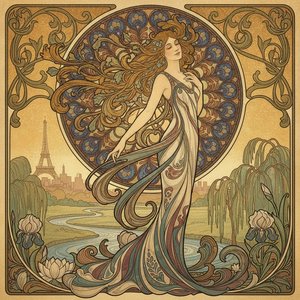
The Elegance of Art Nouveau: Embracing Nature's Fluid Beauty and the Belle Époque Spirit
Discover the enchanting world of Art Nouveau. Explore the organic beauty, flowing lines, and Belle Époque elegance that defined an era of unparalleled craftsmanship and natural inspiration.
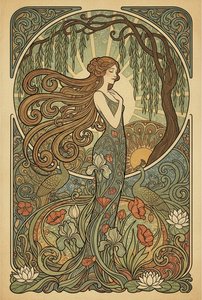
The Flowing Line & Flourishing Form: Exploring Art Nouveau's Aesthetic Legacy
Explore the captivating world of Art Nouveau! Discover its origins, key artists like Horta & Mucha, regional styles, innovative techniques, and lasting influence on architecture & design. A comprehensive guide for art enthusiasts.
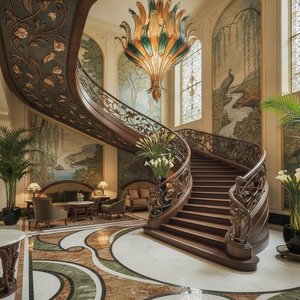
Art Nouveau Guide: Integrating Elegant Curves and Organic Design into Luxury Hotel Interiors
Master Art Nouveau integration for luxury hotel interiors. Discover expert strategies for utilizing organic curves, whiplash lines, and botanical motifs to create sophisticated, high-end hospitality spaces with scalable, professional art procurement solutions.