

 Αποστολή
 Κοινοποίηση
 Λεπτομέρειες
 Οδηγός

 Λήψη
Λήψη
 Παρόμοια αντικείμενα συλλογής
 Παρουσίαση
 Στατιστικά
Brooch


 Περισσότερα
Giclée / Εκτυπώσεις Τέχνης
Εκτύπωση giclée ή σε καμβά ποιότητας μουσείου με γρήγορη παραγωγή και ευέλικτες επιλογές φινιρίσματος. ( Αγορά χειροποίητου πίνακα Μετάβαση σε Ψηφιακή Αποτέλεσμα)




































Επιλέξτε από τις προκαθορισμένες διαστάσεις μας που διατηρούν τις αρχικές αναλογίες του έργου τέχνης.

Εισάγετε το πλάτος και το ύψος που επιθυμείτε, ώστε να ταιριάζουν στο κάδሮ ή στον τοίχο σας. Μια εκτύπωση μπορεί μόνο να υποστεί κοψίμό και ποτέ να μην γίνει μεγαλύτερη από την αρχική εικόνα, επομένως η επιλογή μεγέθους με διαφορετικό σχήμα συνεπάγεται απώλεια ενός μέρους της εικόνας. Σας στέλνουμε ένα ψηφιακό mockup για έγκριση πριν προχωρήσουμε σε οποιαδήποτε εκτύπωση. Η εικόνα που εμφανίζεται σε αυτή τη σελίδα δεν δείχνει την πραγματική κοπή — μόνο το mockup την παρουσιάζει.
Παγκόσμια Αποστολή () σε 2 εβδομάδες αντί για τις συνήθεις 4/5 εβδομάδες. (25 Οκτώβριος)

Δωρεάν γρήγορη διεθνής αποστολή

Κάμβας από Λινό Υψηλής Ποιότητας

Πλήρης ασφάλιση μεταφοράς

Εγγύηση επιστροφής δασμών και φόρων εισαγωγής

Εγγύηση Απόλυτης Ομοιότητας Χρωμάτων

Πολιτική Επιστροφής 100 Ημερών (Μόνο σε περίπτωση ελαττωμάτων)

Εγγύηση επιστροφής 100% των χρημάτων

Προσφορά για πολλαπλές παραγγελίες
 Η επιλογή με γυαλί είναι διαθέσιμη μόνο για μεγέθη κάτω από 110 εκ.

Brooch
Giclée / Εκτυπώσεις Τέχνης
Διαστάσεις Αναπαραγωγής
-


Τελική Τιμή
€ 70
A Jewel of the Vienna Secession
In the delicate interplay of light and color, the Brooch by Josef Hoffmann emerges as a breathtaking testament to the dawn of modern design. Created around 1910, this exquisite piece serves as more than mere ornamentation; it is a window into the soul of the Wiener Werkstätte era. The artwork presents a mesmerizing close-up of stained glass artistry, where deep, velvety blues collide with vibrant, pulsating reds. At its heart, a pristine white letter 'M' stands as a focal point of geometric clarity, anchored within an intricate web of design that speaks to the precision and elegance of the early 20th-century avant-garde.
The technique employed in this piece reflects the mastery of Hoffmann, a man who redefined the boundaries between architecture and decorative arts. The use of stained glass creates a luminous effect, where light does not simply hit the surface but seems to emanate from within the very fibers of the composition. This translucency allows the bold red border to frame the central motif with a rhythmic intensity, drawing the eye inward toward the delicate white calligraphy. For the discerning collector or interior designer, this piece offers a sophisticated way to introduce a sense of historical grandeur and structural beauty into a contemporary space.
The Legacy of Geometric Elegance
To understand the emotional resonance of this work, one must look to the historical context of its creator. As a founding member of the Vienna Secession, Hoffmann sought to break free from the suffocating traditions of academic art, favoring instead a language of functionalism and geometric purity. This brooch embodies that revolution. The stark contrast between the primary colors and the sharp, clean lines of the central letter evokes a sense of organized passion—a controlled explosion of color that feels both ancient in its glasswork tradition and strikingly modern in its minimalist execution.
Integrating such a piece into a curated collection or a high-end interior provides an immediate touchpoint of intellectual luxury. It invites conversation about the transition from the flowing, organic curves of Art Nouveau to the structured, rhythmic patterns of Art Deco. Whether displayed as a focal point in a gallery setting or used as inspiration for textile and glass decor, the Brooch remains a timeless symbol of an era when every small object was treated with the reverence of a masterpiece. It is an invitation to experience the brilliance of Hoffmann’s vision, where every fragment of color tells a story of architectural precision and artistic liberation.
Ερωτήσεις και Απαντήσεις
Πόσο έντονες είναι οι αποχρώσεις του "Brooch";
Το έργο "Brooch" του Josef Maria Gustav Hoffmann χαρακτηρίζεται από κορεσμό Subtle Color και ένταση Balanced.
Ποιος είναι ο δημιουργός και σε ποια χρονιά δημιουργήθηκε το "Brooch";
Το έργο "Brooch" δημιουργήθηκε από τον/την Josef Maria Gustav Hoffmann το 1910.
Ποιο είναι το σχήμα του "Brooch";
Το σχήμα του "Brooch" είναι Square. Αυτό είναι χρήσιμο όταν σχεδιάζετε την τοποθέτηση μιας αναπαραγωγής.
Βιογραφικό Καλλιτέχνη
The lines of a life in Moravia and Vienna
Born in Příbor, Croatia, in 1870, Josef Maria Gustav Hoffmann moved through a world shaped by the heavy textures of his father's textile factory. His early years in Brtnice/Pirnitz were far from the studios he would later inhabit. He sat in classrooms that felt like prisons, eventually finding a different kind of discipline at the Higher School of Arts and Crafts in Brno. By 1892, the focus had shifted to the Academy of Fine Arts Vienna. Under the guidance of Otto Wagner, his hands learned the weight of stone and the precision of a draft. He studied alongside Joseph Maria Olbrich, two figures who would soon look at the old ways of ornament and see something that needed to be stripped away.
The years following his return from Italy were marked by a search for a new language. In 1895, he joined a group known as the Siebener Club, a small gathering that would grow into the Vienna Secession. He did not seek to cover buildings in unnecessary layers of cement or molded shapes. Instead, he looked toward the idea of a harmonious ensemble. His work began to favor the square, the cube, and the stark contrast of black and white surfaces. These were forms he believed were intelligible to everyone.
The workshop and the object
In 1903, alongside Koloman Moser and Fritz Wärndorfer, Hoffmann helped establish the Wiener Werkstätte. This was a place where the boundaries between architecture and daily life blurred. He worked on everything from silver and furniture to bookbindings and textiles. His approach to a tea service, for instance, relied on the geometry of cubes and squares. Often, the only decoration present was the mark left by a hammer blow during the crafting process. In some pieces, small, colorful stones were set into these block-like shapes to break the austerity.
His touch extended to much smaller, more delicate surfaces as well. He designed vases for the glass manufactory Loetz that utilized the Biedermeier technique of Cameo glass. These objects featured layers of multi-colored glass, etched and engraved to reveal patterns of green leaves or vertical ribbons. In 1914, his designs for glass continued to reflect a sober taste, using polished geometric shapes that applied an architectural perspective to a handheld object. Even a chair from 1901, made of carved wood and woven cane, showed this same commitment to a unified aesthetic.
A legacy in stone and structure
Architecture remained the foundation of his practice. The Stoclet Palace in Brussels, built between 1905 and 1911, remains his most recognized structural achievement. It stands as a point where modern architecture and Art Deco meet, characterized by its lack of useless ornament. He also shaped the urban fabric of Vienna through projects like the Karlsplatz station and the design of exhibition spaces that housed the works of Gustav Klimt. His vision was often centered on the concept of the Gesamtkunstwerk, a total work of art where every element of an environment is designed by a single mind to create a unified living space.
Throughout his long career, which lasted until his death in 1956, Hoffmann remained a teacher and a practitioner. He taught at the Kunstgewerbeschule from 1899, passing on the importance of authenticity in materials and the unity of decor to new generations. His work was never about grand pronouncements but about the careful integration of architecture, furniture, and the objects of daily life.

Josef Maria Gustav Hoffmann
1870 - 1956 , Croatia
Γρήγορα στοιχεία
- Artistic Movement Or Style: Vienna Secession, Art Deco, Modernism
- Artists Or Movements Influenced By This Artist: ['Wiener Werkstätte']
- Date Of Birth: 1870
- Date Of Death: 1956
- Full Name: Josef Maria Gustav Hoffmann
- Nationality: Austrian-Moravian
- Notable Artworks: ['Stoclet Palace']
- Place Of Birth: Příbor, Croatia
Σχετικά άρθρα
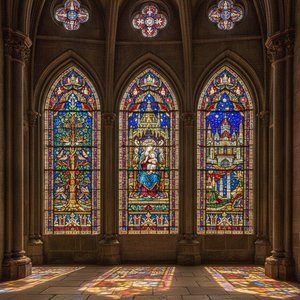
Luminous Masterpieces: The Captivating Beauty and Timeless Elegance of Stained Glass Artworks
Embark on a visual journey through the luminous world of stained glass art. Discover the exquisite craftsmanship, historical significance, and captivating beauty of masterworks from Art Nouveau to the Gothic era, curated for the discerning fine art enthusiast.

Crimson Threads of Narrative: Exploring Symbolism & Representation in Artworks Featuring the Red Dress
Explore the rich symbolism of the red dress in art history! From ancient power displays to iconic portraits like Cézanne’s 'Madame Cezanne', discover the cultural and artistic significance behind this captivating color. Expert analysis & insights.

Οι 10 πιο διάσημες πίνακες με λευκό χρώμα: Ιστορία, τέχνη & διακόσμηση
Ανακαλύψτε τους 10 πιο διάσημους πίνακες με κυρίαρχο το λευκό χρώμα! Ιμπρεσιονισμός, μοντερνισμός & η ιστορία των μεγάλων καλλιτεχνών όπως ο Monet και ο Van Gogh. Βρείτε την τέλεια αναπαραγωγή πίνακα για τον χώρο σας στην OriginalUniqueArt.com.

Οι 10 πιο διάσημοι πίνακες με κυρίαρχο το χρώμα του σλατι (Slate Blue) | OriginalUniqueArt.gr
Ανακαλύψτε τους 10 πιο διάσημους πίνακες με κυρίαρχο το χρώμα του σλατι! Ιμπρεσιονισμός, Van Gogh, Monet & άλλοι μεγάλοι ζωγράφοι. Βρείτε αναπαραγωγές έργων τέχνης υψηλής ποιότητας για την διακόσμηση του χώρου σας στην OriginalUniqueArt.com.
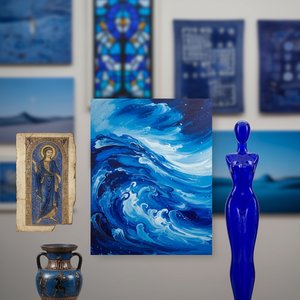
The Allure of Azure: Exploring the Symbolic & Aesthetic Depths of Blue in Art History
Explore the rich history of blue in art! Discover its symbolism, from ancient pigments to modern masterpieces by Kandinsky & Seurat. Uncover the psychological impact and cultural meanings behind this captivating hue.