

 Προεπισκόπηση
 Αποστολή
 Κοινοποίηση
 Λεπτομέρειες
 Οδηγός

 Λήψη
Λήψη
 Παρόμοια αντικείμενα συλλογής
 Ακτινογραφία
 Παρουσίαση
 Στατιστικά
The Walking Tour


 Περισσότερα λεπτομέρεια
Χειροποίητη Αναπαραγωγή σε Έλαιο
Χειροποίητη ελαιογραφία σε καμβά στο δικό σας μέγεθος και πλαίσιο, κατά παραγγελία από τους καλλιτέχνες μας. ( Μετάβαση σε Εκτυπώσεις Μετάβαση σε Ψηφιακή Εικόνα)




P118B $10

P118H $10

P118W $10

P438Z $10

P508JH $12

P508YH $12

P805H $10

P805Z $10

P919BZ $10

P919G $10

P919XJ $10

P959ZH $10

P968JZ $12

W106C $8

W218G $10

W218JH $8

W218Y $10

W307PJ $10

W316G $10

W316PJ $8

W316Y $10

W398PJ $8

W4111J $10

W500HY $15

W500JH $15

W692G $12

W849H $8

W940BG $15

W953PJ $8




Επιλέξτε από τις προκαθορισμένες διαστάσεις μας που διατηρούν τις αρχικές αναλογίες του έργου τέχνης.

Μπορείτε να ορίσετε δικές σας διαστάσεις ώστε το έργο να ταιριάζει σε ένα συγκεκριμένο πλαίσιο ή χώρο. Εάν το επιλεγμένο μέγεθος δεν συμπίπτει με τις αναλογίες της αρχικής εικόνας, θα περικοψούμε το έργο ή θα επεκτείνουμε τη ζωγραφιά με πρόσθετα χειρόγραφα στοιχεία. Ένα ψηφιακό προσχέδιο θα σας αποσταλεί για έγκριση πριν την έναρξη της παραγωγής.
Παρακαλούμε σημειώστε ότι η προεπισκόπηση στην οθόνη δεν αντικατοπτρίζει την πραγματική περικοπή ή επέκταση. Μόνο το προσχέδιο θα δείξει με ακρίβεια την τελική σύνθεση.
Παρόλο που είναι διαθέσιμα προσαρμοσμένα μεγέθη, συνιστούμε να επιλέξετε μια διάσταση από τη λίστα των προκαθορισμένων μεγεθών για τη διατήρηση των αρχικών αναλογιών.
Μετά την παραγγελία, η ομάδα του OriginalUniqueArt.com θα στείλει email στον πελάτη με οδηγίες και θα παρέχει μια προεπισκόπηση προσχεδίου
Παγκόσμια Αποστολή () σε 3-4 εβδομάδες αντί για τις συνήθεις 5 εβδομάδες. (21 Σεπτέμβριος). Χωρίς συμβιβασμούς στην ποιότητα.

Δωρεάν γρήγορη διεθνής αποστολή

Κάμβας από Λινό Υψηλής Ποιότητας

Πλήρης ασφάλιση μεταφοράς

Εγγύηση επιστροφής δασμών και φόρων εισαγωγής

Εγγύηση Απόλυτης Ομοιότητας Χρωμάτων

Πολιτική Επιστροφής 100 Ημερών (Μόνο σε περίπτωση ελαττωμάτων)

Εγγύηση επιστροφής 100% των χρημάτων

Έκπτωση για πολλαπλές παραγγελίες
 Η επιλογή με γυαλί είναι διαθέσιμη μόνο για μεγέθη κάτω από 110 εκ.

The Walking Tour
Τεχνική Αναπαραγωγής
Διαστάσεις Αναπαραγωγής
-


Συνολικό Κόστος
$ 300
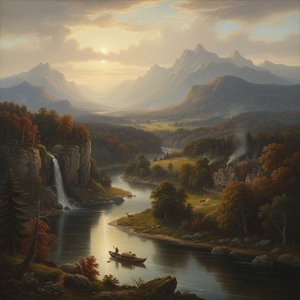
The Walking Tour – A Luminist Embrace of American Landscape
John Frederick Kensett’s “The Walking Tour,” painted in 1847, isn't merely a depiction of a picturesque landscape; it’s an invitation to contemplate the sublime beauty of nature and the quiet joy of exploration. This masterful work, now housed within the Metropolitan Museum of Art, exemplifies the Luminist movement – a distinctly American style that emerged in the mid-19th century, characterized by its emphasis on light, atmosphere, and serene observation. Kensett, a key figure in this artistic circle, eschewed dramatic narratives or heroic subjects, instead focusing on capturing the subtle nuances of the natural world with an almost meditative intensity.
The scene unfolds along a gently sloping path that winds through a vibrant, verdant valley. A meandering river, reflecting the soft hues of the sky, snakes its way through the foreground, drawing the viewer’s eye into the heart of the composition. Scattered amongst the trees and foliage are figures – likely members of a walking party – rendered with remarkable delicacy and suggesting an intimate connection to their surroundings. These aren't grand portraits; rather, they serve as anchors for our own imaginative journey, inviting us to share in the experience of quiet contemplation.
Kensett’s technique is remarkably understated yet profoundly effective. He employs a delicate layering of brushstrokes, creating an almost luminous effect – hence the term “Luminist.” The colors are muted and harmonious, dominated by shades of green, blue, and brown, all rendered with remarkable subtlety. Light plays a crucial role; it filters through the trees, dappling the landscape in shifting patterns, and bathing the scene in a soft, ethereal glow. This masterful manipulation of light isn’t about dramatic illumination but rather about capturing the subtle shifts in atmosphere that define a tranquil afternoon.
A Reflection of Transcendentalist Ideals
“The Walking Tour” is deeply rooted in the philosophical currents of its time – specifically, the Transcendentalist movement. Figures like Ralph Waldo Emerson and Henry David Thoreau were advocating for a closer connection with nature as a means of spiritual enlightenment. Kensett’s painting embodies this philosophy by presenting nature not as something to be conquered or exploited but as a source of profound beauty and inner peace. The figures in the scene aren't actively engaged in any particular activity; they are simply *present* within the landscape, absorbing its serenity and finding solace in its quiet grandeur.
The choice of subject matter – a leisurely walk through nature – is itself significant. It speaks to a growing appreciation for the outdoors during an era increasingly dominated by industrialization and urban life. The painting offers a respite from the hustle and bustle, inviting viewers to slow down, breathe deeply, and reconnect with the natural world.
Symbolism of Path and Perspective
The winding path that dominates the composition is more than just a physical element; it represents a journey – both literal and metaphorical. It symbolizes the exploration of nature, but also the exploration of one’s own inner landscape. The perspective subtly draws the viewer into the scene, creating a sense of immersion and inviting us to step into the painting ourselves.
The placement of the figures along the path suggests a shared experience – a collective appreciation for beauty and tranquility. They are not isolated individuals but rather participants in a larger narrative of connection with nature. The river, flowing towards the horizon, can be interpreted as a symbol of time and continuity, suggesting that this moment of serenity is part of an ongoing cycle.
Capturing American Identity
“The Walking Tour” is often considered a quintessential example of American landscape painting because it captures a uniquely American sensibility. Unlike European artists who frequently depicted grand historical scenes or mythological narratives, Kensett focused on the beauty and character of his native land. He sought to portray an idealized vision of America – one that was both beautiful and accessible, reflecting the nation’s burgeoning sense of identity.
Today, this painting continues to resonate with viewers who appreciate its quiet beauty, its subtle symbolism, and its profound connection to nature. It serves as a reminder of the importance of slowing down, appreciating the simple pleasures of life, and seeking solace in the natural world – values that remain remarkably relevant in our increasingly complex and fast-paced society.
Βιογραφικό Καλλιτέχνη
A Life Dedicated to Capturing Serene Landscapes
Ο Τζον Φρεντρίκ Κένσετ, ένας αμερικανός καλλιτέχνης και χαρακτήρας, γεννήθηκε στις 22 Μαρτίου 1816 στο Σίτσ’ερι του Κογκνίκτη, ΗΠΑ. Ως μέλος της δεύτερης γενιάς της σχολής του Χάρδεν Ριβερ, το έργο του χαρακτηρίζεται από την ηρεμία και τη φωτεινότητα, τιμώντας τις μεταφυσικές πτυχές της φύσης. Η παιδική του εποχή διαμορφώθηκε από την εκπαίδευσή του στο Σχολείο του Σίτσ’ερι και τη μελέτη της χαρακτικής με τον πατέρα του, Τζον Κένσετ. Αργότερα εργάστηκε ως χαρακτήρας σε νέο Χέβεν μέχρι το 1838, μετακινώντας στη Νέα Υόρκη για να εργαστεί στην χαρακτική τραπεζικών σημειωμάτων. Το 1840, ο Κένσετ ταξίδεψε στην Ευρώπη με σκοπό να σπουδάσει ζωγραφική, βελτιώνοντας τις δεξιότητές του δίπλα στον Μπεναμίνο Τσάμπνεϊ.Εγκαθιδρυση Σταδιοδρομίας και Λουμιρισμός
Μετά την εγκατάστασή του στούντιο στη Νέα Υόρκη, ο Κένσετ ταξίδεψε εκτενώς στην ανατολική ηπειροβεια και στις κοιλάδες του Κολοράντο, καταγράφοντας την ουσία αυτών των τοπίων. Ο στυλικός του εξελίχθηκε από τον παραδοσιακό σχολή του Χάρδεν Ριβερ σε μια πιο εξελιγμένη προσέγγιση του λουμιρισμού, χαρακτηριζόμενη από αμερόληπτες πινελιές που αποκαλύπτουν τις ιδιότητες του ατμοσφαιρικού φωτός. Ένα από τα σημαντικότερα έργα του, το "Μούντε Βαντάγουρο από την κοιλάδα του Κονγουέι" (1851), αγοράστηκε από την Αμερικανική Τέχνη και διανεμήθηκε σε 13.000 συνδρομητές. Το "Εϊτον’ς Νεκ, Λόνγκ Άιλαντ" (1872) αποτελεί μια άριστη απόδειξη του λουμιριστικού στυλ του, και σήμερα βρίσκεται στην συλλογή του Μητροπολιτικού Μουσείου Τέχνης στη Νέα Υόρκη.Επηρεές και Συνεργασίες
Ο Κένσετ ήταν ένας από τους ιδρυτές του Μητροπολιτικού Μουσείου Τέχνης και μέλος της Εθνικής Ακαδημίας Σχεδίου. Το έργο του, ευρέως αναγνωρισμένο κατά τη διάρκεια της ζωής του, συνεχίζει να επηρεάζει την τοπική ζωγραφική. Σημαντικές επιρροές υπήρξαν οι καλλιτέχνες Τόμας Κολ και Μπεναμίνο Τσάμπνεϊ.Σημαντικά Έργα
* "Sunset Sky" (ca. 1870), Μητροπολιτικό Μουσείο Τέχνης, Νέα Υόρκη * "Three Mile Harbor" (ca. 1860), Μουσείο Τέχνης, Tallahassee * "Mount Washington from the Valley of Conway" (1851)Συνολική Αξιοσημείωτη Συμβολή
Ο Κένσετ άφησε μια σημαντική κληρονομιά στην τέχνη. Η ικανότητά του να αποτυπώνει την ατμόσφαιρα και το φως, σε συνδυασμό με την αγάπη του για τη φύση, τον καθιέρωσαν ως έναν από τους πιο σημαντικούς καλλιτέχνες της εποχής του. Η δουλειά του συνεχίζει να εμπνέει και σήμερα, αποδεικνύοντας την διαχρονική αξία των έργων του.
Ιωάννης Φρειδερίκος Κένσεντ
1816 - 1872 , Ηνωμένες Πολιτείες της Αμερικής
Στοιχεία καλλιτέχνη
- Artistic Movement Or Style: Hudson River & Luminism
- Artists Or Movements Influenced By This Artist: ['Luminism']
- Artists Who Influenced This Artist:
- Thomas Cole
- Benjamin Champney
- Date Of Birth: 22 Μαρτίου 1816
- Date Of Death: 14 Δεκεμβρίου 1872
- Full Name: John Frederick Kensett
- Nationality: Αμερικανός
- Notable Artworks:
- Mount Washington
- Eaton's Neck
- Place Of Birth: Cheshire, ΗΠΑ
Σχετικά άρθρα

John Frederick Kensett: Luminosity, Landscape & the American Identity
Explore the luminous landscapes of John Frederick Kensett, a master of Luminism and key figure in the Hudson River School. Discover his serene paintings & enduring legacy with OriginalUniqueArt.
Capturing the American Spirit: A Journey Through Iconic Landscapes and the Legacy of the Hudson River School
Explore the profound beauty of American art history. From the Hudson River School to iconic landscapes, discover a curated journey through the masterpieces that defined a nation's spirit and the enduring legacy of American Romanticism.

The Sublime Landscape: Exploring the Hudson River School Movement
Explore the captivating world of the Hudson River School! Discover the history, artists, and defining characteristics of this iconic American art movement. Learn about Romanticism's influence & find inspiration for your collection.

Οι 10 Κορυφαίοι πίνακες που καθόρισαν την Σχολή του ποταμού Hudson | OriginalUniqueArt.gr
Ανακαλύψτε τους 10 κορυφαίους πίνακες της Σχολής του ποταμού Hudson! Thomas Cole, Frederic Church & Albert Bierstadt ζωντανεύουν. Έμπνευση για διακόσμηση σπιτιού με αριστουργήματα ρομαντισμού. Εξερευνήστε την πλήρη συλλογή στο OriginalUniqueArt.com.

Robert Spencer: Luminism, Narrative & the American Landscape Tradition
Explore the captivating world of Luminism & the Hudson River School with our expert analysis. Discover the history, artists, and enduring beauty of 19th-century American landscape painting. Find museum-quality reproductions at OriginalUniqueArt.


