

 Προεπισκόπηση
 Αποστολή
 Κοινοποίηση
 Λεπτομέρειες
 Οδηγός

 Λήψη
Λήψη
 Παρόμοια αντικείμενα συλλογής
 Ακτινογραφία
 Παρουσίαση
 Στατιστικά
Boy's Head
 Acrylic On Canvas
- WallArt
- Scottish Colourists
 26.0 x 28.0 cm
 Government Art Collection
 Περισσότερα λεπτομέρεια
Το έργο τέχνης που εμφανίζεται σε αυτή τη σελίδα προστατεύεται από τους νόμους περί πνευματικών δικαιωμάτων, γεγονός που σημαίνει ότι δεν μπορούμε νομικά να δημιουργήσουμε ή να πουλήσουμε μια ταυτόσημη αναπαραγωγή του. Αυτή η προστασία επιβάλλεται βάσει διεθνών συμφωνιών, όπως η Σύμβαση της Βέρνης καθώς και από τους εθνικούς νόμους, συμπεριλαμβανομένων αυτών που ορίζονται από το Νομοθεσία περί πνευματικών δικαιωμάτων των ΗΠΑ - Τίτλος 17. Όλα τα δικαιώματα κατοχυρωμένα. Απαγορεύεται η αναπαραγωγή χωρίς άδεια.
Αυτή η μέθοδος συμμορφώνεται πλήρως με τους κανονισμούς περί πνευματικών δικαιωμάτων, καθώς δεν περιλαμβάνει την αντιγραφή ή την αναπαραγωγή του προστατευόμενου έργου. Αντίθετα, πρόκειται για μια δημιουργική ερμηνεία — ένα νέο έργο που επηρεάζεται από το πρωτότυπο, χωρίς όμως να είναι πανομοιότυπο με αυτό.
Giclée / Εκτυπώσεις Τέχνης
Εκτύπωση giclée ή σε καμβά ποιότητας μουσείου με γρήγορη παραγωγή και ευέλικτες επιλογές φινιρίσματος. ( Αγορά χειροποίητου πίνακα Μετάβαση σε Ψηφιακή Εικόνα)




P118B €10

P118H €10

P118W €10

P438Z €10

P508JH €12

P508YH €12

P805H €10

P805Z €10

P919BZ €10

P919G €10

P919XJ €10

P959ZH €10

P968JZ €12

W106C €8

W218G €10

W218JH €8

W218Y €10

W307PJ €10

W316G €10

W316PJ €8

W316Y €10

W398PJ €8

W4111J €10

W500HY €15

W500JH €15

W692G €12

W849H €8

W940BG €15

W953PJ €8




Επιλέξτε από τις προκαθορισμένες διαστάσεις μας που διατηρούν τις αρχικές αναλογίες του έργου τέχνης.

Πληκτρολογήστε το πλάτος και το ύψος που επιθυμείτε, ώστε να ταιριάζουν στο κάδሮ ή στον τοίχο σας. Μια εκτύπωση μπορεί μόνο να κοπεί και ποτέ να μην γίνει μεγαλύτερη από την εικόνα, επομένως ένα μέγεθος με διαφορετικό σχήμα συνεπάγεται απώλεια ενός μέρους της εικόνας. Σας στέλνουμε ένα ψηφιακό mockup για έγκριση πριν εκτυπώσουμε οτιδήποτε. Η εικόνα που εμφανίζεται σε αυτή τη σελίδα δεν δείχνει την πραγματική κοπή — μόνο το mockup την παρουσιάζει.
Παγκόσμια Αποστολή () σε 2 εβδομάδες αντί για τις συνήθεις 4/5 εβδομάδες. (22 Οκτώβριος)

Δωρεάν γρήγορη διεθνής αποστολή

Κάμβας από Λινό Υψηλής Ποιότητας

Πλήρης ασφάλιση μεταφοράς

Εγγύηση επιστροφής δασμών και φόρων εισαγωγής

Εγγύηση Απόλυτης Ομοιότητας Χρωμάτων

Πολιτική Επιστροφής 100 Ημερών (Μόνο σε περίπτωση ελαττωμάτων)

Εγγύηση επιστροφής 100% των χρημάτων

Έκπτωση για πολλαπλές παραγγελίες
 Η επιλογή με γυαλί είναι διαθέσιμη μόνο για μεγέθη κάτω από 110 εκ.

Boy's Head
Giclée / Εκτυπώσεις Τέχνης
Διαστάσεις Αναπαραγωγής
-


Συνολικό Κόστος
€ 70
A Portrait of Innocence: Joan Eardley's "Boy’s Head"
Joan Kathleen Harding Eardley (1921–1963), a Scottish painter whose work captured the essence of rural life and childhood, remains one of Britain’s most beloved artists. Born in Sussex to parents grappling with the lingering trauma of World War I – her father suffering from shell shock – Eardley's formative years instilled within her an unwavering empathy for those marginalized by society. This sensitivity would become the bedrock of her artistic vision, informing her distinctive approach to portraying subjects with remarkable tenderness and honesty. Her relocation to Glasgow in 1939 cemented her connection to the Scottish Colourists movement, spearheaded by Hugh Adam Crawford, who profoundly influenced her stylistic development. Though briefly pursuing teacher training, Eardley’s passion for visual art ultimately prevailed, leading her to undertake a carpentry apprenticeship – an unexpected path that nonetheless honed her observational skills and deepened her understanding of craftmanship.- Subject Matter: The painting focuses on the head of a young boy, rendered with meticulous detail. Eardley’s subjects were often children from working-class backgrounds in Glasgow, reflecting her commitment to documenting everyday life and capturing the spirit of ordinary people.
- Style & Technique: “Boy’s Head” exemplifies Eardley's signature style – a blend of realism and expressive brushwork—characterized by bold strokes and vibrant color palettes. She employed oil paint on board, utilizing thick impasto to convey texture and depth, creating an image that feels both tangible and emotionally resonant.
- Historical Context: Created during the post-war era in Britain, Eardley’s work speaks to a period of social upheaval and resilience. Her depictions of children embody hope amidst hardship, capturing the innocence and vulnerability of youth against the backdrop of societal change.
Provenance & Exhibition
The artwork was acquired from Roland Delbanco Gallery in London in 1954 and subsequently exhibited at Edinburgh’s Aitken Dott & Son gallery during the “Joan Eardley Exhibition” held between May and June of 1961. This exhibition solidified Eardley's reputation as a leading figure in Scottish art and ensured that her poignant depictions of childhood would continue to inspire audiences for decades to come.Further Exploration
For more information on Joan Eardley’s life and artistic legacy, explore resources such as Art UK (Ερωτήσεις & Απαντήσεις
Πού και για τι σκοπό συνιστάται το "Boy's Head";
Το έργο "Boy's Head" του Joan Kathleen Harding Eardley προτείνεται για Accent, ιδανικά σε έναν/μια Living Room. Η χρήση και ο χώρος καθορίζουν το κατάλληλο μέρος για την τοποθέτηση μιας αναπαραγωγής.
Είναι το έργο "Boy's Head" του Joan Kathleen Harding Eardley φωτεινό ή σκοτεινό;
Η αισθητή φωτεινότητα του έργου "Boy's Head" του Joan Kathleen Harding Eardley είναι bright. Μπορεί να συνδυαστεί με το φως του προορισμένου χώρου.
Προς ποια απόχρωση τείνει το "Boy's Head";
Μια Amber to Saffron απόχρωση κυριαρχεί στο έργο "Boy's Head" του Joan Kathleen Harding Eardley.
Βιογραφικό Καλλιτέχνη
Joan Kathleen Harding Eardley: A Visionary of Scottish Landscape and Childhood
- Early Life & Influences
- Glasgow School of Art & Italian Travels
- Townhead Portraits & The Street Children
- Catterline Landscapes: Embracing Abstraction
- Legacy & Enduring Impact
Early Life & Influences
Joan Kathleen Harding Eardley was born in 1921 at Bailing Hill Farm, Sussex, to parents grappling with the lingering trauma of World War I. Her father, William Edwin Eardley, suffered from shell shock after serving on the Western Front, a profound experience that shaped his mental health and profoundly impacted Joan’s formative years. Irene Helen Morrison, her mother, was Scottish and had met Captain Eardley during the war, forging a connection rooted in shared hardship. Despite the instability of their early life—the sale of their farm and subsequent suicide attempt by Captain Eardley—Joan’s artistic talent emerged early on at St Helen's School, where an aunt generously funded her education. This formative period instilled within her a sensitivity to human emotion and vulnerability, qualities that would become central to her artistic vision. Her exposure to European art movements like Tachisme, particularly the influence of Wassily Kandinsky and Chaim Soutine, broadened her aesthetic horizons and encouraged experimentation with color and texture.Glasgow School of Art & Italian Travels
Eardley enrolled at Glasgow School of Art in 1947 under Hugh Adam Crawford’s guidance, absorbing the legacy of the Scottish Colourists—Samuel John Peploe and Francis Cadell—who championed vibrant palettes and expressive brushwork. This immersion solidified her commitment to capturing the essence of her subjects with immediacy and emotional depth. Her scholarship provided an opportunity to explore Italy, where she encountered the monumental sculptures of Renaissance masters like Giotto and Masaccio, fostering a fascination with sculptural forms and informing her humanist approach to portraying humanity. The experience instilled in her a deep appreciation for classical ideals and contributed to her distinctive artistic style.Townhead Portraits & The Street Children
From 1949 to 1957, Eardley focused on documenting the lives of children residing in Glasgow’s Townhead district—a slum area marked by poverty and resilience. Her portraits captured their faces with unflinching honesty, conveying not merely visual likeness but also a palpable sense of emotion and spirit. These images stand as a testament to her empathy for marginalized communities and her ability to transform everyday realities into powerful artistic statements. She collaborated closely with photographer Audrey Walker, documenting the children’s lives and capturing their expressions with remarkable precision. Her work during this period aligns with broader trends in British social realism—a movement dedicated to portraying the complexities of postwar life with sensitivity and nuance.Catterline Landscapes: Embracing Abstraction
In 1951, Eardley embarked on a transformative journey to Catterline, a fishing village nestled on Scotland’s northeast coast—a location that would become her artistic sanctuary for the remainder of her life. Inspired by the vastness of the sea and sky, she adopted bolder techniques, experimenting with impasto—applying paint thickly to create texture—and incorporating natural materials like sand and newspaper directly into her canvases. Her later works moved towards greater abstraction, yet remained firmly grounded in observation, conveying not just what she *saw*, but how it *felt* to inhabit that landscape. She admired the expressive style of Claude Monet, capturing fleeting moments of light and color with lyrical precision.Legacy & Enduring Impact
Joan Eardley tragically succumbed to breast cancer in 1963 at the age of forty-two, leaving behind a substantial body of work that continues to resonate with audiences today. Her portraits of Glasgow street children are particularly valued for their unflinching portrayal of poverty and resilience—a poignant reminder of social injustices and a celebration of human dignity. She is rightfully recognized as one of Scotland’s most important twentieth century artists, bridging the gap between realism and abstraction while capturing the spirit of her time with unparalleled sensitivity and skill. Her influence can be seen in subsequent generations of Scottish painters who have sought to explore themes of social justice and the beauty of the natural world—a legacy cemented by her enduring images and unwavering commitment to artistic expression.
Joan Kathleen Harding Eardley
1921 - 1963 , Αγγλία
Στοιχεία καλλιτέχνη
- Artistic Movement Or Style: Ρεαλισμός και Έκφραστισμός
- Artists Or Movements Influenced By This Artist: ['Πίερος και Ιόνα Όπι']
- Artists Who Influenced This Artist:
- Σαμουήλ Τζέιμς Πεπλό
- Φραντσίσκος Κάντινσκι
- Date Of Birth: 18 Μαΐου 1921
- Date Of Death: 16 Αυγούστου 1963
- Full Name: Joan Kathleen Harding Eardley
- Nationality: Βρετανική
- Notable Artworks:
- Παιδιά στην πόλη Τόουηντ
- Αγρός Κυματισμός
- Place Of Birth: Βάρνχαμ, Σύρου
Σχετικά άρθρα
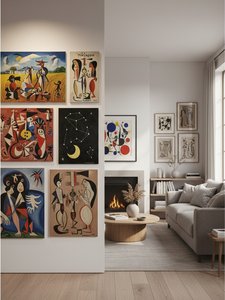
Joan Miró: Τα 25 Εμβληματικότερα Έργα Τέχνης για Κομψή Διακόσμηση
Ανακαλύψτε τα 25 εμβληματικότερα έργα τέχνης του Joan Miró! Εξερευνήστε τον σουρεαλισμό, την καταλανική τέχνη και τα ζωηρά χρώματα που καθόρισαν το στυλ του. Βρείτε πίνακες Miró υψηλής ποιότητας για κομψή διακόσμηση στο OriginalUniqueArt.com.
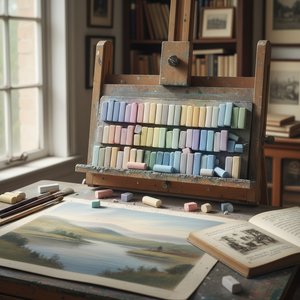
The Subtleties of Pastel: A Comprehensive Exploration of Technique, History & Emotional Resonance
Explore the captivating world of pastel art! Discover its rich history, Impressionistic masters like Degas, emotional power & unique techniques. Find museum-quality reproductions at OriginalUniqueArt.

James Giles: Capturing Scottish Life Through the Lens of British Realism
Explore the life & work of James Giles (1801-1870), a master of Scottish landscape painting and favored artist of Queen Victoria. Discover his atmospheric realism & royal commissions.

The Soft Power of Pastel: A Connoisseur's Guide to History, Technique, and the Art of Texture
Explore the ethereal beauty of pastel art. From Renaissance origins to Impressionist mastery, discover the history, technique, and velvety textures that define this luminous medium in our expert guide for art connoisseurs.

The Subdued Radiance of Pastel: Exploring Nuance & Emotion in Art
Explore the nuanced world of pastel art! Discover its history, techniques & emotional power with expert insights from OriginalUniqueArt.com. Find museum-quality reproductions and learn about collecting this delicate medium.