

 Αποστολή
 Κοινοποίηση
 Λεπτομέρειες
 Οδηγός

 Λήψη
Λήψη
 Παρόμοια αντικείμενα συλλογής
 Παρουσίαση
 Στατιστικά
Alou with Talons


 Περισσότερα λεπτομέρεια
Το έργο τέχνης που εμφανίζεται σε αυτή τη σελίδα προστατεύεται από τους νόμους περί πνευματικών δικαιωμάτων, γεγονός που σημαίνει ότι δεν μπορούμε νομικά να δημιουργήσουμε ή να πουλήσουμε μια ταυτόσημη αναπαραγωγή του. Αυτή η προστασία επιβάλλεται βάσει διεθνών συμφωνιών, όπως η Σύμβαση της Βέρνης καθώς και από τους εθνικούς νόμους, συμπεριλαμβανομένων αυτών που ορίζονται από το Νομοθεσία περί πνευματικών δικαιωμάτων των ΗΠΑ - Τίτλος 17. Όλα τα δικαιώματα κατοχυρωμένα. Απαγορεύεται η αναπαραγωγή χωρίς άδεια.
Ως μια σεβαστή και νόμιμη εναλλακτική, προσφέρουμε προσαρμοσμένα, χειροποίητα έργα τέχνης εμπνευσμένα από το πρωτότυπο. Οι έμπειροι και επαγγελματίες καλλιτέχνες μας μελετούν προσεκτικά το στυλ, τη διάθεση και την καλλιτεχνική ουσία του πρωτοτύπου, ώστε να δημιουργήσουν ένα νέο, μοναδικό έργο που προκαλεί την ίδια αίσθηση — παραμένοντας όμως μια πρωτότυπη δημιουργία από μόνη της.
Αυτή η μέθοδος συμμορφώνεται πλήρως με τους κανονισμούς περί πνευματικών δικαιωμάτων, καθώς δεν περιλαμβάνει την αντιγραφή ή την αναπαραγωγή του προστατευόμενου έργου. Αντίθετα, πρόκειται για μια δημιουργική ερμηνεία — ένα νέο έργο που επηρεάζεται από το πρωτότυπο, χωρίς όμως να είναι πανομοιότυπο με αυτό.
Χειροποίητη Αναπαραγωγή σε Έλαιο
Χειροποίητη ελαιογραφία σε καμβά στο δικό σας μέγεθος και πλαίσιο, κατά παραγγελία από τους καλλιτέχνες μας. ( Μετάβαση σε Εκτυπώσεις Μετάβαση σε Ψηφιακή Εικόνα)




































Επιλέξτε από τις προκαθορισμένες διαστάσεις μας που διατηρούν τις αρχικές αναλογίες του έργου τέχνης.

Πληκτρολογήστε το πλάτος και το ύψος που επιθυμείτε, ώστε να ταιριάζουν στο κάδሮ ή στον τοίχο σας. Ε เนื่องจาก πρόκειται για χειροποίητη ζωγραφική, σε περίπτωση διαστάσεων με διαφορετικό σχήμα, ο καλλιτέχνης μπορεί να ζωγραφίσει λίγο παραπάνω γύρω από το έργο ή να αφαιρέσει ένα μέρος — η επιλογή είναι δική σας. Σας στέλνουμε ένα ψηφιακό mockup για έγκριση πριν ξεκινήσει η δημιουργία του έργου. Η εικόνα που εμφανίζεται σε αυτή τη σελίδα δεν δείχνει το τελικό αποτέλεσμα — μόνο το mockup το αναδεικνύει.
Μετά την παραγγελία, η ομάδα του OriginalUniqueArt.com θα στείλει email στον πελάτη με οδηγίες και θα παρέχει μια προεπισκόπηση προσχεδίου
Παγκόσμια Αποστολή () σε 3-4 εβδομάδες αντί για τις συνήθεις 5 εβδομάδες. (24 Οκτώβριος). Χωρίς συμβιβασμούς στην ποιότητα.

Δωρεάν γρήγορη διεθνής αποστολή

Κάμβας από Λινό Υψηλής Ποιότητας

Πλήρης ασφάλιση μεταφοράς

Εγγύηση επιστροφής δασμών και φόρων εισαγωγής

Εγγύηση Απόλυτης Ομοιότητας Χρωμάτων

Πολιτική Επιστροφής 100 Ημερών (Μόνο σε περίπτωση ελαττωμάτων)

Εγγύηση επιστροφής 100% των χρημάτων

Έκπτωση για πολλαπλές παραγγελίες
 Η επιλογή με γυαλί είναι διαθέσιμη μόνο για μεγέθη κάτω από 110 εκ.

Alou with Talons
Τεχνική Αναπαραγωγής
Διαστάσεις Αναπαραγωγής
-


Συνολικό Κόστος
€ 264
The Genesis of a Biomorphic Masterpiece
Jean Arp’s “Alou with Talons,” created in 1942 during the tumultuous years of World War II, is more than just a sculpture; it's a distilled embodiment of the artist’s lifelong exploration of form, chance, and the inherent beauty of abstraction. Born Hans Peter Wilhelm Arp in Strasbourg, a city perpetually caught between French and German identities, his early life instilled within him a profound sense of displacement – a feeling that would become a defining characteristic of his artistic vision. This duality, coupled with his exposure to both European avant-garde movements like Dadaism and the burgeoning Surrealist currents, shaped an artist who consistently challenged conventional notions of representation and sought to capture essence rather than mimic reality.
The sculpture itself is strikingly simple in its composition: a roughly ovoid form, reminiscent of a stylized bird or perhaps a fetal shape, emerges from a dark, almost monolithic base. Yet, within this apparent minimalism lies a complex interplay of textures and surfaces. Arp employed bronze, a material he favored for its durability and ability to capture subtle nuances of light and shadow, lending the piece an inherent gravitas. The surface is deliberately left unpolished in many areas, revealing the marks of the casting process – deliberate imperfections that contribute to the sculpture’s raw, almost primal energy. The “talons,” sharp, angular protrusions extending from the ovoid, add a layer of tension and visual interest, hinting at both aggression and protection.
Dadaist Roots and the Embrace of Chance
Arp's artistic journey is inextricably linked to the Dada movement, which emerged in Zurich during World War I as a defiant reaction against the horrors of conflict and the perceived irrationality of bourgeois society. Dada artists rejected traditional aesthetic values, embracing chance, absurdity, and the fragmentation of form. Arp’s early work reflects this spirit, particularly his collages – works where he would tear pieces of paper from magazines and newspapers and arrange them on a canvas, allowing chance to dictate the final composition. “Alou with Talons” can be seen as an evolution of this approach, retaining the core principle of relinquishing control to the unpredictable forces of creation.
The title itself, "Alou," is derived from a Berber word meaning "bird." This connection to avian imagery reinforces the sculpture’s potential symbolism – perhaps representing vulnerability, freedom, or even the cyclical nature of life and death. The “talons,” however, introduce an element of ambiguity, suggesting a struggle for survival or a protective instinct. Arp famously described his artistic process as “cutting out” forms from reality, a metaphor that perfectly encapsulates the sculpture’s creation: he essentially ‘cut’ the form from the bronze itself, trusting in the inherent potential of the material to reveal its own shape.
A Bridge Between Movements and a Legacy of Abstraction
While firmly rooted in Dadaism, Arp's work gradually moved beyond the movement's initial shock tactics. He developed his own distinct style characterized by biomorphic forms, a fascination with geometry, and an exploration of space. “Alou with Talons” exemplifies this evolution – it’s a mature work that demonstrates Arp’s mastery of form and texture while retaining a sense of spontaneity and emotional depth. The sculpture's influence extends beyond the realm of sculpture; its principles have resonated throughout 20th-century art, informing movements such as Surrealism and Abstract Expressionism.
Today, “Alou with Talons” stands as a testament to Arp’s innovative spirit and his ability to distill complex ideas into simple, powerful forms. It invites viewers to contemplate the relationship between chance and control, form and space, and ultimately, the enduring beauty of abstraction. Reproductions of this piece offer a remarkable opportunity to bring this evocative work into any setting, adding a touch of intellectual depth and artistic sophistication.
Ερωτήσεις & Απαντήσεις
Πώς είναι δομημένη η χρωματική σύνθεση του "Alou with Talons" του Γιάννης Αρπ;
Στο "Alou with Talons", μια Serene αντίθεση συζευγνύεται με μια Strong Color Unity αρμονία.
Για ποιον χώρο προτείνεται το έργο "Alou with Talons" του Γιάννης Αρπ;
Ο προτεινόμενος χώρος για το έργο "Alou with Talons" του Γιάννης Αρπ είναι ένα Living Room. Η πρόταση αυτή μπορεί φυσικά να προσαρμοστεί στον δικό σας εσωτερικό χώρο.
Ποια εκτύπωση προτείνεται για το έργο "Alou with Talons" του Γιάννης Αρπ;
Μέγεθος Medium, οριζόντια/κάθετη διάταξη Portrait: αυτή είναι η προτεινόμενη ρύθμιση εκτύπωσης για το έργο "Alou with Talons" του Γιάννης Αρπ.
Βιογραφικό Καλλιτέχνη
Jean Arp: A Pioneer of Organic Abstraction
- Early Life and Artistic Education
- Dadaism and the Birth of Biomorphic Forms
- Surrealist Visions and Sculptural Explorations
- Recognition and Legacy
Early Life and Artistic Education
Hans Peter Wilhelm Arp, born September 16, 1886, in Strasbourg, Germany—now France—was a German-French sculptor, painter, and poet who stands as one of the foremost figures of European avant-garde art during the first half of the twentieth century. His heritage was marked by duality: his mother, Marguerite Arp Hagenbach, descended from Huguenot nobility fleeing persecution during the Reformation; his father, Wilhelm Arp, was a German civil servant. This geographical and cultural confluence profoundly shaped his formative years, instilling within him an awareness of conflicting identities—a characteristic that would permeate his entire artistic trajectory. He began his artistic training at the École des Arts et Métiers in Strasbourg in 1900, immersing himself in the burgeoning currents of Impressionism and Symbolism. Subsequently, he pursued studies at Weimarer Kunstschule in Germany, where he honed his skills alongside fellow artists grappling with Expressionist ideals. The encouragement of his uncle, Carl Arp—a landscape painter who championed artistic freedom—proved instrumental in nurturing his passion for art. A decisive move to Paris in 1908 propelled him into the epicenter of artistic innovation, enrolling at the Académie Julian and encountering luminaries like Pablo Picasso and Henri Matisse. This exposure to Parisian intellectual life solidified his commitment to experimentation and broadened his artistic horizons.Dadaism and the Birth of Biomorphic Forms
The eruption of World War I irrevocably altered Arp’s worldview, triggering a profound disillusionment with societal norms and rational thought. Driven by this conviction, he embraced Dada—a movement born from outrage against the senseless brutality of conflict—around 1915. Dada wasn't merely an aesthetic stance; it represented a radical rejection of artistic conventions, a defiant assertion of chaos as a response to disorder. Arp joined forces with fellow artists and intellectuals in neutral Switzerland—Hugo Ball, Tristan Tzara, Marcel Janco—who sought to dismantle established artistic hierarchies. He actively participated in Dada exhibitions alongside the Gruppe D, demonstrating his unwavering dedication to challenging accepted dogma. During this period, he pioneered “chance collages,” meticulously crafted by dropping paper fragments onto a surface and adhering them where they landed—a technique embodying Dada’s rejection of conscious control. Simultaneously, Arp embarked on an exploration of biomorphic forms—abstract shapes reminiscent of organic life—which would become the hallmark of his artistic style. These weren't simply decorative designs; they hinted at hidden energies, mirroring fundamental principles of existence and reflecting a subconscious connection to nature.Surrealist Visions and Sculptural Explorations
As Dada’s influence waned, Arp’s artistic path converged with Surrealism in 1925. He debuted at the Galerie Pierre in Paris—a pivotal moment marking his affiliation with this movement that delved into the realm of dreams and the subconscious. However, Arp didn't adopt Surrealism passively; he infused it with his distinctive sensibility. He transitioned decisively from relief sculptures to freestanding forms, refining his vision of organic abstraction through meticulous material experimentation. His “Human Concretion” series—characterized by smooth, rounded sculptures evoking ambiguous references to both human anatomy and natural contours—exemplified this stylistic evolution. Arp’s exploration of materials—marble, bronze, glass, and wood—further amplified the expressive potential of his art. Notably, he collaborated closely with Sophie Taeuber-Arp, forging a partnership that yielded groundbreaking artistic achievements.Recognition and Legacy
Jean Arp’s impact on twentieth-century art is undeniable. His pioneering role in organic abstraction—his embrace of chance operations—and his unwavering commitment to exploring the fundamental forces of life secured his place as a pivotal figure within the avant-garde. He received considerable acclaim during the postwar era, culminating in the Grand Prize for Sculpture at the Venice Biennale in 1954 and extensive retrospective exhibitions at the Museum of Modern Art in New York (1958) and the Musée National d’Art Moderne in Paris (1962). His monumental relief sculpture for Harvard University stands as a testament to his enduring legacy—a symbol of artistic innovation and intellectual curiosity that continues to inspire generations of artists. Arp's distinctive style—characterized by elegant simplicity and profound symbolism—remains influential, cementing his position as one of the most important sculptors of the 20th century.
Γιάννης Αρπ
1886 - 1966 , Γερμανία
Στοιχεία καλλιτέχνη
- Artistic Movement Or Style: Νεοδαριανισμός και Συρρεαλισμός
- Artists Who Influenced This Artist:
- Καρλ Άρπ
- Βασίλι Κάντινσκι
- Date Of Birth: 16 Σεπτεμβρίου 1886
- Full Name: Hans Peter Wilhelm Arp
- Nationality: Γερμανός
- Notable Artworks:
- Τρουσσέ ντε Ούνα Ντάδα
- Τα Κεντρικά Σκηνώματα του Ντάδα
- Place Of Birth: Στρασβούργο, Γερμανία
Σχετικά άρθρα
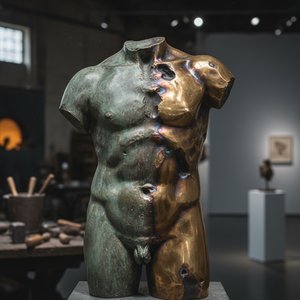
Η Διαχρονική Κληρονομιά της Χάλκινης Γλυπτικής: Ιστορία, Τεχνικές & Σύγχρονες Ερμηνείες
Εξερευνήστε την ιστορία και τις τεχνικές της χάλκινης γλυπτικής, από την αρχαιότητα έως τη σύγχρονη τέχνη. Συμβουλές για συλλέκτες και επενδυτές. Ανακαλύψτε την διαχρονική αξία του μπρούτζου.

The Enduring Form: Sculpture Across History, Technique & Emotional Resonance
Explore the rich history of sculpture with OriginalUniqueArt. Discover key techniques, influential artists & investment potential for discerning collectors. Expert insights into valuing and collecting timeless masterpieces.

Οι 10 Κορυφαίοι Χάλκινοι Αγάλματα που Άλλαξαν την Ιστορία της Τέχνης | OriginalUniqueArt.gr
Ανακαλύψτε τα 10 θρυλικά χάλκινα αγάλματα που διαμόρφωσαν την τέχνη! Από τον Rodin στον Michelangelo, εξερευνήστε ιστορίες, τεχνικές & αισθητική. Βρείτε αντίγραφα υψηλής ποιότητας για το σπίτι σας στην OriginalUniqueArt.com.

Οι 10 Κορυφαίοι Χάλκινοι Θρύλοι που Άλλαξαν την Τέχνη – Έμπνευση για το Σπίτι σας
Ανακαλύψτε τα 10 θρυλικά χάλκινα γλυπτά που επαναπροσδιόρισαν την τέχνη! Ιστορίες από Rodin, Degas & άλλους μεγάλους καλλιτέχνες. Βρείτε αναπαραγωγές υψηλής ποιότητας για να εμπνεύσετε το σπίτι σας. Εξερευνήστε τη συλλογή στο OriginalUniqueArt.com.

The Enduring Form: Exploring Themes & Techniques in Sculpture Across Historical Periods
Explore the rich history of sculpture from ancient masterpieces to contemporary innovations. Discover key techniques, influential artists & investment potential for discerning art collectors.
