 Προεπισκόπηση σε πραγματική κλίμακα
 Αποστολή
 Κοινοποίηση
 Λεπτομέρειες
 Οδηγός

 Λήψη
Λήψη
 Παρόμοια αντικείμενα συλλογής
 Ακτινογραφία
 Παρουσίαση
 Ερωτήσεις & Απαντήσεις
 Στατιστικά
In the Studio

 Περισσότερα
Το έργο τέχνης που εμφανίζεται σε αυτή τη σελίδα προστατεύεται από τους νόμους περί πνευματικών δικαιωμάτων, γεγονός που σημαίνει ότι δεν μπορούμε νομικά να δημιουργήσουμε ή να πουλήσουμε μια ταυτόσημη αναπαραγωγή του. Αυτή η προστασία επιβάλλεται βάσει διεθνών συμφωνιών, όπως η Σύμβαση της Βέρνης καθώς και από τους εθνικούς νόμους, συμπεριλαμβανομένων αυτών που ορίζονται από το Νομοθεσία περί πνευματικών δικαιωμάτων των ΗΠΑ - Τίτλος 17. Όλα τα δικαιώματα κατοχυρωμένα. Απαγορεύεται η αναπαραγωγή χωρίς άδεια.
Αυτή η μέθοδος συμμορφώνεται πλήρως με τους κανονισμούς περί πνευματικών δικαιωμάτων, καθώς δεν περιλαμβάνει την αντιγραφή ή την αναπαραγωγή του προστατευόμενου έργου. Αντίθετα, πρόκειται για μια δημιουργική ερμηνεία — ένα νέο έργο που επηρεάζεται από το πρωτότυπο, χωρίς όμως να είναι πανομοιότυπο με αυτό.
Giclée / Εκτυπώσεις Τέχνης
Εκτύπωση giclée ή σε καμβά ποιότητας μουσείου με γρήγορη παραγωγή και ευέλικτες επιλογές φινιρίσματος. ( Αγορά χειροποίητου πίνακα Μετάβαση σε Ψηφιακή Αποτέλεσμα)




P118B €10

P118H €10

P118W €10

P438Z €10

P508JH €12

P508YH €12

P805H €10

P805Z €10

P919BZ €10

P919G €10

P919XJ €10

P959ZH €10

P968JZ €12

W106C €8

W218G €10

W218JH €8

W218Y €10

W307PJ €10

W316G €10

W316PJ €8

W316Y €10

W398PJ €8

W4111J €10

W500HY €15

W500JH €15

W692G €12

W849H €8

W940BG €15

W953PJ €8




Επιλέξτε από τις προκαθορισμένες διαστάσεις μας που διατηρούν τις αρχικές αναλογίες του έργου τέχνης.

Εισάγετε το πλάτος και το ύψος που επιθυμείτε, ώστε να ταιριάζουν στο κάδሮ ή στον τοίχο σας. Μια εκτύπωση μπορεί μόνο να υποστεί κοψίμό και ποτέ να μην γίνει μεγαλύτερη από την αρχική εικόνα, επομένως η επιλογή μεγέθους με διαφορετικό σχήμα συνεπάγεται απώλεια ενός μέρους της εικόνας. Σας στέλνουμε ένα ψηφιακό mockup για έγκριση πριν προχωρήσουμε σε οποιαδήποτε εκτύπωση. Η εικόνα που εμφανίζεται σε αυτή τη σελίδα δεν δείχνει την πραγματική κοπή — μόνο το mockup την παρουσιάζει.
Παγκόσμια Αποστολή () σε 2 εβδομάδες αντί για τις συνήθεις 4/5 εβδομάδες. (11 Νοέμβριος)

Δωρεάν γρήγορη διεθνής αποστολή

Κάμβας από Λινό Υψηλής Ποιότητας

Πλήρης ασφάλιση μεταφοράς

Εγγύηση επιστροφής δασμών και φόρων εισαγωγής

Εγγύηση Απόλυτης Ομοιότητας Χρωμάτων

Πολιτική Επιστροφής 100 Ημερών (Μόνο σε περίπτωση ελαττωμάτων)

Εγγύηση επιστροφής 100% των χρημάτων

Προσφορά για πολλαπλές παραγγελίες
 Η επιλογή με γυαλί είναι διαθέσιμη μόνο για μεγέθη κάτω από 110 εκ.

In the Studio
Giclée / Εκτυπώσεις Τέχνης
Διαστάσεις Αναπαραγωγής
-


Τελική Τιμή
€ 73
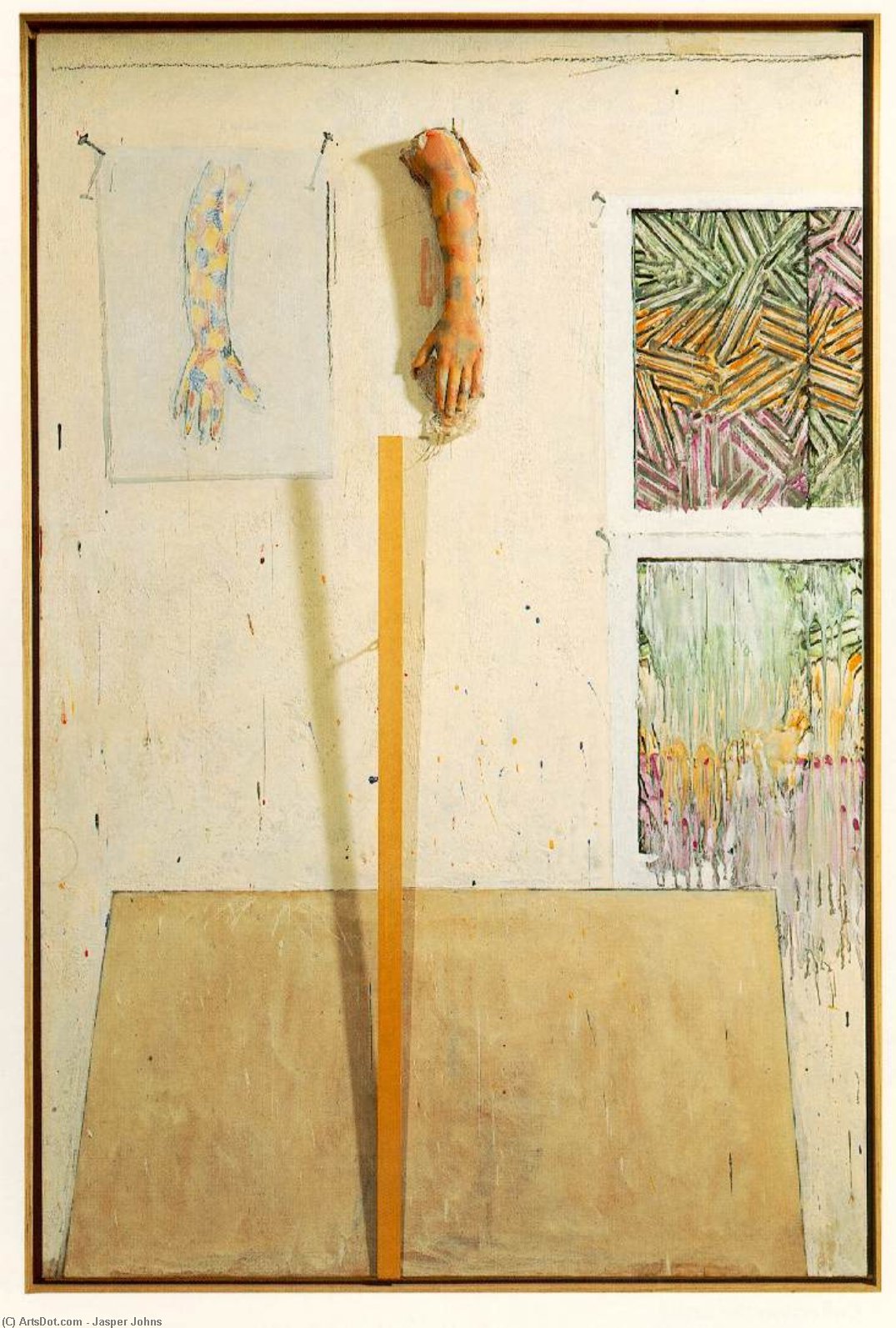
In the Studio – A Surreal Echo of Artistic Struggle
The artwork, “In the Studio” by Jasper Johns, stands as a haunting meditation on creativity and isolation—a piece that transcends mere visual representation to delve into profound psychological themes. Executed in oil paint on canvas, this enigmatic composition captures a moment frozen in time within an artist’s workspace, presenting a tableau of unsettling beauty and symbolic resonance. Its muted palette – predominantly beige and cream for the wall – immediately establishes a sense of age and vulnerability, mirroring perhaps the anxieties inherent in confronting one's own artistic process.Style & Technique: Surrealism Infused with Expressionism
Johns’ approach aligns seamlessly with both Surrealist and Expressionist sensibilities. The loose brushwork employed throughout—particularly on the textured wall—creates a palpable physicality that contrasts sharply with the ethereal quality of the abstract windows. This textural layering contributes to an overall feeling of unease, mirroring the artist's internal turmoil. The technique prioritizes capturing emotion rather than precise observation, evident in the bold colors splashed across the window panes – pinks, purples, and blues—which erupt from geometric grids with a deliberate disregard for conventional perspective. It’s a masterful blend that elevates the artwork beyond simple depiction into a powerful statement about artistic experience.Historical Context & Symbolism: Detachment and Fragmentation
Painted in the aftermath of World War II, “In the Studio” reflects the broader anxieties of the era—a period marked by disillusionment and questioning of established norms. Johns’ exploration of fragmented forms and symbolic imagery speaks to the psychological complexities of the time. The prominent severed arm hanging on the wall serves as a potent emblem of detachment – representing not only physical separation but also the artist's fractured self-perception. This unsettling visual motif underscores the difficulty of achieving wholeness in creative endeavor, mirroring Johns’ own personal struggles with identity and belonging.Emotional Impact & Artistic Legacy
“In the Studio” compels viewers to confront uncomfortable truths about artistic ambition and vulnerability. The artwork’s subdued colors and textured surface evoke a sense of melancholy and contemplation, inviting introspection on themes of loss and perseverance. Jasper Johns' masterful manipulation of color and form cemented his place as a pivotal figure in 20th-century art—a pioneer who dared to challenge conventions and explore the subconscious mind. Its enduring appeal lies in its ability to capture the essence of artistic struggle with unflinching honesty, ensuring that “In the Studio” continues to resonate with audiences today.Ερωτήσεις και Απαντήσεις
Πώς μπορώ να δω μια προεπισκόπηση της αναπαραγωγής του "In the Studio" του Jasper Johns;
Για να δείτε μια προεπισκόπηση μιας αναπαραγωγής του έργου "In the Studio" του Jasper Johns, ανοίξτε τη σελίδα Προεπισκόπηση του έργου.
Ποιο είναι το συναισθηματικό ύφος του "In the Studio" του Jasper Johns;
Το συναισθηματικό ύφος που καταγράφεται για το "In the Studio" του Jasper Johns είναι Melancholic. Περιγράφει με συνοπτικό τρόπο το συναίσθημα που εκφράζει το έργο.
Πού μπορώ να κατεβάσω το "In the Studio" του Jasper Johns;
Μπορείτε να κατεβάσετε την εικόνα του έργου "In the Studio" του Jasper Johns από τη σελίδα Λήψη ψηφιακού αρχείου: λήψη ψηφιακής εικόνας υψηλής ανάλυσης.
Σχετικά άρθρα

John Singer Sargent: Τα 25 Κορυφαία Έργα Τέχνης | OriginalUniqueArt.gr
Ανακαλύψτε τα 25 κορυφαία έργα τέχνης του John Singer Sargent! Πορτρέτα, ιμπρεσιονισμός & αριστουργήματα που αποπνέουν εκλεπτυσμό. Βρείτε αναπαραγωγές υψηλής ποιότητας για διακόσμηση τοίχου στο OriginalUniqueArt.gr.
The Soul of Color: A Journey into the Emotional Resonance of Lyrical Abstraction
Embark on a cultural journey through Lyrical Abstraction. Explore how masters like Kandinsky used color and motion to translate emotion into visual poetry. Discover the profound beauty of abstract expressionism and learn to curate emotional resonance in your own art collection.

Top 10 Έργα που καθόρισαν τον Αφηρημένο Εκφρασισμό | OriginalUniqueArt.gr
Ανακαλύψτε τα 10 εμβληματικά έργα που καθόρισαν τον Αφηρημένο Εκφρασισμό! Jackson Pollock, Mark Rothko & άλλοι. Ιστορίες, τεχνικές και έμπνευση για τη διακόσμηση του σπιτιού σας με πίνακες υψηλής ποιότητας. Εξερευνήστε την πλήρη συλλογή στο OriginalUniqueArt.com

John Constable: Τα 25 Κορυφαία Έργα Τέχνης | Ανακαλύψτε την Αγγλική Υπαίθριο στον Χώρο Σας
Ανακαλύψτε τα 25 κορυφαία έργα τέχνης του John Constable! Εξερευνήστε την αγγλική τοπιογραφία, τον ρομαντισμό και τη μαγεία της φύσης. Υψηλής ποιότητας αναπαραγωγές & ιδέες διακόσμησης στον χώρο σας. Ανακαλύψτε όλα τα αριστουργήματα στο OriginalUniqueArt.com
Lyrical Abstraction: The Emotional Power of Color and Form in Modern Art History
Explore the profound emotional depth of Lyrical Abstraction. Discover how masters like Raymond Parker used color and form to bridge Impressionism and Abstract Expressionism. Learn about this pivotal movement through our expert-led art history guide.


