

 Προεπισκόπηση
 Αποστολή
 Κοινοποίηση
 Λεπτομέρειες
 Οδηγός

 Λήψη
Λήψη
 Παρόμοια αντικείμενα συλλογής
 Ακτινογραφία
 Παρουσίαση
 Στατιστικά
Green Target


 Περισσότερα λεπτομέρεια
Το έργο τέχνης που εμφανίζεται σε αυτή τη σελίδα προστατεύεται από τους νόμους περί πνευματικών δικαιωμάτων, γεγονός που σημαίνει ότι δεν μπορούμε νομικά να δημιουργήσουμε ή να πουλήσουμε μια ταυτόσημη αναπαραγωγή του. Αυτή η προστασία επιβάλλεται βάσει διεθνών συμφωνιών, όπως η Σύμβαση της Βέρνης καθώς και από τους εθνικούς νόμους, συμπεριλαμβανομένων αυτών που ορίζονται από το Νομοθεσία περί πνευματικών δικαιωμάτων των ΗΠΑ - Τίτλος 17. Όλα τα δικαιώματα κατοχυρωμένα. Απαγορεύεται η αναπαραγωγή χωρίς άδεια.
Αυτή η μέθοδος συμμορφώνεται πλήρως με τους κανονισμούς περί πνευματικών δικαιωμάτων, καθώς δεν περιλαμβάνει την αντιγραφή ή την αναπαραγωγή του προστατευόμενου έργου. Αντίθετα, πρόκειται για μια δημιουργική ερμηνεία — ένα νέο έργο που επηρεάζεται από το πρωτότυπο, χωρίς όμως να είναι πανομοιότυπο με αυτό.
Giclée / Εκτυπώσεις Τέχνης
Εκτύπωση giclée ή σε καμβά ποιότητας μουσείου με γρήγορη παραγωγή και ευέλικτες επιλογές φινιρίσματος. ( Αγορά χειροποίητου πίνακα Μετάβαση σε Ψηφιακή Εικόνα)




P118B €10

P118H €10

P118W €10

P438Z €10

P508JH €12

P508YH €12

P805H €10

P805Z €10

P919BZ €10

P919G €10

P919XJ €10

P959ZH €10

P968JZ €12

W106C €8

W218G €10

W218JH €8

W218Y €10

W307PJ €10

W316G €10

W316PJ €8

W316Y €10

W398PJ €8

W4111J €10

W500HY €15

W500JH €15

W692G €12

W849H €8

W940BG €15

W953PJ €8




Επιλέξτε από τις προκαθορισμένες διαστάσεις μας που διατηρούν τις αρχικές αναλογίες του έργου τέχνης.

Πληκτρολογήστε το πλάτος και το ύψος που επιθυμείτε, ώστε να ταιριάζουν στο κάδሮ ή στον τοίχο σας. Μια εκτύπωση μπορεί μόνο να κοπεί και ποτέ να μην γίνει μεγαλύτερη από την εικόνα, επομένως ένα μέγεθος με διαφορετικό σχήμα συνεπάγεται απώλεια ενός μέρους της εικόνας. Σας στέλνουμε ένα ψηφιακό mockup για έγκριση πριν εκτυπώσουμε οτιδήποτε. Η εικόνα που εμφανίζεται σε αυτή τη σελίδα δεν δείχνει την πραγματική κοπή — μόνο το mockup την παρουσιάζει.
Παγκόσμια Αποστολή () σε 2 εβδομάδες αντί για τις συνήθεις 4/5 εβδομάδες. (20 Οκτώβριος)

Δωρεάν γρήγορη διεθνής αποστολή

Κάμβας από Λινό Υψηλής Ποιότητας

Πλήρης ασφάλιση μεταφοράς

Εγγύηση επιστροφής δασμών και φόρων εισαγωγής

Εγγύηση Απόλυτης Ομοιότητας Χρωμάτων

Πολιτική Επιστροφής 100 Ημερών (Μόνο σε περίπτωση ελαττωμάτων)

Εγγύηση επιστροφής 100% των χρημάτων

Έκπτωση για πολλαπλές παραγγελίες
 Η επιλογή με γυαλί είναι διαθέσιμη μόνο για μεγέθη κάτω από 110 εκ.

Green Target
Giclée / Εκτυπώσεις Τέχνης
Διαστάσεις Αναπαραγωγής
-


Συνολικό Κόστος
€ 70
Jasper Johns’ “Green Target”: A Dialogue Between Symbol and Abstraction
Jasper Johns' "Green Target," painted in 1955, stands as a pivotal work within the trajectory of American art, bridging the emotive intensity of Abstract Expressionism with the nascent energy of Pop Art. More than simply a depiction of a target, this piece represents a deliberate challenge to traditional notions of representation – a bold assertion that familiar imagery could be imbued with profound meaning through abstraction and a careful manipulation of visual language. The painting’s immediate impact lies in its striking simplicity: a large, dominant green circle punctuated by smaller circles arranged around it, creating a dynamic composition that draws the viewer into an ongoing conversation.
The work's genesis is inextricably linked to Johns’ exploration of everyday objects and symbols. Targets, initially associated with hunting and sport, quickly became a recurring motif in his oeuvre, representing themes of American identity, perception, and the relationship between reality and illusion. Johns wasn’t interested in replicating the visual appearance of a target; instead, he sought to capture its essence – its inherent ambiguity and its role as a marker within a larger context. The green hue itself is significant, evoking associations with nature, safety, and even military applications, subtly layering meaning onto the familiar image.
Abstract Expressionism and the Dawn of New Visual Language
“Green Target” exemplifies the core tenets of Abstract Expressionism, though it diverges from the movement’s more overtly emotional approach. Rather than prioritizing subjective experience, Johns utilizes recognizable imagery to explore the process of seeing itself. The painting embodies a shift towards non-representational art forms – a deliberate move away from direct imitation and toward an investigation of form, color, and spatial relationships. This aligns with the broader post-war artistic climate, where artists were questioning established conventions and seeking new ways to engage with the world around them.
Influenced by movements like Cubism and Surrealism, Johns’ work demonstrates a sophisticated understanding of visual techniques. The layering of encaustic on newspaper and cloth over canvas creates a textured surface that adds depth and complexity to the composition. The varying sizes and positions of the smaller circles contribute to a sense of dynamism and movement, preventing the image from feeling static or overly simplistic. It's a testament to Johns’ ability to synthesize disparate influences into a uniquely personal style.
Context, Symbolism, and the Artist’s Intent
Jasper Johns’ exploration of targets wasn’t merely aesthetic; it was deeply rooted in his own experiences and observations. Born in Augusta, Georgia, in 1930, Johns' early life was marked by a sense of displacement following his parents’ divorce – an experience that subtly informed his later explorations of identity and belonging within the context of American iconography. His time serving in the Korean War further shaped his perspective, exposing him to a world far removed from the burgeoning art scene he sought to embrace upon his return.
The deliberate ambiguity inherent in “Green Target” invites multiple interpretations. Is it a representation of a target itself? Or is it a symbol of something more elusive – perhaps the act of looking, the nature of perception, or even the anxieties and uncertainties of the post-war era? Leo Castelli, who championed Johns’ work early on, recognized the painting's significance, stating that it was “the experience of a lifetime to see all those flags and targets.” This sentiment underscores the profound impact that seemingly simple images could have on viewers.
A Captivating Reproduction for Your Collection
OriginalUniqueArt offers meticulously crafted hand-painted reproductions of Jasper Johns’ "Green Target," allowing you to bring this iconic artwork into your home or office. Our skilled artists replicate the painting's vibrant colors, textured surface, and dynamic composition with exceptional detail and accuracy. Whether you are an art enthusiast, a collector seeking to expand your collection, or an interior designer looking for a striking statement piece, our reproductions provide a beautiful and authentic representation of this seminal work.
Explore the full-color image and discover the possibilities of owning a genuine reproduction of “Green Target” – a timeless masterpiece that continues to challenge and inspire viewers today. Learn more about this artwork here.
Ερωτήσεις & Απαντήσεις
Ποια εκτύπωση προτείνεται για το έργο "Green Target" του Jasper Johns;
Προτείνεται εκτύπωση του έργου "Green Target" του Jasper Johns σε μέγεθος Μεγάλο μέγεθος με προσανατολισμό Τετράγωνο.
Πόσοι άνθρωποι επισκέπτονται το "Green Target";
Υπάρχει μια σελίδα Στατιστικά για το "Green Target". Καταγράφει τις μηνιαίες επισκέψεις του έργου και άλλων έργων του καλλιτέχνη, με ανάλυση ανά χώρα και γλώσσα.
Ποια χρήση και ποιος χώρος προτείνονται για το "Green Target" του Jasper Johns;
Η χρήση (Κεντρικό έργο) και ο χώρος (Καθιστικό) είναι οι δύο προτάσεις που καταγράφονται για το "Green Target" του Jasper Johns.
Βιογραφικό Καλλιτέχνη
A Life Painted in Symbols: The World of Jasper Johns
Jasper Johns emerged as a pivotal figure in the landscape of American art, bridging the emotive intensity of Abstract Expressionism with the burgeoning Pop Art movement that would soon redefine artistic boundaries. Born in Augusta, Georgia, in 1930, his early life was marked by a sense of displacement following his parents’ divorce, an experience that perhaps subtly informed his later explorations of identity and belonging within the context of American iconography. His formative years unfolded across various schools before he briefly attended the University of South Carolina, but it wasn't until his move to New York City in 1949 that Johns truly began to forge his artistic path. A period of service during the Korean War further shaped his perspective, exposing him to a world far removed from the burgeoning art scene he was eager to embrace upon his return. This early exposure to conflict and displacement undoubtedly contributed to the introspective nature of much of his later work, prompting him to examine themes of perception, representation, and the complexities of American identity.Breaking with Abstraction: The Dawn of a New Visual Language
The post-war American art world was dominated by Abstract Expressionism—a style characterized by spontaneous gesture and deeply personal emotional expression. While initially influenced by this movement, Johns felt compelled to move beyond its purely non-representational approach. He sought a new visual language, one that incorporated recognizable imagery not as illustrations but as vehicles for deeper contemplation. This wasn’t simply about *depicting* the world; it was about questioning how we perceive and interpret symbols within it. Key influences guided his departure: Marcel Duchamp's radical readymades challenged conventional notions of art-making, demonstrating that everyday objects could be elevated to the status of art through their presentation, while the emphasis on materiality in Abstract Expressionism informed Johns’ early techniques. However, it was the everyday objects and potent symbols of American culture—flags, targets, maps, numbers—that truly became central to his artistic vocabulary. He wasn't interested in escaping representation; he wanted to dissect it, layer it with meaning, and ultimately reveal its inherent ambiguities. This shift marked a significant departure from the subjective emotionalism of Abstract Expressionism, prioritizing intellectual engagement and symbolic exploration over raw feeling.Iconic Images: Flags, Targets, and the Language of Symbols
Johns’ breakthrough works arrived in the mid-1950s, instantly establishing him as a force to be reckoned with. His paintings of flags, most notably *Flag* (1954–55), were not patriotic declarations but rather investigations into the very nature of representation. Rendered in a semi-abstract style, using encaustic—pigment mixed with hot wax—and collage techniques, these flags weren’t simply images; they were textured surfaces laden with symbolic weight. The *Flag* series wasn't about celebrating American nationalism, but rather questioning the act of seeing and representing – what does it mean to depict something so familiar? Similarly, his target paintings, beginning in 1958, explored themes of chance, accuracy, and the relationship between perception and reality. These works, often executed with a deceptively simple palette, invited viewers to consider the inherent contradictions within seemingly straightforward images. *Map* (1961), with its fragmented and layered depictions of the United States, delved into themes of geography, identity, and the complexities of national representation. Works like *False Start* (1959) demonstrated his experimentation with language and visual codes, creating complex compositions that challenged viewers to decipher their underlying meanings. Even *White Flag* (1955), a seemingly simple monochrome canvas, prompted profound questions about absence, surrender, and the very act of seeing.Technique and Materials: Encaustic, Collage, and Beyond
Jasper Johns’ artistic process was characterized by meticulous attention to detail and an innovative use of materials. He frequently employed encaustic—a mixture of pigment and hot wax—to create textured surfaces and layered effects, lending a tactile quality to his paintings. Collage techniques were also integral to his work, incorporating elements such as newspaper clippings, maps, and found objects into his compositions. This layering of different media created visual complexity and invited multiple interpretations. Johns’ use of numbers, particularly in works like *Numbers 1-10* (1958), demonstrated a fascination with mathematical precision and the inherent order within seemingly chaotic arrangements. He also experimented with printmaking techniques, producing lithographs and screenprints that further explored his symbolic vocabulary. The deliberate choice of materials—encaustic, collage, found objects—was not merely decorative; it was a fundamental aspect of Johns’ artistic language, contributing to the layered meanings embedded in his work.Recognition and Enduring Impact
Throughout his illustrious career, Jasper Johns has received numerous accolades, including a Golden Lion at the Venice Biennale in 1988, the National Medal of Arts in 1990, and the Presidential Medal of Freedom in 2011. His works are held in major museum collections worldwide—the Museum of Modern Art, the Whitney Museum of American Art, the Metropolitan Museum of Art in New York, and Tate Modern in London, to name just a few. He has been the subject of countless exhibitions, cementing his position as one of the most important figures in 20th-century art. Beyond his paintings, Johns’ contributions extend to sculpture and printmaking, demonstrating his versatility and unwavering commitment to artistic innovation. His enduring legacy lies not only in the iconic images he created but also in the profound questions he raised about the nature of representation, symbolism, and the very essence of what it means to be an artist in a rapidly changing world. Johns continues to create art today, pushing the boundaries of his practice while retaining the core principles that have defined his career.
Jasper Johns
1930 - , Ηνωμένες Πολιτείες της Αμερικής
Στοιχεία καλλιτέχνη
- Artistic Movement Or Style: Pop & Abstr Expres
- Artists Or Movements Influenced By This Artist:
- Warhol
- Lichtenstein
- Artists Who Influenced This Artist: ['Duchamp']
- Date Of Birth: 15 Μαΐου 1930
- Full Name: Jasper Johns
- Nationality: Αμερικανός
- Notable Artworks:
- Flag
- Target
- Map
- Place Of Birth: Augusta, ΗΠΑ
Σχετικά άρθρα

Βασίλι Καντίνσκι: Τα 25 Κορυφαία Έργα Τέχνης για Διακόσμηση & Έμπνευση
Ανακαλύψτε τα 25 κορυφαία έργα τέχνης του Βασίλι Καντίνσκι! Εξερευνήστε την αφηρημένη τέχνη, τον εξπρεσιονισμό & τα εμβληματικά χρώματα του ιδιοφυούς ζωγράφου. Αναπαραγωγές υψηλής ποιότητας για διακόσμηση και έμπνευση στο OriginalUniqueArt.com.

Top 10 Έργα που καθόρισαν τον Αφηρημένο Εκφρασισμό | OriginalUniqueArt.gr
Ανακαλύψτε τα 10 εμβληματικά έργα που καθόρισαν τον Αφηρημένο Εκφρασισμό! Jackson Pollock, Mark Rothko & άλλοι. Ιστορίες, τεχνικές και έμπνευση για τη διακόσμηση του σπιτιού σας με πίνακες υψηλής ποιότητας. Εξερευνήστε την πλήρη συλλογή στο OriginalUniqueArt.com

John Singer Sargent: Τα 25 Κορυφαία Έργα Τέχνης | OriginalUniqueArt.gr
Ανακαλύψτε τα 25 κορυφαία έργα τέχνης του John Singer Sargent! Πορτρέτα, ιμπρεσιονισμός & αριστουργήματα που αποπνέουν εκλεπτυσμό. Βρείτε αναπαραγωγές υψηλής ποιότητας για διακόσμηση τοίχου στο OriginalUniqueArt.gr.

John Constable: Τα 25 Κορυφαία Έργα Τέχνης | Ανακαλύψτε την Αγγλική Υπαίθριο στον Χώρο Σας
Ανακαλύψτε τα 25 κορυφαία έργα τέχνης του John Constable! Εξερευνήστε την αγγλική τοπιογραφία, τον ρομαντισμό και τη μαγεία της φύσης. Υψηλής ποιότητας αναπαραγωγές & ιδέες διακόσμησης στον χώρο σας. Ανακαλύψτε όλα τα αριστουργήματα στο OriginalUniqueArt.com
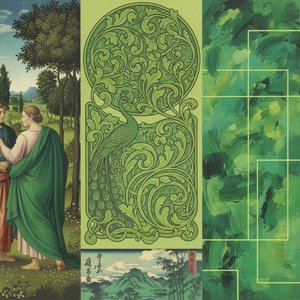
Verdant Visions: Exploring the Symbolism & Aesthetic Impact of Green in Art History
Explore the rich history & symbolism of green in art! Discover iconic paintings, techniques, and how to bring verdant harmony into your home with OriginalUniqueArt's expert guide.


