
 Προεπισκόπηση σε πραγματική κλίμακα
 Αποστολή
 Κοινοποίηση
 Λεπτομέρειες
 Οδηγός

 Λήψη
Λήψη
 Παρόμοια αντικείμενα συλλογής
 Ακτινογραφία
 Παρουσίαση
 Ερωτήσεις & Απαντήσεις
 Στατιστικά
Copernicus in the tower at Frombork, or Conversations with God

- 221.0 x 315.0 cm


 Περισσότερα
Giclée / Εκτυπώσεις Τέχνης
Εκτύπωση giclée ή σε καμβά ποιότητας μουσείου με γρήγορη παραγωγή και ευέλικτες επιλογές φινιρίσματος. ( Αγορά χειροποίητου πίνακα Μετάβαση σε Ψηφιακή Αποτέλεσμα)




P118B €10

P118H €10

P118W €10

P438Z €10

P508JH €12

P508YH €12

P805H €10

P805Z €10

P919BZ €10

P919G €10

P919XJ €10

P959ZH €10

P968JZ €12

W106C €8

W218G €10

W218JH €8

W218Y €10

W307PJ €10

W316G €10

W316PJ €8

W316Y €10

W398PJ €8

W4111J €10

W500HY €15

W500JH €15

W692G €12

W849H €8

W940BG €15

W953PJ €8




Επιλέξτε από τις προκαθορισμένες διαστάσεις μας που διατηρούν τις αρχικές αναλογίες του έργου τέχνης.

Εισάγετε το πλάτος και το ύψος που επιθυμείτε, ώστε να ταιριάζουν στο κάδሮ ή στον τοίχο σας. Μια εκτύπωση μπορεί μόνο να υποστεί κοψίμό και ποτέ να μην γίνει μεγαλύτερη από την αρχική εικόνα, επομένως η επιλογή μεγέθους με διαφορετικό σχήμα συνεπάγεται απώλεια ενός μέρους της εικόνας. Σας στέλνουμε ένα ψηφιακό mockup για έγκριση πριν προχωρήσουμε σε οποιαδήποτε εκτύπωση. Η εικόνα που εμφανίζεται σε αυτή τη σελίδα δεν δείχνει την πραγματική κοπή — μόνο το mockup την παρουσιάζει.
Παγκόσμια Αποστολή () σε 2 εβδομάδες αντί για τις συνήθεις 4/5 εβδομάδες. (8 Νοέμβριος)

Δωρεάν γρήγορη διεθνής αποστολή

Κάμβας από Λινό Υψηλής Ποιότητας

Πλήρης ασφάλιση μεταφοράς

Εγγύηση επιστροφής δασμών και φόρων εισαγωγής

Εγγύηση Απόλυτης Ομοιότητας Χρωμάτων

Πολιτική Επιστροφής 100 Ημερών (Μόνο σε περίπτωση ελαττωμάτων)

Εγγύηση επιστροφής 100% των χρημάτων

Προσφορά για πολλαπλές παραγγελίες
 Η επιλογή με γυαλί είναι διαθέσιμη μόνο για μεγέθη κάτω από 110 εκ.

Copernicus in the tower at Frombork, or Conversations with God
Giclée / Εκτυπώσεις Τέχνης
Διαστάσεις Αναπαραγωγής
-


Τελική Τιμή
€ 72
The Visionary Canvas: Jan Matejko’s “Copernicus in the Tower at Frombork”
Jan Matejko's "Copernicus in the Tower at Frombork, or Conversations with God" isn’t merely a painting; it’s a potent distillation of intellectual fervor and spiritual contemplation. Completed in 1873, this monumental oil on canvas transports us to the heart of Renaissance Poland, capturing a pivotal moment not just in astronomical history but also in the nation's burgeoning sense of self-awareness. The scene unfolds within the austere yet majestic confines of Frombork Cathedral’s tower, a location imbued with both religious significance and scientific curiosity – a perfect embodiment of the painting’s central theme: the harmonious intersection of faith and reason.

A Masterpiece of Romantic Drama
Matejko, a towering figure in 19th-century Polish art, masterfully employs the tenets of Romanticism to elevate this historical subject. The painting pulsates with dramatic lighting – a chiaroscuro effect that sculpts the figures and emphasizes the solemnity of the scene. The deep blues and purples of the night sky contrast sharply with the warm hues of Copernicus’s study, creating a visual tension that mirrors the intellectual struggle he embodies. Notice how Matejko uses loose brushstrokes to convey movement and emotion, imbuing the composition with a sense of dynamism rarely found in earlier historical paintings. The figures are rendered with an almost theatrical intensity, their gestures and expressions conveying profound thought and perhaps even a touch of awe.
The Anatomy of Inquiry: Symbolism and Detail
Beyond its dramatic impact, “Copernicus” is rich in symbolic detail. Nicolaus Copernicus himself, depicted as a man of quiet contemplation, sits at his desk surrounded by the tools of his trade – astronomical instruments, charts, and open books. The globe, prominently displayed, speaks to his revolutionary heliocentric model of the universe, challenging the established geocentric view. A partially visible diagram of the solar system hints at the complex calculations he undertook. The inclusion of a skullcap suggests the weight of religious tradition alongside the pursuit of scientific truth. Even the brick wall in the background serves as a grounding element, anchoring the scene within the physical reality of Frombork and reminding us of the earthly context of this extraordinary intellectual journey.
A Legacy Forged in Faith and Reason
The painting’s creation coincided with the 400th anniversary of Copernicus' birth, a moment of national pride for Poland. Matejko’s decision to portray Copernicus not as a triumphant discoverer but as a man engaged in dialogue with something greater than himself—perhaps even God—resonates deeply within Polish cultural identity. The painting became a symbol of the nation’s intellectual and spiritual heritage, embodying the spirit of inquiry and the courage to challenge established dogma. Its eventual acquisition by the Jagiellonian University – a bastion of learning since the 14th century – underscores its enduring significance as a testament to the power of human intellect and the pursuit of knowledge. Today, this magnificent work continues to inspire contemplation on the relationship between science, faith, and the boundless mysteries of the universe.
Ερωτήσεις και Απαντήσεις
Μπορώ να δω το έργο "Copernicus in the tower at Frombork, or Conversations with God" του Γιάννης Ματεγκόφσκι στον δικό μου τοίχο πριν από την αγορά;
Η σελίδα Προεπισκόπηση σε AR για το έργο "Copernicus in the tower at Frombork, or Conversations with God" του Γιάννης Ματεγκόφσκι χρησιμοποιεί την τεχνολογία augmented reality για να σας δείξει το έργο στον δικό σας χώρο, μέσω μιας συμβατής συσκευής.
Ποιος δημιούργησε το "Copernicus in the tower at Frombork, or Conversations with God" και σε ποια χρονιά;
Το έργο "Copernicus in the tower at Frombork, or Conversations with God" δημιουργήθηκε από τον/την Γιάννης Ματεγκόφσκι το 1872.
Πού μπορώ να βρω έναν οδηγό για το "Copernicus in the tower at Frombork, or Conversations with God";
Ο οδηγός για το "Copernicus in the tower at Frombork, or Conversations with God" είναι η σελίδα Οδηγός του έργου — ένα εκτυπώσιμο ενημερωτικό φυλλάδιο που παρουσιάζει το έργο μαζί με τη λεζάντα, την αναφορά στην πηγή και τον πίνακα ταυτότητας (καλλιτέχνης, ημερομηνίες, τεχνική, αρχικό μέγεθος, συλλογή).
Βιογραφικό Καλλιτέχνη
Early Life and Education
Jan Alojzy Matejko (also known as Jan Mateyko; June 24, 1838 – November 1, 1893) was a Polish painter, a leading 19th-century exponent of history painting, known for depicting nodal events from Polish history. His most famous works include large oil on canvas paintings like *Battle of Grunwald*, paintings of numerous other battles and court scenes, and a gallery of Polish kings. He is counted among the most celebrated Polish painters. Matejko was born in the Free City of Krakow, part of the Polish territory annexed by Austria during the Partitions of Poland. His father, Franciszek Ksawery Matejko (Czech: *František Xaver Matějka*) (born 1789 or January 13, 1793, died October 26, 1860), a Czech from the village of Roudnice, was a graduate of the Hradec Králové school who later became a tutor and music teacher. He first worked for the Wodzicki family in Kościelniki, Poland, then moved to Krakow, where he married Joanna Karolina Rossberg (Rozberg), a woman of Czech and German descent. Jan was the ninth child of eleven that his parents had. He grew up in a kamienica building on Floriańska Street. After the death of his mother in 1845, Jan and his siblings were cared for by his maternal aunt, Anna Zamojska. At a young age he witnessed the Kraków revolution of 1846 and the 1848 siege of Kraków by the Austrians, events which ended the existence of the Free City of Kraków. His two older brothers served in them under General Józef Bem; one died and the other was forced into exile. He attended St. Ann's High School, which he dropped out of in 1851 because of poor grades. Despite that and because of his exceptional talent he studied at the School of Fine Arts in Kraków from 1852 to 1858. His teachers included Wojciech Korneli Stattler and Władysław Łuszczkiewicz. He selected historical painting as his specialization, and finished his first major work, *Tsars Shuyski before Zygmunt III* (*Carowie Szujscy przed Zygmuntem III*) in 1853 (",Artistic Career
Matejko’s artistic journey began with an early fascination for art and a dedication to mastering his craft. His first significant commission, *Tsars Shuyski before Zygmunt III*, solidified his reputation as a painter of monumental historical scenes. From 1855 onwards, he actively participated in exhibitions at the Kraków Society of Friends of Fine Arts, showcasing his evolving style and expanding repertoire. He quickly gained recognition for his ability to convey emotion and drama through color and composition—characteristics that would define his oeuvre. Notable works include:- Rejtan (1866): A colossal oil on canvas depicting the pivotal moment of the Polish uprising against Russian rule in 1863. Matejko meticulously researched archival documents and utilized innovative techniques to capture the dynamism and intensity of the battlefield, establishing himself as a pioneer of Romanticism.
- Union of Lublin (1869): This monumental painting portrays the signing ceremony of the Union Agreement between Poland and Lithuania in 1386, symbolizing a crucial juncture in Polish history. Matejko’s masterful brushwork and dramatic lighting contribute to an unforgettable portrayal of regal splendor and political significance.
- Battle of Grunwald (1878): Considered Matejko’s magnum opus, *Battle of Grunwald* commemorates the decisive victory of Polish forces against Teutonic Knights in 1410—a triumph that secured Poland's independence. The painting is renowned for its breathtaking scale and meticulous detail, reflecting Matejko’s unwavering commitment to historical accuracy and artistic excellence.
Museological Contributions and Legacy
Matejko’s influence extended beyond his paintings; he played a pivotal role in shaping the intellectual landscape of Kraków and fostering artistic talent. He served as director at the Jan Matejko Academy of Fine Arts, nurturing generations of artists who would carry on his legacy. Among his students were prominent figures such as Maurycy Gottlieb, Jacek Malczewski, Józef Mehoffer, and Stanisław Wyspiański—artists whose works continue to resonate with audiences worldwide. His unwavering belief in the transformative power of art and his dedication to preserving Polish cultural heritage cemented his place as a national icon.References
Jan Matejko (wikipedia.org)
Γιάννης Ματεγκόφσκι
1838 - 1893 , Πολωνία
Γρήγορα στοιχεία
- Artistic Movement Or Style: Ρομαντισμός
- Artists Or Movements Influenced By This Artist: ['Maurycy Gottlieb']
- Artists Who Influenced This Artist:
- Wojciech Korneli Stattler
- Władysław Łuszczkiewicz
- Date Of Birth: 24 Ιουνίου 1838
- Date Of Death: 1 Νοεμβρίου 1893
- Full Name: Jan Alojzy Matejko
- Nationality: Πολωνός
- Notable Artworks:
- Μάχη του Γκρούνβαλντ
- Ένωση Λουμπλίν
- Place Of Birth: Κρακόβια, Πολωνία
Σχετικά άρθρα

The Enduring Legacy of Oil on Canvas: Technique, History & Aesthetic Impact
Explore the rich history & techniques of oil painting – from Renaissance masters to Impressionism. Discover pigments, layering methods, and why this timeless medium endures. Expert insights for artists & art enthusiasts.

Η Διαχρονική Κληρονομιά του Λαδιού στον Καμβά: Τεχνική, Ιστορία & Σύγχρονη Πρακτική
Εξερευνήστε την ιστορία και τις τεχνικές της λαδαιογραφίας. Οδηγός για υλικά, εργαλεία και σύγχρονες προσεγγίσεις. Μάθετε από ειδικούς και ανακαλύψτε τη διαχρονική τέχνη του λαδιού στον καμβά.

The Enduring Power of Painting: A Historical & Contemporary Exploration of Form and Emotion
Explore the rich history & enduring techniques of oil painting with OriginalUniqueArt. Discover masterpieces, learn about art collecting, and find authentic handmade reproductions crafted by skilled artists.

Oil on Canvas: A Historical & Technical Exploration of a Timeless Artistic Medium
Explore the rich history & enduring techniques of oil painting on canvas. Discover the science behind its longevity, conservation practices, and contemporary relevance. Expert insights for art enthusiasts.
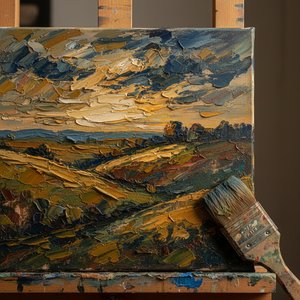
The Timeless Beauty of Oil on Canvas: A Masterclass in Texture, Impasto, and Artistic Mastery
Discover the profound allure of oil on canvas. Explore the mastery of impasto textures, the science of pigment longevity, and expert guides to selecting museum-quality reproductions that elevate your collection with timeless elegance and tactile depth.

