Symbolist Expressionism · 1895
The Skeleton Painter (Τζέιμς Ένσορ, 1895)
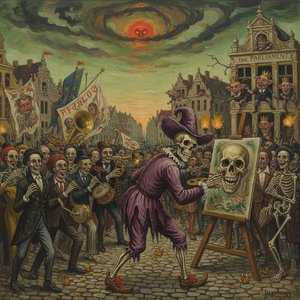
Ο/Η Τζέιμς Ένσορ (1860–1949) δημιούργησε το The Skeleton Painter. Χρονολογείται στο 1895. Ανήκει στο κίνημα Symbolist Expressionism. Είναι φτιαγμένο σε Acrylic On Canvas. Αποθηκεύεται στο Βασιλικό Μουσείο Τέχνης Ανβέρπης στο Άντερμπεργκ, Βέλγιο.
- 1895
- Acrylic On Canvas
- Βασιλικό Μουσείο Τέχνης Ανβέρπης, Άντερμπεργκ

 Προεπισκόπηση σε πραγματική κλίμακα

 Ελαιογραφικό Χειροποίητο Έργο
 Αποστολή
 Κοινοποίηση
 Πληροφοριακό φύλλο


 Λήψη
 Παρόμοια αντικείμενα συλλογής
 Ακτινογραφία
 Παρουσίαση
 Ερωτήσεις & Απαντήσεις

 Στατιστικά
The Skeleton Painter, εν συντομία
- Τίτλος
- The Skeleton Painter
- Καλλιτέχνης
- Τζέιμς Ένσορ (1860–1949)
- Γεννημένος/η το
- Οστένδη, Βέλγιο
- Ημερομηνία
- 1895
- Μέσο
- Acrylic On Canvas
- Πού εκτίθεται
- Βασιλικό Μουσείο Τέχνης Ανβέρπης, Άντερμπεργκ, Βέλγιο
- Κίνηση
- Symbolist Expressionism
- Θέμα
- skeleton, artist, death, masks, paintings, room
Τι απεικονίζει το The Skeleton Painter;
A Dance with Mortality: James Ensor’s “The Skeleton Painter”
James Ensor's "The Skeleton Painter," completed in 1895, is not merely a painting; it’s an unsettling plunge into the subconscious, a meticulously crafted tableau of morbidity and artistic obsession. The image, rendered with a distinctive and increasingly personal style, immediately confronts the viewer with a scene both bizarre and profoundly familiar – a room overflowing with art, dominated by a central figure: a skeleton diligently wielding a paintbrush. This isn’t a morbid spectacle intended to shock for shock's sake; rather, it’s a complex meditation on life, death, creativity, and the inescapable nature of artistic endeavor. Ensor, born in Ostend, Belgium, in 1860, cultivated an intensely individual vision, one deeply rooted in his upbringing amidst the vibrant chaos of a seaside resort town and fueled by a fascination with masks, disguise, and the theatricality of human experience.
The Artist’s Studio – A Realm of Shadows
The setting itself is crucial to understanding the painting's power. The room is crammed with canvases, each bearing witness to Ensor’s restless hand. A dining table, laden with objects—a clock, a partially consumed meal—suggests an interrupted life, a space where sustenance and creation intertwine. The presence of other skeletons, scattered amongst the chairs and leaning against walls, reinforces the pervasive theme of mortality. These aren't simply decorative elements; they are active participants in the scene, almost as if they’re observing or even contributing to the artist’s work. The inclusion of a cat, curled up near the left edge, adds an element of domesticity and perhaps a subtle critique – a creature of instinct and survival nestled within this world of intellectual pursuit.
Symbolism and Technique: A Palette of Unease
Ensor’s technique is immediately recognizable. He employed a thick, impasto application of paint, building up layers of color to create a tactile surface that seems almost sculptural. The palette is deliberately muted – browns, greys, ochres, and deep blues dominate—contributing to the painting's somber mood. The skeletal figure itself is rendered with remarkable detail, highlighting the fragility of bone while simultaneously conveying a sense of focused determination. Notice how Ensor uses strong diagonals – particularly in the arrangement of the chairs and paintings – to create a feeling of unease and instability. The use of color is not about beauty; it’s about evoking emotion, creating a visual atmosphere of melancholy and contemplation. His style evolved significantly throughout his career, moving away from academic influences towards a highly expressive, often unsettling, approach that anticipated the Symbolist movement.
Ensor's Exploration of Artistic Identity
"The Skeleton Painter" can be interpreted as an exploration of Ensor’s own artistic identity and his relationship to mortality. The skeleton artist represents not just death but also the inevitable end of creative endeavor, the fading of inspiration with time. It speaks to the paradox of the artist – someone who often seems detached from the everyday realities of life, yet is ultimately defined by their engagement with them. Ensor’s own struggles with artistic recognition and his rejection of traditional academic training likely fueled this preoccupation with themes of isolation and the ephemeral nature of existence. The painting isn't a celebration of art; it’s a questioning of its purpose and its ultimate significance in the face of oblivion. It invites us to consider what drives an artist to create, knowing that their work, like their own physical form, will eventually succumb to time.
OriginalUniqueArt offers exquisite, hand-painted reproductions of James Ensor’s “The Skeleton Painter,” allowing you to bring this haunting masterpiece into your home or office. Each reproduction is created with the same meticulous attention to detail and expressive technique as the original, capturing the painting's unique atmosphere and emotional depth. Explore our collection today and experience the unsettling beauty of Ensor’s vision.
Σε ποιο μουσείο βρίσκεται το The Skeleton Painter;
Βασιλικό Μουσείο Τέχνης Ανβέρπης
Άντερμπεργκ, Βέλγιο
Ένας Κήρυξ Φλαμανδικής Γοργότητας: Το Βασιλικό Μουσείο Τέχνης Ανβέρπης Στην καρδιά της Ανβέρμπης, ανάμεσα στην παλιά πόλη και την πνεύμα της σύγχρονης ζωής, βρίσκεται το Βασιλικό Μουσείο Τέχνης Ανβέρπης (KMSKA), ένα θησαυροφυλάκιο που δεν είναι απλώς μια συλλογή έργων τέχνης, αλλά μια ζωντανή μαρτυρία της φλαμανδικής ψυχής. Το μουσείο, εγκαταλεγμένο σε ένα εντυπωσιακό νεοκλασικό κτίριο που στέκει με υπερηφάνεια στην πλατεία Λέοπολντ, είναι μια εμπειρία που συνδυάζει την ιστορία, την τέχνη και την αρχιτεκτονική σε μια μοναδική αρμονία. Η ίδρυση του μουσείου το 1810 ήταν αποτέλεσμα μιας φιλόδοξης ιδέας: να συγκεντρωθεί και να προστατευτεί η πλούσια καλλιτεχνική κληρονομιά της Ανβέρμπης, μια πόλη που για αιώνες υπήρξε σημαντικό κέντρο εμπορίου και πολιτισμού.


Εικόνες υψηλής ανάλυσης του The Skeleton Painter

Δημόσιος τομέας: ο καλλιτέχνης απεβίωσε το 1949.
Άλλες διαστάσεις, καρέττες και αναφορά →Τζέιμς Ένσορ, The Skeleton Painter (1895), Βασιλικό Μουσείο Τέχνης Ανβέρπης. Δημόσιο περιουσιακό δικαίωμα
Ερωτήσεις για το The Skeleton Painter, απαντημένες
Πού μπορώ να δω το πρωτότυπο "The Skeleton Painter" του Τζέιμς Ένσορ;
Το πρωτότυπο έργο "The Skeleton Painter" εκτίθεται στο Βασιλικό Μουσείο Τέχνης Ανβέρπης, Άντερμπεργκ, Βέλγιο.
Σε ποια χρονιά δημιουργήθηκε το "The Skeleton Painter" του Τζέιμς Ένσορ;
Το έργο "The Skeleton Painter" χρονολογείται από το 1895. Η ημερομηνία αυτό το έργο το τοποθετεί μέσα στην καριέρα του/της Τζέιμς Ένσορ και την εποχή του/της.
Με ποιο υλικό έχει εκτελεστεί το έργο "The Skeleton Painter" του Τζέιμς Ένσορ;
Η τεχνική του έργου "The Skeleton Painter" του Τζέιμς Ένσορ είναι το Acrylic On Canvas. Οι αναπαραγωγές στοχεύουν στην πιστή απόδοση της εμφάνισης αυτής της τεχνικής.
Τι απεικονίζει το "The Skeleton Painter" του Τζέιμς Ένσορ;
Τα θέματα που περιλαμβάνονται στο "The Skeleton Painter" του Τζέιμς Ένσορ περιλαμβάνουν το/τα skeleton, artist, death, masks, paintings, room, cat, decay. Μαζί, συνοψίζουν το περιεχόμενο του έργου τέχνης.
Το έργο "The Skeleton Painter" ανήκει στο δημόσιο περιουσιακό αγαθό;
Όσον αφορά τα πνευματικά δικαιώματα, το "The Skeleton Painter" ανήκει στο δημόσιο κτήμα - τα δικαιώματα αυτορության έχουν λήξει.
Ποιον καλλιτέχνη αποδίδεται το "The Skeleton Painter";
Το έργο "The Skeleton Painter" αποδίδεται στον/στην Τζέιμς Ένσορ.
Σε ποιο καλλιτεχνικό ρεύμα ανήκει το "The Skeleton Painter";
Το έργο "The Skeleton Painter" ανήκει στο καλλιτεχνικό ρεύμα Symbolist Expressionism, το οποίο ορίζει την καλλιτεχνική παράδοση στην οποία εντάσσεται.
Σε ποια περίοδο της καριέρας του/της Τζέιμς Ένσορ ανήκει το "The Skeleton Painter";
Το έργο "The Skeleton Painter" ανήκει στην περίοδο Late Period της καριέρας του Τζέιμς Ένσορ. Αυτή η ταξινόμηση συνδέει το έργο με την εξέλιξη του καλλιτέχνη.
Σε τι ηλικία δημιούργησε ο/η Τζέιμς Ένσορ το "The Skeleton Painter";
Όταν δημιουργήθηκε το "The Skeleton Painter" το 1895, ο/η Τζέιμς Ένσορ - γεννημένος/η το 1860 - ήταν μόλις 35 ετών.
Σχετικά με τον καλλιτέχνη, Τζέιμς Ένσορ

1860–1949, Βέλγιο
Τζέιμς Ένσορ
A Life Immersed in Masks and Shadows: The World of James Ensor James Sidney Edouard Ensor, γεννημένος στην Οστράνδος της Βελγίου το 1860, υπήρξε μια πολυσχιδής προσωπικότητα – γιος Άγγλου πατέρα και Βελγικής μητέρας. Αυτή η διττή καταγωγή πιθανόν να σηματοδότησε την αιώνια ενασχόλησή του με τις μάσκες και τα παρακείμενα, θέματα που θα κυριαρχούσαν στην αμφιλεγόμενη αλλά συναρπαστική καλλιτεχνική του πορεία. Αναγεννώμενος σε μια πολυσύχναστη παραθαλάσσια πόλη, ο νεαρός Τζέημς επηρεάστηκε βαθιά από την ατμόσφαιρα των καρναβαλιών και των περίεργων αντικειμένων που έμοιαζε να διαθέτει το σπίτι του. Οι γονείς του λειτουργούσαν ένα κατάστημα αναμνηστικών, γεμάτο από κοχύλια, μάσκες καρναβάλι και ασυνήθιστα είδη – έναν ουσιαστικό θησαυρό που πυροδότησε τη φαντασία του και παρείχε μια πλούσια οπτική γκάμα για το μέλλον του.
Εργασίες του Τζέιμς Ένσορ
 Είσοδος του Χριστού στις Βρυξέλλες1888
 Αυτοπροσωπογραφία με μάσκες1899
 Τα Λουτρά στο Όστεντ
 Αλλοίπτερα που Ζεσταίνονται1889

Μελέτες γύρω από το The Skeleton Painter
 Beauty in Mortality: Capturing the Soul of the Skull through the Luminous Lens of Impressionist ArtExplore the profound beauty of mortality through Impressionism. Discover how masters like Monet and Renoir transformed the Memento Mori tra…
 Η Ψυχολογία της Ελαφρότητας: Πώς η Χιουμοριστική Τέχνη Απελευθερώνει την Ευημερία και τη ΣύνδεσηΑνακαλύψτε πώς η χιουμοριστική τέχνη ενισχύει την ευημερία και τη σύνδεση. Εξερευνήστε την ιστορία, την ψυχολογία και τα οφέλη της τέχνης γ…
 James Ensor's Grotesque Visions: Social Commentary & Artistic InnovationExplore the unsettling yet captivating world of James Ensor, a pioneer of Expressionism. Discover his satirical masterpieces, symbolic imag…