

 Προεπισκόπηση
 Αποστολή
 Κοινοποίηση
 Λεπτομέρειες
 Οδηγός

 Λήψη
Λήψη
 Παρόμοια αντικείμενα συλλογής
 Ακτινογραφία
 Παρουσίαση
 Στατιστικά
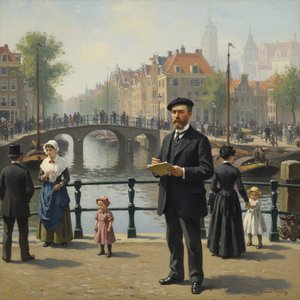
Housemaid with Pram


 Περισσότερα λεπτομέρεια
Χειροποίητη Αναπαραγωγή σε Έλαιο
Χειροποίητη ελαιογραφία σε καμβά στο δικό σας μέγεθος και πλαίσιο, κατά παραγγελία από τους καλλιτέχνες μας. ( Μετάβαση σε Εκτυπώσεις Μετάβαση σε Ψηφιακή Εικόνα)




P118B $10

P118H $10

P118W $10

P438Z $10

P508JH $12

P508YH $12

P805H $10

P805Z $10

P919BZ $10

P919G $10

P919XJ $10

P959ZH $10

P968JZ $12

W106C $8

W218G $10

W218JH $8

W218Y $10

W307PJ $10

W316G $10

W316PJ $8

W316Y $10

W398PJ $8

W4111J $10

W500HY $15

W500JH $15

W692G $12

W849H $8

W940BG $15

W953PJ $8




Επιλέξτε από τις προκαθορισμένες διαστάσεις μας που διατηρούν τις αρχικές αναλογίες του έργου τέχνης.

Μπορείτε να ορίσετε δικές σας διαστάσεις ώστε το έργο να ταιριάζει σε ένα συγκεκριμένο πλαίσιο ή χώρο. Εάν το επιλεγμένο μέγεθος δεν συμπίπτει με τις αναλογίες της αρχικής εικόνας, θα περικοψούμε το έργο ή θα επεκτείνουμε τη ζωγραφιά με πρόσθετα χειρόγραφα στοιχεία. Ένα ψηφιακό προσχέδιο θα σας αποσταλεί για έγκριση πριν την έναρξη της παραγωγής.
Παρακαλούμε σημειώστε ότι η προεπισκόπηση στην οθόνη δεν αντικατοπτρίζει την πραγματική περικοπή ή επέκταση. Μόνο το προσχέδιο θα δείξει με ακρίβεια την τελική σύνθεση.
Παρόλο που είναι διαθέσιμα προσαρμοσμένα μεγέθη, συνιστούμε να επιλέξετε μια διάσταση από τη λίστα των προκαθορισμένων μεγεθών για τη διατήρηση των αρχικών αναλογιών.
Μετά την παραγγελία, η ομάδα του OriginalUniqueArt.com θα στείλει email στον πελάτη με οδηγίες και θα παρέχει μια προεπισκόπηση προσχεδίου
Παγκόσμια Αποστολή () σε 3-4 εβδομάδες αντί για τις συνήθεις 5 εβδομάδες. (25 Σεπτέμβριος). Χωρίς συμβιβασμούς στην ποιότητα.

Δωρεάν γρήγορη διεθνής αποστολή

Κάμβας από Λινό Υψηλής Ποιότητας

Πλήρης ασφάλιση μεταφοράς

Εγγύηση επιστροφής δασμών και φόρων εισαγωγής

Εγγύηση Απόλυτης Ομοιότητας Χρωμάτων

Πολιτική Επιστροφής 100 Ημερών (Μόνο σε περίπτωση ελαττωμάτων)

Εγγύηση επιστροφής 100% των χρημάτων

Έκπτωση για πολλαπλές παραγγελίες
 Η επιλογή με γυαλί είναι διαθέσιμη μόνο για μεγέθη κάτω από 110 εκ.

Housemaid with Pram
Τεχνική Αναπαραγωγής
Διαστάσεις Αναπαραγωγής
-


Συνολικό Κόστος
$ 300
A Moment Frozen in Time: Isaac Israëls’ “Housemaid with Pram”
Isaac Lazarus Israëls' "Housemaid with Pram," painted in 1875, isn’t merely a snapshot of urban life; it’s a poignant meditation on the quiet dignity and understated beauty found within the everyday. This watercolor, now housed in the Rijksmuseum in Amsterdam, captures a fleeting moment along a bustling city street – a woman pushing a baby carriage, her face etched with a subtle blend of weariness and contentment. Israëls, a key figure in the Dutch Impressionist movement, masterfully utilizes loose brushstrokes and delicate washes to evoke not just a visual representation but an atmosphere, a feeling of the scene’s transient nature.
Israëls' artistic journey was deeply intertwined with his family history. The son of Jozef Israëls, a renowned Hague School painter known for his realistic depictions of working-class life, Isaac initially followed in his father’s footsteps, exploring similar themes of labor and social realism. However, he quickly developed his own distinct style, moving away from the stark formality of his father's work towards a more impressionistic approach – prioritizing capturing light, color, and mood over precise detail. This shift is powerfully evident in “Housemaid with Pram,” where the focus isn’t on the woman’s physical appearance but rather on her presence within the urban landscape.
The Language of Light and Color
Israëls' technique is characterized by a remarkable sensitivity to light. He employs broken color, layering translucent washes of pigment to create an ethereal quality, as if the scene is bathed in a soft, diffused glow. The muted palette – predominantly blues, greens, and browns – reflects the overcast Amsterdam sky, lending the painting a melancholic yet peaceful atmosphere. Notice how he uses highlights to draw attention to the woman’s face and the details of the pram, while simultaneously blurring the background figures into an indistinct mass. This selective focus directs the viewer's eye and emphasizes the central subject.
The composition itself is carefully constructed. The woman occupies a slightly off-center position, creating a sense of dynamism and inviting the viewer to step into the scene. The placement of the clock tower in the background provides a subtle temporal reference, anchoring the image within a specific moment in time. Israëls’ use of atmospheric perspective – making distant objects appear paler and less distinct – further enhances the illusion of depth and contributes to the painting's overall sense of realism.
Symbolism and Social Commentary
Beyond its aesthetic qualities, “Housemaid with Pram” carries a subtle layer of social commentary. The woman’s posture suggests both responsibility and exhaustion—a common reality for working-class women in 19th-century Amsterdam. The pram itself symbolizes motherhood and the cycle of life, while the bustling street represents the relentless pace of urban existence. Israëls doesn't offer a judgment or moralizing statement; instead, he presents a simple, honest portrayal of a woman’s daily life, inviting viewers to contemplate her experiences and consider the social conditions that shaped them.
The inclusion of other figures in the background – a man standing on the left and another further back on the right – adds to the painting's narrative complexity. They represent the broader context of urban society, highlighting the woman’s place within it. Their presence suggests a community, albeit one largely unseen by the central figure.
A Timeless Portrait of Human Experience
“Housemaid with Pram” is more than just a painting; it's a window into the past—a poignant and evocative depiction of everyday life in 19th-century Amsterdam. Israëls’ masterful use of light, color, and composition creates an image that resonates deeply with viewers today, reminding us of the shared human experiences of labor, motherhood, and the quiet beauty found within the ordinary moments of our lives. Reproductions of this work offer a chance to bring this evocative scene into any space, fostering contemplation and appreciation for Israëls’ enduring legacy.
Βιογραφικό Καλλιτέχνη
Isaac Israëls: A Pioneer of Amsterdam Impressionism
- Early Life and Artistic Heritage
- The Amsterdam Impressionist Movement
- Travels and Artistic Evolution
- Notable Works and Recognition
- Legacy and Influence
Early Life and Artistic Heritage
Isaac Lazarus Israëls was born in Amsterdam, Netherlands, on February 3rd, 1865, into a family deeply rooted in the Dutch art world. His father, Jozef Israëls—a towering figure of the Hague School—was renowned for his monumental depictions of maritime life and peasant scenes, establishing a tradition of realism infused with lyrical beauty. Aleida Schaap, Isaac’s mother, was herself an accomplished artist and instilled within him a profound appreciation for visual expression from childhood. This familial artistic lineage profoundly shaped Isaac's formative years, fostering an innate talent that would blossom into extraordinary creativity. From the tender age of sixteen, he demonstrated remarkable skill when he secured a sale of “Bugle Practice” to Hendrik Willem Mesdag—a visionary collector and artist—even before its completion, showcasing his prodigious ability to capture fleeting moments and convey emotion with masterful technique. Two portraits created in the same year of his grandmother and family friend Nannette Enthoven attest to this early aptitude for portraying human subjects with sensitivity and precision.The Amsterdam Impressionist Movement
Israëls’ artistic trajectory was decisively influenced by the intellectual currents swirling around him, particularly the “Tachtigers”—a group of writers and artists who championed stylistic innovation as a reflection of content. Rejecting academic conventions, they advocated for portraying subjects with intense emotion and capturing the immediacy of experience—principles that resonated deeply within Israëls’ artistic sensibilities. He honed his craft at the Royal Academy of Art in The Hague alongside George Hendrik Breitner, forging a lifelong friendship that would propel them both toward groundbreaking achievements. Together, they embraced the ethos of the Tachtigers, rejecting traditional artistic formulas and striving to convey psychological depth through vibrant color palettes and loose brushwork. Israëls’ fascination with capturing the dynamism of urban life—particularly the bustling streets and cafes of Amsterdam—became a defining characteristic of his oeuvre.Travels and Artistic Evolution
Driven by an insatiable curiosity and artistic ambition, Israëls embarked on extensive journeys throughout Europe and Asia in 1904, establishing a studio in Paris. He immersed himself in the city’s vibrant cultural landscape, studying at Paquin and Drecoll fashion houses—a pursuit that honed his observational skills and broadened his understanding of visual aesthetics. The outbreak of World War I prompted him to return to Holland, where he focused primarily on portraiture—capturing the faces of prominent figures from Dutch society with unwavering dedication. However, Israëls’ artistic explorations didn't cease there; he undertook expeditions to India and the Dutch East Indies, immersing himself in exotic landscapes and cultures. These experiences infused his work with new perspectives and techniques, enriching his artistic vocabulary and cementing his reputation as a cosmopolitan artist.Notable Works and Recognition
Israëls’ legacy rests upon a substantial body of paintings celebrated for their luminous colors, expressive brushstrokes, and astute portrayals of everyday life. Among his most iconic creations are “Transport of Colonial Soldiers”—a monumental canvas depicting the arduous journey of African soldiers—and “The Coffee Sorters”—a captivating depiction of labor amidst tropical foliage. His portrait of Mata Hari—a controversial figure shrouded in intrigue—became a symbol of artistic daring and psychological insight. Israëls’ work garnered international acclaim, culminating in a Gold Medal at the 1928 Olympic Games for his painting "Red Rider"—a testament to his artistic prowess and enduring influence.Legacy and Influence
Isaac Lazarus Israëls left an indelible mark on Dutch art history. His paintings—now housed in prestigious museums worldwide, including the Van Gogh Museum and Mauritshuis—continue to inspire artists and captivate audiences alike. He championed Impressionism’s expressive power, elevating it beyond mere visual representation to convey profound emotional resonance. Israëls' unwavering commitment to capturing the spirit of his time solidified his place as one of the most significant Dutch painters of the early 20th century—a true innovator who reshaped artistic conventions and bequeathed a timeless vision of beauty and human experience.
Ισακ Ισράελς
1865 - 1934 , Ολλανδία
Στοιχεία καλλιτέχνη
- Artistic Movement Or Style: Ιμπρεσιανισμός
- Artists Or Movements Influenced By This Artist: ['Εμίλ Ζολά']
- Artists Who Influenced This Artist:
- Ζοζεφ Ισράελς
- Γιώργος Εντρμπέρ
- Date Of Birth: 3 Φεβρουαρίου 1865
- Date Of Death: 7 Οκτωβρίου 1934
- Full Name: Isaac Lazarus Israëls
- Nationality: Ολλανδός
- Notable Artworks:
- Μεταφορά Στρατιωτών Κόλωνος
- Οι Διαφοροστρατεύτες Καφέ
- Πορτρέτο της Ματά Χάρι
- Place Of Birth: Άμστερνταμ, Ολλανδία
Σχετικά άρθρα
Isaac Lazarus Israëls: A Chronicle of Dutch Life & the Evolution of Impressionistic Realism
Explore the captivating world of Isaac Lazarus Israëls (1865-1934), a leading Dutch Amsterdam Impressionist. Discover his city scenes, portraits & travels through Asia – a chronicle of Dutch life and artistic evolution.

Ephemeral Visions: Exploring the Artistic Legacy & Nuances of Watercolor Painting
Explore the captivating world of watercolor painting! Discover its rich history, essential techniques, influential artists & collecting tips from art experts. A comprehensive guide for enthusiasts.

Οι 10 Κορυφαίοι Θρύλοι της Υδατοχρωματικής Τέχνης που Άλλαξαν την Ιστορία | OriginalUniqueArt
Ανακαλύψτε τα 10 αριστουργήματα υδατοχρωμάτων που επαναπροσδιόρισαν την τέχνη! Ιστορίες από Turner, Monet και Cézanne. Βρείτε αναπαραγωγές υψηλής ποιότητας & έμπνευση διακόσμησης στο OriginalUniqueArt.com.

Ephemeral Visions: Exploring the History & Emotional Resonance of Watercolor Painting
Explore the captivating history of watercolor painting, from ancient techniques to modern masters like Kandinsky & Blake. Discover essential artists, collecting tips & the emotional power of this luminous medium. Expert insights for art enthusiasts.

Ephemeral Visions: Exploring the Artistic Legacy & Contemporary Practice of Watercolor Painting
Explore the captivating world of watercolor painting! Discover its rich history, essential techniques, influential artists & collecting tips. A comprehensive guide for art enthusiasts from OriginalUniqueArt.