

 Δείτε σε πραγματικό χώρο
 Αποστολή
 Κοινοποίηση
 Λεπτομέρειες

 Λήψη
Λήψη
 Παρόμοια αντικείμενα συλλογής
 Ακτινογραφία
 Παρουσίαση
Samovar
 Oil On Canvas
- WallArt
- Post-Impressionism
 1905
1905- Modern
 80.0 x 80.0 cm
 Διαβάστε περισσότερα
Giclée / Εκτυπώσεις Τέχνης
Εκτύπωση giclée ή σε καμβά ποιότητας μουσείου με γρήγορη παραγωγή και ευέλικτες επιλογές φινιρίσματος. ( Αγορά χειροποίητου πίνακα Αγορά ψηφιακής εικόνας)




P118B $10

P118H $10

P118W $10

P438Z $10

P508JH $12

P508YH $12

P805H $10

P805Z $10

P919BZ $10

P919G $10

P919XJ $10

P959ZH $10

P968JZ $12

W106C $8

W218G $10

W218JH $8

W218Y $10

W307PJ $10

W316G $10

W316PJ $8

W316Y $10

W398PJ $8

W4111J $10

W500HY $15

W500JH $15

W692G $12

W849H $8

W940BG $15

W953PJ $8




Επιλέξτε από τις προκαθορισμένες διαστάσεις μας που διατηρούν τις αρχικές αναλογίες του έργου τέχνης.

Μπορείτε να εισαγάγετε δικές σας διαστάσεις ώστε να ταιριάξουν με ένα συγκεκριμένο πλαίσιο ή χώρο. Εάν το επιλεγμένο μέγεθος δεν συμπίπτει με τις αναλογίες της πρωτότυπης εικόνας, θα κόψουμε το έργο τέχνης ή θα επεκτείνουμε την εικόνα με καθρεφτισμένη ή μονόχρωμη ατέλεια. Θα σας αποσταλεί ένα ψηφιακό mockup για έγκρισή σας πριν από την έναρξη της παραγωγής.
Παρακαλούμε σημειώστε ότι η προεπισκόπηση στην οθόνη δεν αντικατοπτρίζει την πραγματική κοπή ή επέκταση. Μόνο το mockup θα δείξει με ακρίβεια την τελική σύνθεση.
Παρόλο που είναι διαθέσιμες προσαρμοσμένες διαστάσεις, προτείνουμε την επιλογή μιας διάστασης από τη προκαθορισμένη λίστα για τη διατήρηση των αρχικών αναλογιών.
Παγκόσμια Αποστολή () σε 2 εβδομάδες αντί για τις συνήθεις 4/5 εβδομάδες. (21 Αύγουστος)

Δωρεάν γρήγορη διεθνής αποστολή

Κάμβας από Λινό Υψηλής Ποιότητας

Πλήρης ασφάλιση μεταφοράς

Εγγύηση Επιστροφής Δασμών και Φόρων

Εγγύηση Απόλυτης Ομοιότητας Χρωμάτων

Πολιτική Επιστροφής 60 Ημερών (Μόνο σε περίπτωση ελαττωμάτων)

Εγγύηση επιστροφής 100% των χρημάτων

Προσφορά για μαζικές παραγγελίες
 Η επιλογή με γυαλί είναι διαθέσιμη μόνο για μεγέθη κάτω από 110 εκ.

Samovar
Giclée / Εκτυπώσεις Τέχνης
Διαστάσεις Αναπαραγωγής
-


Συνολική Τιμή
$ 80
Περιγραφή Συλλεκτικού Αντικειμένου
A Moment Frozen in Light: The Soul of Samovar
In the quiet corners of art history, few works capture the essence of domestic intimacy as tenderly as Igor Emmanuilovich Grabar’s Samovar. Painted in 1905, this exquisite oil on canvas serves as a window into a bygone era of warmth and communal connection. The scene unfolds within a cozy dining area, where a woman sits poised at a table, her presence anchored by the iconic silhouette of a samovar. As she holds a small piece of bread, there is a profound sense of stillness, as if the world outside has ceased to exist, leaving only the soft glow of the meal and the quiet companionship of the moment. For collectors and interior designers alike, this piece offers more than just decoration; it provides an emotional anchor, inviting a sense of peace and nostalgia into any curated space.
The technical mastery displayed in Samovar is a testament to Grabar’s unique position within the Post-Impressionist movement. Having studied under the legendary Ilya Repin in Saint Petersburg and Anton Ažbe in Munich, Grabar synthesized classical training with the avant-garde experimentation of his time. He employs a sophisticated divisionist technique—a method bordering on pointillism—where small, distinct strokes of color are applied to the canvas to create a shimmering, vibrant texture. This approach allows light to dance across the surface, illuminating the wine glasses and the metallic sheen of the samovar with an almost rhythmic energy. The result is a painting that feels alive, breathing with a soft, luminous vitality that draws the viewer into its warm embrace.
Beyond its technical brilliance, the painting is a masterclass in atmosphere and symbolism. The arrangement of objects—the scattered wine glasses, the solitary cup, and the bread—suggests a narrative of shared life and the beauty found in everyday rituals. Grabar uses a palette of warm tones to evoke a sense of comfort and safety, making the artwork an ideal centerpiece for rooms designed for relaxation and conversation. To possess a reproduction of this work is to bring a piece of Russian Post-Impressionist history into the modern home, offering a timeless elegance that complements both classical and contemporary interiors. It is a celebration of the quiet, beautiful fragments of life that define our most cherished memories.
Βιογραφία Καλλιτέχνη
Early Life and Education
Igor Emmanuilovich Grabar (Russian: Игорь Эммануи́лович Грабарь, 25 March 1871 – 16 May 1960) was a Russian Post-Impressionist painter, publisher, restorer and historian of art. Grabar, descendant of a wealthy Rusyn family, was trained as a painter by Ilya Repin in Saint Petersburg and by Anton Àžbe in Munich. He reached his peak in painting between 1903–1907 and was notable for a peculiar technique bordering on pointillism and his rendition of snow. His early life unfolded amidst the turbulent currents of Austro-Hungarian rule, shaping his worldview and fueling his artistic ambition. Born in Budapest (then part of Austria-Hungary), Grabar’s family possessed deep roots in Rusyn culture—a tradition marked by fervent devotion to Russian Orthodox faith and a palpable yearning for connection with Moscow. His father, Emmanuil Hrabar, was an ethnic Rusyn lawyer and politician who maintained close ties with the Russian embassy, instilling in Igor a profound appreciation for Russian heritage. From a young age, Grabar demonstrated exceptional artistic talent, sketching diligently and immersing himself in the vibrant visual culture of his surroundings—a formative experience that would profoundly influence his future endeavors. He pursued his education rigorously at Yegoryevsk Gymnasium, honing his analytical skills alongside his burgeoning artistic sensibilities. The influx of Russian magazines following the assassination of Tsar Alexander II ignited Grabar’s passion for illustration and encouraged him to explore innovative visual approaches. Recognizing his innate aptitude for art, he enrolled in Mikhail Katkov's boarding school in Moscow, establishing connections with fellow students who shared a fervent enthusiasm for painting and sculpture.Artistic Career and Notable Works
Grabar’s artistic journey commenced under the tutelage of Ilya Repin—a titan of Russian realism—who instilled in him a steadfast commitment to portraying life authentically and conveying profound emotional resonance. Simultaneously, Anton Àžbe imparted invaluable lessons in Munich's avant-garde milieu, exposing Grabar to the burgeoning stylistic currents of Jugendstil and fostering his experimentation with new artistic mediums. During this period, Grabar’s distinctive style crystallized—characterized by a masterful blend of divisionist technique and pointillistic precision—a method perfectly suited for capturing the ethereal beauty of snow landscapes. His oeuvre encompasses a remarkable array of canvases that exemplify both stylistic innovation and unwavering dedication to artistic excellence. Among his most celebrated works are:- Landscape with a Haystack: This evocative depiction captures the serene majesty of rural Russia, showcasing Grabar’s unparalleled ability to translate visual impressions into emotionally charged compositions.
- The Embroideress: A poignant portrait rendered in meticulous realism, “The Embroideress” delves into the complexities of human experience—illuminating themes of labor, dignity, and artistic contemplation.
- Going to Work: Grabar’s masterful portrayal of daily life embodies the spirit of Russian Impressionism—capturing fleeting moments of urban existence with remarkable sensitivity and nuance.
Museum and Art Restoration
In 1913, Igor Grabar ascended to a pivotal role within the cultural landscape of Russia—appointed executive director of the Tretyakov Gallery in Moscow. This appointment marked a watershed moment, propelling him into the vanguard of artistic reform and ushering in an era of unprecedented intellectual engagement. Recognizing the imperative for broadening the gallery’s horizons beyond traditional Russian art, Grabar championed the inclusion of modern European masterpieces—a bold initiative that fundamentally reshaped the Tretyakov's identity and solidified its position as a beacon of artistic innovation. Furthermore, he spearheaded the publication of the gallery’s inaugural comprehensive catalogue in 1917—a monumental undertaking that meticulously documented the collection’s holdings and disseminated knowledge about art history to an eager public. As a professor of art restoration at Moscow State University (1921), Grabar championed the preservation of Russia's artistic heritage—establishing workshops dedicated to safeguarding invaluable artworks from decay and neglect.Legacy and Later Life
Throughout his illustrious career, Grabar remained steadfast in his commitment to advancing Russian art scholarship—producing seminal treatises on painters such as Repin, Àžbe, Petrov-Vodkin and Kandinsky. His magnum opus, *History of Russian Art* (1910–15), stands as a testament to his erudition and artistic vision—establishing itself as the definitive reference work for understanding Russian art history. During World War II, Grabar actively participated in repatriating looted artworks from Germany—demonstrating unwavering devotion to safeguarding cultural treasures amidst turbulent geopolitical circumstances. Following the war, he served as advisor to Joseph Stalin on architectural preservation—influencing policy decisions that ensured the enduring beauty of Russia’s historic monuments. Igor Emmanuilovich Grabar passed away peacefully in Moscow on May 16, 1960, leaving behind an indelible mark on Russian art and culture—a legacy celebrated by generations of artists and scholars alike.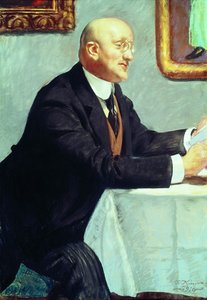
igor emmanuilovich grabar
1871 - 1960 , Ουγγαρία
Γρήγορα στοιχεία
- Artistic Movement Or Style: Ποστ-ιμπρεσιανισμός
- Artists Who Influenced This Artist:
- Ιλία Ρεπιν
- Άντον Αζμπέ
- Date Of Birth: Μάρκος 25, 1871
- Date Of Death: Μάιος 16, 1960
- Full Name: Igor Emmanuilovich Grabar
- Nationality: Ρώσος
- Notable Artworks:
- Το Πεδίο με Συκαροδέντρα
- Η Επιδερμίστρια
- Πηγαίνοντας στην Εργασία
- Place Of Birth: Βουδαπέστης, Ουγγαρία
Σχετικά άρθρα
Οι 10 πιο διάσημοι πίνακες με κυρίαρχες αποχρώσεις της άμμου | OriginalUniqueArt.gr
Ανακαλύψτε τους 10 πιο διάσημους πίνακες με κυρίαρχες αποχρώσεις της άμμου! Van Gogh, Monet & άλλοι μεγάλοι ζωγράφοι. Ιμπρεσιονισμός, μοντερνισμός και η γοητεία των γήινων χρωμάτων. Βρείτε την τέλεια αναπαραγωγή πίνακα για το σπίτι σας στο OriginalUniqueArt.gr
Τα 10 Κορυφαία Έργα που καθόρισαν τον Μεταϊμπρεσιονισμό | OriginalUniqueArt.gr
Ανακαλύψτε τα 10 εμβληματικά έργα που καθόρισαν τον Μεταϊμπρεσιονισμό! Βαν Γκογκ, Σεζάν & άλλοι μεγάλοι ζωγράφοι. Ιστορία τέχνης, τεχνικές & χρώματα που εμπνέουν. Αναπαραγωγές υψηλής ποιότητας στο OriginalUniqueArt.com – διακοσμήστε τον χώρο σας με αριστουργήματα!
Οι 10 πιο διάσημοι πίνακες με κυρίαρχες αποχρώσεις μανιταριού – Έμπνευση για το σπίτι σας
Ανακαλύψτε τους 10 πιο διάσημους πίνακες με κυρίαρχες αποχρώσεις μανιταριού! Ιμπρεσιονισμός, μοντερνισμός & γήινες παλέτες. Βρείτε την τέλεια αναπαραγωγή πίνακα για το σπίτι σας στην OriginalUniqueArt.com.

Πέρα από το Φως και το Χρώμα: Ο Ιμπρεσιονισμός έναντι του Μετα-Ιμπρεσιονισμού για τον Δεινό Συλλέκτη
Εξερευνήστε τις διαφορές μεταξύ Ιμπρεσιονισμού και Μετα-Ιμπρεσιονισμού. Εξειδικευμένη ανάλυση για συλλέκτες τέχνης, επενδυτικές συμβουλές & ιστορική επισκόπηση.
Beyond Impressionism: Exploring the Emotional Depth of Post-Impressionist Painting
Explore the profound emotional depth & innovative techniques of Post-Impressionism with OriginalUniqueArt. Discover Cézanne, Van Gogh, Gauguin & more – and their lasting impact on modern art.

