

 Αποστολή
 Κοινοποίηση
 Λεπτομέρειες
 Οδηγός

 Λήψη
Λήψη
 Παρόμοια αντικείμενα συλλογής
 Παρουσίαση
 Στατιστικά
Mocatta, commonly known as Pretty Mary, a Native of South Australia


 Περισσότερα λεπτομέρεια
Χειροποίητη Αναπαραγωγή σε Έλαιο
Χειροποίητη ελαιογραφία σε καμβά στο δικό σας μέγεθος και πλαίσιο, κατά παραγγελία από τους καλλιτέχνες μας. ( Μετάβαση σε Εκτυπώσεις Μετάβαση σε Ψηφιακή Εικόνα)




































Επιλέξτε από τις προκαθορισμένες διαστάσεις μας που διατηρούν τις αρχικές αναλογίες του έργου τέχνης.

Μπορείτε να ορίσετε δικές σας διαστάσεις ώστε το έργο να ταιριάζει σε ένα συγκεκριμένο πλαίσιο ή χώρο. Εάν το επιλεγμένο μέγεθος δεν συμπίπτει με τις αναλογίες της αρχικής εικόνας, θα περικοψούμε το έργο ή θα επεκτείνουμε τη ζωγραφιά με πρόσθετα χειρόγραφα στοιχεία. Ένα ψηφιακό προσχέδιο θα σας αποσταλεί για έγκριση πριν την έναρξη της παραγωγής.
Παρακαλούμε σημειώστε ότι η προεπισκόπηση στην οθόνη δεν αντικατοπτρίζει την πραγματική περικοπή ή επέκταση. Μόνο το προσχέδιο θα δείξει με ακρίβεια την τελική σύνθεση.
Παρόλο που είναι διαθέσιμα προσαρμοσμένα μεγέθη, συνιστούμε να επιλέξετε μια διάσταση από τη λίστα των προκαθορισμένων μεγεθών για τη διατήρηση των αρχικών αναλογιών.
Μετά την παραγγελία, η ομάδα του OriginalUniqueArt.com θα στείλει email στον πελάτη με οδηγίες και θα παρέχει μια προεπισκόπηση προσχεδίου
Παγκόσμια Αποστολή () σε 3-4 εβδομάδες αντί για τις συνήθεις 5 εβδομάδες. (27 Σεπτέμβριος). Χωρίς συμβιβασμούς στην ποιότητα.

Δωρεάν γρήγορη διεθνής αποστολή

Κάμβας από Λινό Υψηλής Ποιότητας

Πλήρης ασφάλιση μεταφοράς

Εγγύηση επιστροφής δασμών και φόρων εισαγωγής

Εγγύηση Απόλυτης Ομοιότητας Χρωμάτων

Πολιτική Επιστροφής 100 Ημερών (Μόνο σε περίπτωση ελαττωμάτων)

Εγγύηση επιστροφής 100% των χρημάτων

Έκπτωση για πολλαπλές παραγγελίες
 Η επιλογή με γυαλί είναι διαθέσιμη μόνο για μεγέθη κάτω από 110 εκ.

Mocatta, commonly known as Pretty Mary, a Native of South Australia
Τεχνική Αναπαραγωγής
Διαστάσεις Αναπαραγωγής
-


Συνολικό Κόστος
$ 300
A Glimpse into the Past: The Soul of Mocatta
In the quiet resonance of Harry Walker’s evocative work, we encounter a profound connection to history and identity through the piece titled Mocatta, commonly known as Pretty Mary, a Native of South Australia. This striking creation serves as more than just a visual representation; it is a window into the year 1838, capturing a moment of frozen dignity. The subject, a woman of South Australian heritage, is depicted with a serene yet piercing gaze that seems to look far beyond the immediate frame, inviting the viewer to contemplate the vast landscapes and the deep ancestral roots from which she emerges. Through Walker’s lens, we are not merely observing a portrait, but participating in a silent dialogue with a bygone era.
The sculpture-like quality of the work, reminiscent of carved marble or ancient stone, lends an air of timelessness to the composition. The intricate details—the delicate braids of her hair, the purposeful placement of the headband, and the symbolic presence of the bow and arrow—suggest a narrative of strength, survival, and cultural pride. There is a palpable weight to the piece, as if every texture has been weathered by time itself. This sense of antiquity is further heightened by the ornate, intricately carved frame that surrounds the figure, creating a sanctuary for the subject and elevating the artwork from a simple depiction to a precious relic of historical memory.
Artistic Mastery and Visual Harmony
Technically, the work demonstrates a masterful command over texture and form. While Walker is celebrated for his ability to bridge the gap between classical realism and the vibrant energy of Fauvism, in this particular piece, he leans into a more sculptural, monochromatic elegance. The play of light across the smooth surfaces mimics the luster of polished stone, creating highlights and shadows that give the figure a three-dimensional presence. This technique allows the viewer to appreciate the subtle musculature and the soft contours of the face, making the subject feel tangibly present within the room.
For the discerning collector or interior designer, this piece offers an unparalleled opportunity to introduce a sense of historical gravity and sophisticated texture into a curated space. The neutral, antique tones of the work allow it to integrate seamlessly into diverse decor styles—from the quiet elegance of a classical library to the bold statements of modern minimalist galleries. It acts as a focal point that commands attention through its subtlety rather than through loud colors, providing an emotional anchor that evokes feelings of reverence, peace, and deep intellectual curiosity.
To possess a reproduction of such a significant subject is to hold a piece of storytelling. It is an invitation to decorate one's surroundings with art that does not merely fill a wall, but enriches the atmosphere with the whispers of history and the enduring spirit of the human experience.
Βιογραφικό Καλλιτέχνη
A Visionary of the Canvas: The Artistic Journey of Harry Walker
In the vibrant landscape of contemporary art, few voices resonate with as much unique complexity as Harry Walker. Born in 1947, this French-born painter, who found his creative home in Adelaide, South Australia, has carved out a niche that defies simple categorization. His work serves as a profound bridge between the weight of historical tradition and the frenetic energy of modern existence. Walker is perhaps most notably recognized for his exploration of televisionism—a concept through which he examines how media and visual culture reshape our perception of reality. Through his lens, the screen and the canvas become intertwined, reflecting a world where history and digital immediacy constantly collide.
Walker’s artistic identity is deeply rooted in a mastery of both classical technique and experimental color theory. While much of his early biographical narrative remains a private tapestry, his formal training at the Adelaide University School of Art provided him with a formidable foundation. It was here that he honed his skills in oil painting, developing a command over light and texture that would later allow him to navigate between the realms of figurative realism and the expressive, emotive power of Fauvism. This duality is the heartbeat of his oeuvre; he possesses the ability to ground a subject in recognizable reality while simultaneously bathing it in a palette that feels dreamlike and psychologically charged.
The Language of Color and Symbolism
To encounter a Walker painting is to enter a world where color functions as much more than mere pigment. Drawing significant inspiration from the masters of Impressionism and Fauvism, particularly the structural brilliance of Cézanne and the revolutionary color language of Picasso, Walker utilizes bold, often unexpected hues to evoke deep emotional responses. In works such as ‘Corsham Still Life,’ one sees this playful yet profound aesthetic in full bloom, where vibrant tones dance across the surface to create a modern, almost rhythmic atmosphere.
His thematic range is equally vast, moving seamlessly from the intimate to the sociopolitical. Walker’s work often captures the quiet, nuanced psychological states of his subjects, yet he is equally capable of addressing grander narratives of identity and heritage. His depictions of the Australian Outback landscapes offer a soulful connection to the land, while his more complex figurative works confront the intricacies of human connection. In pieces like ‘Untitled’ (2006), he captures the sophisticated energy of social leisure, using the setting of a tennis match to symbolize the joy of communal engagement and physical vitality in an increasingly digital age.
Legacy and Artistic Significance
The significance of Harry Walker’s contribution to contemporary art lies in his ability to make the viewer look twice at the familiar. Whether he is celebrating the rhythmic energy of music in ‘Blues Festival’ or confronting the heavy, historical weight of identity through symbolic imagery, his work demands an active, emotional participation from the observer. His paintings do not merely represent scenes; they act as windows into the tension between what we see and what we feel.
Throughout his career, Walker has achieved notable recognition, with his works finding homes in prestigious institutions such as the Walker Art Center and the Harris Museum – Art Gallery. His ability to participate in international exhibitions has cemented his status as a respected figure whose work transcends geographical boundaries. As he continues to explore the intersections of media, history, and the human condition, Walker remains a vital presence in the art world—a painter who reminds us that even in a world saturated by images, the hand-painted stroke retains an unmatched power to capture the soul.

harry walker
1947 -
Στοιχεία καλλιτέχνη
- Artistic Movement Or Style: Televisionism
- Full Name: Harry Walker
- Nationality: French
- Notable Artworks:
- Blues Festival
- Kara Walker: Darkytown Rebellion, 2001
- Corsham Still Life
Σχετικά άρθρα

The Enduring Form: Exploring Themes & Techniques in Sculpture Across Historical Periods
Explore the rich history of sculpture from ancient masterpieces to contemporary innovations. Discover key techniques, influential artists & investment potential for discerning art collectors.

The Enduring Form: Sculpture Across History, Technique & Emotional Resonance
Explore the rich history of sculpture with OriginalUniqueArt. Discover key techniques, influential artists & investment potential for discerning collectors. Expert insights into valuing and collecting timeless masterpieces.

Οι 10 Κορυφαίοι Χάλκινοι Αγάλματα που Άλλαξαν την Ιστορία της Τέχνης | OriginalUniqueArt.gr
Ανακαλύψτε τα 10 θρυλικά χάλκινα αγάλματα που διαμόρφωσαν την τέχνη! Από τον Rodin στον Michelangelo, εξερευνήστε ιστορίες, τεχνικές & αισθητική. Βρείτε αντίγραφα υψηλής ποιότητας για το σπίτι σας στην OriginalUniqueArt.com.

The Enduring Allure of Marble in Art History: From Classical Sculpture to Modern Abstraction
Explore the captivating history of marble sculpture from ancient Greece to modern art. Discover renowned artists like Canova & Michelangelo, carving techniques, and investment insights at OriginalUniqueArt.
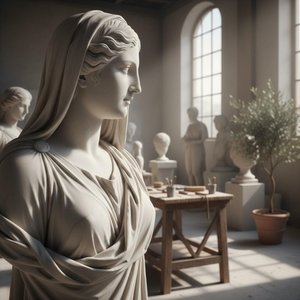
Timeless Elegance: A Complete Guide to the Sublime Beauty and Artistry of Marble Sculpture
Discover the sublime beauty of marble art through an expert exploration of Renaissance and Neoclassical masterpieces. From the delicate textures of Carpeaux to the grandeur of Sansovino, immerse yourself in a guide to timeless elegance and sculptural perfection.