Northern Renaissance · 1505
Forest scenes (Γκέραρντ Ντάβιντ, 1505)
Ο/Η Γκέραρντ Ντάβιντ (1460–1523) δημιούργησε το Forest scenes. Χρονολογείται στο 1505. Ανήκει στο κίνημα Northern Renaissance. Είναι φτιαγμένο σε Oil On Panel. Αποθηκεύεται στο Rijksmuseum στο Άμστερνταμ, Ολλανδίες. Οι διαστάσεις είναι 90 × 31 cm.
- 1505
- Oil On Panel
- 90 × 31 cm
- Rijksmuseum, Άμστερνταμ

 Προεπισκόπηση σε πραγματική κλίμακα

 Ελαιογραφικό Χειροποίητο Έργο
 Αποστολή
 Κοινοποίηση
 Πληροφοριακό φύλλο


 Λήψη
 Παρόμοια αντικείμενα συλλογής
 Ακτινογραφία
 Παρουσίαση
 Ερωτήσεις & Απαντήσεις

 Στατιστικά
Forest scenes, εν συντομία
- Τίτλος
- Forest scenes
- Καλλιτέχνης
- Γκέραρντ Ντάβιντ (1460–1523)
- Γεννημένος/η το
- Αουντεβάτερ, Ολλανδία
- Ημερομηνία
- 1505
- Μέσο
- Oil On Panel
- Διαστάσεις
- 90 × 31 cm
- Πού εκτίθεται
- Rijksmuseum, Άμστερνταμ, Ολλανδίες
- Κίνηση
- Northern Renaissance
- Θέμα
- forest landscape, northern europe, detailed nature, woodland scene, religious symbolism, oil painting style
Τι απεικονίζει το Forest scenes;
A Woodland Reverie: Gerard David’s “Forest Scenes”
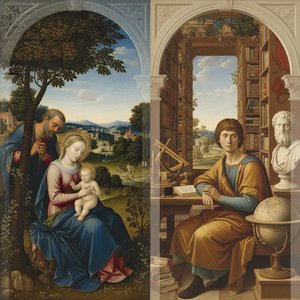
Gerard David's "Forest Scenes," painted in 1505, isn’t merely a depiction of trees and streams; it’s an immersion into the heart of Northern Renaissance contemplation. This diptych, a masterful exploration of light, shadow, and perspective, offers a profound glimpse into the artistic sensibilities of a pivotal figure often overshadowed by his more flamboyant contemporaries. David, working in the burgeoning art centers of Bruges and Antwerp, crafted a work that speaks to both the earthly beauty of nature and the spiritual yearning characteristic of the era.
The painting immediately draws the eye with its dramatic lighting – a strong directional light illuminates the foreground, casting long, evocative shadows that deepen the sense of enclosure within the woodland. This technique, reminiscent of the Flemish masters, isn’t simply about realism; it's a deliberate orchestration of atmosphere. The composition is carefully balanced between two distinct panels. To the left, a small stone building with a thatched roof nestles amongst the trees, hinting at human presence and suggesting a connection between the natural world and domestic life. The right panel flows with a stream, its movement subtly guiding the viewer’s eye through the landscape. The overall effect is one of serene depth – a space that feels both familiar and profoundly mysterious.
Northern Renaissance Realism and Artistic Innovation
“Forest Scenes” exemplifies the Northern Renaissance style in its meticulous attention to detail and its commitment to realistic representation. David’s brushwork is remarkably fine, particularly evident in the rendering of the foliage – each leaf, branch, and texture painstakingly rendered with a level of precision rarely seen in Southern European art at the time. However, it's not merely imitation; David subtly departs from purely observational painting. He employs a flattened perspective, characteristic of the Northern style, creating a sense of depth without resorting to the complex aerial perspective favored by Italian artists. This choice contributes to the painting’s slightly dreamlike quality, as if peering into an idealized version of the forest.
Furthermore, David's use of color is particularly noteworthy. He masterfully employs a palette dominated by warm browns, deep greens, and touches of gold – colors that evoke the richness and warmth of autumn light filtering through the trees. The layering of thin glazes of oil paint builds up luminosity and depth, creating a sense of tactile realism. This technique, combined with his skillful manipulation of light and shadow, elevates the painting beyond a simple landscape depiction into a powerful expression of mood and atmosphere.
Symbolism and Emotional Resonance
Beyond its technical brilliance, “Forest Scenes” is rich in symbolic meaning. The small building suggests human resilience and connection to the land – a reminder of humanity’s place within the natural world. The stream, flowing steadily onward, can be interpreted as a symbol of time, life, or perhaps even the soul's journey. The overall mood is one of tranquility and solitude, inviting contemplation and introspection. It’s a scene that speaks to the human desire for escape from the pressures of daily life and offers a glimpse into a world of peace and beauty.
David’s choice to present this scene as a diptych adds another layer of complexity. The division between the two panels suggests a duality – perhaps representing opposing forces, or different aspects of the same experience. The forest itself can be seen as a metaphor for the human psyche, with its hidden depths and potential for both beauty and darkness. “Forest Scenes” is not just a landscape; it’s an invitation to explore the mysteries within ourselves and in the world around us.
A Timeless Masterpiece – Reproduction Options
Reproductions of Gerard David's "Forest Scenes" offer a remarkable opportunity to bring this iconic work into your home or office. Available in a range of sizes, from smaller prints suitable for adorning a wall to larger canvases that command attention, these reproductions faithfully capture the painting’s rich colors, intricate details, and evocative atmosphere. Crafted on high-quality materials – canvas, metal, or acrylic glass – each reproduction is designed to last for generations, ensuring that you can enjoy this timeless masterpiece for years to come.
Σε ποιο μουσείο βρίσκεται το Forest scenes;
Rijksmuseum
Άμστερνταμ, Ολλανδίες
The History and Origins of Rijksmuseum The Rijksmuseum is the national museum of the Netherlands. Its origins are tied to the tumultuous years following the French Revolution. The institution was founded in The Hague on 19 November 1798.


Εικόνες υψηλής ανάλυσης του Forest scenes

Δημόσιος τομέας: ο καλλιτέχνης απεβίωσε το 1523.
Άλλες διαστάσεις, καρέττες και αναφορά →Γκέραρντ Ντάβιντ, Forest scenes (1505), Rijksmuseum. Δημόσιο περιουσιακό δικαίωμα
Ερωτήσεις για το Forest scenes, απαντημένες
Πού μπορώ να δω το πρωτότυπο "Forest scenes" του Γκέραρντ Ντάβιντ;
Το έργο "Forest scenes" του Γκέραρντ Ντάβιντ εκτίθεται στο Rijksmuseum, Άμστερνταμ, Ολλανδίες. Η αναφορά στο μουσείο αφορά το πρωτότυπο έργο και όχι αναπαραγωγές.
Σε ποια χρονική περίοδο δημιουργήθηκε το "Forest scenes" του Γκέραρντ Ντάβιντ;
Το έργο "Forest scenes" χρονολογείται από το 1505. Η ημερομηνία αυτό το έργο το τοποθετεί μέσα στην καριέρα του/της Γκέραρντ Ντάβιντ και την εποχή του/της.
Με τι τεχνική έχει δημιουργηθεί το "Forest scenes";
Ο/Η Γκέραρντ Ντάβιντ χρησιμοποίησε την τεχνική του/της Oil On Panel για το έργο "Forest scenes". Η τεχνική αυτή ορίζει τη υλική φύση του πρωτότυπου έργου.
Ποια είναι οι πραγματικές διαστάσεις του έργου "Forest scenes" του Γκέραρντ Ντάβιντ;
Οι καταγεγραμμένες διαστάσεις του έργου "Forest scenes" του Γκέραρντ Ντάβιντ είναι 90 x 31 cm. Αναπαραγωγές μπορούν να παραγγηθούν σε άλλες διαστάσεις, διατηρώντας τις ίδιες αναλογίες.
Τι απεικονίζει το "Forest scenes" του Γκέραρντ Ντάβιντ;
Τα θέματα που περιλαμβάνονται στο "Forest scenes" του Γκέραρντ Ντάβιντ περιλαμβάνουν το/τα forest landscape, northern europe, detailed nature, woodland scene, religious symbolism, oil painting style, diptych artwork. Μαζί, συνοψίζουν το περιεχόμενο του έργου τέχνης.
Το έργο "Forest scenes" ανήκει στο δημόσιο περιουσιακό αγαθό;
Όσον αφορά τα πνευματικά δικαιώματα, το "Forest scenes" ανήκει στο δημόσιο κτήμα - τα δικαιώματα αυτορության έχουν λήξει.
Ποιον καλλιτέχνη αποδίδεται το "Forest scenes";
Το έργο "Forest scenes" δημιουργήθηκε από τον/την Γκέραρντ Ντάβιντ. Οι πληροφορίες σε αυτή τη σελίδα περιγράφουν το πρωτότυπο έργο του/της Γκέραρντ Ντάβιντ.
Προς ποιο καλλιτεχνικό ρεύμα ανήκει το έργο "Forest scenes" του Γκέραρντ Ντάβιντ;
Το έργο "Forest scenes" του Γκέραρντ Ντάβιντ ανήκει στο καλλιτεχνικό κίνημα Northern Renaissance. Αυτό το κίνημα παρέχει το στυλιστικό πλαίσιο του έργου.
Ποια εποχή της καριέρας του/της Γκέραρντ Ντάβιντ αντιπροσωπεύει το έργο "Forest scenes";
Το έργο "Forest scenes" ανήκει στην περίοδο Mature Period της καριέρας του Γκέραρντ Ντάβιντ. Αυτή η ταξινόμηση συνδέει το έργο με την εξέλιξη του καλλιτέχνη.
Σχετικά με τον καλλιτέχνη, Γκέραρντ Ντάβιντ

1460–1523, Ολλανδία
Γκέραρντ Ντάβιντ
Ένας Μέγιστος του Φλαμανδικού Φωτός: Ο Ενigmτικός Κόσμος του Γεράρδα Νταβίδ Ο Γεράρδος Νταβίς, ένα όνομα που αντηχεί με τη λάμψη της πρώιμης φλαμανδικής ζωγραφικής, παραμένει ένας καλλιτέχνης περιτριγυρισμένος από ενδιαφέρουσες μυστηριώδεις πτυχές. Γεννήθηκε περίπου το 1460 στην Ούντεβοτερ, τα Νήεια, και η ιστορία της ζωής του αποτελείται από σπασμένα αρχεία και την έντονη μαρτυρία των έργων του. Σε αντίθεση με ορισμένους συμπατριώτες του, οι οποίοι έχουν καλά τεκμηριωμένες ζωές, η προσωπική πλοκή του Νταβίδ είναι ελλιπής, επιτρέποντας στα έργα του να μιλούν έντονα όπου τα βιογραφικά στοιχεία λείπουν. Αυτό που γνωρίζουμε υποδηλώνει μια εξαιρετικά επιτυχημένη καριέρα, πιθανότατα διαχειριζόμενος εργαστήρια τόσο στην Αντουέρ όσο και στη Βρούγεντ – κέντρα καινοτομίας κατά τη διάρκεια της Αναγέννησης.
Σχετικά με τον Γκέραρντ Ντάβιντ Σημαντικά έργα του Γκέραρντ Ντάβιντ
Εργασίες του Γκέραρντ Ντάβιντ
 Η Κρίση του Καμβύση1498
 Η Πάοσα της Καναίας1500
 The Judgment of Cambyses (detail)1498
 Triptych with the Nativity1505
Μελέτες γύρω από το Forest scenes
 From Pixels to Paint: Transforming Digital Memories into Timeless Oil MasterpiecesDiscover the art of transforming digital photos into bespoke oil masterpieces. From custom portraits to historical 'period shifts,' our aca…
 The Northern Renaissance: A Masterclass in Hyper-Realism, Oil Innovation, and Symbolic DepthExplore the profound mastery of Northern Renaissance art. Discover the technical brilliance of Flemish oil painting, the intricate symbolis…
 Gerard David: Bridging Late Medieval Tradition with Early Renaissance HumanismExplore the captivating world of Gerard David, a pivotal figure bridging late medieval artistry with the Early Renaissance. Discover his in…