
 Δείτε σε πραγματικό χώρο
 Αποστολή
 Κοινοποίηση
 Λεπτομέρειες

 Λήψη
Λήψη
 Παρόμοια αντικείμενα συλλογής
 Ακτινογραφία
 Παρουσίαση
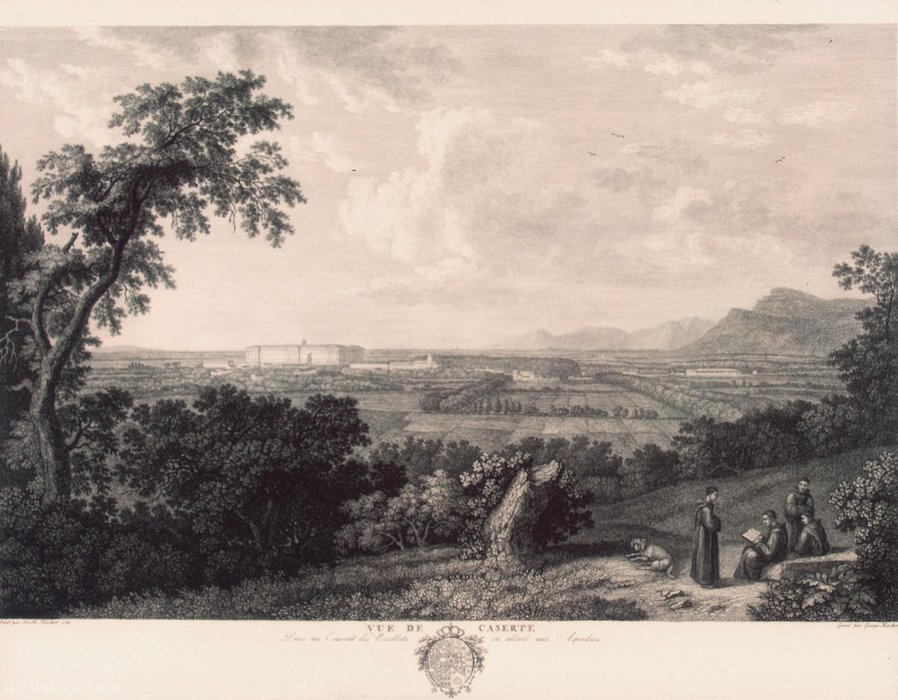
View of Caserta

 Διαβάστε περισσότερα
Χειροποίητη Αναπαραγωγή σε Έλαιο
Χειροποίητη oil painting σε καμβά στο δικό σας μέγεθος και πλαίσιο, κατά παραγγελία από τους καλλιτέχνες μας. ( Αγορά εκτύπωσης Αγορά ψηφιακής εικόνας)




































Επιλέξτε από τις προκαθορισμένες διαστάσεις μας που διατηρούν τις αρχικές αναλογίες του έργου τέχνης.

Μπορείτε να ορίσετε δικές σας διαστάσεις ώστε το έργο να ταιριάζει σε ένα συγκεκριμένο πλαίσιο ή χώρο. Εάν το επιλεγμένο μέγεθος δεν συμπίπτει με τις αναλογίες της αρχικής εικόνας, θα περικοψούμε το έργο ή θα επεκτείνουμε τη ζωγραφιά με πρόσθετα χειρόγραφα στοιχεία. Ένα ψηφιακό προσχέδιο θα σας αποσταλεί για έγκριση πριν την έναρξη της παραγωγής.
Παρακαλούμε σημειώστε ότι η προεπισκόπηση στην οθόνη δεν αντικατοπτρίζει την πραγματική περικοπή ή επέκταση. Μόνο το προσχέδιο θα δείξει με ακρίβεια την τελική σύνθεση.
Παρόλο που είναι διαθέσιμα προσαρμοσμένα μεγέθη, συνιστούμε να επιλέξετε μια διάσταση από τη λίστα των προκαθορισμένων μεγεθών για τη διατήρηση των αρχικών αναλογιών.
Μετά την παραγγελία, η ομάδα του OriginalUniqueArt.com θα στείλει email στον πελάτη με οδηγίες και θα παρέχει μια προεπισκόπηση προσχεδίου
Παγκόσμια Αποστολή () σε 3-4 εβδομάδες αντί για τις συνήθεις 5 εβδομάδες. (18 Αύγουστος). Χωρίς συμβιβασμούς στην ποιότητα.

Δωρεάν γρήγορη διεθνής αποστολή

Κάμβας από Λινό Υψηλής Ποιότητας

Πλήρης ασφάλιση μεταφοράς

Εγγύηση Επιστροφής Δασμών και Φόρων

Εγγύηση Απόλυτης Ομοιότητας Χρωμάτων

Πολιτική Επιστροφής 60 Ημερών (Μόνο σε περίπτωση ελαττωμάτων)

Εγγύηση επιστροφής 100% των χρημάτων

Προσφορά για μαζικές παραγγελίες
 Η επιλογή με γυαλί είναι διαθέσιμη μόνο για μεγέθη κάτω από 110 εκ.

View of Caserta
Μέσο Αναπαραγωγής
Διαστάσεις Αναπαραγωγής
-


Συνολική Τιμή
$ 325
Βιογραφία Καλλιτέχνη
Georg Abraham Hackert: A Romantic Observer of Hungary and Berlin
Georg Abraham Hackert (1755-1805) stands as a pivotal figure in the transition between the late Baroque and the burgeoning Romanticism of German art. Born in Prenzlau, Prussia – now part of Germany – his life was inextricably linked to the shifting political landscape of 18th-century Europe, particularly through his extensive travels and artistic engagements in Hungary and Berlin. Hackert’s work isn't defined by grand, heroic narratives; instead, he offered a remarkably intimate and observant portrayal of everyday life, rural landscapes, and the remnants of history – a style that resonated deeply with the Romantic sensibility’s focus on emotion, nature, and the past.Early Life and Artistic Training
Hackert's early artistic training remains somewhat shrouded in mystery, though it’s known he began his career as an assistant to Johann Christian Fieger, a painter working in Berlin. This initial apprenticeship provided him with foundational skills in portraiture and decorative painting. However, Hackert quickly developed a fascination with engraving, a medium that allowed him to meticulously capture detail and explore the interplay of light and shadow – qualities crucial to his later landscape work. He honed his engraving skills under the tutelage of Johann Christian Fieger’s assistant, Carl Wilhelm von Nauck, further solidifying his technical expertise. Crucially, Hackert's early exposure to Prussian court life and the burgeoning interest in archaeological discoveries—particularly Roman ruins—would profoundly shape his artistic vision.Hungary: A Landscape of Transformation
In 1778, Hackert embarked on a pivotal journey to Hungary, commissioned by Frederick the Great of Prussia to document the country’s landscape and its transformation following the Habsburg-Turkish War. This extended sojourn proved transformative, both artistically and personally. He spent nearly two decades immersed in Hungarian life, capturing scenes of rural communities, peasant labor, and the dramatic beauty of the Hungarian plains. Unlike many artists who idealized nature, Hackert presented a more nuanced view – one that acknowledged the hardships faced by the peasantry while simultaneously celebrating the region’s rugged charm. His etchings and engravings from this period, such as “View of Vietri” and “View of the Environs of Carpentras,” are characterized by their meticulous detail, atmospheric perspective, and a subtle sense of melancholy. He wasn't simply recording scenery; he was attempting to capture the spirit of a people and a land undergoing significant change.Berlin: Portraits and Historical Scenes
Returning to Berlin in 1798, Hackert established himself as a respected portrait painter and continued his work on historical subjects. He produced numerous portraits of prominent figures, demonstrating a keen ability to capture character and personality. His engagement with the Prussian court provided him with access to luxurious settings and opulent costumes, which he rendered with remarkable accuracy. Simultaneously, he revisited themes from his Hungarian period, creating engravings that explored the ruins of Roman sites – a fascination rooted in his earlier experiences. Works like “Ruins of the Augustan Bridge at Narni” exemplify this blend of historical awareness and Romantic sensibility, presenting ancient structures not as relics of a distant past but as evocative reminders of human ambition and decay.Legacy and Influence
Georg Abraham Hackert’s legacy lies in his ability to bridge the gap between Neoclassicism and Romanticism. He was a master of observation, meticulously documenting the details of everyday life and the beauty of the natural world. His work anticipated many of the key themes of the Romantic movement – the importance of emotion, the fascination with nature, and the exploration of the past—though he did so through a distinctly German lens. His detailed engravings served as models for later generations of landscape artists, while his portraits offered insightful glimpses into the personalities of 18th-century Europe. Hackert’s influence can be seen in the works of Caspar David Friedrich and other prominent Romantic painters who followed in his footsteps, solidifying his place as a significant figure in the development of German art. His work continues to resonate today through its evocative depictions of human experience and the enduring power of landscape.
georg abraham hackert
1755 - 1805 , Germany
Γρήγορα στοιχεία
- Artistic Movement Or Style: Romanticism
- Artists Or Movements Influenced By This Artist: ['Romantic Landscapes']
- Artists Who Influenced This Artist: ['Philipp the Younger']
- Date Of Birth: 1755
- Date Of Death: 1805
- Full Name: Georg Abraham Hackert
- Nationality: German
- Notable Artworks:
- View of Vietri
- View of Carpentras
- Ruins of Narni Bridge
- Place Of Birth: Prenzlau, Germany
Σχετικά άρθρα

Engraving: A Historical Survey of Technique, Artistic Expression & Enduring Legacy
Explore the rich history of engraving with OriginalUniqueArt. Discover techniques, iconic artists like Dürer & Callot, collecting tips, and expert guidance for preserving your art investment. Learn about intaglio printing & more!

Οι 25 Κορυφαίοι Πίνακες του Katsushika Hokusai: Έμπνευση για το Σπίτι σας | OriginalUniqueArt.gr
Ανακαλύψτε τους 25 πιο εμβληματικούς πίνακες του Katsushika Hokusai! Μάθετε την ιστορία, την τεχνοτροπία και τη σημασία των έργων ukiyo-e. Βρείτε αναπαραγωγές υψηλής ποιότητας & ιδέες διακόσμησης στο OriginalUniqueArt.com.
Τα 10 Κορυφαία Έργα Τέχνης που Εξερευνούν το Τοπίο | OriginalUniqueArt.gr
Ανακαλύψτε τα 10 κορυφαία έργα τέχνης που αποτυπώνουν την ομορφιά του τοπίου! Από Monet έως Van Gogh, εξερευνήστε ιστορίες, τεχνικές & χρώματα. Βρείτε πίνακες για διακόσμηση στο OriginalUniqueArt.gr.
Οι 10 Κορυφαίοι Χαράκτες που Άλλαξαν την Τέχνη για Πάντα | OriginalUniqueArt.gr
Ανακαλύψτε τις 10 κορυφαίες χαρακτικές που διαμόρφωσαν την τέχνη! Ιστορίες από Dürer, Rembrandt, Goya και άλλους μεγάλους χαράκτες. Βρείτε αναπαραγωγές υψηλής ποιότητας & ιδέες διακόσμησης στο OriginalUniqueArt.gr

Οι 10 Κορυφαίοι Πίνακες που Όρισαν τον Ρομαντισμό στην Τοπιογραφία | OriginalUniqueArt.gr
Ανακαλύψτε τους 10 πίνακες που καθόρισαν τον Ρομαντισμό στην τοπιογραφία! Friedrich, Turner & άλλοι. Ιστορίες τέχνης, τεχνικές και έμπνευση για διακόσμηση σπιτιού. Βρείτε αναπαραγωγές υψηλής ποιότητας στο OriginalUniqueArt.com.

