 Προεπισκόπηση σε πραγματική κλίμακα
 Αποστολή
 Κοινοποίηση
 Λεπτομέρειες
 Οδηγός

 Λήψη
Λήψη
 Παρόμοια αντικείμενα συλλογής
 Ακτινογραφία
 Παρουσίαση
 Ερωτήσεις & Απαντήσεις
 Στατιστικά
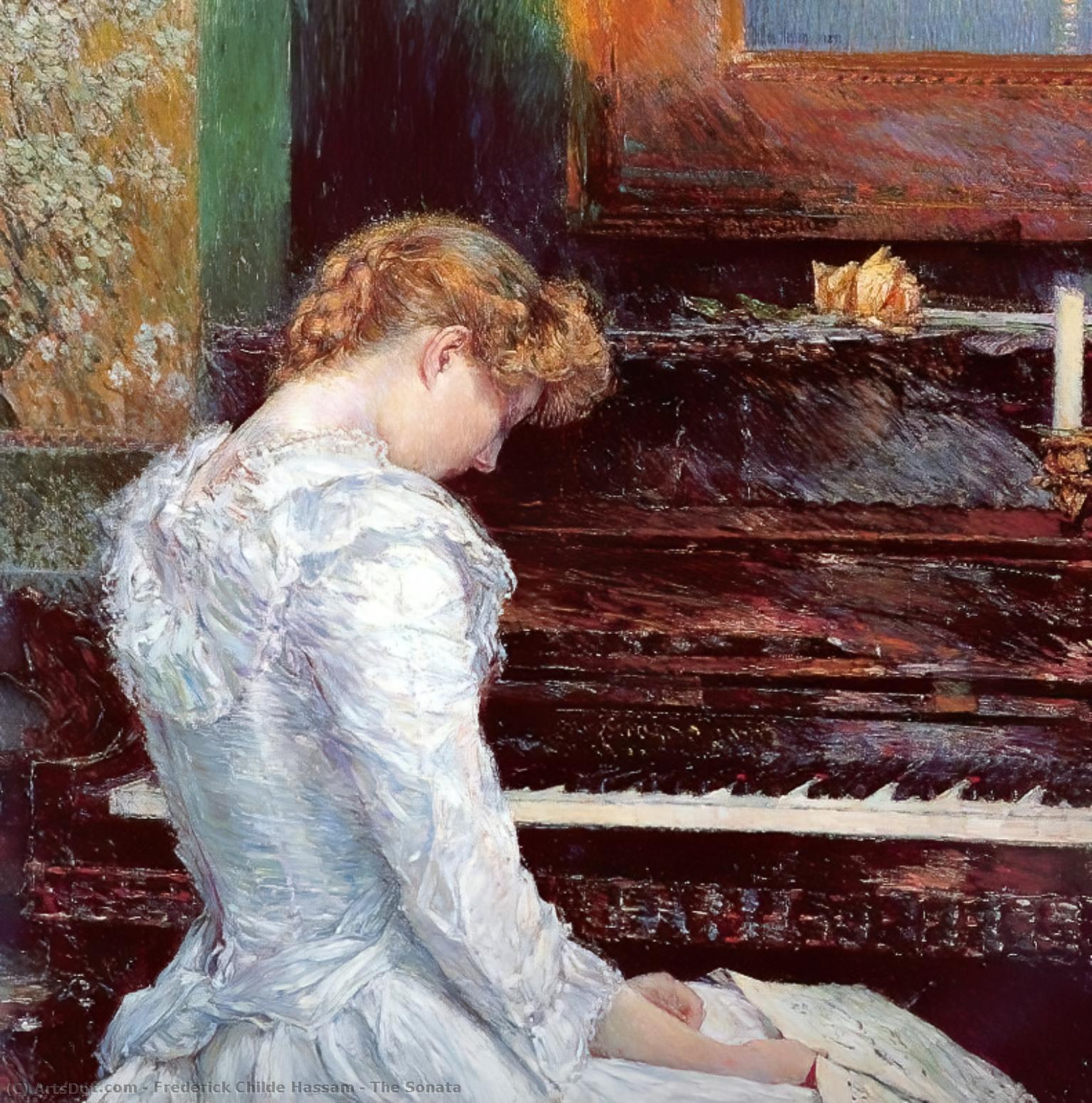
The Sonata


 Περισσότερα
Λάβετε ένα αρχείο έτοιμο για εκτύπωση, με ποιότητα πολύ ανώτερη από την προεπισκόπηση στον ιστότοπο. Κάθε ψηφιακή εικόνα που διαθέτουμε προέρχεται από ένα αρχείο υψηλής ανάλυσης στη βάση δεδομένων μας —συνήθως με πλάτος 5.000 έως 15.000 pixel— ώστε να μπορείτε να εκτυπώσετε σε μεγάλο μέγεθος, να κάνετε στενές κοψιμές ή να αναπαράγετε τις λεπτομέρειες με απόλυτη εμπιστοσύνη.
Κανένα αρχείο δεν φεύγει από το στούντιο μας χωρίς να υποστεί επεξεργασία. Ένας ειδικός ψηφιακών εικόνων ελέγχει τα χρώματα σε σύγκριση με το πρωτότυπο έργο και τα διορθώνει αν χρειαστεί, στη συνέχεια βελτιώνει την καθαρότητα και τις λεπτομέρειες με επαγγελματικά εργαλεία αφαίρεσης ατέλειων — παραμένοντας πάντα πιστός στις πινελιές και το ύφος του καλλιτέχνη. Το αποτέλεσμα είναι μια εικόνα που μοιάζει με το ίδιο το αριστούργημα και όχι με ένα σκανάρισμα με φίλτρα.
Εγκρίνετε πριν την ολοκλήρωση: ο ειδικός μας σας στέλνει την εικόνα μέσω e-mail εντός 72 ωρών για επανεξέταση. Δεν είστε ικανοποιημένοι; Ζητήστε βελτιώσεις ή διορθώσεις, ή ζητήστε επιστροφή χρημάτων εάν η ποιότητα δεν ανταποκρίνεται στις προσδοκίες σας.
Αυτή είναι η ποιότητα στην οποία εμπιστεύονται οι εκδότες, τα design studios, οι γκαλερί και τα εκτυπωτήρια.
Ψηφιακή εικόνα
Κατεβάστε ένα αρχείο υψηλής ανάλυσης για προσωπική χρήση, εκτύπωση και δημιουργικά έργα. ( Μετάβαση σε Εκτυπώσεις Αγορά χειροποίητου πίνακα)
Περιλαμβάνεται σε κάθε παραγγελία ψηφιακής εικόνας
Επαγγελματική Ψηφιακή Παράδοση με Εγγύηση
Όταν επιλέγετε το OriginalUniqueArt.com, δεν αποκτάτε απλώς μια εικόνα – λαμβάνετε ένα επαγγελματικά αναβαθμισμένο ψηφιακό έργο τέχνης, δημιουργημένο με ακρίβεια και με εγγύηση ικανοποίησης. Δείτε όλα όσα περιλαμβάνονται στην παραγγελία σας, αυτόματα:

Άμεση αποστολή μέσω email
Το ψηφιακό σας αρχείο εικόνας υψηλής ανάλυσης θα σας σταλεί μέσω email εντός 72 ωρών από την παραγγελία σας — έτοιμο για άμεση χρήση.

Ψηφιακό Αρχείο με Τεχνητή Νοημοσύνη
Το έργο σας βελτιστοποιείται επαγγελματικά με τη χρήση προηγμένων εργαλείων Τεχνητής Νοημοσύνης και χειροκίνητης επεξεργασίας, εξασφαλίζοντας μέγιστη λεπτομέρεια, ευκρίνεια και ακρίβεια χρωμάτων.

Δωρεάν επανεκδόσεις مدى ζωής
Απώλησες ή διαγράψατε κατά λάθος το αρχείο σας; Μην ανησυχείτε — θα σας το ξαναστείλομε οποιαδήποτε στιγμή, δωρεάν.

Χωρίς Τελωνειακούς Φόρους - Ποτέ
Απολαύστε αμέσως τα έργα τέχνης σας χωρίς δασμούς, φόρους ή έξοδα αποστολής - οι ψηφιακές λήψεις είναι πάντα αφορεশিপτεία.

Εγγύηση Ακριβούς Χρωματισμού
Εξασφαλίζουμε ότι η ψηφιακή σας εικόνα αποτυπώνει τα αυθεντικά χρώματα όσο το δυνατόν πιστότερα, χρησιμοποιώντας επαγγελματικά εργαλεία και διαχείριση χρωμάτων.

Εγγύηση Ικανοποίησης 100 Ημερών
Εάν δεν είστε ικανοποιημένοι με την ψηφιακή σας εικόνα, θα την τροποποιήσουμε ή θα σας επιστρέψουμε το 100% εντός 100 ημερών — χωρίς κανένα ερώτημα.

100% Εγγύηση Επιστροφής Χρήματος
Δεν είστε ικανοποιημένοι; Λάβετε πλήρη επιστροφή των χρημάτων σας εντός 100 ημερών από τη λήψη του ψηφιακού σας αρχείου — χωρίς κανένα ερώτημα.

Εκπτώσεις σε μεγάλες παραγγελίες
Αγοράστε 3 εικόνες, κάντε εξοικονόμηση 10% - Αγοράστε 5, κάντε εξοικονόμηση 15% - Αγοράστε 10+, κάντε εξοικονόμηση 20%. Ιδανικό για δημιουργικά έργα, γκαλερί και agencies.
The Sonata: A Moment of Contemplation by Frederick Childe Hassam
Frederick Childe Hassam's The Sonata, painted in 1893 and currently residing at the Nelson-Atkins Museum of Art, is a captivating oil on canvas that embodies the serenity and elegance characteristic of American Impressionism. This piece offers a glimpse into late 19th-century domestic life, skillfully blending realism with the soft light and atmospheric qualities of the Impressionist movement.
Composition and Symbolism
The painting depicts a young woman seated at a grand piano, her posture suggesting a moment of quiet introspection. Her fingers rest poised above the keys, while her gaze is directed downward, lost in thought as she prepares to play. The piano itself serves as a central focal point, symbolizing creativity and artistic expression. Two books are placed on its surface – one closer to the left side and another nearer to the right – potentially representing the intellectual pursuits of the subject. A vase positioned subtly in the background adds an element of refinement to the scene. The overall composition directs attention to the woman and her contemplative state, inviting viewers to share in her moment of reflection.
Artistic Style and Technique
Hassam’s signature Impressionist style is readily apparent in The Sonata. He masterfully employs soft, muted colors – primarily warm yellows, creams, and browns – creating a sense of calmness and intimacy. Gentle brushstrokes capture the play of light on the woman's dress and the polished surface of the piano. While the subject’s face is rendered with precision, the background remains subtly blurred, drawing further attention to the central figure. This technique, common in Impressionism, prioritizes capturing a fleeting moment and subjective impression over strict realism. The use of layered paint creates texture and luminosity, enhancing the overall visual appeal.
Historical Context and Cultural Significance
The Sonata emerged during a period of significant artistic evolution, coinciding with the rise of Impressionism in both Europe and America. Hassam was instrumental in introducing and popularizing this movement within the United States. The painting reflects the cultural trends of its time, portraying an idealized vision of domestic life and highlighting the importance of music and intellectual pursuits among the upper classes. It captures a moment of leisure and artistic appreciation, offering insight into the values and aesthetics prevalent during the late 19th century.
Emotional Impact and Enduring Relevance
Beyond its aesthetic beauty and historical significance, The Sonata resonates with viewers through its timeless themes of creativity, contemplation, and the pursuit of beauty. The woman’s introspective pose evokes a sense of quiet melancholy and invites reflection on the power of music to inspire and soothe. Its enduring appeal lies in its ability to transport us to a bygone era while simultaneously tapping into universal human emotions. For those interested in exploring more works by Frederick Childe Hassam, Marlborough Street, Boston is another notable piece showcasing his talent for capturing urban scenes.
Ερωτήσεις και Απαντήσεις
Σε ποιο σημείο του σπιτιού θα ταιριάζει ιδανικά μια αναπαραγωγή του "The Sonata";
Ο προτεινόμενος χώρος για το έργο "The Sonata" του Φρεντρίκης Χίλντε Χάσαμ είναι ένα Living Room. Η πρόταση αυτή μπορεί φυσικά να προσαρμοστεί στον δικό σας εσωτερικό χώρο.
Ποιο είναι το κυρίαρχο χρώμα του "The Sonata" του Φρεντρίκης Χίλντε Χάσαμ;
Το χρώμα που ξεχωρίζει περισσότερο στο "The Sonata" είναι το Quinacridone Magenta (#775647). Το κυρίαρχο χρώμα είναι χρήσιμο όταν συνδυάζετε ένα έργο τέχνης με έναν εσωτερικό χώρο.
Μπορώ να δω προεπισκόπηση του "The Sonata" του Φρεντρίκης Χίλντε Χάσαμ πριν την παραγγελία;
Μπορείτε να δείτε μια προεπισκόπηση του έργου "The Sonata" του Φρεντρίκης Χίλντε Χάσαμ στη σελίδα Προεπισκόπηση.
Βιογραφικό Καλλιτέχνη
The Life of Frederick Childe Hassam
Frederick Childe Hassam was an American Impressionist painter whose life was rooted in the urban and coastal landscapes of the United States. Born on October 17, 1859, in the Dorchester neighborhood of Boston, Massachusetts, he entered a world that would eventually serve as the primary subject of his brush. He was known to all as "Childe," a name he adopted from his uncle.
His presence in the American art scene was marked by a steady evolution from his early beginnings to his established position as a leading figure of his movement. He moved through the changing social textures of the late 19th and early 20th centuries, capturing the energy of a nation in transition. He remained active in his craft until his death on August 27, 1935.
Early Life, Family and Training
Born in Dorchester, Massachusetts, Frederick Childe Hassam entered a household defined by both commerce and a quiet connection to New England roots. His father, Frederick Fitch Hassam, managed a cutlery business, while his mother, Rosa Delia Hawthorne, brought the influence of her native Maine to the family. This practical environment shaped the young artist's early years, as the necessity of supporting his family required him to leave high school at the age of seventeen.
His early professional life was rooted in the meticulous demands of commercial art. He found work as a draftsman and illustrator, a period that required a disciplined eye for detail and a firm grasp of composition. These years of practical application were not merely a means of survival; they provided a foundational understanding of line and form. While working these roles, he simultaneously cultivated his skills as a painter, moving from the rigid requirements of illustration toward a more expressive visual language.
To formalize his technical abilities, he studied engraving techniques at the Boston School of the Arts. This training in engraving, characterized by precision and the careful management of light and shadow, would later inform the way he approached color and atmosphere in his oil paintings. His development was a gradual process of refinement, transitioning from the structured world of wood engravings and commercial design toward the fluid, observational style that would eventually define his career.
Artistic Foundations and European Travels
The formative years of Hassam’s development were shaped by a significant departure from the familiar landscapes of New England. In 1883, he embarked on a period of travel that would fundamentally alter his perception of light and composition. His path took him through the United Kingdom, the Netherlands, France, Italy, Switzerland, and Spain. During these excursions, he found himself particularly drawn to the watercolor techniques of J. M. W. Turner, whose approach to atmosphere and light left a lasting impression on his developing sensibilities.
By 1886, his commitment to formalizing his craft led him to Paris for a three-year stint of study. He was enrolled for a brief time at the Académie Julian, an institution known for its crowded studios and lack of rigid discipline. This environment allowed him to encounter a wide variety of styles from international students. It was during these years in Europe that he began to move away from his earlier, more subdued color palettes, moving instead toward a more expressive way of handling light and color that would define his later career.
Technique and Impressionist Style
Hassam’s artistic output was vast, encompassing over 3,000 works that spanned a diverse range of media. He was as comfortable with the precision of wood engravings and etchings as he was with the fluidity of watercolors and oils. His early years as an illustrator provided a foundation in detailed drawing, a skill that remained present even as his style underwent a significant transformation. After his time in Paris, his approach to the canvas shifted; he adopted a lighter palette and a looser brushwork that allowed him to capture the fleeting qualities of light and atmosphere.
This evolution allowed him to achieve a unique blend of European influences and American subjects. He did not merely transplant foreign methods onto domestic soil; instead, he adapted them to suit the specific character of his surroundings. His work often sought to render the energy of a bustling city or the quietude of a coastal landscape through a sensitive application of color. This technical versatility ensured that his depictions of modern life felt both immediate and atmospheric.
- The Sonata (1893)
- Gloucester (1899)
- The Water Garden (1909)
- View of a Southern French City (1910)
The Ten American Painters
By 1897, the rigid structures of the established art world had become a source of friction for many progressive creators. In response to the conservative policies of the Society of American Artists, a group known as The Ten American Painters emerged to seek a more independent path. Hassam was central to this movement, serving as the first president of the collective. This group provided a necessary alternative for those seeking to exhibit their work outside of traditional academic constraints.
The collective was composed of artists who shared a desire for autonomy, including John Henry Twachtman, Willard Leroy Metcalf, and Edmund Tarbell. Through their independent exhibitions, they helped establish Impressionism as a legitimate movement within the United States. Hassam’s leadership within this circle helped steer the direction of American art toward a more modern, experimental sensibility. His involvement ensured that the group remained a significant force in the push for artistic independence.
Key Works and Patriotic Series
Hassam’s ability to translate atmosphere into color is evident in his varied subject matter, ranging from intimate domesticity to the expansive sea. In 1893, he produced The Sonata, a work now held by the Nelson-Atkins Museum of Art in Kansas City. His interest in the coast was equally profound, seen in the 1899 depiction of Gloucester, which captures the specific light of the New England shoreline. These works demonstrate a shift from his early illustrative roots toward a more fluid, atmospheric approach to the American landscape.
The onset of global conflict prompted a significant change in his thematic focus. Between 1916 and 1919, he turned his attention to the American flag, producing a series of paintings that documented the patriotic fervor of the era. These works moved away from quiet landscapes to capture the energy of a nation in transition. One notable piece, Victory Day, May 1919, focuses on the atmosphere in the streets following the armistice, recording a specific moment of civic emotion through his characteristic brushwork.
Legacy and Enduring Influence
Hassam’s impact on the American art landscape was felt through his ability to bridge the gap between European aesthetics and domestic sensibilities. He was instrumental in promulgating Impressionism to American collectors, dealers, and museums, helping to integrate these new visual languages into the national consciousness. By doing so, he helped establish American Impressionism as a distinct artistic movement, one that was no longer merely a derivative of French practice but a way to interpret the specific light and energy of the United States.
His presence in the American canon is cemented by the enduring placement of his work in significant public spaces. His paintings have found a permanent home in the White House, specifically within the Oval Office, where they contribute to the visual history of the nation's highest office. This placement reflects a broader recognition of his ability to capture the spirit of a changing country, from the bustling urbanity of New York to the quietude of the New England coast.
The reach of his influence extends through the generations of painters who followed his lead. His technical approach and his commitment to capturing the ephemeral qualities of light left a mark on the trajectory of American art. He moved the focus of the American painter away from traditional academic constraints and toward a more direct, observational engagement with the modern world.
Where to See the Works Today
The physical presence of Hassam’s vision remains scattered across several significant American institutions. In New York, the Metropolitan Museum of Art maintains a substantial collection, housing eleven of his works. The Brooklyn Museum also holds four pieces, offering a glimpse into his varied subject matter within the city's cultural landscape. These collections allow for a direct encounter with the light and atmosphere he sought to capture throughout his career.
Beyond the metropolitan centers of the East Coast, his influence is felt in the West and the Pacific Northwest. The Portland Art Museum in Portland preserves six of his paintings, while the Nelson-Atkins Museum of Art in Kansas City holds four. These holdings ensure that his approach to both urban and coastal scenes remains accessible to those studying the development of American Impressionism.
- The Sonata (1893)
- Gloucester (1899)
- The Water Garden (1909)
- Sunset at Sea
- The Fourth of July, 1916
- Victory Day, May 1919

Φρεντρίκης Χίλντε Χάσαμ
1859 - 1935 , Ηνωμένες Πολιτείες Αμερικής
Σύντομη Βιογραφία
- Artistic Movement Or Style: Αμερικανικός Ενταρκισμός
- Artists Or Movements Influenced By This Artist: ['Αμερικανικός Ενταρκισμός']
- Artists Who Influenced This Artist:
- Claude Monet
- Edgar Degas
- Date Of Birth: 1859
- Date Of Death: 1935
- Full Name: Frederick Childe Hassam
- Nationality: Αμερικανός
- Notable Artworks:
- The Sonata
- Gloucester
- Victory Day, May 1919
- Place Of Birth: Βοστώνη, Ηνωμένες Πολιτείες της Αμερικής