Μετάβαση σε Εκτυπώσεις
 Περισσότερα







































 Για έργα τέχνης ή αναπαραγωγές με πλευρά υπερβαίνουσα των 105 εκ. (περίπου 41 ίντσες), το πλαίσιο θα αποσταλεί αποσυναρμολογημένο, σε μορφή κιτ. Η μέθοδος αυτή διασφαλίζει την ασφαλή παράδοση και προλαμβάνει τυχόν ζημιές κατά τη μεταφορά.


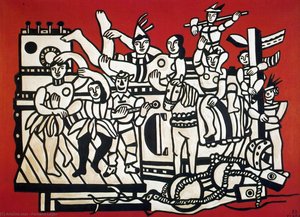
Fernand Léger’s ‘Three Figures’: A Cubist Echo of Modern Life
“Three Figures,” painted in 1921 by the groundbreaking artist Fernand Léger, offers a compelling glimpse into the heart of early 20th-century modernity. This work, executed in Léger's signature Cubist style, isn’t merely a depiction of three individuals; it’s an exploration of human form within the burgeoning landscape of industrialization and urban life. The painting immediately draws the eye to the central trio – two figures intimately connected through a shared embrace, and a third positioned slightly behind, suggesting a dynamic movement and interaction. Scattered throughout the composition are smaller, fragmented figures, echoing Léger’s fascination with the mechanical world and its impact on human experience.
Cubist Innovation and Léger's Vision
Created during a pivotal moment in art history, “Three Figures” exemplifies Léger’s radical approach to Cubism. Unlike some of his contemporaries who sought purely abstract forms, Léger remained deeply engaged with the observable world, translating its geometric qualities – the sharp angles of machinery, the rigid lines of urban architecture – into his artistic language. The painting's fractured planes and multiple perspectives challenge traditional notions of representation, forcing the viewer to actively participate in constructing the image. Léger’s use of bold black and white further emphasizes this effect, stripping away any superfluous detail to reveal the underlying structure of form. This technique was heavily influenced by his upbringing on a farm, where he observed the precise, functional forms of agricultural tools and structures.
Symbolism and Emotional Resonance
Beyond its formal qualities, “Three Figures” is rich in symbolic potential. The embrace between the two central figures suggests connection, intimacy, and perhaps even a yearning for stability amidst the rapid changes occurring around them. The guitar, prominently placed within the scene, adds another layer of interpretation – representing leisure, social interaction, and the burgeoning cultural life of the modern city. Léger’s deliberate use of simplified forms and stark contrasts evokes a sense of both alienation and fascination with the machine age. There's an underlying melancholy in the composition, reflecting perhaps the anxieties and uncertainties associated with this period of unprecedented technological advancement.
Technique and Historical Context
Painted in 1921, “Three Figures” represents a high point in Léger’s artistic development. The work demonstrates his mastery of oil paint, utilizing thick impasto to create a tactile surface that emphasizes the solidity of form. Léger's meticulous attention to detail, combined with his innovative approach to Cubism, firmly established him as one of the leading figures of the modern art movement. This piece is a testament to Léger’s ability to synthesize influences from various sources – including Fauvism and early Futurism – into a uniquely personal and powerfully expressive style. It's important to note that this painting was created during a time of immense social and technological upheaval, reflecting the anxieties and aspirations of a generation grappling with the dawn of the modern era.
Ερωτήσεις και Απαντήσεις
Πού μπορώ να δω μια προεπισκόπηση του "Three figures";
Μπορείτε να δείτε μια προεπισκόπηση του έργου "Three figures" του Φρανς Λέγκερ στη σελίδα Προεπισκόπηση.
Ποια είναι η τεχνική και η ημερομηνία δημιουργίας του έργου "Three figures" του Φρανς Λέγκερ;
Το έργο "Three figures" δημιουργήθηκε το 1921 με την τεχνική του Acrylic On Canvas. Το υλικό και η ημερομηνία περιγράφουν τον τρόπο και την περίοδο δημιουργίας του πρωτοτύπου.
Παρουσιάζει το "Three figures" έντονες αντιθέσεις φωτός και σκότους;
Η αντίθεση φωτός-σκιάς του "Three figures" καταγράφεται ως Statement. Η αντίθεση περιγράφει το πόσο έντονα διαφέρουν οι ανοιχτές και οι σκούρες περιοχές.
 Προεπισκόπηση σε πραγματική κλίμακα
 Αποστολή
 Κοινοποίηση
 Λεπτομέρειες
 Οδηγός

 Λήψη
Λήψη
 Παρόμοια αντικείμενα συλλογής
 Ακτινογραφία
 Παρουσίαση
 Q&A
Q&A Στατιστικά