

 Προεπισκόπηση
 Αποστολή
 Κοινοποίηση
 Λεπτομέρειες
 Οδηγός

 Λήψη
Λήψη
 Παρόμοια αντικείμενα συλλογής
 Ακτινογραφία
 Παρουσίαση
 Στατιστικά
Still Life


 Περισσότερα λεπτομέρεια
Giclée / Εκτυπώσεις Τέχνης
Εκτύπωση giclée ή σε καμβά ποιότητας μουσείου με γρήγορη παραγωγή και ευέλικτες επιλογές φινιρίσματος. ( Αγορά χειροποίητου πίνακα Μετάβαση σε Ψηφιακή Εικόνα)




P118B €10

P118H €10

P118W €10

P438Z €10

P508JH €12

P508YH €12

P805H €10

P805Z €10

P919BZ €10

P919G €10

P919XJ €10

P959ZH €10

P968JZ €12

W106C €8

W218G €10

W218JH €8

W218Y €10

W307PJ €10

W316G €10

W316PJ €8

W316Y €10

W398PJ €8

W4111J €10

W500HY €15

W500JH €15

W692G €12

W849H €8

W940BG €15

W953PJ €8




Επιλέξτε από τις προκαθορισμένες διαστάσεις μας που διατηρούν τις αρχικές αναλογίες του έργου τέχνης.

Πληκτρολογήστε το πλάτος και το ύψος που επιθυμείτε, ώστε να ταιριάζουν στο κάδሮ ή στον τοίχο σας. Μια εκτύπωση μπορεί μόνο να κοπεί και ποτέ να μην γίνει μεγαλύτερη από την εικόνα, επομένως ένα μέγεθος με διαφορετικό σχήμα συνεπάγεται απώλεια ενός μέρους της εικόνας. Σας στέλνουμε ένα ψηφιακό mockup για έγκριση πριν εκτυπώσουμε οτιδήποτε. Η εικόνα που εμφανίζεται σε αυτή τη σελίδα δεν δείχνει την πραγματική κοπή — μόνο το mockup την παρουσιάζει.
Παγκόσμια Αποστολή () σε 2 εβδομάδες αντί για τις συνήθεις 4/5 εβδομάδες. (22 Οκτώβριος)

Δωρεάν γρήγορη διεθνής αποστολή

Κάμβας από Λινό Υψηλής Ποιότητας

Πλήρης ασφάλιση μεταφοράς

Εγγύηση επιστροφής δασμών και φόρων εισαγωγής

Εγγύηση Απόλυτης Ομοιότητας Χρωμάτων

Πολιτική Επιστροφής 100 Ημερών (Μόνο σε περίπτωση ελαττωμάτων)

Εγγύηση επιστροφής 100% των χρημάτων

Έκπτωση για πολλαπλές παραγγελίες
 Η επιλογή με γυαλί είναι διαθέσιμη μόνο για μεγέθη κάτω από 110 εκ.

Still Life
Giclée / Εκτυπώσεις Τέχνης
Διαστάσεις Αναπαραγωγής
-


Συνολικό Κόστος
€ 70
A Moment Frozen in Time: Ferdinand Guillaimin’s “Still Life”
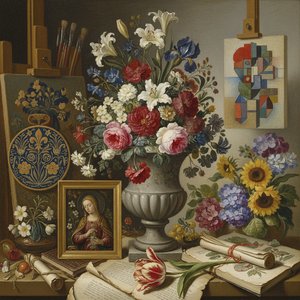
Ferdinand Guillaimin's "Still Life," painted in 1872, isn’t merely a depiction of objects arranged on a table; it’s a carefully constructed tableau brimming with quiet observation and subtle symbolism. This work, rendered in the heart of the Impressionist movement, captures a fleeting moment of domestic tranquility – a scene both familiar and imbued with an understated elegance. The painting immediately draws the eye to the central arrangement: a vase overflowing with vibrant red and yellow flowers, their petals seemingly caught mid-bloom, radiating warmth against the cooler tones that dominate the rest of the composition. Beside them rests a worn book, its pages hinting at untold stories and intellectual pursuits, while a simple bowl holds what appears to be fruit – perhaps apples or pears – adding another layer of earthly abundance.
Guillaimin’s technique is distinctly Impressionistic, prioritizing capturing the *impression* of light and color rather than precise detail. Loose brushstrokes dance across the canvas, creating an atmospheric haze that softens the edges of each object. He masterfully employs broken color – applying small dabs of paint side-by-side to build up hues and create a shimmering effect, particularly noticeable in the reflections on the table’s surface. The dark background serves not as mere backdrop but as a crucial element, intensifying the luminosity of the floral arrangement and lending the scene a sense of intimacy and depth. The artist's focus is less on photographic realism and more on conveying the *feeling* of being present within this quiet space.
The Context of Parisian Impressionism
To fully appreciate “Still Life,” it’s essential to understand the artistic climate in which Guillaimin was working. The 1870s were a period of profound change and experimentation for French art, marked by the rise of Impressionism. Artists like Monet, Renoir, and Pissarro sought to break free from the rigid conventions of academic painting, embracing plein air (outdoor) painting and capturing the ephemeral qualities of light and atmosphere. Guillaimin’s work reflects this spirit of innovation, moving away from traditional subject matter and exploring new ways of representing the world around him.
Guillaimin's connection to Pissarro is particularly noteworthy. The artist spent a significant period painting alongside Pissarro in Pontoise, a suburb of Paris, where he found inspiration in the everyday life of the region. This proximity fostered a collaborative environment, allowing Guillaimin to refine his style and develop his unique approach to capturing light and color. The Impressionists were not simply interested in depicting what they *saw*; they were driven by a desire to express their subjective experience of the world.
Symbolism and the Language of Objects
Beyond its aesthetic qualities, “Still Life” is rich with symbolic meaning. The flowers themselves represent beauty, fragility, and the fleeting nature of life – themes frequently explored in Impressionist art. The book suggests knowledge, contemplation, and a connection to the past. The bowl of fruit symbolizes abundance, nourishment, and the pleasures of earthly existence. Even the dark background can be interpreted as representing mortality or the unknown.
Guillaimin’s use of these objects is deliberate and carefully considered, inviting the viewer to engage in a process of interpretation. He doesn't offer explicit explanations; instead, he presents a series of interconnected symbols that resonate with universal themes of beauty, life, and death. The arrangement feels deliberately balanced, creating a harmonious composition that evokes a sense of peace and serenity.
A Legacy of Delicate Beauty
Ferdinand Guillaimin’s “Still Life” stands as a testament to the power of observation and the enduring appeal of simple subjects rendered with exquisite sensitivity. It's a painting that rewards close attention, revealing layers of meaning and emotional depth with each viewing. Reproductions capture much of the original atmosphere, but nothing quite replicates the subtle nuances of light and color that define Guillaimin’s masterful technique.
Today, this work is celebrated for its evocative beauty and its contribution to the development of Impressionism. It remains a poignant reminder of the quiet moments of everyday life – a timeless meditation on beauty, mortality, and the enduring power of art.
Ερωτήσεις & Απαντήσεις
Τι είδους χρώματα χρησιμοποιεί το "Still Life";
Το έργο "Still Life" του Φερδινάνδος Γουιλιμάιν χρησιμοποιεί μια χρωματική παλέτα Earthy. Η παλέτα αυτή συνοψίζει τον συνολικό χρωματικό χαρακτήρα του έργου.
Υπάρχουν έργα παρόμοια με το "Still Life";
Η σελίδα Παρόμοια έργα του έργου "Still Life" του Φερδινάνδος Γουιλιμάιν παρουσιάζει σχετικά έργα τέχνης.
Ποιος δημιούργησε το "Still Life" και πότε;
Ο δημιουργός του "Still Life" είναι ο/η Φερδινάνδος Γουιλιμάιν, και το έργο χρονολογείται στο 1872.
Βιογραφικό Καλλιτέχνη
early life and career
Ο Φερδινάνδος Γουιλλαμίν γεννήθηκε το έτος 1841 στην Πάρις και ξεκίνησε την καλλιτεχνική του πορεία στα τέλη του δεκατενταετίας του δέκατου ένατου αιώνα, μια εποχή που ο ιμπρεσιανισμός είχε αρχίσει να κερδίζει έδαφος στη Γαλλία. Η παιδική του ηλικία ήταν χαρακτηρισμένη από ενδιαφέρον για την τέχνη και τον πολιτισμό, καθώς οι γονείς του ήταν εκπαιδευτικοί και τον ενθάρρυναν να αναπτύξει τα καλλιτεχνικά του ταλέντα.
contribution to impressionism
Ο Γουιλλαμίν αποτέλεσε σημαντικό μέλος της ιμπρεσιανικής ομάδας και συμμετείχε σε αρκετές εκθέσεις που παρουσίασαν τον μοναδικό του στυλ. Η προσπάθειά του να αποτυπώσει την ατμόσφαιρα μιας σκηνής με χρώματα και φωτισμό ήταν ιδιαίτερα πρωτοποριακή για την εποχή του.
- Οι πίνακές του συχνά απεικόνιζαν ονειρικές τοπίες που αντανακλούσαν την ψυχή του ιμπρεσιανισμού.
- Χρησιμοποιούσε έντονα χρώματα και χαλαρές πινελιές που ενίσχυαν την αυθαιρεσία της τέχνης του ιμπρεσιανισμού.
notable works and associations
Ένας από τους πιο γνωστούς πίνακές του είναι ο «Θάνατος του Σαρδαναπάλου» του Ντελακρουά, ένα έργο που εκθέθηκε στην Εθνική Πινακοθήκη του Λονδίνου και θεωρείται σύμβολο της ρομαντικής τέχνης. Ο Γουιλλαμίν είχε στενή συνεργασία με τον Κλαύδιο Μονέ και οι δύο καλλιτέχνες εκθέθηκαν μαζί σε πολλές κοινές εκθέσεις.
style and influences
Ο στυλ του Γουιλλαμίνη χαρακτηρίζεται από την χρήση έντομων χρωμάτων και την τεχνική του ιμπρεσιανισμού, η οποία επικεντρώνεται στην καταγραφή των παροδικών εντυπώσεων του φωτός και του χρώματος στο τοπίο. Επηρεασμένος από τον συμβολισμό και τους μεταμοντερνιστές καλλιτέχνες όπως ο Βαν Γκογκ και ο Πιζάρρο, ο Γουιλλαμίν αναπτύξε μια ιδιαίτερη αισθητική που εκφράζει τις συναισθηματικές του εμπειρίες.
legacy and remembrance
Ο Φερδινάνδος Γουιλλαμίν πέθανε το έτος 1927 και η κληρονομιά του παραμένει σημαντική για την ιστορία της ιμπρεσιανικής τέχνης. Οι πίνακές του εκτίθενται σε μουσεία όπως το Μουσείο Τέχνης Μοντέρνας Πάρις και έχουν αναγνωριστεί ως έργα υψηλής καλλιτεχνικής αξίας.

Φερδινάνδος Γουιλιμάιν
1841 - 1927 , Γαλλία
Στοιχεία καλλιτέχνη
- Artistic Movement Or Style: Εντυπωσιασμός
- Artists Who Influenced This Artist:
- Κλαύδος Μονέ
- Βίνσεντ Βαν Γκόγκ
- Πωλ Σεζάν
- Date Of Birth: Φεβρουάριος 16, 1841
- Date Of Death: Ιούνιος 26, 1927
- Full Name: Jean Baptiste Armand Guillaumin
- Nationality: Γάλλος
- Notable Artworks:
- Κήπος στην Ιανβίλ στο Ιούνιο
- Προβολή του Που του Ντε Ω
- Προβολή του Που του Ντε Ω
- Place Of Birth: Παρίσι, Γαλλία
Σχετικά άρθρα

Blossoms of Time: A Historical Journey Through Flower Painting
Explore the captivating history of flower painting! Discover Dutch masters, symbolic meanings, & botanical art. Expert insights & high-quality reproductions at OriginalUniqueArt.
Blossoming Symbolism: A Historical Journey Through Flowers in Western Painting
Explore the rich history of flower symbolism in Western painting! Discover how artists from the Renaissance to Modernism used blossoms to convey meaning, emotion & beauty. Learn about iconic artworks and movements.

Impressionism: Τα 10 Εικόνες που Άλλαξαν την Τέχνη | OriginalUniqueArt.gr
Ανακαλύψτε τα 10 κορυφαία έργα ιμπρεσιονισμού! Μονέ, Ρενουάρ & άλλοι ζωγράφοι αποτυπωμένοι σε πίνακες που εμπνέουν. Βρείτε αναπαραγωγές υψηλής ποιότητας για να διακοσμήσετε τον χώρο σας. Εξερευνήστε την πλήρη συλλογή στο OriginalUniqueArt.gr

Silent Narratives: Exploring the Enduring Appeal of Still Life Painting Across Centuries
Explore the rich history of still life painting with OriginalUniqueArt. Discover Dutch Masters, decode vanitas symbolism & learn about collecting timeless art. Expert insights and museum-quality reproductions.

Paul Cézanne: Τα 25 Κορυφαία Έργα Τέχνης για Διακόσμηση & Συλλογή
Ανακαλύψτε τα 25 κορυφαία έργα τέχνης του Paul Cézanne! Ιμπρεσιονισμός, μετα-ιμπρεσιονισμός & η τεχνοτροπία του. Βρείτε πίνακες για διακόσμηση και συλλογή υψηλής ποιότητας στο OriginalUniqueArt.com.