Expressionism
Marsh bridge (Έμιλ Νόλντε)
Ο/Η Έμιλ Νόλντε (1867–1956) δημιούργησε το Marsh bridge. Ανήκει στο κίνημα Expressionism. Είναι φτιαγμένο σε Oil On Canvas.
- Oil On Canvas

 Προεπισκόπηση σε πραγματική κλίμακα

 Ελαιογραφικό Χειροποίητο Έργο
 Αποστολή
 Κοινοποίηση
 Πληροφοριακό φύλλο


 Λήψη
 Παρόμοια αντικείμενα συλλογής
 Ακτινογραφία
 Παρουσίαση
 Ερωτήσεις & Απαντήσεις

 Στατιστικά
Marsh bridge, εν συντομία
- Τίτλος
- Marsh bridge
- Καλλιτέχνης
- Έμιλ Νόλντε (1867–1956)
- Γεννημένος/η το
- Νόλτε, Δανία
- Μέσο
- Oil On Canvas
- Κίνηση
- Expressionism
- Εποχή
- Modern
- Θέμα
- bridge, marsh, water, sky, trees, blue
Τι απεικονίζει το Marsh bridge;
Identification of the Artwork and Artist
The artwork titled Marsh bridge is a painting by the artist Emil Nolde. This piece depicts a marsh landscape where a wooden bridge serves as the central subject. The composition focuses on the intersection of the man-made structure and the organic forms of the surrounding wetlands.
Emil Nolde, born in Nolde, Denmark, was a figure associated with the Expressionist movement. His approach to this subject matter is characterized by a style strongly influenced by Expressionism, prioritizing subjective experience through the application of paint. The work utilizes an impasto technique, where thick layers of oil paint create a palpable surface relief on the canvas.
Composition and Visual Elements
The composition is organized around a wooden bridge that traverses the canvas diagonally from the lower right toward the upper left. This diagonal movement provides a sense of direction through the landscape. The structure of the bridge is defined by a series of short, choppy lines that form the railings. A body of water occupies much of the background, reflecting the sky and the surrounding vegetation. On the horizon line, distant buildings and trees are visible, though they appear flattened due to a lack of clear atmospheric perspective.
Horizontal elements dominate the arrangement, specifically the water line, the bridge’s railings, and the distant treeline. These lines create a sense of expansive space across the marsh. The bridge is positioned in the foreground, appearing closer to the viewer than the trees in the distance. While the bridge provides a geometric contrast to the organic and irregular shapes of the marsh, its structure remains somewhat distorted by the application of the paint.
Technique and Material Application
The work is executed in oil paint on canvas. The artist employs an impasto technique, characterized by a thick application of paint across the surface. This method results in a palpable sense of surface relief, where the physical weight of the medium is evident. The paint is not applied in thin, translucent glazes but in heavy, substantial layers that create a tactile topography on the canvas.
The brushwork is highly visible throughout the composition. Rather than being blended into smooth transitions, the colors are applied in thick, distinct strokes. These marks are short and choppy, particularly where the railings of the bridge are defined. The application of the pigment is energetic, with the texture of the brushstrokes contributing directly to the visual impact of the landscape. The uneven surface created by these strokes catches the light, emphasizing the physical presence of the material.
Color and Lighting Details
The color palette is dominated by shades of blue, green, and white. These tones establish the primary visual field of the marsh and the sky. Along the path, the application of paint introduces areas of muted yellow and ochre. In the distance, the color scheme shifts to include touches of brown and red, which provide a subtle contrast to the cooler tones of the foreground and midground.
The lighting in the scene is diffused, suggesting the conditions of an overcast day. This lack of direct sunlight results in an even distribution of light across the landscape. There are no strong highlights or deep shadows present in the composition. The light does not create sharp edges or high-contrast points, maintaining a consistent luminosity across the water, the bridge, and the horizon.
Artistic Style and Subject Matter
The subject matter consists of a marsh landscape where a wooden bridge serves as the central focus. This structure traverses the canvas diagonally from the lower right toward the upper left. The bridge's railings are defined by short, choppy lines, while the surrounding water is suggested through wavy, broken strokes. The shapes within the scene are largely organic and irregular, reflecting the natural forms of the marshland. Perspective is not rendered realistically; objects in the distance appear flattened and lack clear depth cues, which emphasizes the expressive nature of the work over a faithful representation of reality.
The style is characterized by Expressionism, prioritizing subjective experience and emotional expression. The application of paint through the impasto technique creates a palpable surface relief, where thick, distinct strokes contribute to an energetic feel. This approach, combined with a muted color palette of blues, greens, and whites, contributes to a mood of solitude and melancholy. The bridge itself functions as a symbol of transition or connection within this quiet, atmospheric setting. The composition relies on horizontal elements—the water line, the railings, and the distant treeline—to create a sense of expansive space despite the flattened perspective.
Related Works by Emil Nolde
The artist's exploration of landscape and atmosphere extends to several other compositions. He painted Marshy Landscape under the Evening Sky, a work that captures a quiet moment where the land meets a heavy sky. His interest in maritime and elemental themes is further seen in Autumn Sea, created about 1908. These works demonstrate a recurring focus on the interaction between terrain and the shifting light of the sky.
Beyond landscape subjects, the artist's output includes more figurative and symbolic imagery. He produced The Mocking of Christ in 1909. Additionally, he created Masks around 1906-1907, which lean into the expressive power of primitive forms. These pieces reflect the breadth of his subject matter, moving from the wide expanse of a marsh to specific religious and formal studies.
Εικόνες υψηλής ανάλυσης του Marsh bridge
Δημόσιος τομέας: ο καλλιτέχνης απεβίωσε το 1956.
Έμιλ Νόλντε, Marsh bridge. Δημόσιο περιουσιακό δικαίωμα
Ερωτήσεις για το Marsh bridge, απαντημένες
Με τι τεχνική έχει δημιουργηθεί το "Marsh bridge";
Το έργο "Marsh bridge" εκτελέστηκε με τη χρήση του/της Oil On Canvas.
Περί τι αφορά το "Marsh bridge";
Τα θέματα του "Marsh bridge" είναι τα bridge, marsh, water, sky, trees, blue, green, brown.
Το έργο "Marsh bridge" του Έμιλ Νόλντε ανήκει στο δημόσιο περιουσιακό αγαθό;
Όσον αφορά τα πνευματικά δικαιώματα, το "Marsh bridge" ανήκει στο δημόσιο κτήμα - τα δικαιώματα αυτορության έχουν λήξει.
Ποιος δημιούργησε το "Marsh bridge";
Το έργο "Marsh bridge" δημιουργήθηκε από τον/την Έμιλ Νόλντε. Οι πληροφορίες σε αυτή τη σελίδα περιγράφουν το πρωτότυπο έργο του/της Έμιλ Νόλντε.
Σε ποιο καλλιτεχνικό ρεύμα ανήκει το "Marsh bridge";
Το έργο "Marsh bridge" του Έμιλ Νόλντε ανήκει στο καλλιτεχνικό κίνημα Expressionism. Αυτό το κίνημα παρέχει το στυλιστικό πλαίσιο του έργου.
Ποια είναι η αιτία της κατάστασης των πνευματικών δικαιωμάτων για το έργο "Marsh bridge" του Έμιλ Νόλντε;
Το έργο "Marsh bridge" του Έμιλ Νόλντε ανήκει στο δημόσιο κτήμα - τα δικαιώματα αυτορության έχουν λήξει. Η διάρκεια της προστασίας των πνευματικών δικαιωμάτων υπολογίζεται από το έτος θανάτου του καλλιτέχνη, ο οποίος συνέβη το 1956.
Πώς εντάσσεται το "Marsh bridge" στα θέματα και το στυλ του/της Έμιλ Νόλντε;
Το "Marsh bridge" μοιράζεται με τα υπόλοιπα έργα του Έμιλ Νόλντε το στυλ της καλλιτεχνικής σχολής Expressionism και τα επαναλαμβανόμενα θέματα: post-impressionism, die brücke, expressionism, subjective experience, nature and color.
Είναι το "Marsh bridge" τυπικό για όσα δημιουργούσε συνήθως ο/η Έμιλ Νόλντε;
Ανάμεσα στα αναγνωρισμένα θέματα του/της Έμιλ Νόλντε - post-impressionism, die brücke, expressionism, subjective experience, nature and color - το "Marsh bridge" εστιάζει ιδιαίτερα στα bridge, marsh, water, sky, trees, blue, green, brown.
Σχετικά με τον καλλιτέχνη, Έμιλ Νόλντε
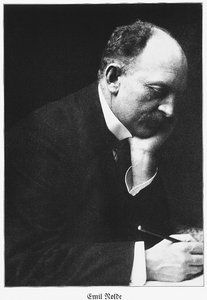
1867–1956, Δανία
Έμιλ Νόλντε
Early Life and Artistic Beginnings Ο Έμιλ Νόλντε, ένας διάσημος Γερμανός-Δανικός ζωγράφος, γεννήθηκε ως Χάινς Έμιλ Χάνσεν στις 7 Αυγούστου 1867 στην πόλη Νόλντε, στο Σλέσβιχ-Χολστάιν της Γερμανίας. Προερχόταν μιας οικογένειας με ισχυρούς δεσμούς με την αγροτική ζωή και θρησκευτικές πεποιθήσεις, παράγοντες που επηρέασαν βαθιά το καλλιτεχνικό του οράμα. Παρά την αρχική αντίσταση των γονιών του, οι οποίοι προτιμούσαν να ακολουθήσει μια πιο παραδοσιακή καριέρα, ο Νόλντε κυρίως επιδίωξε τον πάθος του για τέχνη. Αρχικά εργάστηκε ως ξυλουργός και διακοσμητής επίπλων πριν αφιερωθεί πλήρως στη ζωγραφική στα τέλη της δεκαετίας του 1920.
Εργασίες του Έμιλ Νόλντε
 Sunset
 Sea with Red Sky
 Couple on the beach1903
 Masks1911
Μελέτες γύρω από το Marsh bridge
 The Visceral Turn: Exploring Emotional Intensity in ExpressionismExplore the powerful world of Expressionism with OriginalUniqueArt. Discover key artists like Kirchner & Nolde, understand its emotional im…
 Raw Emotion & Bold Strokes: Top 10 Neo-Expressionism MasterpiecesExplore iconic Neo-Expressionist works by Basquiat and Kiefer. Discover museum-quality art at OriginalUniqueArt.com.
 Emile Nolde: A Journey into Expressionist Nature & the Primal SelfExplore the powerful Expressionism of Emile Nolde – a pioneer of emotive landscapes & spiritual themes. Discover his journey, influences, a…