
 Προεπισκόπηση
 Αποστολή
 Κοινοποίηση
 Λεπτομέρειες
 Οδηγός

 Λήψη
Λήψη
 Παρόμοια αντικείμενα συλλογής
 Ακτινογραφία
 Παρουσίαση
 Στατιστικά
Still life
 Περισσότερα λεπτομέρεια
Αγοράστε μια ψηφιακή εικόνα υψηλής ανάλυσης και βελτιωμένης ποιότητας, πολύ ανώτερης από την προεπισκόπηση στο διαδίκτυο.
Κάθε αρχείο προετοιμάζεται σχολαστικά από τους εξειδικευμένους συνεργάτες μας, με τη χρήση προηγμένων εργαλείων και χειροκίνητου ρετουσαρίσματος υψηλής ακρίβειας. Εξασφαλίζουμε ότι κάθε εικόνα προσφέρει εξαιρετική ευκρίνεια, απόλυτη πιστότητα στο χρώμα και λεπτομερή ανάδραση των λεπτομερειών.
Το τελικό αρχείο παραδίδεται μέσω email εντός 72 ωρών, βελτιστοποιημένο για άμεση χρήση σε επαγγελματικά, εκδοτικά και έντυπα περιβάλλοντα. Πρόκειται για την ίδια ποιότητα που εμπιστεύονται κορυφαία studios σχεδιασμού, εκδότες και γκαλερί.
Ψηφιακή εικόνα
Κατεβάστε ένα αρχείο υψηλής ανάλυσης για προσωπική χρήση, εκτύπωση και δημιουργικά έργα. ( Μετάβαση σε Εκτυπώσεις Αγορά χειροποίητου πίνακα)
Περιλαμβάνεται σε κάθε αγορά ψηφιακής εικόνας
Επαγγελματική Ψηφιακή Παράδοση με Εγγύηση
Όταν επιλέγετε το OriginalUniqueArt.com, δεν αποκτάτε απλώς μια εικόνα – λαμβάνετε ένα επαγγελματικά αναβαθμισμένο ψηφιακό έργο τέχνης, δημιουργημένο με ακρίβεια και με εγγύηση ικανοποίησης. Δείτε όλα όσα περιλαμβάνονται στην παραγγελία σας, αυτόματα:

Άμεση αποστολή μέσω email
Το ψηφιακό σας αρχείο εικόνας υψηλής ανάλυσης θα σας σταλεί μέσω email εντός 72 ωρών από την παραγγελία σας — έτοιμο για άμεση χρήση.

Ψηφιακό Αρχείο με Τεχνητή Νοημοσύνη
Το έργο σας βελτιστοποιείται επαγγελματικά με τη χρήση προηγμένων εργαλείων Τεχνητής Νοημοσύνης και χειροκίνητης επεξεργασίας, εξασφαλίζοντας μέγιστη λεπτομέρεια, ευκρίνεια και ακρίβεια χρωμάτων.

Δωρεάν επανεκδόσεις مدى ζωής
Απώλησες ή διαγράψατε κατά λάθος το αρχείο σας; Μην ανησυχείτε — θα σας το ξαναστείλομε οποιαδήποτε στιγμή, δωρεάν.

Χωρίς Τελωνειακούς Φόρους - Ποτέ
Απολαύστε αμέσως τα έργα τέχνης σας χωρίς δασμούς, φόρους ή έξοδα αποστολής - οι ψηφιακές λήψεις είναι πάντα αφορεশিপτεία.

Εγγύηση Ακριβούς Χρωματισμού
Εξασφαλίζουμε ότι η ψηφιακή σας εικόνα αποτυπώνει τα αυθεντικά χρώματα όσο το δυνατόν πιστότερα, χρησιμοποιώντας επαγγελματικά εργαλεία και διαχείριση χρωμάτων.

Εγγύηση Ικανοποίησης 100 Ημερών
Εάν δεν είστε ικανοποιημένοι με την ψηφιακή σας εικόνα, θα την τροποποιήσουμε ή θα σας επιστρέψουμε το 100% εντός 100 ημερών - χωρίς κανένα ερώτημα.

100% Εγγύηση Επιστροφής Χρήματος
Δεν είστε ικανοποιημένοι; Λάβετε πλήρη επιστροφή των χρημάτων σας εντός 100 ημερών από τη λήψη του ψηφιακού σας αρχείου — χωρίς κανένα ερώτημα.

Εκπτώσεις σε μαζικές παραγγελίες
Αγοράστε 3 εικόνες, κάντε εξοικονόμηση 10% - Αγοράστε 5, κάντε εξοικονόμηση 15% - Αγοράστε 10+, κάντε εξοικονόμηση 20%. Ιδανικό για δημιουργικά έργα, γκαλερί και agencies.
Βιογραφικό Καλλιτέχνη
Edwart Collier (Evert Colyer): A Dutch Master of Mortality and Wealth
Edwart Collier, more commonly known as Evert Colyer, was a pivotal figure in 17th-century Dutch art, renowned for his poignant and meticulously detailed Vanitas still lifes. Born around 1642 in Breda, Netherlands, and tragically dying just before September 8, 1708, in Leiden, Collier’s work offers a profound meditation on the transience of life, the fleeting nature of earthly possessions, and the inevitability of death – themes deeply rooted in the philosophical currents of his time. While he initially trained under Vincent Laurensz van der Vinne in Haarlem, establishing a strong foundation in the established Dutch still-life tradition, Collier quickly developed a unique style characterized by an almost unsettling realism and a masterful manipulation of perspective to create the illusion of three-dimensionality within a two-dimensional canvas – a technique known as *trompe-l’œil*.Early Life and Artistic Training
Collier's early life remains somewhat shrouded in mystery, though it is believed he was baptized Evert Calier in Breda. His artistic education began under the tutelage of Vincent Laurensz van der Vinne, a prominent Haarlem painter whose work focused on capturing the beauty of everyday objects and domestic scenes. Van der Vinne’s influence is readily apparent in Collier's early paintings, which exhibit a similar attention to detail and a fondness for depicting still lifes of flowers, fruits, and tableware. However, Collier soon surpassed his teacher, developing a distinctive style that moved beyond mere representation towards a deeper exploration of symbolic meaning. He officially joined the Haarlem Guild of St. Luke in 1649, followed by membership in the Leiden Guild of St. Luke in 1673, marking a significant shift in his artistic career and geographic location. This move to Leiden coincided with a period of intense personal reflection and creative experimentation, culminating in the development of his signature *trompe-l’œil* technique.The Rise of Vanitas Painting
Collier's most enduring legacy lies in his masterful execution of Vanitas still lifes – a genre that gained prominence during the 17th century and became particularly associated with Dutch art. Vanitas, derived from the Portuguese word *vanitas vanitatum et omnia vanita* ("the vanity of vanities and all vanities"), served as a visual reminder of mortality and the futility of worldly pursuits. Collier’s paintings are not simply arrangements of objects; they are carefully constructed allegories designed to provoke contemplation on the ephemeral nature of existence. He skillfully combined seemingly disparate items – skulls, decaying fruit, extinguished candles, hourglasses, books, musical instruments, and coins – each laden with symbolic weight. A skull represented death, a wilting flower symbolized decay, an hourglass indicated the passage of time, and a closed book alluded to unfulfilled knowledge. These objects were not presented in a morbid or depressing manner, but rather arranged with a striking elegance and precision, highlighting their beauty alongside their inherent transience.Technique and Innovation: The Art of *Trompe-l’œil*
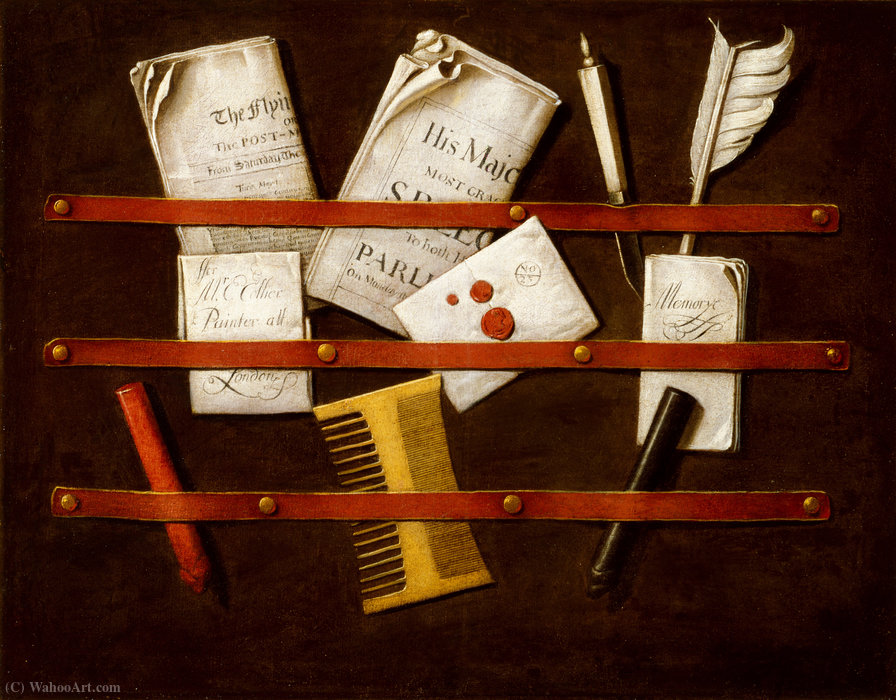
What truly distinguishes Collier's work is his innovative use of *trompe-l’œil*, or “fool the eye,” a technique that creates the illusion of three-dimensionality on a two-dimensional surface. He achieved this through meticulous attention to detail, precise perspective, and an understanding of light and shadow. Objects appeared to spill off the canvas, seemingly floating in space – a letter rack overflowing with documents, a collection of books stacked precariously high, or a smoking pipe resting on a table. This technique wasn’t merely decorative; it served to heighten the sense of realism and immediacy within his paintings, drawing the viewer into the scene and emphasizing the tangible nature of the objects depicted. Collier's mastery of *trompe-l’œil* set him apart from his contemporaries and established him as a pioneer in Dutch still-life painting.Legacy and Historical Significance
Evert Collier’s influence on subsequent generations of artists is considerable. His work served as a powerful commentary on the values and anxieties of 17th-century society, reflecting a growing awareness of mortality and the limitations of human ambition. His paintings continue to resonate with viewers today, offering a timeless meditation on the themes of life, death, and the pursuit of meaning. Major museums worldwide – including the Denver Art Museum, the Honolulu Museum of Art, the Indianapolis Museum of Art, the National Portrait Gallery (United Kingdom), the Rijksmuseum (Amsterdam), and the Art Institute of Chicago – house significant examples of his oeuvre, ensuring that his artistic legacy endures for centuries to come. Dror Wahrman’s book, *Mr. Collier's Letter Racks*, provides a comprehensive exploration of this artist’s unique contribution to the world of still-life painting, solidifying his place as a master of both symbolism and technique.
edwart collier (evert colyer)
1640 - 1708