
 Προεπισκόπηση σε πραγματική κλίμακα
 Αποστολή
 Κοινοποίηση
 Λεπτομέρειες
 Οδηγός

 Λήψη
Λήψη
 Παρόμοια αντικείμενα συλλογής
 Ακτινογραφία
 Παρουσίαση
 Q&A
Q&A Στατιστικά
Delos

- 76.0 x 54.0 cm


 Περισσότερα
Το έργο τέχνης που εμφανίζεται σε αυτή τη σελίδα προστατεύεται από τους νόμους περί πνευματικών δικαιωμάτων, γεγονός που σημαίνει ότι δεν μπορούμε νομικά να δημιουργήσουμε ή να πουλήσουμε μια ταυτόσημη αναπαραγωγή του. Αυτή η προστασία επιβάλλεται βάσει διεθνών συμφωνιών, όπως η Σύμβαση της Βέρνης καθώς και από τους εθνικούς νόμους, συμπεριλαμβανομένων αυτών που ορίζονται από το Νομοθεσία περί πνευματικών δικαιωμάτων των ΗΠΑ - Τίτλος 17. Όλα τα δικαιώματα κατοχυρωμένα. Απαγορεύεται η αναπαραγωγή χωρίς άδεια.
Αυτή η μέθοδος συμμορφώνεται πλήρως με τους κανονισμούς περί πνευματικών δικαιωμάτων, καθώς δεν περιλαμβάνει την αντιγραφή ή την αναπαραγωγή του προστατευόμενου έργου. Αντίθετα, πρόκειται για μια δημιουργική ερμηνεία — ένα νέο έργο που επηρεάζεται από το πρωτότυπο, χωρίς όμως να είναι πανομοιότυπο με αυτό.
Giclée / Εκτυπώσεις Τέχνης
Εκτύπωση giclée ή σε καμβά ποιότητας μουσείου με γρήγορη παραγωγή και ευέλικτες επιλογές φινιρίσματος. ( Αγορά χειροποίητου πίνακα Μετάβαση σε Ψηφιακή Αποτέλεσμα)




P118B €10

P118H €10

P118W €10

P438Z €10

P508JH €12

P508YH €12

P805H €10

P805Z €10

P919BZ €10

P919G €10

P919XJ €10

P959ZH €10

P968JZ €12

W106C €8

W218G €10

W218JH €8

W218Y €10

W307PJ €10

W316G €10

W316PJ €8

W316Y €10

W398PJ €8

W4111J €10

W500HY €15

W500JH €15

W692G €12

W849H €8

W940BG €15

W953PJ €8




Επιλέξτε από τις προκαθορισμένες διαστάσεις μας που διατηρούν τις αρχικές αναλογίες του έργου τέχνης.

Εισάγετε το πλάτος και το ύψος που επιθυμείτε, ώστε να ταιριάζουν στο κάδሮ ή στον τοίχο σας. Μια εκτύπωση μπορεί μόνο να υποστεί κοψίμό και ποτέ να μην γίνει μεγαλύτερη από την αρχική εικόνα, επομένως η επιλογή μεγέθους με διαφορετικό σχήμα συνεπάγεται απώλεια ενός μέρους της εικόνας. Σας στέλνουμε ένα ψηφιακό mockup για έγκριση πριν προχωρήσουμε σε οποιαδήποτε εκτύπωση. Η εικόνα που εμφανίζεται σε αυτή τη σελίδα δεν δείχνει την πραγματική κοπή — μόνο το mockup την παρουσιάζει.
Παγκόσμια Αποστολή () σε 2 εβδομάδες αντί για τις συνήθεις 4/5 εβδομάδες. (31 Οκτώβριος)

Δωρεάν γρήγορη διεθνής αποστολή

Κάμβας από Λινό Υψηλής Ποιότητας

Πλήρης ασφάλιση μεταφοράς

Εγγύηση επιστροφής δασμών και φόρων εισαγωγής

Εγγύηση Απόλυτης Ομοιότητας Χρωμάτων

Πολιτική Επιστροφής 100 Ημερών (Μόνο σε περίπτωση ελαττωμάτων)

Εγγύηση επιστροφής 100% των χρημάτων

Προσφορά για πολλαπλές παραγγελίες
 Η επιλογή με γυαλί είναι διαθέσιμη μόνο για μεγέθη κάτω από 110 εκ.

Delos
Giclée / Εκτυπώσεις Τέχνης
Διαστάσεις Αναπαραγωγής
-


Τελική Τιμή
€ 71
Delos: A Meditation on Form and Void by Barbara Hepworth
Barbara Hepworth’s “Delos,” created in 1971, is more than just a painting; it's an invitation to contemplate the relationship between solidity and emptiness, form and space. The work immediately draws the eye with its striking palette of yellows and blacks – a deliberate contrast that speaks volumes about the artist’s core concerns. The dominant yellow, reminiscent of sun-drenched stone or aged parchment, provides a warm, almost luminous backdrop for the carefully sculpted voids represented by the stark black circles. These aren't merely decorative elements; they are crucial to understanding Hepworth’s intention – to suggest a profound sense of absence and the inherent tension within any form.
Hepworth, a pivotal figure in 20th-century British art, was deeply influenced by both European modernism and her own experiences with sculpture. Her work moved beyond representational imagery, seeking instead to capture essential qualities – weight, texture, and the dynamic interplay of positive and negative space. “Delos” echoes this approach, translating the tactile experience of three-dimensional form into a two-dimensional plane. The painting’s genesis lies partly in Hepworth's fascination with Greek mythology, particularly the island of Delos, sacred to Apollo and Artemis and renowned for its ancient ruins. The title itself acts as a direct reference to this historical and symbolic significance, grounding the abstract composition within a rich cultural context.
Technique and Composition: A Study in Contrasts
The painting’s technique is deceptively simple yet remarkably sophisticated. Hepworth employed a layered approach, building up the yellow ground with thin washes of color to create subtle tonal variations. The black circles are not painted directly onto the surface; rather, they appear as carefully applied areas of concentrated pigment, suggesting a deliberate process of carving or subtraction. This technique reinforces the idea of form emerging from void – a central theme in Hepworth’s oeuvre. The placement of the circles is equally important. The largest circle dominates the center of the composition, acting as a visual anchor and drawing the eye inward. Smaller circles are strategically positioned around it, creating a dynamic balance between stability and movement.
Hepworth's use of color is particularly noteworthy. The yellow isn’t a bright, cheerful hue; it possesses a muted quality, hinting at age and weathering – qualities that resonate with the ancient ruins of Delos itself. The black circles, conversely, are intensely dark, creating a powerful contrast that demands attention. This interplay of light and shadow generates a sense of depth and volume, inviting the viewer to explore the painting’s surface and contemplate its hidden dimensions.
Symbolism and Emotional Resonance
Beyond its formal qualities, “Delos” is imbued with a profound sense of symbolism. The circles can be interpreted as representing the absence of something – perhaps loss, memory, or the unknowable mysteries of the universe. They also evoke the idea of holes or voids within forms, suggesting that even the most solid and substantial objects are ultimately defined by their emptiness. This concept aligns with Hepworth’s broader exploration of the relationship between form and space, a theme she consistently revisited throughout her career.
The painting's emotional impact is subtle yet deeply affecting. It doesn’t offer easy answers or explicit narratives; instead, it invites contemplation and introspection. There’s a sense of quiet melancholy, a recognition of the transient nature of existence, and a profound appreciation for the beauty that can be found in emptiness. “Delos” ultimately serves as a reminder that true understanding often arises not from filling every space with detail, but from embracing the power of suggestion and allowing the mind to complete the picture.
A Legacy of Form and Space
Barbara Hepworth’s “Delos” stands as a testament to her pioneering spirit and her profound insights into the nature of art. It's a work that transcends its simple composition, offering viewers a glimpse into the artist’s inner world and inviting them to engage in a dialogue with timeless themes of form, space, and existence. Reproductions of this piece offer an accessible way to experience Hepworth’s vision, bringing her evocative exploration of emptiness and solidity into any interior space – a reminder that sometimes, the most powerful art is found not in what is shown, but in what is left unsaid.
Ερωτήσεις και Απαντήσεις
Πόσο φως φαίνεται να αντανακλούν τα χρώματα του "Delos";
Τα χρώματα του "Delos" παρουσιάζουν μια φωτεινότητα επιπέδου Luminous.
Πού μπορώ να αγοράσω ένα εκτύπωμα του "Delos" του Μπάρμπαρα Χέπγουορθ;
Για να αποκτήσετε ένα εκτύπωμα του "Delos" του Μπάρμπαρα Χέπγουορθ, αρκεί να το παραγγείλετε στη σελίδα Καλλιτεχνικό Έντυπο: ένα εκτύπωμα fine art σε βαμβακερό καμβά ή σε αρχειοθετητικό χαρτί καμβά.
Πού εκτίθεται σήμερα το "Delos" του Μπάρμπαρα Χέπγουορθ;
Το έργο "Delos" του Μπάρμπαρα Χέπγουορθ εκτίθεται στο The Hepworth Wakefield, Wakefield, Ηνωμένο Βασίλειο. Η αναφορά στο μουσείο αφορά το πρωτότυπο έργο και όχι αναπαραγωγές.
Βιογραφικό Καλλιτέχνη
Early Life and Artistic Influences
Barbara Hepworth (1903–1975) was born Jocelyn Barbara Hepworth on January 10, 1903, in Wakefield, Yorkshire—the eldest child of Herbert and Gertrude Johnson Hepworth. Her father, a civil engineer for the West Riding County Council, instilled in her a fascination with geometric forms and spatial relationships from an early age. Growing up in rural Yorkshire profoundly shaped her artistic sensibilities, fostering a deep connection to the landscape and its rhythms. Hepworth’s formative years were marked by exposure to influential figures and ideas. Her father's profession exposed her to precision and engineering principles—concepts that would later inform her sculptural explorations. Equally significant was her friendship with Henry Moore, whom she met at Leeds School of Art in 1920. Together they embarked on a shared artistic journey, recognizing the power of abstraction as a means of conveying emotion and exploring fundamental questions about form and materiality. The influence of Surrealism—particularly its emphasis on dreamlike imagery and subconscious exploration—became palpable during her time studying at the Royal College of Art in London (1921–24), where she honed her skills alongside fellow artists like Moore and Nicholson.Career Development: From Abstraction to Monumental Sculpture
Hepworth’s artistic trajectory began with a commitment to direct carving—a technique championed by Skeaping that prioritized working directly on the material, bypassing preliminary sketches or models. This approach allowed her to respond intuitively to the inherent qualities of stone and wood, capturing their textures and contours in ways that defied conventional representation. Her early sculptures—characterized by simplified geometric shapes—reflected the prevailing modernist aesthetic of the period, aligning with the broader movement’s rejection of academic conventions. The collaboration with Ben Nicholson proved pivotal in shaping Hepworth's artistic vision. Their shared exploration of abstraction extended beyond mere stylistic considerations; it encompassed a deeper engagement with philosophical ideas about perception and experience. As Hepworth herself eloquently expressed, “All my early memories are of forms and shapes and textures. Moving through and over the West Riding landscape with my father in his car, the hills were sculptures; the roads defined the forms.” This profound connection to the natural world—expressed through her art—became a recurring motif throughout her oeuvre.Notable Works and Exhibitions
Hepworth’s artistic reputation soared during the Second World War when she relocated to St Ives, Cornwall, alongside Nicholson. The tranquility of the Cornish coast provided inspiration for her sculptures, which increasingly incorporated elements of organic form—particularly strings and wires—to create dynamic tensions between mass and space. Her monumental sculpture *Winged Figure* (1961–3), commissioned by John Lewis for their Oxford Street flagship store, stands as a testament to her ambition and technical prowess. It exemplifies Hepworth’s masterful manipulation of material—aluminum—to achieve an ethereal lightness that defies its considerable size. Her sculptures were showcased in prestigious international exhibitions, cementing her status as one of the foremost artists of her generation. The Hepworth Wakefield houses a comprehensive collection of Hepworth's works, offering visitors a unique opportunity to immerse themselves in her artistic legacy. Furthermore, her lithographs—produced during her later years—demonstrate her continued exploration of printmaking techniques and her unwavering dedication to conveying profound emotional resonance through visual imagery.Legacy and Recognition
Barbara Hepworth’s influence extends far beyond the realm of sculpture itself. Her pioneering approach to abstraction challenged prevailing artistic conventions, paving the way for subsequent generations of artists to embrace experimental forms and techniques. She was awarded the Dame Commander Order of the British Empire in 1958—a recognition of her contribution to British art and culture—and continued to produce groundbreaking works until her untimely death in a fire at her studio in Hampstead in 1975. Hepworth’s sculptures remain revered for their elegance, simplicity, and ability to evoke contemplation—serving as enduring symbols of modernist artistic innovation and humanist sensitivity.
Μπάρμπαρα Χέπγουορθ
1903 - 1975 , Ηνωμένο Βασίλειο
Γρήγορα στοιχεία
- Artistic Movement Or Style: Μοντερνισμός
- Artists Or Movements Influenced By This Artist: ['Αβστρακτική Τέχνη']
- Artists Who Influenced This Artist: ['Χένρι Μουρ']
- Date Of Birth: 10 Ιανουαρίου 1903
- Full Name: Jocelyn Barbara Hepworth
- Nationality: Αγγλική
- Notable Artworks:
- Περικυκλωμένη Σχήμα Ι
- Δύο Σχήματα
- Place Of Birth: Wakefield, Αγγλία
Σχετικά άρθρα

The Enduring Form: Exploring Themes & Techniques in Sculpture Across Historical Periods
Explore the rich history of sculpture from ancient masterpieces to contemporary innovations. Discover key techniques, influential artists & investment potential for discerning art collectors.

Οι 10 Κορυφαίοι Χάλκινοι Αγάλματα που Άλλαξαν την Ιστορία της Τέχνης | OriginalUniqueArt.gr
Ανακαλύψτε τα 10 θρυλικά χάλκινα αγάλματα που διαμόρφωσαν την τέχνη! Από τον Rodin στον Michelangelo, εξερευνήστε ιστορίες, τεχνικές & αισθητική. Βρείτε αντίγραφα υψηλής ποιότητας για το σπίτι σας στην OriginalUniqueArt.com.
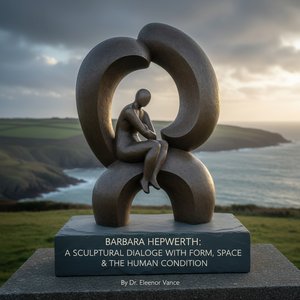
Barbara Hepworth: A Sculptural Dialogue with Form, Space & the Human Condition
Explore the profound world of Barbara Hepworth's sculpture. Discover her artistic evolution, iconic forms, and lasting influence on modern art. A guide for collectors & enthusiasts.

Οι 10 Κορυφαίοι Χάλκινοι Θρύλοι που Άλλαξαν την Τέχνη – Έμπνευση για το Σπίτι σας
Ανακαλύψτε τα 10 θρυλικά χάλκινα γλυπτά που επαναπροσδιόρισαν την τέχνη! Ιστορίες από Rodin, Degas & άλλους μεγάλους καλλιτέχνες. Βρείτε αναπαραγωγές υψηλής ποιότητας για να εμπνεύσετε το σπίτι σας. Εξερευνήστε τη συλλογή στο OriginalUniqueArt.com.

The Enduring Form: Sculpture Across History, Technique & Emotional Resonance
Explore the rich history of sculpture with OriginalUniqueArt. Discover key techniques, influential artists & investment potential for discerning collectors. Expert insights into valuing and collecting timeless masterpieces.


