German Expressionism
Milliner (Αουγκούστ Μάκε)
Ο/Η Αουγκούστ Μάκε (1887–1914) δημιούργησε το Milliner. Ανήκει στο κίνημα German Expressionism. Είναι φτιαγμένο σε Oil On Canvas. Αποθηκεύεται στο Museum Folkwang στο Έσεν, Γερμανία.
- Oil On Canvas
- Museum Folkwang, Έσεν

 Προεπισκόπηση σε πραγματική κλίμακα

 Ελαιογραφικό Χειροποίητο Έργο
 Αποστολή
 Κοινοποίηση
 Πληροφοριακό φύλλο


 Λήψη
 Παρόμοια αντικείμενα συλλογής
 Ακτινογραφία
 Παρουσίαση
 Ερωτήσεις & Απαντήσεις

 Στατιστικά
Milliner, εν συντομία
- Τίτλος
- Milliner
- Καλλιτέχνης
- Αουγκούστ Μάκε (1887–1914)
- Γεννημένος/η το
- Μέσεντε, Γερμανία
- Μέσο
- Oil On Canvas
- Πού εκτίθεται
- Museum Folkwang, Έσεν, Γερμανία
- Κίνηση
- German Expressionism
- Θέμα
- street scene, woman portrait, hat shop display, umbrella, birds, thun lake
Τι απεικονίζει το Milliner;
A Moment Captured on the Thuner Lake Promenade
August Macke’s Milliner transports us to a sun-drenched summer afternoon in Hilterfingen, a place that held such profound resonance for the artist during his final years. This painting is more than just a depiction of a street scene; it is an immersion into a specific, luminous moment—a pause in the vibrant flow of daily life along the Thuner Lake promenade. The composition centers on a woman, elegantly poised with her parasol held nearby, seemingly absorbed by the colorful spectacle of the hat shop display before her. Macke masterfully captures the interplay between human stillness and the riotous energy suggested by the merchandise and the scattered birds that populate the scene.
The Geometry of Light and Commerce
What immediately draws the eye is the fascinating tension between structure and spontaneity. The façade of the hat shop, along with the surrounding showcase walls, are rendered as strictly structured geometric planes. These architectural elements provide a stable, almost crystalline framework against which the softer, more organic forms—the woman’s drapery, the curve of the umbrella, the flutter of wings—are set in delightful contrast. This structural underpinning hints at Macke's fascination with modern urban life and the way commerce organizes our visual experience. One can almost feel the crisp geometry of the painted glass and polished wood.
Echoes of Impressionism and Modernity
While rooted in the vibrant palette associated with German Expressionism, this work carries a distinct echo of Impressionist light play, perhaps even nodding toward Delaunay’s explorations of simultaneous windows. However, Macke tempers that potential dynamism with a calmer, almost meditative quality. The colors—the striking red of the woman's coat against the pastel tones of the shop display—are applied with a luminous touch, suggesting the way sunlight refracts off various surfaces. It is a study in controlled color theory, where every hue contributes to the overall atmospheric glow.
Symbolism and Emotional Resonance
The inclusion of the birds adds a layer of delicate symbolism. They are fleeting elements, embodying freedom and the ephemeral nature of beauty itself. Paired with the woman’s statue-like contemplation, they invite the viewer to ponder what holds our attention in the modern world—is it the dazzling display, the quiet moment of reflection, or the simple act of observing life unfold? Owning a reproduction of Milliner is not merely decorating a space; it is inviting a piece of that luminous, contemplative summer air into your home, transforming any room into a gallery overlooking a sunlit European promenade.
Σε ποιο μουσείο βρίσκεται το Milliner;
Museum Folkwang
Έσεν, Γερμανία
Origins and History of Museum Folkwang The history of Museum Folkwang begins with the convergence of two distinct legacies. In 1902, Karl Ernst Osthaus established the private Folkwang Museum, a collection driven by a specific vision for modern expression. This was later joined by the Essener Kunstmuseum, which had been founded in 1906.


Εικόνες υψηλής ανάλυσης του Milliner

Δημόσιος τομέας: ο καλλιτέχνης απεβίωσε το 1914.
Άλλες διαστάσεις, καρέττες και αναφορά →Αουγκούστ Μάκε, Milliner, Museum Folkwang. Δημόσιο περιουσιακό δικαίωμα
Χρώματα προσαρμοσμένα στο πρωτότυπο από ειδικό ψηφιακής επεξεργασίας και αρχείο λεπτομερώς διορθωμένο, πιστό στις πινελιές του καλλιτέχνη.
Αγοράστε το αρχείο υψηλής ανάλυσηςΕρωτήσεις για το Milliner, απαντημένες
Πού μπορώ να δω το πρωτότυπο "Milliner" του Αουγκούστ Μάκε;
Το πρωτότυπο έργο "Milliner" του Αουγκούστ Μάκε βρίσκεται στο Museum Folkwang, Έσεν, Γερμανία. Μια αναπαραγωγή σας επιτρέπει να εκθέσετε το έργο στο σπίτι σας.
Με ποιο υλικό έχει εκτελεστεί το έργο "Milliner" του Αουγκούστ Μάκε;
Το έργο "Milliner" εκτελέστηκε με τη χρήση του/της Oil On Canvas.
Περί τι αφορά το "Milliner";
Τα θέματα του "Milliner" είναι τα street scene, woman portrait, hat shop display, umbrella, birds, thun lake, outdoor life.
Το έργο "Milliner" ανήκει στο δημόσιο περιουσιακό αγαθό;
Όσον αφορά τα πνευματικά δικαιώματα, το "Milliner" ανήκει στο δημόσιο κτήμα - τα δικαιώματα αυτορության έχουν λήξει.
Ποιος είναι ο καλλιτέχνης πίσω από το "Milliner";
Ο καλλιτέχνης πίσω από το "Milliner" είναι ο/η Αουγκούστ Μάκε. Το έργο καταχωρείται υπό το όνομα του/της Αουγκούστ Μάκε.
Προς ποιο καλλιτεχνικό ρεύμα ανήκει το έργο "Milliner" του Αουγκούστ Μάκε;
Το καλλιτεχνικό ρεύμα που συνδέεται με το "Milliner" του Αουγκούστ Μάκε είναι το German Expressionism. Αυτή η ταξινόμηση τοποθετεί το έργο ανάμεσα σε σχετικούς καλλιτέχνες και έργα τέχνης.
Ποια φάση της καριέρας του Αουγκούστ Μάκε αντιπροσωπεύει το "Milliner";
Το "Milliner" αντιπροσωπεύει την περίοδο Summer 1914 του Αουγκούστ Μάκε.
Γιατί η κατάσταση των πνευματικών δικαιωμάτων του "Milliner" είναι αυτή που είναι;
Το έργο "Milliner" του Αουγκούστ Μάκε ανήκει στο δημόσιο κτήμα - τα δικαιώματα αυτορության έχουν λήξει. Η διάρκεια της προστασίας των πνευματικών δικαιωμάτων υπολογίζεται από το έτος θανάτου του καλλιτέχνη, ο οποίος συνέβη το 1914.
Το έργο "Milliner" του Αουγκούστ Μάκε βρίσκεται στη χώρα καταγωγής του καλλιτέχνη;
Ναι - το έργο βρίσκεται στη χώρα καταγωγής του καλλιτέχνη. Η χώρα γέννησης του/της Αουγκούστ Μάκε είναι η Γερμανία, ενώ το μουσείο που διατηρεί το πρωτότυπο του "Milliner" βρίσκεται στην Γερμανία.
Σχετικά με τον καλλιτέχνη, Αουγκούστ Μάκε
1887–1914, Γερμανία
Αουγκούστ Μάκε
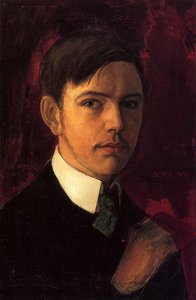
Early Life, Family and Training The story of August Macke begins in the town of Meschede, Germany, where he was born on January 3, 1887. He was the only son born to August Friedrich Hermann Macke, a building contractor and amateur artist, and Maria Florentine. His childhood was shaped by the shifting fortunes of his father’s company, which brought the family to Cologne and later to Bonn. Even as a young boy, the pull of visual expression was evident; he spent his early years sketching and designing sets for school plays, finding a way to translate his surroundings onto paper long before he ever stepped into a formal academy.
Σχετικά με τον Αουγκούστ Μάκε Σημαντικά έργα του Αουγκούστ Μάκε
Εργασίες του Αουγκούστ Μάκε
 Η Γυναίκα με το Πράσινο Γιλέκο1913
 Βαθμωτές με τον τόπο στο υπόβαθρο1913
 Το Καταστημα Ηλιάτου1913
 Portrait of the Artist's Wife with Hat1909

Μελέτες γύρω από το Milliner
 Biedermeier vs. Romanticism: Understanding Two 19th-Century StylesMaster the nuances between Biedermeier and Romanticism through expert analysis. Discover the soul of 19th-century art today.
 Impressionism vs. Expressionism: Capturing Light and EmotionMaster the technical differences between Impressionism and Expressionism. Discover the art of light and emotion now.
 August Macke: Expressionist Visions of Harmony & Modern LifeExplore the vibrant Expressionist paintings of August Macke (1887-1914). Discover his key role in Der Blaue Reiter, Fauvist influences, and…