

 Προεπισκόπηση
 Αποστολή
 Κοινοποίηση
 Λεπτομέρειες
 Οδηγός

 Λήψη
Λήψη
 Παρόμοια αντικείμενα συλλογής
 Ακτινογραφία
 Παρουσίαση
 Στατιστικά
Spring Evening
 Oil On Panel
- Symbolist Painting
 1879
1879 67.0 x 129.0 cm
 Μουσείο Τέχνης Βουδαπέστης
 Περισσότερα λεπτομέρεια
Giclée / Εκτυπώσεις Τέχνης
Εκτύπωση giclée ή σε καμβά ποιότητας μουσείου με γρήγορη παραγωγή και ευέλικτες επιλογές φινιρίσματος. ( Αγορά χειροποίητου πίνακα Μετάβαση σε Ψηφιακή Εικόνα)




P118B €10

P118H €10

P118W €10

P438Z €10

P508JH €12

P508YH €12

P805H €10

P805Z €10

P919BZ €10

P919G €10

P919XJ €10

P959ZH €10

P968JZ €12

W106C €8

W218G €10

W218JH €8

W218Y €10

W307PJ €10

W316G €10

W316PJ €8

W316Y €10

W398PJ €8

W4111J €10

W500HY €15

W500JH €15

W692G €12

W849H €8

W940BG €15

W953PJ €8




Επιλέξτε από τις προκαθορισμένες διαστάσεις μας που διατηρούν τις αρχικές αναλογίες του έργου τέχνης.

Πληκτρολογήστε το πλάτος και το ύψος που επιθυμείτε, ώστε να ταιριάζουν στο κάδሮ ή στον τοίχο σας. Μια εκτύπωση μπορεί μόνο να κοπεί και ποτέ να μην γίνει μεγαλύτερη από την εικόνα, επομένως ένα μέγεθος με διαφορετικό σχήμα συνεπάγεται απώλεια ενός μέρους της εικόνας. Σας στέλνουμε ένα ψηφιακό mockup για έγκριση πριν εκτυπώσουμε οτιδήποτε. Η εικόνα που εμφανίζεται σε αυτή τη σελίδα δεν δείχνει την πραγματική κοπή — μόνο το mockup την παρουσιάζει.
Παγκόσμια Αποστολή () σε 2 εβδομάδες αντί για τις συνήθεις 4/5 εβδομάδες. (18 Οκτώβριος)

Δωρεάν γρήγορη διεθνής αποστολή

Κάμβας από Λινό Υψηλής Ποιότητας

Πλήρης ασφάλιση μεταφοράς

Εγγύηση επιστροφής δασμών και φόρων εισαγωγής

Εγγύηση Απόλυτης Ομοιότητας Χρωμάτων

Πολιτική Επιστροφής 100 Ημερών (Μόνο σε περίπτωση ελαττωμάτων)

Εγγύηση επιστροφής 100% των χρημάτων

Έκπτωση για πολλαπλές παραγγελίες
 Η επιλογή με γυαλί είναι διαθέσιμη μόνο για μεγέθη κάτω από 110 εκ.

Spring Evening
Giclée / Εκτυπώσεις Τέχνης
Διαστάσεις Αναπαραγωγής
-


Συνολικό Κόστος
€ 70
The Ethereal Embrace of Spring Evening
Arnold Böcklin’s “Spring Evening,” painted in 1879, isn't merely a depiction of a woodland scene; it’s an immersion into a realm of melancholic beauty and profound symbolism. Created during his time in Florence – a city that profoundly shaped his artistic vision – the painting captures a fleeting moment of enchantment, steeped in the atmosphere of late Romanticism and foreshadowing the rise of Symbolism. The canvas breathes with a quiet intensity, dominated by muted greens, blues, and browns, creating an almost dreamlike quality that immediately draws the viewer into its hushed world.
At the heart of the composition stands a woman, her posture suggesting both contemplation and vulnerability. Her hand gently resting on her head is a gesture simultaneously of yielding and quiet strength – she’s not passively observing but actively engaged with the scene unfolding before her. Beside her sits a man, seemingly lost in thought as he peruses a book, his presence offering a grounding element to the ethereal atmosphere. A bear, rendered with surprising tenderness, interacts playfully with both figures, blurring the lines between human and animal, nature and civilization. This carefully orchestrated tableau speaks of harmony, connection, and the delicate balance of the natural world.
A Symphony of Symbolism
Böcklin’s work is deeply rooted in mythology and folklore, drawing heavily on ancient Greek and Roman traditions. The central figure, often interpreted as Pan – the god of nature, shepherds, and wild music – plays his pipes, summoning a chorus of unseen nymphs from the surrounding forest. These dryads, with their flowing hair and graceful movements, represent the spirit of the woods, embodying both beauty and danger. The bear itself is a potent symbol, frequently associated with strength, wisdom, and primal instincts—a reminder of humanity’s connection to the earth.
The painting's muted palette contributes significantly to its symbolic weight. The cool blues and greens evoke a sense of melancholy and introspection, while the browns ground the scene in the tangible reality of the forest floor. The lighting is soft and diffused, creating an atmosphere of twilight—a liminal space between day and night, representing transition, mystery, and perhaps even mortality. Böcklin masterfully uses color not to simply depict a landscape but to convey complex emotions and ideas.
Technique and Artistic Influences
“Spring Evening” exemplifies Böcklin’s distinctive artistic style, characterized by meticulous detail, rich textures, and an almost obsessive attention to the natural world. He employed a technique of layering thin glazes of oil paint, building up color gradually to achieve remarkable depth and luminosity. The brushwork is subtle yet expressive, conveying both the smoothness of the forest floor and the intricate details of the foliage.
Böcklin’s artistic journey was profoundly influenced by his time in Düsseldorf, where he studied under Schirmer and became associated with the Düsseldorf School of Painting. However, it was in Florence that he truly developed his unique Symbolist vision, drawing inspiration from the city's rich cultural heritage and its connection to antiquity. The painting also reflects the influence of Romanticism, particularly the emphasis on emotion, imagination, and the sublime beauty of nature—themes central to the movement.
A Timeless Resonance
“Spring Evening” continues to resonate with viewers today because it taps into universal themes of longing, connection, and the search for meaning. Its evocative atmosphere and symbolic richness invite contemplation and offer a glimpse into the artist’s deeply personal vision. The painting's enduring appeal lies in its ability to transport us to another time and place—a world where myth and reality intertwine, and where the beauty of nature is inextricably linked to the mysteries of the human soul.
Ερωτήσεις & Απαντήσεις
Αποτελεί το "Spring Evening" του Άρνολδος Μπόκλιν ένα από τα περιζητούμενα έργα της καλλιτεχνικής κατεύθυνσης Symbolist Painting;
Το έργο "Spring Evening" του Άρνολδος Μπόκλιν ταξινομείται ως Recognized και ανήκει στο καλλιτεχνικό ρεύμα Symbolist Painting.
Πού μπορώ να αγοράσω ένα εκτύπωμα του "Spring Evening" του Άρνολδος Μπόκλιν;
Το έργο "Spring Evening" είναι διαθέσιμο ως ένα εκτύπωμα fine art σε βαμβακερό καμβά ή σε αρχειοθετητικό χαρτί καμβά. Οι παραγγελίες πραγματοποιούνται στη σελίδα Καλλιτεχνικό Έντυπο, στο μέγεθος που επιλέξετε.
Ποιος είναι ο καλλιτέχνης πίσω από το "Spring Evening";
Ο καλλιτέχνης πίσω από το "Spring Evening" είναι ο/η Άρνολδος Μπόκλιν. Το έργο καταχωρείται υπό το όνομα του/της Άρνολδος Μπόκλιν.
Βιογραφικό Καλλιτέχνη
Early Life and Training
Arnold Böcklin, a figure of profound melancholy and haunting beauty, was born on October 16, 1827, in Basel, Switzerland – a city steeped in history and artistic tradition. His father, Christian Frederick Böcklin, descended from an old family rooted in the silk trade, while his mother, Ursula Lippe, hailed from the same city as well. From a young age, Arnold displayed a keen interest in art, enrolling at the Zeichenschule (drawing school) of Basel under the guidance of Ludwig Adam Kelterborn. This foundational training instilled in him a solid understanding of technique and composition. Four years later, in 1845, he pursued his artistic ambitions further by entering the Düsseldorf Academy, where he studied under the renowned German landscape painter Johann Wilhelm Schirmer. It was here that he forged a lasting friendship with Anselm Feuerbach, an encounter that profoundly shaped his artistic sensibilities. Böcklin’s time in Düsseldorf marked a crucial period of development, exposing him to the vibrant atmosphere of the school and fostering a deep appreciation for classical forms and dramatic narratives – influences that would later permeate his distinctive style.Artistic Career and Symbolism
Böcklin's artistic journey took him beyond the borders of Switzerland and Germany, leading him through cities brimming with cultural significance. He spent time in Paris, immersing himself in the works of the Louvre’s vast collection, absorbing the techniques and aesthetics of masters from across centuries. Rome, with its ancient ruins and evocative landscapes, became another pivotal location, profoundly influencing his artistic vision. Böcklin's work is characterized by a distinctive blend of allegorical and mythological themes, often set against backdrops of classical architecture – a deliberate choice that evoked a sense of timelessness and mystery. He frequently explored the darker aspects of human existence, particularly mortality and the ephemeral nature of life, imbuing his paintings with an atmosphere of profound sadness and contemplation. Notable early works include *Great Park*, which showcased ancient mythology in a dramatic and evocative manner, and *Nymph and Satyr* (1858) and *Sappho* (1859), both of which established his reputation for capturing the beauty and melancholy of classical narratives. A particularly poignant example of his unique style is *Portrait of Myself, with Death Playing the Violin* (1872), a haunting self-portrait that brilliantly encapsulates his preoccupation with mortality and the interplay between life and death.Influence and Legacy
Arnold Böcklin’s artistic legacy extends far beyond his own lifetime, profoundly influencing subsequent generations of artists. He is considered one of the key figures in the Symbolist movement, a reaction against the realism and naturalism that dominated much of 19th-century art. His work resonated deeply with younger artists seeking to express subjective emotions and explore the realm of dreams and mysticism. Hans Thoma, a prominent German painter and writer, was particularly inspired by Böcklin’s evocative imagery and haunting atmosphere. Furthermore, his paintings served as a significant source of inspiration for several late-Romantic composers, notably Sergey Rachmaninoff, whose symphonic poem *The Isle of the Dead* drew directly from Böcklin's iconic series of the same name. Clement Greenberg famously described Böcklin’s work as “one of the most consummate expressions” of its time, recognizing his ability to capture a profound sense of melancholy and mystery. Böcklin’s style overlapped with that of the Pre-Raphaelites, sharing their interest in romanticism, symbolism, and the exploration of themes related to death and beauty.Major Works and Collections
Arnold Böcklin is best remembered for his five versions of *The Isle of the Dead* (1880-1886), a series that remains one of the most iconic images in art history. The paintings depict a desolate island shrouded in mist, populated by spectral figures – a powerful evocation of mortality and the mysteries of the afterlife. These works were directly inspired by the English cemetery in Florence, where Böcklin’s daughter was buried, adding a deeply personal dimension to their symbolism. Beyond *The Isle of the Dead*, Böcklin created numerous other significant paintings, including *Pan in the Reeds* (1857), *Odysseus and Calypso* (1883), and *The Pest* (1898) – each a testament to his unique artistic vision. His works are now housed in several prestigious museums around the world, including:- Öffentliche Kunstsammlung (Basel, Switzerland)
- Kunstmuseum Basel (Switzerland)
- Museum Kunsthaus Zürich (Zürich, Switzerland)
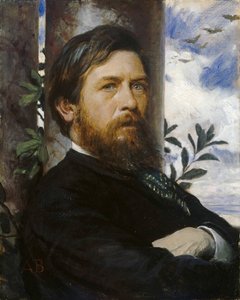
Άρνολδος Μπόκλιν
1827 - 1901 , Ελβετία
Στοιχεία καλλιτέχνη
- Artistic Movement Or Style: Συμβολισμός
- Artists Or Movements Influenced By This Artist:
- Hans Thoma
- Pre-Raphaelites
- Artists Who Influenced This Artist:
- Schirmer
- Feuerbach
- Date Of Birth: 16 Οκτ 1827
- Date Of Death: 16 Ιαν 1901
- Full Name: Arnold Böcklin
- Nationality: Ελβετός
- Notable Artworks:
- Το Νησί των Θανών
- Νύμφη και Σατύρος
- Σαπφώ
- Place Of Birth: Βασίλειο, Ελβετία
Σχετικά άρθρα

Evocations of Place: A Historical Journey Through Landscape Art
Explore the rich history of landscape art with OriginalUniqueArt. Discover renowned artists, movements like Impressionism & tonalism, and expert guidance for collecting timeless pieces. Find your perfect serene escape today!

John Constable: Τα 25 Κορυφαία Έργα Τέχνης | Ανακαλύψτε την Αγγλική Υπαίθριο στον Χώρο Σας
Ανακαλύψτε τα 25 κορυφαία έργα τέχνης του John Constable! Εξερευνήστε την αγγλική τοπιογραφία, τον ρομαντισμό και τη μαγεία της φύσης. Υψηλής ποιότητας αναπαραγωγές & ιδέες διακόσμησης στον χώρο σας. Ανακαλύψτε όλα τα αριστουργήματα στο OriginalUniqueArt.com

Οι 10 Κορυφαίοι Πίνακες που Όρισαν τον Ρομαντισμό στην Τοπιογραφία | OriginalUniqueArt.gr
Ανακαλύψτε τους 10 πίνακες που καθόρισαν τον Ρομαντισμό στην τοπιογραφία! Friedrich, Turner & άλλοι. Ιστορίες τέχνης, τεχνικές και έμπνευση για διακόσμηση σπιτιού. Βρείτε αναπαραγωγές υψηλής ποιότητας στο OriginalUniqueArt.com.

Evocations of Place: A Historical Journey Through Landscape Art
Explore the rich history of landscape art with OriginalUniqueArt. Discover renowned artists, movements like Impressionism & Romanticism, and expert guidance for collecting timeless pieces. Find your perfect serene escape today!

Nature’s Sanctuary: Curating Enchanting Forest Artworks to Transform Your Home into a Serene Woodland Retreat
Transform your home into a serene woodland retreat with enchanting forest artworks. Discover museum-quality oil reproductions and custom landscape commissions designed to bring the peaceful beauty of nature indoors.
