

 Προεπισκόπηση
 Αποστολή
 Κοινοποίηση
 Λεπτομέρειες
 Οδηγός

 Λήψη
Λήψη
 Παρόμοια αντικείμενα συλλογής
 Ακτινογραφία
 Παρουσίαση
 Στατιστικά
Pont dans un paysage de montagne


 Περισσότερα λεπτομέρεια
Giclée / Εκτυπώσεις Τέχνης
Εκτύπωση giclée ή σε καμβά ποιότητας μουσείου με γρήγορη παραγωγή και ευέλικτες επιλογές φινιρίσματος. ( Αγορά χειροποίητου πίνακα Μετάβαση σε Ψηφιακή Εικόνα)




P118B $10

P118H $10

P118W $10

P438Z $10

P508JH $12

P508YH $12

P805H $10

P805Z $10

P919BZ $10

P919G $10

P919XJ $10

P959ZH $10

P968JZ $12

W106C $8

W218G $10

W218JH $8

W218Y $10

W307PJ $10

W316G $10

W316PJ $8

W316Y $10

W398PJ $8

W4111J $10

W500HY $15

W500JH $15

W692G $12

W849H $8

W940BG $15

W953PJ $8




Επιλέξτε από τις προκαθορισμένες διαστάσεις μας που διατηρούν τις αρχικές αναλογίες του έργου τέχνης.

Μπορείτε να εισαγάγετε δικές σας διαστάσεις ώστε να ταιριάξουν με ένα συγκεκριμένο πλαίσιο ή χώρο. Εάν το επιλεγμένο μέγεθος δεν συμπίπτει με τις αναλογίες της πρωτότυπης εικόνας, θα κόψουμε το έργο τέχνης ή θα επεκτείνουμε την εικόνα με καθρεφτισμένη ή μονόχρωμη ατέλεια. Θα σας αποσταλεί ένα ψηφιακό mockup για έγκρισή σας πριν από την έναρξη της παραγωγής.
Παρακαλούμε σημειώστε ότι η προεπισκόπηση στην οθόνη δεν αντικατοπτρίζει την πραγματική κοπή ή επέκταση. Μόνο το mockup θα δείξει με ακρίβεια την τελική σύνθεση.
Παρόλο που είναι διαθέσιμες προσαρμοσμένες διαστάσεις, προτείνουμε την επιλογή μιας διάστασης από τη προκαθορισμένη λίστα για τη διατήρηση των αρχικών αναλογιών.
Παγκόσμια Αποστολή () σε 2 εβδομάδες αντί για τις συνήθεις 4/5 εβδομάδες. (25 Σεπτέμβριος)

Δωρεάν γρήγορη διεθνής αποστολή

Κάμβας από Λινό Υψηλής Ποιότητας

Πλήρης ασφάλιση μεταφοράς

Εγγύηση επιστροφής δασμών και φόρων εισαγωγής

Εγγύηση Απόλυτης Ομοιότητας Χρωμάτων

Πολιτική Επιστροφής 100 Ημερών (Μόνο σε περίπτωση ελαττωμάτων)

Εγγύηση επιστροφής 100% των χρημάτων

Έκπτωση για πολλαπλές παραγγελίες
 Η επιλογή με γυαλί είναι διαθέσιμη μόνο για μεγέθη κάτω από 110 εκ.

Pont dans un paysage de montagne
Giclée / Εκτυπώσεις Τέχνης
Διαστάσεις Αναπαραγωγής
-


Συνολικό Κόστος
$ 80
A Journey Through Symbolism: Exploring Böcklin's Mountain Landscape
Arnold Böcklin’s Pont dans un paysage de montagne is not merely a depiction of stone and foliage; it is an invitation—a sublime passage into a realm where the tangible world dissolves into myth and profound contemplation. This masterpiece, steeped in the evocative atmosphere of Symbolism, immediately draws the viewer across its painted threshold. One gazes upon a bridge, elegantly spanning a valley carved by time, set against a backdrop of monumental, slumbering mountains. The air itself seems thick with unspoken narratives, beckoning us to slow our pace and simply absorb the breathtaking grandeur that Böcklin so masterfully captured on canvas.
The Composition: Nature's Grand Narrative
Observe how the composition guides the eye in a deliberate, almost ritualistic manner. The bridge acts as the primary visual anchor, a perfect point of transition leading the gaze deep into the heart of the scene. Flanking this passage is a forest, rendered with such lush vitality that the trees appear to reach upward, aspiring toward an unseen celestial canopy. In the distance, the majestic peaks rise—silent witnesses to ages untold, lending the entire vista an overwhelming sense of depth and timeless scale. Scattered throughout this verdant expanse are human figures; they are not merely placed within the landscape but seem integral to its very rhythm, suggesting journeys undertaken or perhaps moments paused in deep reflection.
Symbolism Woven into the Brushstrokes
To view this painting without considering its symbolic weight would be to miss half of Böcklin’s genius. The bridge itself is a potent symbol—a connection between disparate states of being, perhaps linking the known world to the subconscious, or life to eternity. The towering mountains embody the mysteries and formidable challenges inherent in the human condition, while the surrounding forest whispers promises of growth and cyclical renewal. Even the two distant birds, caught mid-flight against the azure sky, inject a fleeting note of pure, untamed freedom into this otherwise deeply contemplative tableau.
A Touch of Böcklin's Mystical Artistry
As a key figure in Symbolism, Böcklin specialized in blurring the lines between mythology and reality. His work often carries an air of dream logic, echoing themes of allegory and the sublime power of nature over human endeavor. When considering a reproduction of this piece for your home or studio, you are acquiring more than just decoration; you are curating an atmosphere. It is a piece that demands quiet contemplation, transforming any space it graces into a sanctuary—a place where one can pause amidst the clamor of modern life and reconnect with the enduring, picturesque beauty found at the edge of myth.
Βιογραφικό Καλλιτέχνη
Early Life and Training
Arnold Böcklin, a figure of profound melancholy and haunting beauty, was born on October 16, 1827, in Basel, Switzerland – a city steeped in history and artistic tradition. His father, Christian Frederick Böcklin, descended from an old family rooted in the silk trade, while his mother, Ursula Lippe, hailed from the same city as well. From a young age, Arnold displayed a keen interest in art, enrolling at the Zeichenschule (drawing school) of Basel under the guidance of Ludwig Adam Kelterborn. This foundational training instilled in him a solid understanding of technique and composition. Four years later, in 1845, he pursued his artistic ambitions further by entering the Düsseldorf Academy, where he studied under the renowned German landscape painter Johann Wilhelm Schirmer. It was here that he forged a lasting friendship with Anselm Feuerbach, an encounter that profoundly shaped his artistic sensibilities. Böcklin’s time in Düsseldorf marked a crucial period of development, exposing him to the vibrant atmosphere of the school and fostering a deep appreciation for classical forms and dramatic narratives – influences that would later permeate his distinctive style.Artistic Career and Symbolism
Böcklin's artistic journey took him beyond the borders of Switzerland and Germany, leading him through cities brimming with cultural significance. He spent time in Paris, immersing himself in the works of the Louvre’s vast collection, absorbing the techniques and aesthetics of masters from across centuries. Rome, with its ancient ruins and evocative landscapes, became another pivotal location, profoundly influencing his artistic vision. Böcklin's work is characterized by a distinctive blend of allegorical and mythological themes, often set against backdrops of classical architecture – a deliberate choice that evoked a sense of timelessness and mystery. He frequently explored the darker aspects of human existence, particularly mortality and the ephemeral nature of life, imbuing his paintings with an atmosphere of profound sadness and contemplation. Notable early works include *Great Park*, which showcased ancient mythology in a dramatic and evocative manner, and *Nymph and Satyr* (1858) and *Sappho* (1859), both of which established his reputation for capturing the beauty and melancholy of classical narratives. A particularly poignant example of his unique style is *Portrait of Myself, with Death Playing the Violin* (1872), a haunting self-portrait that brilliantly encapsulates his preoccupation with mortality and the interplay between life and death.Influence and Legacy
Arnold Böcklin’s artistic legacy extends far beyond his own lifetime, profoundly influencing subsequent generations of artists. He is considered one of the key figures in the Symbolist movement, a reaction against the realism and naturalism that dominated much of 19th-century art. His work resonated deeply with younger artists seeking to express subjective emotions and explore the realm of dreams and mysticism. Hans Thoma, a prominent German painter and writer, was particularly inspired by Böcklin’s evocative imagery and haunting atmosphere. Furthermore, his paintings served as a significant source of inspiration for several late-Romantic composers, notably Sergey Rachmaninoff, whose symphonic poem *The Isle of the Dead* drew directly from Böcklin's iconic series of the same name. Clement Greenberg famously described Böcklin’s work as “one of the most consummate expressions” of its time, recognizing his ability to capture a profound sense of melancholy and mystery. Böcklin’s style overlapped with that of the Pre-Raphaelites, sharing their interest in romanticism, symbolism, and the exploration of themes related to death and beauty.Major Works and Collections
Arnold Böcklin is best remembered for his five versions of *The Isle of the Dead* (1880-1886), a series that remains one of the most iconic images in art history. The paintings depict a desolate island shrouded in mist, populated by spectral figures – a powerful evocation of mortality and the mysteries of the afterlife. These works were directly inspired by the English cemetery in Florence, where Böcklin’s daughter was buried, adding a deeply personal dimension to their symbolism. Beyond *The Isle of the Dead*, Böcklin created numerous other significant paintings, including *Pan in the Reeds* (1857), *Odysseus and Calypso* (1883), and *The Pest* (1898) – each a testament to his unique artistic vision. His works are now housed in several prestigious museums around the world, including:- Öffentliche Kunstsammlung (Basel, Switzerland)
- Kunstmuseum Basel (Switzerland)
- Museum Kunsthaus Zürich (Zürich, Switzerland)
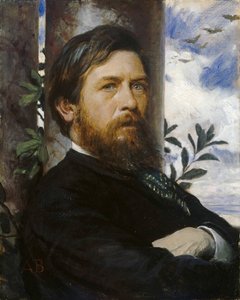
Άρνολδος Μπόκλιν
1827 - 1901 , Ελβετία
Στοιχεία καλλιτέχνη
- Artistic Movement Or Style: Συμβολισμός
- Artists Or Movements Influenced By This Artist:
- Hans Thoma
- Pre-Raphaelites
- Artists Who Influenced This Artist:
- Schirmer
- Feuerbach
- Date Of Birth: 16 Οκτ 1827
- Date Of Death: 16 Ιαν 1901
- Full Name: Arnold Böcklin
- Nationality: Ελβετός
- Notable Artworks:
- Το Νησί των Θανών
- Νύμφη και Σατύρος
- Σαπφώ
- Place Of Birth: Βασίλειο, Ελβετία
Σχετικά άρθρα
Αναπαράγοντας την Τέχνη: Ένας Οδηγός για τα Μέσα Αναπαραγωγής Λαδιού, Κανβά και Χαρτιού
Εξερευνήστε τον κόσμο της αναπαραγωγής τέχνης! Οδηγός για λάδι, καμβά & χαρτί. Μάθετε τεχνικές, συντήρηση και βρείτε την ιδανική αναπαραγωγή για εσάς.

Echoes of Time: Exploring the Enduring Appeal & Historical Context of Vintage Art Prints
Explore the captivating world of vintage art prints! Discover their history, collecting tips & enduring appeal. Expert insights on chromolithography and building a legacy collection with OriginalUniqueArt.

Giclée Prints: Archival Quality & Aesthetic Nuances for the Discerning Collector
Explore the world of giclée prints with OriginalUniqueArt. Learn about archival quality, aesthetic nuances & investment potential. Expert guidance for discerning art collectors seeking museum-quality reproductions and lasting value.

Romantic Realism's Finest: 10 Masterpieces for Your Home | OriginalUniqueArt
Explore 10 defining masterpieces of Romantic Realism! Discover Courbet, Millet & Daumier's powerful paintings—capturing emotion and social realities. Find museum-quality reproductions for your home at OriginalUniqueArt.com.
Giclée Prints Explained: The Ultimate Guide to Museum-Quality Art Reproductions
Master the nuances of Giclée printing with our expert guide. Discover how pigment-based inks and museum-grade substrates create fade-resistant, high-fidelity art reproductions designed for discerning collectors seeking unparalleled quality and longevity.
