School of Paris · 1928
Rita van Leer (Άντρέ Ντεράιν, 1928)
Ο/Η Άντρέ Ντεράιν (1880–1954) δημιούργησε το Rita van Leer. Χρονολογείται στο 1928. Ανήκει στο κίνημα School of Paris. Είναι φτιαγμένο σε Oil On Panel. Οι διαστάσεις είναι 41 × 34 cm.
- 1928
- Oil On Panel
- 41 × 34 cm

 Προεπισκόπηση σε πραγματική κλίμακα

 Ελαιογραφικό Χειροποίητο Έργο
 Αποστολή
 Κοινοποίηση
 Πληροφοριακό φύλλο


 Λήψη
 Παρόμοια αντικείμενα συλλογής
 Ακτινογραφία
 Παρουσίαση
 Ερωτήσεις & Απαντήσεις

 Στατιστικά
Rita van Leer, εν συντομία
- Τίτλος
- Rita van Leer
- Καλλιτέχνης
- Άντρέ Ντεράιν (1880–1954)
- Γεννημένος/η το
- Σατού, Γαλλία
- Ημερομηνία
- 1928
- Μέσο
- Oil On Panel
- Διαστάσεις
- 41 × 34 cm
- Κίνηση
- School of Paris
- Εποχή
- Modern
- Θέμα
- woman, portrait, face, shoulders, gray, black
Τι απεικονίζει το Rita van Leer;
The Portrait of Rita van Leer
In this intimate portrait, André Derain turns his attention to Rita van Leer. Created about 1928, the work moves away from the loud colorism of his earlier years, focusing instead on the quiet presence of the sitter. There is a certain stillness here, a moment captured in a way that prioritizes her character over a mere photographic likeness. She meets the viewer with a directness that feels both personal and somewhat guarded.
André Derain captures the subject with an expressive likeness, favoring the essence of her personality over rigid, academic precision. The portrait focuses on the head and shoulders, stripping away unnecessary distractions to ensure the viewer's attention remains fixed upon her gaze. It is a study of a person rather than a mere likeness, offering a glimpse into a specific, fleeting moment of her life.
Composition and Visual Elements
The composition is centered entirely upon the woman’s face, which occupies the majority of the frame. Presented in a close-up view, the subject's head and shoulders emerge from a dark, minimalist background. This lack of environmental detail ensures that the viewer's attention remains fixed on the sitter. Her head is slightly tilted, a subtle movement that introduces a sense of dynamism to an otherwise still moment.
There is a directness in her gaze, as she looks straight toward the viewer. This connection is established through the careful placement of her features and the use of tonal variations rather than sharp, photographic lines. Light and shadow work together to define the contours of her face, creating a sense of three-dimensionality through the layering of different shades.
Technique and Artistic Style
The work is characteristic of early modern art, leaning into the expressive possibilities of Fauvism and Expressionism. Rather than seeking photographic accuracy, the artist employs a loose and gestural application of paint to capture the sitter. There is a palpable sense of immediacy here, driven by the visible brushstrokes that define the form. This approach prioritizes the emotional essence of the subject over a strictly realistic representation.
One notices how the artist uses short, choppy strokes to build up the features of the face and the contours of the hair. This method creates a textured, almost rugged surface. The use of thick impasto is particularly evident, providing a physical depth that makes the paint feel sculptural. These heavy applications of pigment allow the light to catch the ridges of the brushwork, adding a sense of movement to the portrait.
Materials and Physical Properties
This work is executed in oil paint, applied with a deliberate and textured hand. The artist has worked upon a surface of either canvas or panel, a choice that supports the heavy impasto visible throughout the piece. Such tactile application allows the paint to hold its form, creating a physical presence that catches the light in subtle ways. The dimensions of the work are 41 x 34 cm, a scale that invites a close, intimate inspection of the surface.
The palette is notably restrained, eschewing the riotous color often associated with the artist's earlier years. Instead, we find a monochromatic arrangement of gray, black, and white. These tones are layered to build depth and define the contours of the subject. The interplay of light and shadow is achieved through these varying shades, providing a sense of volume without the need for chromatic intensity. It is a quiet, disciplined approach to the medium.
Εικόνες υψηλής ανάλυσης του Rita van Leer
Δημόσιος τομέας: ο καλλιτέχνης απεβίωσε το 1954.
Άντρέ Ντεράιν, Rita van Leer (1928). Δημόσιο περιουσιακό δικαίωμα
Ερωτήσεις για το Rita van Leer, απαντημένες
Σε ποια χρονική περίοδο δημιουργήθηκε το "Rita van Leer" του Άντρέ Ντεράιν;
Το έργο "Rita van Leer" του Άντρέ Ντεράιν δημιουργήθηκε το έτος 1928.
Με ποιο υλικό έχει εκτελεστεί το έργο "Rita van Leer" του Άντρέ Ντεράιν;
Η τεχνική του έργου "Rita van Leer" του Άντρέ Ντεράιν είναι το Oil On Panel. Οι αναπαραγωγές στοχεύουν στην πιστή απόδοση της εμφάνισης αυτής της τεχνικής.
Ποιες είναι οι διαστάσεις του πρωτότυπου "Rita van Leer" του Άντρέ Ντεράιν;
Οι καταγεγραμμένες διαστάσεις του έργου "Rita van Leer" του Άντρέ Ντεράιν είναι 41 x 34 cm. Αναπαραγωγές μπορούν να παραγγηθούν σε άλλες διαστάσεις, διατηρώντας τις ίδιες αναλογίες.
Τι απεικονίζει το "Rita van Leer" του Άντρέ Ντεράιν;
Τα θέματα του "Rita van Leer" είναι τα woman, portrait, face, shoulders, gray, black, white.
Το έργο "Rita van Leer" ανήκει στο δημόσιο περιουσιακό αγαθό;
Η κατάσταση των πνευματικών δικαιωμάτων για το έργο "Rita van Leer" του Άντρέ Ντεράιν είναι η εξής: το έργο ανήκει στο δημόσιο κτήμα - τα δικαιώματα αυτορության έχουν λήξει. Αυτό καθορίζει εάν επιτρέπεται η ελεύθερη αναπαραγωγή της εικόνας.
Ποιος δημιούργησε το "Rita van Leer";
Ο καλλιτέχνης πίσω από το "Rita van Leer" είναι ο/η Άντρέ Ντεράιν. Το έργο καταχωρείται υπό το όνομα του/της Άντρέ Ντεράιν.
Προς ποιο καλλιτεχνικό ρεύμα ανήκει το έργο "Rita van Leer" του Άντρέ Ντεράιν;
Το καλλιτεχνικό ρεύμα που συνδέεται με το "Rita van Leer" του Άντρέ Ντεράιν είναι το School of Paris. Αυτή η ταξινόμηση τοποθετεί το έργο ανάμεσα σε σχετικούς καλλιτέχνες και έργα τέχνης.
Ποια εποχή της καριέρας του/της Άντρέ Ντεράιν αντιπροσωπεύει το έργο "Rita van Leer";
Το "Rita van Leer" αντιπροσωπεύει την περίοδο Late Period του Άντρέ Ντεράιν.
Πόσο είχε ο/η Άντρέ Ντεράιν όταν δημιουργήθηκε το "Rita van Leer";
Ο/Η Άντρέ Ντεράιν δημιούργησε το έργο "Rita van Leer" στην ηλικία των 48 ετών. Ο/Η καλλιτέχνης γεννήθηκε το 1880 και το έργο χρονολογείται στο 1928.
Σχετικά με τον καλλιτέχνη, Άντρέ Ντεράιν
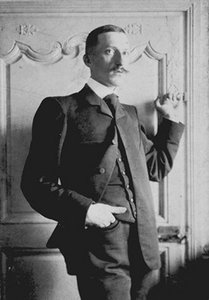
1880–1954, Γαλλία
Άντρέ Ντεράιν
Early Life, Family and Training In the year 1880, André Derain entered the world in Chatou, a village nestled within the Yvelines region of France. His early years were shaped by the quiet landscapes of the Île-de-France, where a natural curiosity for the surroundings began to take root. By 1895, he had already commenced studying on his own, seeking to understand the visual world through his own eyes rather than through formal instruction. This period of self-directed exploration allowed him to develop a personal way of seeing before the rigors of an academy could impose their will upon him.
Σχετικά με τον Άντρέ Ντεράιν Σημαντικά έργα του Άντρέ Ντεράιν
Εργασίες του Άντρέ Ντεράιν
 νηπιασμένες1907
 Γέφυρα του Λονδίνου1906
 Charing Cross from sw1906
 Landscape at L'Estaque1906
Μελέτες γύρω από το Rita van Leer
 Fauvism vs German Expressionism: Distinguishing Color and EmotionMaster the differences between Fauvism and German Expressionism through expert analysis. Learn to decode the emotion behind the color today.
 Dutch artworks of the 1860s1860s Dutch masterpieces by Vincent van Gogh, Gerard Bilders, and August Allebé. View the full collection online at OriginalUniqueArt.com.
 The Silent Dialogue: Examining Intimacy and Psychological Depth in Classical PortraitureExplore the psychological depth of classical portraiture through masters like Rembrandt and Vermeer. Discover the power of the gaze today.