
() ·
Ένα έργο ζωγραφικής φτιαγμένο για εσάς, με το χέρι
Χειροποίητη Αναπαραγωγή σε Έλαιο
Χειροποίητη ελαιογραφία σε καμβά στο δικό σας μέγεθος και πλαίσιο, κατά παραγγελία από τους καλλιτέχνες μας. ( Μετάβαση σε Εκτυπώσεις Μετάβαση σε Ψηφιακή Αποτέλεσμα)
Βιογραφικό Καλλιτέχνη
Dutch painter Gerard Sanders specialized in portraits and landscapes like Archibald Hope the Elder. Discover his exquisite fine art collection.
 Περισσότερα
από ·
Κεφάλαιο 1
Ποιο μέγεθος θα έπρεπε να έχει;
Ανακινήστε το ρυθμιστικό για να αλλάξετε το μέγεθος· η εικόνα στα αριστερά δείχνει το κάδρο στο πραγματικό του πλάτος. Οι αναλογίες του πρωτοτύπου διατηρούνται.
Επιλέξτε από τις προκαθορισμένες διαστάσεις μας που διατηρούν τις αρχικές αναλογίες του έργου τέχνης.

Πληκτρολογήστε το πλάτος και το ύψος που επιθυμείτε, ώστε να ταιριάζουν στο κάδሮ ή στον τοίχο σας. Ε เนื่องจาก πρόκειται για χειροποίητη ζωγραφική, σε περίπτωση διαστάσεων με διαφορετικό σχήμα, ο καλλιτέχνης μπορεί να ζωγραφίσει λίγο παραπάνω γύρω από το έργο ή να αφαιρέσει ένα μέρος — η επιλογή είναι δική σας. Σας στέλνουμε ένα ψηφιακό mockup για έγκριση πριν ξεκινήσει η δημιουργία του έργου. Η εικόνα που εμφανίζεται σε αυτή τη σελίδα δεν δείχνει το τελικό αποτέλεσμα — μόνο το mockup το αναδεικνύει.
Κεφάλαιο 2
Πώς θα πρέπει να παραδοθεί;
Επιλέξτε τις πλευρές του τεντωμένου καμβά
Επιλέξτε το πλαίσιο σας

Λευκό €1

Αντιστροφή με θολό φινίρισμα €1

Εκτεταμένη περιφέρεια €1

P118B €10

P118H €10

P118W €10

P438Z €10

P508JH €12

P508YH €12

P805H €10

P805Z €10

P919BZ €10

P919G €10

P919XJ €10

P959ZH €10

P968JZ €12

W106C €8

W218G €10

W218JH €8

W218Y €10

W307PJ €10

W316G €10

W316PJ €8

W316Y €10

W398PJ €8

W4111J €10

W500HY €15

W500JH €15

W692G €12

W849H €8

W940BG €15

W953PJ €8

H24-GOLD €30

H24-SILVER €30

H36-GOLD €45

H36-SILVER €45
Με πλαίσιο
Πλαισίωμα: . Συνολικές διαστάσεις με το πλαίσιο: .
Κεφάλο 3
Ποιος το ζωγραφίζει και πρέπει να αλλάξει κάτι;
Μετά την παραγγελία, η ομάδα του OriginalUniqueArt.com θα στείλει email στον πελάτη για οδηγίες και θα παρέχει μια προεπισκόπηση (mockup)
Κεφάλαιο 4
Παγκόσμια Αποστολή () σε 3-4 εβδομάδες αντί για τις συνήθεις 5 εβδομάδες. (21 Νοέμβριος). Χωρίς συμβιβασμούς στην ποιότητα.
Οι τελευταίες πινελιές
Μια πινακίδα με πληροφορίες, όπως σε ένα μουσείο;
Λεπτομέρειες Χάραξης σε Πλακέτα Χαλκού
This elegant plaque features the artist's name and the title of the artwork, finely engraved for a timeless presentation.
It is made from bronze with a refined, elegant finish. The text is precisely laser-engraved for a sharp and permanent result. Measuring 9x2 cm, the plaque is compact yet easy to read. It's built to be durable and scratch-resistant, offering a professional, museum-quality look. Mounting is simple thanks to the included adhesive backing.
Λεπτομέρειες Διαφανούς Ακρυλικής Πλακίδας
The plaque includes essential engraved details such as the artist's name, the title of the artwork, the date it was created, the type of media used-like oil on canvas or watercolor-a brief description of the piece, and a QR code that links to the complete artwork information.
It is crafted from clear acrylic, offering a sleek, modern appearance. The text is UV-engraved in black to ensure strong visual contrast. With a size of 10x15 cm, it ensures optimal readability. It comes equipped with two metal hooks for secure wall mounting. The plaque is designed to be weather-resistant, making it suitable for various environments, and it includes interactive features that work seamlessly with smartphone scanning.
Λεπτομέρειες Πλακίδας Ακρυλικού Μαύρου Χρώματος
This elegant plaque includes engraved information such as the artist's name, the title of the artwork, the date it was created, the type of media used (like oil on canvas or watercolor), a short description of the artwork, and a QR code for quick access to more information.
The plaque itself is made from refined black acrylic with a premium finish. The text is laser-engraved in white for high contrast and readability. Its size is 10x15 cm, designed to be easy to read. It comes with two metal hooks for professional mounting. The design is sleek and fits any interior style. It is also weather-resistant and durable, with built-in digital integration for mobile compatibility.
Προστατευτικό βερνίκι;
Πότε θα το χρειαστείτε;
Κεφάλαιο 5
Το έργο σας, ακριβώς όπως το παραγγείλατε

Amorous Couple
Μέσο Αναπαραγωγής
Διαστάσεις Αναπαραγωγής
-

Κορυφαίος Καλλιτέχνης
Περισσότερη λεπτομέρεια, φινέτσα και επιπλέον χρόνος παραγωγής
-

Πλαίσιο Αναπαραγωγής
-
-
Για έργα τέχνης ή αναπαραγωγές με πλευρά υπερβαίνουσα των 105 εκ. (περίπου 41 ίντσες), το πλαίσιο θα αποσταλεί αποσυναρμολογημένο, σε μορφή κιτ. Η μέθοδος αυτή διασφαλίζει την ασφαλή παράδοση και προλαμβάνει τυχόν ζημιές κατά τη μεταφορά.
Απαιτείται επαγγελματικός συναρμολογητής - δεν πρόκειται για προϊόν αυτοσυναρμολογίας (DIY).
Το κιτ πρέπει να συναρμολογηθεί και ο καμβάς να τεντωθεί από έμπειρο επαγγελματία πλαίσιο (framer), με τη χρήση κόλλας ξύλου (δεν περιλαμβάνεται), πένσας για ένταση καμβά και σφιγκτήρων, ώστε να διατηρηθεί η ορθογωνιότητα των δοκών κατά τη διάρκεια της ξędρανσης. Η λανθασμένη συναρμολόγηση ή η ανισόρροπη ένταση του καμβά μπορεί να προκαλέσει μόνιμη ζημιά στο έργο και δεν καλύπτεται από την εγγύησή μας.
 Για έργα τέχνης ή αναπαραγωγές με πλευρά υπερβαίνουσα των 105 εκ. (περίπου 41 ίντσες), το πλαίσιο θα αποσταλεί αποσυναρμολογημένο, σε μορφή κιτ. Η μέθοδος αυτή διασφαλίζει την ασφαλή παράδοση και προλαμβάνει τυχόν ζημιές κατά τη μεταφορά.
Περιλαμβάνονται όλες οι μπάρες από μασίφ ξύλο, κομμένες με ακρίβεια στις διαστάσεις τους.
Συναρμολογείται με τις παρεχόμενες βίδες, καθώς και με κόλλα ξύλου για τις γωνιακές ενώσεις, η οποία δεν περιλαμβάνεται και θα πρέπει να προμηθευτεί από τον τεχνίτη σας.
Απαιτούνται επαγγελματικά εργαλεία που δεν περιλαμβάνονται: μια πένσα για σφίξιμο καμβά (τενωτήρας) και σφιγκτήρες για τη διατήρηση της ορθογωνιότητας των καρέ κατά τη διάρκεια της απορρόφησης της κόλλας.
Σημαντικό:
Οι γωνιακές ενώσεις απαιτούν κόλλα ξύλου, οι σπορ πρέπει να συγκρατούνται με σφιγκτήρες μέχρι να στεγνώσει πλήρως η κόλλα, και για την ένταση του καμβά στο συναρμολογημένο πλαίσιο απαιτείται μια πένσα για ένταση καμβά. Κανένα από αυτά δεν περιλαμβάνεται στο σετ. Παρακαλούμε συμβουλευτείτε έναν έμπειρο επαγγελματία κάδραρχο πριν παραγγείλετε αυτό το μέγεθος.

Πληροφορίες έργου
-
-

Βερνίκι Προστασίας
Γυαλιστερό Βερνίκι (ενισχύει τα χρώματα, προστατεύει από το φως και την υγρασία)
-

Προσαρμογή του έργου μου
Παραδείγματα αλλαγών που είναι δυνατές: Αντικατάσταση προσώπου με φωτογραφία του πελάτη· Προσθήκη κατοικίδιου (π.χ., αντικατάσταση γάτας με σκύλο)· Ενσωμάτωση κρυφού μηνύματος στο φόντο· Αλλαγή τοπίου ή στοιχείων στο φόντο.
-

Επείγουσα παραγγελία
Παγκόσμια Αποστολή () σε 3-4 εβδομάδες αντί για τις συνήθεις 5 εβδομάδες. (21 Νοέμβριος). Χωρίς συμβιβασμούς στην ποιότητα.
-
Αποστολή Express
Παγκόσμια Αποστολή () σε 5 εβδομάδες. (28 Νοέμβριος).
Συμπεριλαμβάνεται
Τελική Τιμή
€ 290
Η επιλογή με γυαλί είναι διαθέσιμη μόνο για μεγέθη κάτω από 110 εκ.
Συμπεριλαμβάνεται σε κάθε παραγγελία
- Δωρεάν γρήγορη διεθνής αποστολή
- Κάμβας από Λινό Υψηλής Ποιότητας
- Πλήρης ασφάλιση μεταφοράς
- Εγγύηση επιστροφής δασμών και φόρων εισαγωγής
- Εγγύηση Απόλυτης Ομοιότητας Χρωμάτων
- Πολιτική Επιστροφής 100 Ημερών (Μόνο σε περίπτωση ελαττωμάτων)
- Εγγύηση επιστροφής 100% των χρημάτων
- Προσφορά για πολλαπλές παραγγελίες


 Προεπισκόπηση σε πραγματική κλίμακα

 Αποστολή
 Κοινοποίηση
 Λεπτομέρειες
 Οδηγός


 Λήψη
 Παρόμοια αντικείμενα συλλογής
 Ακτινογραφία
 Παρουσίαση
 Ερωτήσεις & Απαντήσεις
 Στατιστικά
Με αριθμούς
- 1752το έτος δημιουργίας
- 29επιλογές καρέ
- τυπικές διαστάσεις, στις δικές τους αναλογίες
- 5εβδομάδες για τη δημιουργία και την παράδοση του
Σχετικά με το πρωτότυπο

- 41.0 x 36.0cm


Το έργο αυτό προστατεύεται από πνευματικά δικαιώματα
Το έργο τέχνης που εμφανίζεται σε αυτή τη σελίδα προστατεύεται από τους νόμους περί πνευματικών δικαιωμάτων, γεγονός που σημαίνει ότι δεν μπορούμε νομικά να δημιουργήσουμε ή να πουλήσουμε μια ταυτόσημη αναπαραγωγή του. Αυτή η προστασία επιβάλλεται βάσει διεθνών συμφωνιών, όπως η Σύμβαση της Βέρνης καθώς και από τους εθνικούς νόμους, συμπεριλαμβανομένων αυτών που ορίζονται από το Νομοθεσία περί πνευματικών δικαιωμάτων των ΗΠΑ - Τίτλος 17. Όλα τα δικαιώματα κατοχυρωμένα. Απαγορεύεται η αναπαραγωγή χωρίς άδεια.
Ως μια σεβαστή και νόμιμη εναλλακτική, προσφέρουμε προσαρμοσμένα, χειροποίητα έργα τέχνης εμπνευσμένα από το πρωτότυπο. Οι έμπειροι και επαγγελματίες καλλιτέχνες μας μελετούν προσεκτικά το στυλ, τη διάθεση και την καλλιτεχνική ουσία του πρωτοτύπου, ώστε να δημιουργήσουν ένα νέο, μοναδικό έργο που προκαλεί την ίδια αίσθηση — παραμένοντας όμως μια πρωτότυπη δημιουργία από μόνη της.
Αυτή η μέθοδος συμμορφώνεται πλήρως με τους κανονισμούς περί πνευματικών δικαιωμάτων, καθώς δεν περιλαμβάνει την αντιγραφή ή την αναπαραγωγή του προστατευόμενου έργου. Αντίθετα, πρόκειται για μια δημιουργική ερμηνεία — ένα νέο έργο που επηρεάζεται από το πρωτότυπο, χωρίς όμως να είναι πανομοιότυπο με αυτό.

Gerard Sanders
1702 - 1767
Γρήγορα στοιχεία για τον/την Gerard Sanders
- Artists Who Influenced This Artist:
- Tobias van Nijmegen
- Elias van Nijmegen
- Full Name: Gerard Sanders
- Nationality: Dutch
- Notable Artworks:
- Archibald Hope the Elder
- Amorous Couple
- Portrait of Johannes Wilhelmus Bussingh
- Portrait of Elisabeth van der Linden
- Place Of Birth: Wesel am Rhein, Germany
- Date Of Birth: 1702
- Date Of Death: 1767
Βιογραφικό Καλλιτέχνη
Early Life, Family and Training
Born in 1702 in Wesel am Rhein, Germany, Gerard Sanders entered a world of visual craft through the intimate ties of family. His early years were shaped by a significant transition when his mother remarried Tobias van Nijmegen. This change in family structure provided the young artist with his first formal introduction to the arts, as he became a pupil of his stepfather. Under Tobias's guidance, Sanders began to develop the foundational skills of a painter and draughtsman, learning the nuances of composition and form within a domestic apprenticeship.
The trajectory of his education shifted when he reached the age of eighteen. Seeking to broaden his technical horizons, he moved to Rotterdam to study under Elias van Nijmegen. This period of study was essential in refining his ability to navigate both portraiture and landscape, preparing him for a career that would eventually see him decorating the interiors of the social elite. Throughout his life, he was occasionally known by the alias Gerhard Sanders, a variation that reflects the shifting linguistic borders of his era.
Patrons, Workshop and Commissions
Sanders’s professional life was defined by his ability to navigate the social hierarchies of the eighteenth century, moving between the private splendor of aristocratic homes and the public dignity of civic institutions. His early training under his stepfather, Tobias van Nijmegen, provided a foundation in the art of decoration, a skill that would lead him to decorate the interiors of the elite. This expertise in large-scale decorative schemes allowed him to secure significant placements, including work for the Elector Palatinate in Düsseldorf. Such commissions required a versatility that bridged the gap between fine art and the functional requirements of interior design.
His reputation for handling both private and public spaces is evident in the varied nature of his patronage. He was entrusted with the decoration of the house of Isaac Hope, a commission that placed his work within the intimate, domestic settings of the wealthy. This ability to cater to the specific tastes of prominent families ensured a steady presence in the high-society circles of the era. His work was not confined to the private sphere, however; he also engaged with the civic identity of the Netherlands. In 1764, he was commissioned to paint several scenes of civic virtues for the Town Hall of Middelburg, a task that required a shift from the personal nuances of portraiture to the formal demands of public morality.
Key Works and Artistic Subjects
Sanders focused his creative energy on the formal demands of portraiture, history subjects, and landscapes. His ability to navigate these diverse genres allowed him to move between the intimate scale of a private study and the grander requirements of civic decoration. In 1730, he produced a portrait historiée of a mother with her children, a work that suggests an interest in the allegorical or narrative potential of the human figure. This interest in character and status is further evidenced by his 1737 portrait of Archibald Hope the Elder, a piece that captures the dignity of its subject within the social hierarchies of the era.
As his career progressed, his output continued to reflect the tastes of the Dutch elite. He turned his attention to the likenesses of prominent individuals, including a portrait of Johannes Wilhelmus Bussingh (1727-1782) and a portrait of Elisabeth van der Linden (1735-1783), both dating to about 1760. These works demonstrate a steady hand in capturing the specificities of his sitters. Beyond the human form, he also engaged with the natural world, as seen in his 1763 watercolor over graphite, Fleurs et châtaignes sur un entablement.
- Portrait historiée of a mother with her children (1730)
- Portrait of Archibald Hope the Elder (1737)
- Portrait of Johannes Wilhelmus Bussingh (1727-1782) (about 1760)
- Portrait of Elisabeth van der Linden (1735-1783) (about 1760)
- Fleurs et châtaignes sur un entablement (1763)
Technique and Style
Sanders operated with the versatility required of a professional working in the Dutch tradition, moving fluidly between the roles of painter, draughtsman, and decorator. His training under his stepfather and later in Rotterdam provided him with a technical foundation that allowed him to navigate diverse commissions. Whether he was executing large-scale decorations for the interiors of the elite or working on more intimate studies, his hand remained steady and purposeful. He was as comfortable as a schilder handling canvas as he was a tekenaar capturing the essential lines of a subject.
In his more delicate works, Sanders demonstrated the precision of an aquarellist. He frequently employed watercolor over graphite on laid paper, a method that allowed for a controlled yet expressive application of color. This technique was particularly suited to his botanical studies and his ability to render the subtle textures of still life. The use of graphite provided a structural clarity to his compositions, ensuring that even his most light-handed washes of color maintained a sense of formal order.
His stylistic range was dictated by the demands of his environment. As a decorator, his work had to harmonize with the architectural spaces of the wealthy, requiring a sense of scale and decorative rhythm. In his portraiture and history subjects, he focused on the clarity of form and the character of his sitters. This adaptability—the ability to shift from the broad requirements of interior decoration to the fine, meticulous detail of a watercolor on paper—defined his professional practice.
Σχετικά άρθρα
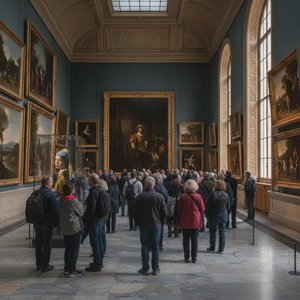
Masterpieces of the Dutch Soul: Top 25 Must-See Artworks in Amsterdam's Rijksmuseum
Embark on a journey through the Dutch Golden Age. From Rembrandt's drama to Vermeer's light, explore 25 iconic Rijksmuseum masterpieces and find museum-quality art reproductions for your decor. Discover all masterpieces on OriginalUniqueArt.com.

Masterpieces Unveiled: The Top 25 Artworks at the J. Paul Getty Museum
Explore 25 iconic masterpieces from the J. Paul Getty Museum. From Renaissance to Baroque, discover the legends on OriginalUniqueArt.com.