

 Δείτε σε πραγματικό χώρο
 Αποστολή
 Κοινοποίηση
 Λεπτομέρειες

 Λήψη
Λήψη
 Παρόμοια αντικείμενα συλλογής
 Ακτινογραφία
 Παρουσίαση
Cornfield


 Διαβάστε περισσότερα
Giclée / Εκτυπώσεις Τέχνης
Εκτύπωση giclée ή σε καμβά ποιότητας μουσείου με γρήγορη παραγωγή και ευέλικτες επιλογές φινιρίσματος. ( Αγορά χειροποίητου πίνακα Αγορά ψηφιακής εικόνας)




P118B $10

P118H $10

P118W $10

P438Z $10

P508JH $12

P508YH $12

P805H $10

P805Z $10

P919BZ $10

P919G $10

P919XJ $10

P959ZH $10

P968JZ $12

W106C $8

W218G $10

W218JH $8

W218Y $10

W307PJ $10

W316G $10

W316PJ $8

W316Y $10

W398PJ $8

W4111J $10

W500HY $15

W500JH $15

W692G $12

W849H $8

W940BG $15

W953PJ $8




Επιλέξτε από τις προκαθορισμένες διαστάσεις μας που διατηρούν τις αρχικές αναλογίες του έργου τέχνης.

Μπορείτε να εισαγάγετε δικές σας διαστάσεις ώστε να ταιριάξουν με ένα συγκεκριμένο πλαίσιο ή χώρο. Εάν το επιλεγμένο μέγεθος δεν συμπίπτει με τις αναλογίες της πρωτότυπης εικόνας, θα κόψουμε το έργο τέχνης ή θα επεκτείνουμε την εικόνα με καθρεφτισμένη ή μονόχρωμη ατέλεια. Θα σας αποσταλεί ένα ψηφιακό mockup για έγκρισή σας πριν από την έναρξη της παραγωγής.
Παρακαλούμε σημειώστε ότι η προεπισκόπηση στην οθόνη δεν αντικατοπτρίζει την πραγματική κοπή ή επέκταση. Μόνο το mockup θα δείξει με ακρίβεια την τελική σύνθεση.
Παρόλο που είναι διαθέσιμες προσαρμοσμένες διαστάσεις, προτείνουμε την επιλογή μιας διάστασης από τη προκαθορισμένη λίστα για τη διατήρηση των αρχικών αναλογιών.
Παγκόσμια Αποστολή () σε 2 εβδομάδες αντί για τις συνήθεις 4/5 εβδομάδες. (27 Αύγουστος)

Δωρεάν γρήγορη διεθνής αποστολή

Κάμβας από Λινό Υψηλής Ποιότητας

Πλήρης ασφάλιση μεταφοράς

Εγγύηση Επιστροφής Δασμών και Φόρων

Εγγύηση Απόλυτης Ομοιότητας Χρωμάτων

Πολιτική Επιστροφής 60 Ημερών (Μόνο σε περίπτωση ελαττωμάτων)

Εγγύηση επιστροφής 100% των χρημάτων

Προσφορά για μαζικές παραγγελίες
 Η επιλογή με γυαλί είναι διαθέσιμη μόνο για μεγέθη κάτω από 110 εκ.

Cornfield
Giclée / Εκτυπώσεις Τέχνης
Διαστάσεις Αναπαραγωγής
-


Συνολική Τιμή
$ 80
Cornfield: A Symphony of Emotion and Color
Alexej Georgewitsch von Jawlensky’s “Cornfield,” painted in 1905, stands as a cornerstone of Expressionist art—a movement that sought to convey inner feelings rather than objective reality. More than just a depiction of a rural landscape, it's an immersive experience designed to resonate with the viewer on a profound emotional level.
- Style and Technique: Jawlensky’s approach was characterized by bold brushstrokes—a deliberate rejection of Impressionistic subtlety—and a palette saturated with vibrant hues. He employed oil paint on panel, allowing for textural richness and capturing the luminous quality of sunset light with remarkable precision.
- Historical Context: The painting emerged during a period of significant artistic upheaval, mirroring the anxieties and passions simmering beneath the surface of European society at the turn of the century. Expressionism responded to the disillusionment following World War I and embraced subjective experience as its primary impetus.
The cornfield itself serves as more than just a visual element; it embodies potent symbolism. The towering grasses represent resilience and growth—a defiant assertion of life amidst perceived darkness. Scattered figures symbolize humanity’s connection to the natural world, inviting contemplation on themes of solitude and communion.
- Symbolism: The dominant colors—warm yellows and oranges—evoke feelings of optimism and tranquility, suggesting a moment of respite from worldly concerns. They are juxtaposed against cooler blues and greens, hinting at underlying melancholy and acknowledging the inevitable passage of time.
- Emotional Impact: “Cornfield” compels viewers to confront their own emotions—to consider questions of beauty, loss, and the enduring power of nature. It’s a painting that lingers in memory long after initial observation, prompting introspection and fostering a deeper appreciation for artistic expression.
Jawlensky's influence extends beyond Expressionism; he drew inspiration from Fauvism and incorporated elements of Byzantine iconography into his work. “Cornfield” exemplifies this fusion—a testament to the artist’s ability to synthesize diverse stylistic influences into a singular vision.
- Influences: Jawlensky's artistic journey was marked by experimentation and innovation, constantly pushing boundaries and redefining conventions. His unwavering commitment to conveying emotion solidified his legacy as one of the most significant artists of his era.
"Cornfield," currently housed at Kunstmuseum Bern, Switzerland—a museum renowned for its expansive collection spanning centuries—offers a captivating glimpse into the artistic spirit of a transformative moment in art history. Its enduring appeal lies not merely in its visual beauty but also in its capacity to provoke contemplation and inspire emotional resonance.
Βιογραφία Καλλιτέχνη
A Life Painted in Emotion: The Journey of Alexej von Jawlensky
Alexej Georgewitsch von Jawlensky, surname also spelt as Yavlensky, was born on March 13, 1864, in Torzhok, a small town in the Tver Governorate of Russia. His early life, marked by frequent relocations and culminating in his childhood spent in Moscow, instilled within him a sense of displacement—a subtle yet persistent theme that would permeate much of his later artistic expression. Initially drawn to a military career, Jawlensky’s path dramatically shifted during the 1880 Moscow World Exposition. Witnessing the vibrant world of art for the first time ignited an unyielding passion that ultimately superseded any ambition for service, leading him down a dedicated and transformative artistic journey. Securing a posting in St. Petersburg through his social connections allowed him to formally study at the Art Academy from 1889 to 1896, balancing his artistic pursuits with military obligations – a period where he encountered the influence of Ilya Repin, a prominent Russian realist painter, and crucially, met Marianne von Werefkin. Werefkin, herself an accomplished artist of considerable means and independent spirit, became not only his mentor but also a vital benefactor, providing him with the financial stability necessary to fully dedicate himself to his craft. Their relationship was complex, deeply intertwined with artistic ambition, mutual support, and a shared desire for creative freedom – shaping the trajectory of both their careers in profound ways. It’s important to note that Werefkin's position as a widow, receiving a substantial pension from the Russian government, played a significant role in her ability to financially support Jawlensky during his formative years.Munich and the Seeds of Expressionist Innovation
The move to Munich in 1894 marked a pivotal moment in Jawlensky’s artistic development. He enrolled at Anton Ãzbe’s private school, an environment that actively encouraged experimentation and challenged traditional academic approaches. This period witnessed a significant shift in his artistic sensibilities as he became increasingly engaged with the avant-garde ideas circulating throughout Europe. The influence of artists like Ferdinand Hodler, Jan Verkade, and Paul Sérusier proved particularly impactful, exposing him to principles of symbolism and synthetism – movements that prioritized subjective experience and emotional resonance over strict representational accuracy. Jawlensky’s style began to evolve away from the realism he had initially studied, moving towards a more expressive approach characterized by simplified forms and intensified hues designed to convey inner states rather than merely depicting external appearances. This exploration led him toward abstraction, a path that would define much of his later work. His involvement with groups like the Neue Künstlervereinigung München (NKvM) further solidified his commitment to artistic innovation, placing him at the heart of a burgeoning Expressionist movement. The NKvM, though short-lived, was a crucible for radical ideas, and Jawlensky’s participation demonstrated his willingness to challenge established norms and embrace new modes of visual language. The association's second exhibition, featuring artists from across Europe – including Cubist artist Henri le Fauconnier and Symbolist painter Odilon Redon – sparked considerable controversy within Munich society, highlighting the growing tension between traditional artistic values and the avant-garde’s experimental spirit. G. J. Wolf, a prominent conservative critic, famously denounced the exhibition as a “roost for an artists’ association of mixed Slavic and Latin elements,” expressing his disapproval at the lack of native Munich painters among the participants. This reaction underscored the challenges faced by artists pushing boundaries within a culturally conservative environment.The Mystical Heads: A Descent into Spiritual Essence
Around 1909, Jawlensky embarked on what would become his most iconic series—the “Mystical Heads.” These intensely colored portraits, often depicting faces reduced to essential forms, are not merely representations of individuals but rather explorations of spiritual essence and inner life. The heads possess a haunting quality, their simplified features and vibrant palettes conveying a sense of profound emotion and psychological depth. Works like Schokko with Red Hat (1909) and Portrait of Alexander Sakharoff (1909) exemplify this period, showcasing his mastery of color and composition. These weren’t portraits in the traditional sense; they were attempts to capture something beyond physical likeness—the soul, the inner landscape of the sitter. He distilled faces into geometric shapes, emphasizing the power of color to evoke emotion and spiritual resonance. Throughout the 1910s, Jawlensky continued to refine his style, moving towards an even greater degree of abstraction. His compositions became increasingly geometric, with forms distilled to their most fundamental elements. He developed a formulaic approach, often employing a limited range of colors arranged in carefully balanced configurations.Exile, Resilience, and Lasting Legacy
The outbreak of World War I brought upheaval to Jawlensky’s life. Expelled from Germany in 1914 due to his Russian origins, he sought refuge in Switzerland, where he encountered Emmy Scheyer. Scheyer became a devoted champion of his work, tirelessly promoting it in the United States and securing him recognition on an international stage. Despite facing increasing health challenges—including severe arthritis that progressively limited his ability to paint—Jawlensky continued to create until his death in Wiesbaden, Germany, on March 15, 1941. His later works, created under immense physical hardship, are a testament to his unwavering dedication to artistic expression. Today, Alexej von Jawlensky is celebrated as a key figure in the development of Expressionism. His paintings are held in prominent museum collections worldwide, including the Museum Ostwall in Dortmund and the Städtische Galerie im Lenbachhaus in Munich. His exploration of color, form, and spiritual themes continues to resonate with audiences, solidifying his place as one of the most important artists of the early twentieth century. He left behind a body of work that is both visually striking and emotionally profound, offering a glimpse into the inner world of an artist who dared to challenge conventions and embrace the power of subjective expression.Influences and Artistic Associations
Jawlensky’s artistic journey was shaped by a network of influential figures and movements:- Ilya Repin: Early mentor providing foundational training in realist techniques.
- Marianne von Werefkin: Crucial benefactor, mentor, and artistic partner who supported his development.
- Ferdinand Hodler: Influenced Jawlensky’s use of simplified forms and symbolic imagery.
- Jan Verkade & Paul Sérusier: Introduced him to the principles of symbolism and synthetism, shaping his approach to color and composition.
- Wassily Kandinsky & Franz Marc: Collaborators within Der Blaue Reiter, fostering a shared commitment to artistic innovation.

Αλέξαιος Βον Γιαβλενσκι
1864 - 1941 , Ρωσία
Γρήγορα στοιχεία
- Artistic Movement Or Style: Εκφρατισμός
- Artists Or Movements Influenced By This Artist:
- Der Blaue Reiter
- nΕκφρατισμός
- Artists Who Influenced This Artist:
- Repin
- Werefkin
- nHodler
- Date Of Birth: 13 Μαρτ 1864
- Date Of Death: 15 Μαρτ 1941
- Full Name: Alexej Georgewitsch Jawlensky
- Nationality: Ρώσος
- Notable Artworks:
- Schokko με καπέλο
- n"Violet Turban",
- Αυτοπροσωπογραφία
- Place Of Birth: Torzhok, Ρωσία
Σχετικά άρθρα

Οι 10 Κορυφαίοι Πίνακες που Όρισαν τον Ρομαντισμό στην Τοπιογραφία | OriginalUniqueArt.gr
Ανακαλύψτε τους 10 πίνακες που καθόρισαν τον Ρομαντισμό στην τοπιογραφία! Friedrich, Turner & άλλοι. Ιστορίες τέχνης, τεχνικές και έμπνευση για διακόσμηση σπιτιού. Βρείτε αναπαραγωγές υψηλής ποιότητας στο OriginalUniqueArt.com.

John Constable: Τα 25 Κορυφαία Έργα Τέχνης | Ανακαλύψτε την Αγγλική Υπαίθριο στον Χώρο Σας
Ανακαλύψτε τα 25 κορυφαία έργα τέχνης του John Constable! Εξερευνήστε την αγγλική τοπιογραφία, τον ρομαντισμό και τη μαγεία της φύσης. Υψηλής ποιότητας αναπαραγωγές & ιδέες διακόσμησης στον χώρο σας. Ανακαλύψτε όλα τα αριστουργήματα στο OriginalUniqueArt.com

Evocations of Place: A Historical Journey Through Landscape Art
Explore the rich history of landscape art with OriginalUniqueArt. Discover renowned artists, movements like Impressionism & Romanticism, and expert guidance for collecting timeless pieces. Find your perfect serene escape today!
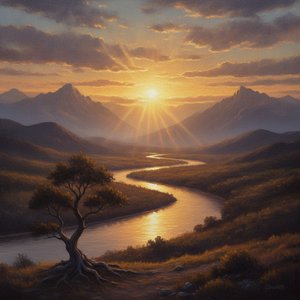
Golden Hour Magic: Capturing the Ethereal Beauty of Sunset Landscapes in Fine Art
Embark on a visual journey through the golden hour. Discover how master painters capture the ethereal glow of sunsets, from Monet's Impressionism to the Hudson River School. Explore timeless techniques and bring the magic of twilight into your home with exquisite fine art reproductions.

Οι 10 Κορυφαίοι Καμβάδες που Όρισαν τον Ιμπρεσιονισμό και το Τοπίο
Ανακαλύψτε τους 10 κορυφαίους πίνακες ιμπρεσιονισμού που καθόρισαν το τοπίο! Μονέ, Ρενουάρ & άλλοι. Ιστορίες τεχνικής και έμπνευσης. Βρείτε αναπαραγωγές υψηλής ποιότητας για τον χώρο σας στο OriginalUniqueArt.com



