
 Προεπισκόπηση
 Αποστολή
 Κοινοποίηση
 Λεπτομέρειες

 Λήψη
Λήψη
 Παρόμοια έργα
 Ακτινογραφία
 Παρουσίαση
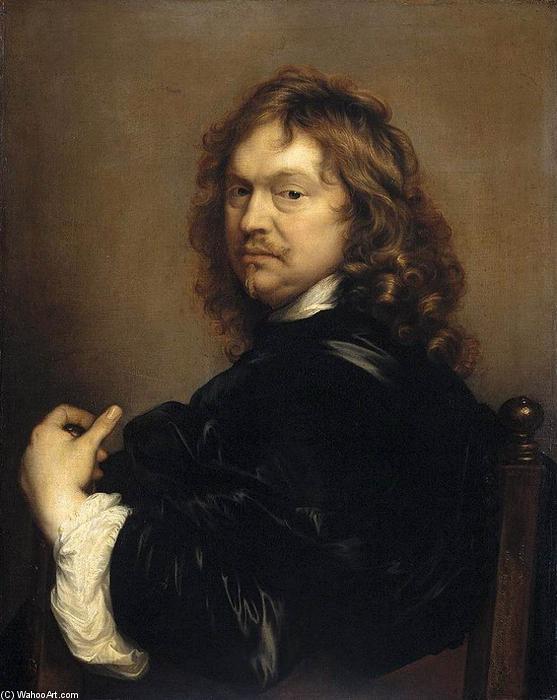
Self-Portrait


 Περισσότερα λεπτομέρεια
Giclée / Εκτυπώσεις Τέχνης
Εκτύπωση giclée ή σε καμβά ποιότητας μουσείου με γρήγορη παραγωγή και ευέλικτες επιλογές φινιρίσματος. ( Μετάβαση σε χειροποίητη ζωγραφική Μετάβαση σε Εικόνα)




P118B $10

P118H $10

P118W $10

P438Z $10

P508JH $12

P508YH $12

P805H $10

P805Z $10

P919BZ $10

P919G $10

P919XJ $10

P959ZH $10

P968JZ $12

W106C $8

W218G $10

W218JH $8

W218Y $10

W307PJ $10

W316G $10

W316PJ $8

W316Y $10

W398PJ $8

W4111J $10

W500HY $15

W500JH $15

W692G $12

W849H $8

W940BG $15

W953PJ $8




Επιλέξτε από τις προκαθορισμένες διαστάσεις μας που διατηρούν τις αρχικές αναλογίες του έργου τέχνης.

Μπορείτε να εισαγάγετε δικές σας διαστάσεις ώστε να ταιριάξουν με ένα συγκεκριμένο πλαίσιο ή χώρο. Εάν το επιλεγμένο μέγεθος δεν συμπίπτει με τις αναλογίες της πρωτότυπης εικόνας, θα κόψουμε το έργο τέχνης ή θα επεκτείνουμε την εικόνα με καθρεφτισμένη ή μονόχρωμη ατέλεια. Θα σας αποσταλεί ένα ψηφιακό mockup για έγκρισή σας πριν από την έναρξη της παραγωγής.
Παρακαλούμε σημειώστε ότι η προεπισκόπηση στην οθόνη δεν αντικατοπτρίζει την πραγματική κοπή ή επέκταση. Μόνο το mockup θα δείξει με ακρίβεια την τελική σύνθεση.
Παρόλο που είναι διαθέσιμες προσαρμοσμένες διαστάσεις, προτείνουμε την επιλογή μιας διάστασης από τη προκαθορισμένη λίστα για τη διατήρηση των αρχικών αναλογιών.
Παγκόσμια Αποστολή () σε 2 εβδομάδες αντί για τις συνήθεις 4/5 εβδομάδες. (11 Αύγουστος)

Δωρεάν Παγκόσμια Αποστολή Express

Κάμβας από Λινό Υψηλής Ποιότητας

Πλήρης ασφάλιση μεταφοράς

Εγγύηση Επιστροφής Δασμών και Φόρων

Εγγύηση Απόλυτης Ομοιότητας Χρωμάτων

Πολιτική Επιστροφής 60 Ημερών (Μόνο σε περίπτωση ελαττωμάτων)

Εγγύηση επιστροφής 100% των χρημάτων

Έκπτωση για πολλαπλές παραγγελίες
 Η επιλογή με γυαλί είναι διαθέσιμη μόνο για μεγέθη κάτω από 110 εκ.

Self-Portrait
Giclée / Εκτυπώσεις Τέχνης
Διαστάσεις Αναπαραγωγής
-


Τελική Τιμή
$ 80
Περιγραφή Συλλεκτικού Αντικειμένου
A Window into the Seventeenth Century: Adriaen Hanneman’s Self-Portrait
Adriaen Hanneman's 1656 self-portrait offers a remarkably intimate glimpse into the world of a Dutch Golden Age artist, revealing not just his likeness but also the social and intellectual currents of his time. This painting transcends a simple depiction of an individual; it’s a carefully constructed statement about identity, status, and the burgeoning artistic conventions of the era. The work immediately draws the eye with its restrained elegance – a deliberate choice that speaks volumes about Hanneman's considered approach to portraiture.
- The Figure: Seated in a comfortable chair, likely of considerable quality given the detail, the subject presents himself as a man of means and standing. His posture is upright, suggesting confidence and self-awareness. The dark coat, adorned with a crisp white collar – a hallmark of 17th-century Dutch attire – immediately establishes his social position.
- The Face: Hanneman’s face is the focal point, rendered with meticulous realism. The subtle lines etched around his eyes and mouth hint at experience and perhaps contemplation. His mustache and beard are carefully executed, adding to the authenticity of the portrait and reflecting prevailing male beauty standards. Crucially, his expression isn't overtly cheerful or dramatic; it’s a quiet seriousness, suggesting an intellectual bent – a man accustomed to thought and observation.
- Background & Composition: The stark simplicity of the background—a plain wall—is a masterstroke. It serves to isolate the subject entirely, amplifying his importance within the frame and directing all attention towards his personality and bearing. This technique was common in portraiture during this period, prioritizing the individual over elaborate settings.
A Masterclass in Dutch Portrait Technique
Hanneman’s skill lies not just in capturing likeness but also in employing a sophisticated understanding of light, shadow, and texture. The painting is executed with a realistic style, demonstrating a deep knowledge of anatomy and the effects of light on form. Notice how he uses subtle gradations of tone to create a sense of volume and depth – particularly evident in the rendering of the clothing and the folds of his hair. This masterful use of chiaroscuro (the contrast between light and dark) lends the portrait a three-dimensional quality, making it feel remarkably lifelike.
- Brushwork: The brushstrokes are generally smooth and controlled, reflecting Hanneman’s training under Jan Antonisz. van Ravesteyn the Younger. Van Ravesteyn instilled in him a precise, sculptural approach to rendering form – a legacy that is clearly visible in the carefully modeled features of the face and the detailed fabric of the coat.
- Color Palette: The muted tones—primarily blacks, whites, and browns—are typical of Dutch portraiture during this period. These restrained colors allowed Hanneman to focus on capturing subtle nuances of expression and texture rather than relying on vibrant hues.
Historical Context & Artistic Influences
Created in 1656, this self-portrait is firmly rooted within the Dutch Golden Age – a period of unprecedented artistic flourishing fueled by wealth, trade, and intellectual curiosity. Hanneman’s work reflects the influence of his contemporary, Anthony van Dyck, whose elegant and dynamic portraits were immensely popular throughout Europe. Hanneman's early years in England further shaped his style, exposing him to new trends and broadening his artistic horizons. His time with Constantijn Huygens, a prominent poet and composer, also suggests an engagement with the intellectual life of the court.
Interestingly, Hanneman’s background as a Catholic in a predominantly Protestant Netherlands subtly informed his career trajectory, potentially influencing his subject matter and patronage networks.Symbolism & Emotional Resonance
Beyond its technical brilliance, the self-portrait carries a subtle symbolic weight. The serious expression on Hanneman's face suggests an introspective nature – perhaps reflecting his role as an artist grappling with questions of identity and representation. The formality of his attire speaks to his social standing, while the quiet dignity of his pose conveys a sense of self-assuredness. Ultimately, this painting is not merely a likeness; it’s a carefully constructed portrait of a man, a time, and an artistic sensibility – inviting us to contemplate the complexities of human experience within the context of 17th-century Dutch society.
Βιογραφία Καλλιτέχνη
Early Life and Artistic Foundations
Adriaen Hanneman, a pivotal figure in the Dutch Golden Age art scene, was born around 1603 in The Hague, Netherlands – a city steeped in artistic tradition and burgeoning wealth. His lineage provided him with a stable foundation; his family belonged to the prosperous Catholic community of the region, affording him access to education and opportunities that were not always available to artists from less privileged backgrounds. From a remarkably young age, Hanneman demonstrated an innate talent for visual representation, a keen eye for detail, and a natural inclination towards capturing the essence of human form – qualities that would blossom into a distinguished artistic career. Formal training began in 1619 under the tutelage of Jan Antonisz. van Ravesteyn the Younger, a respected portraitist based in The Hague. This early mentorship proved invaluable, instilling within Hanneman not only technical proficiency but also a fundamental understanding of Dutch portraiture conventions – the precise rendering of features, the subtle nuances of expression, and the importance of conveying social status and character through visual cues. Van Ravesteyn’s influence was particularly evident in Hanneman's early work; his meticulous approach to form, characterized by a sculptural quality and an emphasis on clarity, became a hallmark of the artist’s style throughout much of his career. This foundational period wasn’t merely about mastering technique; it was about absorbing the established artistic vocabulary of the time, learning to translate complex social realities into compelling visual narratives.The English Interlude: Embracing the Van Dyck Influence
A transformative chapter in Hanneman's artistic development unfolded between 1626 and 1638 when he relocated to England. This move proved to be a pivotal moment, placing him at the heart of a vibrant and rapidly evolving artistic landscape – one profoundly shaped by the presence of Anthony van Dyck, the celebrated Flemish court painter. Van Dyck’s arrival in London in 1632 ignited a creative revolution, influencing artists across the nation with his elegant compositions, dynamic brushwork, and rich, luminous palette. Hanneman, deeply impressed by Van Dyck's artistry, sought opportunities to study and learn from him, potentially even working within his studio – an experience that undoubtedly shaped his aesthetic sensibilities and broadened his artistic horizons. Beyond Van Dyck, Hanneman also encountered other prominent artists of the era, including Cornelis Janssens van Ceulen and Daniel Mytens, further enriching his understanding of diverse artistic styles and techniques. The English court itself became a significant patron of the arts, providing Hanneman with access to influential figures and commissioning works that showcased his talent and established his reputation within the British aristocracy. This period wasn’t simply about imitation; it was an immersion in a sophisticated courtly culture – a dynamic environment where artistic innovation flourished alongside political intrigue and social maneuvering.Return to The Hague and Artistic Maturity
Around 1638, Hanneman returned to his native The Hague, marking a significant shift in both his personal and professional life. This homecoming was accompanied by several key developments: he married Maria van Ravesteyn, the daughter of his former teacher, solidifying his family ties within the artistic community; and he secured a position as a deacon of the Guild of St. Luke – a prestigious honor that reflected his integration into the established hierarchy of Dutch artists. Hanneman’s return to The Hague coincided with a period of intense artistic activity in the city, fueled by the influx of wealthy merchants, prominent officials, and members of the exiled English court who sought refuge within its walls following the tumultuous events of the English Civil War. Hanneman skillfully catered to this burgeoning demand for portraits, blending the lessons he had learned from Van Dyck with a distinctly Dutch artistic sensibility – a combination that resulted in works characterized by both elegance and realism. He produced numerous portraits of prominent figures, including Constantijn Huygens, Charles II (then Prince of Wales), and William III, Prince of Orange – demonstrating his rising reputation and access to influential patrons. His work during this period reflected the complex political and social dynamics of the time, capturing not only the physical likenesses of his subjects but also their social standing and aspirations.Legacy and Lasting Impact
Despite facing financial difficulties towards the end of his life – a common challenge for artists during the “Rampjaar” (Disaster Year) of 1672 – Adriaen Hanneman left behind a significant artistic legacy. He died in The Hague in 1671, leaving behind a collection of notable works that continue to be admired and studied today. These include striking portraits of Henry, Duke of Gloucester (now housed in the National Gallery of Art, Washington D.C.), a youthful depiction of William III (gracing the Rijksmuseum in Amsterdam), and a posthumous portrait of Maria I Stuart (displayed at the Mauritshuis in the Netherlands). Hanneman’s influence extended beyond his own creations, impacting other painters such as Govert Flinck, demonstrating his significant contribution to Dutch portraiture during the Golden Age. His ability to synthesize Flemish elegance with Dutch realism cemented his place as a key figure in 17th-century art – a painter who not only documented his era but also helped define its aesthetic ideals. His portraits are characterized by their meticulous detail, dramatic lighting, and skillful portrayal of human character, reflecting the complex social and political landscape of the time.Notable Works
- John Evelyn: A Baroque masterpiece showcasing rich detail and dramatic lighting.
- Charles II: An exquisite 17th-century portrait embodying royal authority.
- Charles II as Prince of Wales: A stunning depiction of royal status and artistry, notable for its dramatic lighting.
- Henry, Duke of Gloucester: Currently residing in the National Gallery of Art, Washington D.C., this portrait exemplifies Hanneman’s skill in capturing aristocratic presence.
- William III as a young prince: A captivating work held at the Rijksmuseum, Amsterdam, showcasing the future ruler's early years.
- Posthumous portrait of Maria I Stuart: Located in the Mauritshuis, Netherlands, this piece is a testament to Hanneman’s ability to create compelling portraits even from memory or description.

Αδριανός Χάμμαν
1603 - 1671 , Ολλανδία
Σημαντικά στοιχεία
- Artistic Movement Or Style: Μπαρόκo, Πορτρέτο
- Artists Or Movements Influenced By This Artist: ['Govert Flinck']
- Artists Who Influenced This Artist:
- Αντόνιο Φαν Ντάικ
- Γιάννης Ραβεστεϊν
- Date Of Birth: c. 1603
- Date Of Death: 1671
- Full Name: Adriaen Hanneman
- Nationality: Ολλανδός
- Notable Artworks:
- Πορτρέτο Ιωάννη Εβάνς
- Πορτρέτο Καρλ Γ'
- Place Of Birth: The Hague, Netherlands
Σχετικά Άρθρα

Οι 10 Κορυφαίοι Δασκάλοι της Ολλανδικής Χρυσής Εποχής & τα Έργα τους | OriginalUniqueArt.gr
Ανακαλύψτε τα 10 αριστουργήματα της Ολλανδικής Χρυσής Εποχής! Rembrandt, Vermeer & άλλοι δάσκαλοι ζωντανεύουν. Ιστορία τέχνης, τεχνικές ζωγραφικής και έμπνευση για διακόσμηση σπιτιού. Explore the full collection on OriginalUniqueArt.com

Golden Age Reflections: Dutch Baroque Painting & Cultural Innovation
Explore the Dutch Golden Age of painting! Discover key artists like Vermeer & ter Borch, their innovative techniques, and the rich cultural context behind these Baroque masterpieces. Learn about collecting & appreciating this iconic art period.

Ferdinand Bol (1616-1680): A Dutch Master of Portraiture & Dramatic Light
Explore the captivating world of Ferdinand Bol (1616-1680), a master Dutch portraitist deeply influenced by Rembrandt. Discover his life, style, and enduring legacy with OriginalUniqueArt.

Rembrandt van Rijn: A Life Illuminated – Innovation, Emotion, and the Dutch Golden Age
Explore the life & art of Rembrandt van Rijn, a Dutch Golden Age master. Discover his innovative techniques, iconic paintings like 'The Night Watch', and enduring legacy. Expert insights for collectors & enthusiasts.
Gerard van Honthorst: Illuminating the Dutch Golden Age with Caravaggism & Courtly Grace
Explore the captivating world of Gerard van Honthorst, a Dutch Golden Age master renowned for his dramatic chiaroscuro & courtly portraits. Discover his life, art, and lasting influence on Baroque painting.

