- Αρχική

- Αναπαραγωγή Πινάκων Λαδιού
- Αδριανός Χάμμαν
- John Evelyn

 Αγορά εκτύπωσης Αγορά ψηφιακής εικόνας
 Αποστολή
 Κοινοποίηση
 Λεπτομέρειες
 Προσθήκη στα αγαπημένα

 Λήψη
Λήψη
 Παρόμοια έργα
 Ακτινογραφία
 Παρουσίαση
John Evelyn

 Περισσότερα λεπτομέρεια
Χειροποίητη Αναπαραγωγή σε Έλαιο
Χειροποίητη α óleo σε καμβά στο δικό σας μέγεθος και πλαίσιο, κατά παραγγελία από τους καλλιτέχνες μας.




































Επιλέξτε από τις προκαθορισμένες διαστάσεις μας που διατηρούν τις αρχικές αναλογίες του έργου τέχνης.

Μπορείτε να εισάγετε δικές σας διαστάσεις για να ταιριάξετε το έργο με ένα συγκεκριμένο πλαίσιο ή χώρο. Εάν το επιλεγμένο μέγεθος δεν συμπίπτει με τις αναλογίες της αρχικής εικόνας, θα περικοψούμε το έργο τέχνης ή θα επεκτείνουμε τη ζωγραφιά με πρόσθετα χειρόγραφα στοιχεία. Ένα ψηφιακό προσχέδιο θα σας σταλεί για έγκριση πριν την έναρξη της παραγωγής.
Παρακαλούμε σημειώστε ότι η προεπισκόπηση στην οθόνη δεν αντικατοπτρίζει την πραγματική περικοπή ή επέκταση. Μόνο το προσχέδιο θα δείξει με ακρίβεια την τελική σύνθεση.
Παρόλο που είναι διαθέσιμα προσαρμοσμένα μεγέθη, συνιστούμε να επιλέξετε μια διάσταση από τη λίστα των προκαθορισμένων μεγεθών για τη διατήρηση των αρχικών αναλογιών.
Μετά την παραγγελία, η ομάδα του OriginalUniqueArt.com θα στείλει email στον πελάτη για οδηγίες και θα παρέχει μια προεπισκόπηση προσχεδίου
Παγκόσμια Αποστολή () σε 3/4 εβδομάδες αντί για τις συνήθεις 5 εβδομάδες. (21 Ιούλιος). Χωρίς συμβιβασμούς στην ποιότητα.

Δωρεάν Παγκόσμια Αποστολή Express

Κάμβας από Λινό Υψηλής Ποιότητας

Πλήρης ασφάλιση μεταφοράς

Εγγύηση Επιστροφής Δασμών και Φόρων

Εγγύηση Απόλυτης Ομοιότητας Χρωμάτων

Πολιτική Επιστροφής 60 Ημερών (Μόνο σε περίπτωση ελαττωμάτων)

Εγγύηση επιστροφής 100% των χρημάτων

Έκπτωση για πολλαπλές παραγγελίες
 Η επιλογή με γυαλί είναι διαθέσιμη μόνο για μεγέθη κάτω από 110 εκ.

John Evelyn
Τεχνική Αναπαραγωγής
Διαστάσεις Αναπαραγωγής
-


Τελική Τιμή
-
Βιογραφία Καλλιτέχνη
Early Life and Artistic Foundations
Adriaen Hanneman, a pivotal figure in the Dutch Golden Age art scene, was born around 1603 in The Hague, Netherlands – a city steeped in artistic tradition and burgeoning wealth. His lineage provided him with a stable foundation; his family belonged to the prosperous Catholic community of the region, affording him access to education and opportunities that were not always available to artists from less privileged backgrounds. From a remarkably young age, Hanneman demonstrated an innate talent for visual representation, a keen eye for detail, and a natural inclination towards capturing the essence of human form – qualities that would blossom into a distinguished artistic career. Formal training began in 1619 under the tutelage of Jan Antonisz. van Ravesteyn the Younger, a respected portraitist based in The Hague. This early mentorship proved invaluable, instilling within Hanneman not only technical proficiency but also a fundamental understanding of Dutch portraiture conventions – the precise rendering of features, the subtle nuances of expression, and the importance of conveying social status and character through visual cues. Van Ravesteyn’s influence was particularly evident in Hanneman's early work; his meticulous approach to form, characterized by a sculptural quality and an emphasis on clarity, became a hallmark of the artist’s style throughout much of his career. This foundational period wasn’t merely about mastering technique; it was about absorbing the established artistic vocabulary of the time, learning to translate complex social realities into compelling visual narratives.The English Interlude: Embracing the Van Dyck Influence
A transformative chapter in Hanneman's artistic development unfolded between 1626 and 1638 when he relocated to England. This move proved to be a pivotal moment, placing him at the heart of a vibrant and rapidly evolving artistic landscape – one profoundly shaped by the presence of Anthony van Dyck, the celebrated Flemish court painter. Van Dyck’s arrival in London in 1632 ignited a creative revolution, influencing artists across the nation with his elegant compositions, dynamic brushwork, and rich, luminous palette. Hanneman, deeply impressed by Van Dyck's artistry, sought opportunities to study and learn from him, potentially even working within his studio – an experience that undoubtedly shaped his aesthetic sensibilities and broadened his artistic horizons. Beyond Van Dyck, Hanneman also encountered other prominent artists of the era, including Cornelis Janssens van Ceulen and Daniel Mytens, further enriching his understanding of diverse artistic styles and techniques. The English court itself became a significant patron of the arts, providing Hanneman with access to influential figures and commissioning works that showcased his talent and established his reputation within the British aristocracy. This period wasn’t simply about imitation; it was an immersion in a sophisticated courtly culture – a dynamic environment where artistic innovation flourished alongside political intrigue and social maneuvering.Return to The Hague and Artistic Maturity
Around 1638, Hanneman returned to his native The Hague, marking a significant shift in both his personal and professional life. This homecoming was accompanied by several key developments: he married Maria van Ravesteyn, the daughter of his former teacher, solidifying his family ties within the artistic community; and he secured a position as a deacon of the Guild of St. Luke – a prestigious honor that reflected his integration into the established hierarchy of Dutch artists. Hanneman’s return to The Hague coincided with a period of intense artistic activity in the city, fueled by the influx of wealthy merchants, prominent officials, and members of the exiled English court who sought refuge within its walls following the tumultuous events of the English Civil War. Hanneman skillfully catered to this burgeoning demand for portraits, blending the lessons he had learned from Van Dyck with a distinctly Dutch artistic sensibility – a combination that resulted in works characterized by both elegance and realism. He produced numerous portraits of prominent figures, including Constantijn Huygens, Charles II (then Prince of Wales), and William III, Prince of Orange – demonstrating his rising reputation and access to influential patrons. His work during this period reflected the complex political and social dynamics of the time, capturing not only the physical likenesses of his subjects but also their social standing and aspirations.Legacy and Lasting Impact
Despite facing financial difficulties towards the end of his life – a common challenge for artists during the “Rampjaar” (Disaster Year) of 1672 – Adriaen Hanneman left behind a significant artistic legacy. He died in The Hague in 1671, leaving behind a collection of notable works that continue to be admired and studied today. These include striking portraits of Henry, Duke of Gloucester (now housed in the National Gallery of Art, Washington D.C.), a youthful depiction of William III (gracing the Rijksmuseum in Amsterdam), and a posthumous portrait of Maria I Stuart (displayed at the Mauritshuis in the Netherlands). Hanneman’s influence extended beyond his own creations, impacting other painters such as Govert Flinck, demonstrating his significant contribution to Dutch portraiture during the Golden Age. His ability to synthesize Flemish elegance with Dutch realism cemented his place as a key figure in 17th-century art – a painter who not only documented his era but also helped define its aesthetic ideals. His portraits are characterized by their meticulous detail, dramatic lighting, and skillful portrayal of human character, reflecting the complex social and political landscape of the time.Notable Works
- John Evelyn: A Baroque masterpiece showcasing rich detail and dramatic lighting.
- Charles II: An exquisite 17th-century portrait embodying royal authority.
- Charles II as Prince of Wales: A stunning depiction of royal status and artistry, notable for its dramatic lighting.
- Henry, Duke of Gloucester: Currently residing in the National Gallery of Art, Washington D.C., this portrait exemplifies Hanneman’s skill in capturing aristocratic presence.
- William III as a young prince: A captivating work held at the Rijksmuseum, Amsterdam, showcasing the future ruler's early years.
- Posthumous portrait of Maria I Stuart: Located in the Mauritshuis, Netherlands, this piece is a testament to Hanneman’s ability to create compelling portraits even from memory or description.

Αδριανός Χάμμαν
1603 - 1671 , Ολλανδία
Σημαντικά στοιχεία
- Artistic Movement Or Style: Μπαρόκo, Πορτρέτο
- Artists Or Movements Influenced By This Artist: ['Govert Flinck']
- Artists Who Influenced This Artist:
- Αντόνιο Φαν Ντάικ
- Γιάννης Ραβεστεϊν
- Date Of Birth: c. 1603
- Date Of Death: 1671
- Full Name: Adriaen Hanneman
- Nationality: Ολλανδός
- Notable Artworks:
- Πορτρέτο Ιωάννη Εβάνς
- Πορτρέτο Καρλ Γ'
- Place Of Birth: The Hague, Netherlands
Σχετικά Άρθρα
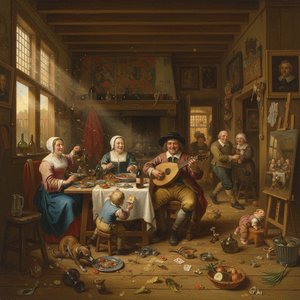
Jan Steen: A Master of Dutch Genre Painting & the Golden Age
Explore the life & art of Jan Steen, a leading Dutch Golden Age painter renowned for his humorous genre scenes & insightful social commentary. Discover his techniques, legacy, and collecting tips.
Genre Painting: A Window into Daily Life & Societal Values of the Dutch Golden Age
Explore the captivating world of Dutch Golden Age genre painting! Discover realistic depictions of daily life, masterful artists like Ostade & Metsu, and hidden symbolism. Learn about this influential art movement with OriginalUniqueArt.

Rembrandt van Rijn: A Life Illuminated – Innovation, Emotion, and the Dutch Golden Age
Explore the life & art of Rembrandt van Rijn, a Dutch Golden Age master. Discover his innovative techniques, iconic paintings like 'The Night Watch', and enduring legacy. Expert insights for collectors & enthusiasts.

Frans Hals I: Innovation, Intimacy & the Dutch Golden Age Portrait
Explore the revolutionary portraiture of Frans Hals I, a master of the Dutch Golden Age. Discover his innovative techniques, captivating character studies & lasting impact on art history. Learn more at OriginalUniqueArt.

Willem van de Velde the Elder: Master of Maritime Painting & Chronicler of the Dutch Golden Age
Discover the captivating maritime paintings of Willem van de Velde the Elder, a master chronicler of the Dutch Golden Age. Explore his unparalleled realism and lasting influence on naval art history.

