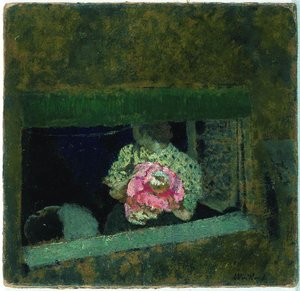
Πορτρέτο του Εντουάρ Βιγιάρ

Τα 100 πιο διάσημα έργα του Εντουάρ Βιγιάρ, κάθε ένα μοναδικό

Ενημερωμένο Νοέμβριος 2026 · κατάταξη βάσει του σκορ δημοφιλίας μας (αναζητήσεις, επισκέψεις και παραγγελίες για κάθε έργο) · 603 έργα του Εντουάρ Βιγιάρ στον κατάλογό μας

Με σύντομη περιγραφή

Το έργο The Gilded Chair, Madame George Feydeau and Her Son (1906) είναι το ποίτευμα του Εντουάρ Βιγιάρ που τραβάει τα περισσότερα βλέμματα· το πρωτότυπο ανήκει στο Virginia Museum of Fine Arts, Ρίτσμοντ. Μετά από αυτό, το βλέμμα στρέφεται στο Flowers on a fireplace in Clayes (1935) και στο Portrait of Madame Frantz Jourdain (1914). Ανάμεσα στα 603 έργα του Εντουάρ Βιγιάρ στον κατάλογό μας, αυτά τα 100 είναι τα πιο διάσημα, το καθένα ένα μοναδικό πρωτότυπο που παρουσιάζεται με την χρονολογία του, το μουσείο του και τον λόγο για τον οποίο παραμένει αιώνιο.

1868 – 1940, Κουιζώ Post-impressionism Περισσότερα έργα: Μετροπολιτικό Μουσείο Τέχνης

Τα 10 κορυφαία έργα του Εντουάρ Βιγιάρ, μέσα από το βλέμμα της γκαλερί

1
The Gilded Chair, Madame George Feydeau and Her Son (1906) του Εντουάρ Βιγιάρ

The Gilded Chair, Madame George Feydeau and Her Son

1906 · Oil On Panel · Virginia Museum of Fine Arts, Ρίτσμοντ

The painting depicts a domestic interior featuring a woman seated in a chair, with her son positioned nearby. The scene is set within a living space that includes a fireplace, which contributes to the warmth of the environment. The room is furnished with various items, including several chairs and couches, creating a cozy atmosphere. Decorative elements are scattered throughout the space, such as multiple vases and a clock mounted on…

2
Flowers on a fireplace in Clayes (1935) του Εντουάρ Βιγιάρ

Flowers on a fireplace in Clayes

1935 · Oil On Canvas

Introduction to the Painting Jean Edouard Vuillard's "Flowers on a Fireplace in Clayes" is a beautiful representation of a room with a yellow wall and a window. The painting, created in 1935, measures 102 x 90 cm and is classified under the Post-Impressionism art movement. Artistic Style and Movement Post-Impressionism was a predominantly French art movement that developed roughly between 1886 and 1905. It emerged as a reaction against Impressionists'…

3
Portrait of Madame Frantz Jourdain (1914) του Εντουάρ Βιγιάρ

Portrait of Madame Frantz Jourdain

1914 · Mixed Technique · Petit Palais, Παρίσι

The room holds its breath. An elderly woman sits at her desk, her presence a soft weight within the domestic stillness of a 1914 interior. She is a figure of quiet solitude, her form partially dissolving into the very atmosphere of the space. Light spills from an unseen source to the right, brushing against the edge of the desk and illuminating the gentle contours of her face. There is a…

4
Interior with Work Table (also known as The Suitor) (1893) του Εντουάρ Βιγιάρ

Interior with Work Table (also known as The Suitor)

1893

A Glimpse into Intimate Parisian Life: Jean-Édouard Vuillard’s “Interior with Work Table” Jean-Édouard Vuillard's 1893 masterpiece, “Interior with Work Table” (also known as "The Suitor"), offers a captivating window into the private world of late 19th-century Parisian society. The painting depicts a subtly charged encounter between a woman in an elegant dress and a seated man, seemingly engaged in work at a table draped with a striking blue cloth. This…

5
Sunlit Interior: Madame Vuillard's Room at La Closerie des Genêts (1921) του Εντουάρ Βιγιάρ

Sunlit Interior: Madame Vuillard's Room at La Closerie des Genêts

1921

A Glimpse into Intimate Domesticity: Vuillard’s Sunlit Interior Jean-Édouard Vuillard's *Sunlit Interior: Madame Vuillard's Room at La Closerie des Genêts* (1921) offers a captivating window into the private world of a woman within her personal space. This painting isn’t merely a depiction of a room; it is an evocation of mood, memory, and the quiet rhythms of daily life. The scene unfolds with a deliberate intimacy, inviting viewers to share…

6
The Room (1899) του Εντουάρ Βιγιάρ

The Room

1899 · Oil

Created in 1899, The Room is a post-impressionist work by Édouard Vuillard. The painting captures a domestic interior, presenting a living room where several individuals are gathered around a dining table. At least five people occupy the space, some seated in chairs and others positioned on couches or standing. A potted plant sits near the upper right corner, while a vase rests upon the central table.

7
Man Reading (1890) του Εντουάρ Βιγιάρ

Man Reading

1890 · Musée d'Orsay, Παρίσι

A Quiet Moment: Delving into Vuillard’s “Man Reading” Jean-Édouard Vuillard's 1890 oil on panel, “Man Reading,” is a captivating example of Post-Impressionism, offering a glimpse into the intimate world of late 19th-century Parisian life. Measuring just 35 x 19 cm and currently residing at the Musée d’Orsay, this seemingly simple scene reveals layers of artistic innovation and emotional resonance. Vuillard, alongside artists like Pierre Bonnard, formed the core of *Les…

8
Sewing Party at Loctudy (1912) του Εντουάρ Βιγιάρ

Sewing Party at Loctudy

1912 · Oil On Canvas · Legion of Honor, Σαν Φρανσίσκο

In this 1912 composition, we find ourselves in a sun-drenched veranda or courtyard overlooking Loctudy Bay in Brittany. The scene captures a fleeting moment of domestic life, where a group of figures—women seated around a table and children playing—are immersed in quiet conversation and activity. There is an organic asymmetry to the arrangement, a deliberate departure from formal balance that allows the viewer to feel as though they have stumbled…

9
Interior (1900) του Εντουάρ Βιγιάρ

Interior

1900 · Oil On Canvas · Μετροπολιτικό Μουσείο Τέχνης, Νέα Υόρκη

A hush settles over the room, thick and heavy like the air in a sun-drenched parlor at midday. A woman sits, her presence anchored in a space where the boundaries between person and place begin to dissolve. She wears a blouse of deep, startling red, a sudden pulse of color amidst a sea of muted earth tones. Around her, the world is a dense collection of shapes—the curve of a…

10
Portrait of Thaddeus Natanson in chair (1906) του Εντουάρ Βιγιάρ

Portrait of Thaddeus Natanson in chair

1906 · Oil · Musée d'Orsay, Παρίσι

Thaddeus Natanson sits reclined in a dark armchair, absorbed in a book or newspaper. The scene is a domestic interior, rendered with a dense, textured application of paint that prioritizes tactile presence over sharp outlines. A muted palette of warm ochres, browns, creams, and deep blacks defines the space, creating a somber, cozy atmosphere. The composition is structured through the layering of objects, from the foreground rug to the background…

Τα διάσημα έργα του Εντουάρ Βιγιάρ, από το 11 έως το 100

11Dr. George Viau in his dental office (1914) του Εντουάρ ΒιγιάρDr. George Viau in his dental office1914 · Musée d'Orsay 12Madame Bonnard (1900) του Εντουάρ ΒιγιάρMadame Bonnard1900 · Εθνική Πινακοθήκη Τέχνης 13Madame Vuillard in Profile (1888) του Εντουάρ ΒιγιάρMadame Vuillard in Profile1888 · Art Institute of Chicago 14Mme Vuillard Sewing by the Window, rue Truffaut (1899) του Εντουάρ ΒιγιάρMme Vuillard Sewing by the Window, rue Truffaut1899 · Μετροπολιτικό Μουσείο Τέχνης 15Portrait of Madame Guerin (1916) του Εντουάρ ΒιγιάρPortrait of Madame Guerin1916 · Art Institute of Chicago 16The Salon of Madame Aron (1912) του Εντουάρ ΒιγιάρThe Salon of Madame Aron1912 17Woman Reading in the Reeds, Saint Jacut de la mer (1909) του Εντουάρ ΒιγιάρWoman Reading in the Reeds, Saint Jacut de la mer1909 · Μουσείο Φιτσίουελλ 18Self-Portrait with Cane and Straw Hat (1891) του Εντουάρ ΒιγιάρSelf-Portrait with Cane and Straw Hat1891 19Figures in an Interior: Intimacy (1896) του Εντουάρ ΒιγιάρFigures in an Interior: Intimacy1896 · Petit Palais 20Figures in an Interior: Music (1896) του Εντουάρ ΒιγιάρFigures in an Interior: Music1896 · Petit Palais 21Woman in Profile Wearing a Green Hat (1890) του Εντουάρ ΒιγιάρWoman in Profile Wearing a Green Hat1890 · Musée d'Orsay 22Mme Henri-Xavier Fontaine (1927) του Εντουάρ ΒιγιάρMme Henri-Xavier Fontaine1927 · Μετροπολιτικό Μουσείο Τέχνης 23Madame Lucien Sauphar, Seated in Her Salon (1926) του Εντουάρ ΒιγιάρMadame Lucien Sauphar, Seated in Her Salon1926 24Repast in a Garden (1898) του Εντουάρ ΒιγιάρRepast in a Garden1898 · Εθνική Πινακοθήκη Τέχνης 25At Table (1893) του Εντουάρ ΒιγιάρAt Table1893 · Μετροπολιτικό Μουσείο Τέχνης 26Woman Seated on a Sofa (also known as The Dressing-Room, Madame Hessel Reading at Amfréville) (1906) του Εντουάρ ΒιγιάρWoman Seated on a Sofa (also known as The Dressing-Room, Madame Hessel Reading at Amfréville)1906 · Art Institute of Chicago 27Woman by the Window (1898) του Εντουάρ ΒιγιάρWoman by the Window1898 · Aichi Prefectural Museum of Art 28The Art Dealers (1912) του Εντουάρ ΒιγιάρThe Art Dealers1912 · McNay Art Museum 29Woman in the garden. (1891) του Εντουάρ ΒιγιάρWoman in the garden.1891 · Εθνικό Μουσείο Βαρσοβίας 30Woman Seated in an Armchair (1898) του Εντουάρ ΒιγιάρWoman Seated in an Armchair1898 31The Public Gardens - The Nursemaids (1894) του Εντουάρ ΒιγιάρThe Public Gardens - The Nursemaids1894 32The Chestnuts (1895) του Εντουάρ ΒιγιάρThe Chestnuts1895 · Dallas Museum of Art 33The Public Gardens - Under the Trees (1894) του Εντουάρ ΒιγιάρThe Public Gardens - Under the Trees1894 · Μουσείο Τέχνης Κλίβελαντ 34La chambre rose (The Pink Bedroom) (1911) του Εντουάρ ΒιγιάρLa chambre rose (The Pink Bedroom)1911 · Scottish National Gallery of Modern Art 35In the Room (1903) του Εντουάρ ΒιγιάρIn the Room1903 · Μουσείο Πούσκιν 36Window overlooking the Woods (1899) του Εντουάρ ΒιγιάρWindow overlooking the Woods1899 · Art Institute of Chicago 37The Voiles de Gênes Boudoir (1931) του Εντουάρ ΒιγιάρThe Voiles de Gênes Boudoir1931 38Mlle Nathanson in the Artist's Studio (1912) του Εντουάρ ΒιγιάρMlle Nathanson in the Artist's Studio1912 · Leeds Art Gallery 39Mme Vuillard in a Set Designer's Studio (1893) του Εντουάρ ΒιγιάρMme Vuillard in a Set Designer's Studio1893 · Μετροπολιτικό Μουσείο Τέχνης 40Breton House (1909) του Εντουάρ ΒιγιάρBreton House1909 41A l'Opéra [At the Opera] (1900) του Εντουάρ ΒιγιάρA l'Opéra [At the Opera]1900 · Εθνική Πινακοθήκη Αυστραλίας 42Woman Sweeping (1899) του Εντουάρ ΒιγιάρWoman Sweeping1899 · The Phillips Collection 43APRES LE REPAS του Εντουάρ ΒιγιάρAPRES LE REPASMusée d'Orsay 44'Le Grand Teddy' Tea-Room (1918) του Εντουάρ Βιγιάρ'Le Grand Teddy' Tea-Room1918 45Mme Bonnard with her dog at rue Drouai (1907) του Εντουάρ ΒιγιάρMme Bonnard with her dog at rue Drouai1907 · Εθνική Πινακοθήκη της Βικτώριας 46The Vestibule at Saint Jacut de la mer (1909) του Εντουάρ ΒιγιάρThe Vestibule at Saint Jacut de la mer1909 47The Luncheon (1895) του Εντουάρ ΒιγιάρThe Luncheon1895 · Yale University Art Gallery 48The Cook (1892) του Εντουάρ ΒιγιάρThe Cook1892 · Εθνική Πινακοθήκη Τέχνης 49The Small Drawing-Room: Mme Hessel at Her Sewing Table (1917) του Εντουάρ ΒιγιάρThe Small Drawing-Room: Mme Hessel at Her Sewing Table1917 · Μετροπολιτικό Μουσείο Τέχνης 50Madame Hessel au Sofa (1908) του Εντουάρ ΒιγιάρMadame Hessel au Sofa1908 · Walker Art Gallery 51The Cafe (1898) του Εντουάρ ΒιγιάρThe Cafe1898 52Interior with Misia Natanson on the piano (1897) του Εντουάρ ΒιγιάρInterior with Misia Natanson on the piano1897 · Staatliche Kunsthalle Karlsruhe 53Self-Portrait, Aged 21 (1889) του Εντουάρ ΒιγιάρSelf-Portrait, Aged 211889 · Εθνικό Μουσείο Βαρσοβίας 54Lady of Fashion (1891) του Εντουάρ ΒιγιάρLady of Fashion1891 55Madame Vuillard's Sewing Workshop (1892) του Εντουάρ ΒιγιάρMadame Vuillard's Sewing Workshop1892 56Self-Portrait (1890) του Εντουάρ ΒιγιάρSelf-Portrait1890 57The Couple (1890) του Εντουάρ ΒιγιάρThe Couple1890 · Collection Bemberg 58The Laundress (1892) του Εντουάρ ΒιγιάρThe Laundress1892 · Μουσείο Τέχνης Κλίβελαντ 59Madame Arthur Fontaine (1904) του Εντουάρ ΒιγιάρMadame Arthur Fontaine1904 60Interior with a Man Reading (1898) του Εντουάρ ΒιγιάρInterior with a Man Reading1898 · Virginia Museum of Fine Arts 61Young Woman in Bed (1894) του Εντουάρ ΒιγιάρYoung Woman in Bed1894 · Brooklyn Museum 62Woman Sweeping at 346 rue Saint-Honoré (1895) του Εντουάρ ΒιγιάρWoman Sweeping at 346 rue Saint-Honoré1895 · Μουσείο Τέχνης Κλίβελαντ 63The Public Gardens - First Steps (1894) του Εντουάρ ΒιγιάρThe Public Gardens - First Steps1894 64Valloton in Natanson (1897) του Εντουάρ ΒιγιάρValloton in Natanson1897 65Woman Reading on a Bench (1898) του Εντουάρ ΒιγιάρWoman Reading on a Bench1898 66The Dining Room (1902) του Εντουάρ ΒιγιάρThe Dining Room1902 · Bavarian State Painting Collections 67Interior with Woman (1905) του Εντουάρ ΒιγιάρInterior with Woman1905 · Bavarian State Painting Collections 68two women sitting at a table (1900) του Εντουάρ Βιγιάρtwo women sitting at a table1900 · Museum collection Am Römerholz 69Young Woman Trying on a Hat (1900) του Εντουάρ ΒιγιάρYoung Woman Trying on a Hat1900 · Virginia Museum of Fine Arts 70Ker-Xavier Roussel Reading (1904) του Εντουάρ ΒιγιάρKer-Xavier Roussel Reading1904 · Saint Louis Art Museum 71Woman at the Window (1897) του Εντουάρ ΒιγιάρWoman at the Window1897 · Μουσείο του Ισραήλ 72At the Board Game (1902) του Εντουάρ ΒιγιάρAt the Board Game1902 · Städel Museum 73Red Interior (1902) του Εντουάρ ΒιγιάρRed Interior1902 · Barnes Foundation 74Madame Hessel at Home (1908) του Εντουάρ ΒιγιάρMadame Hessel at Home1908 · Μουσείο Καλών Τεχνών του Χιούστον 75Nude on a Chair (Nu à la chaise) (1904) του Εντουάρ ΒιγιάρNude on a Chair (Nu à la chaise)1904 · Los Angeles County Museum of Art 76Knitting Woman in Pink Dress (1900) του Εντουάρ ΒιγιάρKnitting Woman in Pink Dress1900 · Museum Boijmans Van Beuningen 77At the Revue Blanche (Portrait of Félix Fénéon) (1901) του Εντουάρ ΒιγιάρAt the Revue Blanche (Portrait of Félix Fénéon)1901 · Solomon R. Guggenheim Museum 78Nude woman sitting on a sofa (1903) του Εντουάρ ΒιγιάρNude woman sitting on a sofa1903 79In the Red Room (1905) του Εντουάρ ΒιγιάρIn the Red Room1905 80Nude in the Studio (1902) του Εντουάρ ΒιγιάρNude in the Studio1902 81The Terrace at Vasouy: Luncheon (1901) του Εντουάρ ΒιγιάρThe Terrace at Vasouy: Luncheon1901 82Sunny Morning, Lucy Hessel and Denise Natanson in the Garden at Les Pavillons, Villerville (1910) του Εντουάρ ΒιγιάρSunny Morning, Lucy Hessel and Denise Natanson in the Garden at Les Pavillons, Villerville1910 83Standing Nude at the Studio (1909) του Εντουάρ ΒιγιάρStanding Nude at the Studio1909 · Hiroshima Museum of Art 84Self-portrait (1906) του Εντουάρ ΒιγιάρSelf-portrait1906 · Arp Museum Bahnhof Rolandseck 85Self-Portrait (1906) του Εντουάρ ΒιγιάρSelf-Portrait1906 · Foundation E.G. Bührle Collection 86Woman in Green (1909) του Εντουάρ ΒιγιάρWoman in Green1909 · Μουσεία Τέχνης του Χάρβαρντ 87Jardin à l.Étang-la-Ville (1908) του Εντουάρ ΒιγιάρJardin à l.Étang-la-Ville1908 88Le repas (1911) του Εντουάρ ΒιγιάρLe repas1911 · Birmingham Museum and Art Gallery 89Madame Vuillard Arranging Her Hair (1900) του Εντουάρ ΒιγιάρMadame Vuillard Arranging Her Hair1900 · The Barber Institute of Fine Arts 90Lucy Hessel (1912) του Εντουάρ ΒιγιάρLucy Hessel1912 · Βασικό Μουσείο Καλών Τεχνών Αντβέρπη 91Woman in the Studio (1912) του Εντουάρ ΒιγιάρWoman in the Studio1912 · Μουσείο Wallraf-Richartz 92Lacing the Ankle Boots (1917) του Εντουάρ ΒιγιάρLacing the Ankle Boots1917 · Cincinnati Art Museum 93Sketch for 'Mme Jean Trarieux and her Daughters' (1912) του Εντουάρ ΒιγιάρSketch for 'Mme Jean Trarieux and her Daughters'1912 94Women Sewing (1912) του Εντουάρ ΒιγιάρWomen Sewing1912 · Εθνική Πινακοθήκη Τέχνης 95Madame Vuillard reading the newspaper (1912) του Εντουάρ ΒιγιάρMadame Vuillard reading the newspaper1912 96The model with the rose (1915) του Εντουάρ ΒιγιάρThe model with the rose1915 97The Yellow Curtain (1893) του Εντουάρ ΒιγιάρThe Yellow Curtain1893 · Εθνική Πινακοθήκη Τέχνης 98Three Women on a Sofa at Clos Cézanne (1921) του Εντουάρ ΒιγιάρThree Women on a Sofa at Clos Cézanne1921 99Marie Holding a Bowl (1891) του Εντουάρ ΒιγιάρMarie Holding a Bowl1891 100Madame Vuillard Sewing (1920) του Εντουάρ ΒιγιάρMadame Vuillard Sewing1920 · Εθνικό Μουσείο Δυτικής Τέχνης

Τα διάσημα έργα του Εντουάρ Βιγιάρ, ανά περίοδο

Τα θέματα που κίνησαν το ενδιαφέρον του Εντουάρ Βιγιάρ

Τα τέσσερα θέματα που εμφανίζονται πιο συχνά σε αυτά τα πρωτότυπα έργα, το καθένα με το εξαιρετικό του παράδειγμα.

Τα μουσεία που διατηρούν τα πρωτότυπα έργα του Εντουάρ Βιγιάρ

Τα 8 μουσεία που φιλοξενούν το μεγαλύτερο μέρος των έργων σε αυτήν τη σελίδα.

Μουσείο Πόλη Έργα του Εντουάρ Βιγιάρ Πάτρια από αυτή τη λίστα
Μετροπολιτικό Μουσείο Τέχνης, Νέα ΥόρκηΜετροπολιτικό Μουσείο Τέχνης Νέα Υόρκη 16 Interior, Mme Vuillard Sewing by the Window, rue Truffaut, Mme Henri-Xavier Fontaine
Musée d'Orsay, ΠαρίσιMusée d'Orsay Παρίσι 30 Man Reading, Portrait of Thaddeus Natanson in chair, Dr. George Viau in his dental office
Εθνική Πινακοθήκη Τέχνης, ΟυάσινγκτονΕθνική Πινακοθήκη Τέχνης Ουάσινγκτον 21 Madame Bonnard, Repast in a Garden, The Cook
Art Institute of Chicago, ΣικάγκοArt Institute of Chicago Σικάγκο 10 Madame Vuillard in Profile, Portrait of Madame Guerin, Woman Seated on a Sofa (also known as The Dressing-Room, Madame Hessel Reading at Amfréville)
Μουσείο Τέχνης Κλίβελαντ, ΚλίβελαντΜουσείο Τέχνης Κλίβελαντ Κλίβελαντ 7 The Public Gardens - Under the Trees, The Laundress, Woman Sweeping at 346 rue Saint-Honoré
Petit Palais, ΠαρίσιPetit Palais Παρίσι 6 Portrait of Madame Frantz Jourdain, Figures in an Interior: Intimacy, Figures in an Interior: Music
Virginia Museum of Fine Arts, ΡίτσμοντVirginia Museum of Fine Arts Ρίτσμοντ 5 The Gilded Chair, Madame George Feydeau and Her Son, Interior with a Man Reading, Young Woman Trying on a Hat
Bavarian State Painting Collections, ΜόναχοBavarian State Painting Collections Μόναχο 3 The Dining Room, Interior with Woman

Ο Εντουάρ Βιγιάρ μέσα από τις δεκαετίες: ένα μοναδικό πρωτότυπο για κάθε εποχή

Έργα ανά δεκαετία

Επιλέξτε μια δεκαετία για να δείτε το πρωτότυπο έργο που την χαρακτηρίζει.

Οι πίνακες του Εντουάρ Βιγιάρ: ερωτήσεις για την γκαλερί

Ποιο είναι το πιο διάσημο έργο του Εντουάρ Βιγιάρ;Αποκαλύψτε την απάντηση

The Gilded Chair, Madame George Feydeau and Her Son (1906), Virginia Museum of Fine Arts, Ρίτσμοντ. Στη συνέχεια ακολουθούν το Flowers on a fireplace in Clayes (1935) και το Portrait of Madame Frantz Jourdain (1914).

Σε τι ηλικία δημιούργησε ο/η Εντουάρ Βιγιάρ το έργο The Gilded Chair, Madame George Feydeau and Her Son;Αποκαλύψτε την απάντηση

38 ετών: το έργο The Gilded Chair, Madame George Feydeau and Her Son είναι του 1906, και ο/η Εντουάρ Βιγιάρ γεννήθηκε το 1868.

Ποια είναι τα δέκα πιο διάσημα έργα του Εντουάρ Βιγιάρ;Αποκαλύψτε την απάντηση

The Gilded Chair, Madame George Feydeau and Her Son, Flowers on a fireplace in Clayes, Portrait of Madame Frantz Jourdain, Interior with Work Table (also known as The Suitor), Sunlit Interior: Madame Vuillard's Room at La Closerie des Genêts, The Room, Man Reading, Sewing Party at Loctudy, Interior και Portrait of Thaddeus Natanson in chair. Η κατάταξη παραπάνω αναγράφει το έτος και το μουσείο για το κάθε έργο.

Πόσα έργα του Εντουάρ Βιγιάρ είναι γνωστά;Αποκαλύψτε την απάντηση

Ο κατάλογός μας περιλαμβάνει 603 έργα του Εντουάρ Βιγιάρ, με ημερομηνίες από 1888 έως 1935.

Πού μπορούν να θαυμαστούν τα πιο διάσημα πρωτότυπα έργα του Εντουάρ Βιγιάρ;Αποκαλύψτε την απάντηση

Κυρίως σε Μετροπολιτικό Μουσείο Τέχνης (Νέα Υόρκη), Musée d'Orsay (Παρίσι) και Εθνική Πινακοθήκη Τέχνης (Ουάσινγκτον). Ο πίνακας μουσείου παραπάνω τους περιλαμβάνει όλους.

Κατά ποια περίοδο δημιούργησε ο/η Εντουάρ Βιγιάρ τα πιο γνωστά του/της έργα;Αποκαλύψτε την απάντηση

Κατά την περίοδο 1890s: 37 από τα 100 έργα σε αυτήν τη σελίδα δημιουργήθηκαν τότε, με Interior with Work Table (also known as The Suitor) από αυτά να είναι μοναδικά.

Ποιο διάσημο έργο του Εντουάρ Βιγιάρ είναι το παλαιότερο και ποιο το νεότερο;Αποκαλύψτε την απάντηση

Σε αυτήν τη σελίδα, το παλαιότερο είναι Madame Vuillard in Profile (1888) και το νεότερο Flowers on a fireplace in Clayes (1935).

Ποια θέματα προτίμησε ο/η Εντουάρ Βιγιάρ;Αποκαλύψτε την απάντηση

Woman (44), Interior (39) και Table (19), σε συνολικά 100 έργα σε αυτήν τη σελίδα.

Με ποια υλικά χρησιμοποίησε περισσότερο ο Εντουάρ Βιγιάρ;Αποκαλύψτε την απάντηση

Oil On Canvas, για 44 από τα 100 έργα σε αυτήν τη σελίδα.

Ποιο καλλιτεχνικό κίνημα ανήκει το έργο του Εντουάρ Βιγιάρ;Αποκαλύψτε την απάντηση

Post-impressionism, όπως προκύπτει από τα πρωτότυπα σε αυτήν τη σελίδα.

Ποια πρωτότυπα έργα του Εντουάρ Βιγιάρ μπορώ να δω στο Μετροπολιτικό Μουσείο Τέχνης;Αποκαλύψτε την απάντηση

Interior, Mme Vuillard Sewing by the Window, rue Truffaut και Mme Henri-Xavier Fontaine: το Μετροπολιτικό Μουσείο Τέχνης, Νέα Υόρκη διαθέτει 6 από τα έργα σε αυτήν τη σελίδα.

Εντουάρ Βιγιάρ: ένα πορτρέτο του καλλιτέχνη

Early Life, Family and Artistic Training

Jean-Édouard Vuillard was born on 11 November 1868 in Cuiseaux, France. His upbringing was shaped by the quiet, industrious rhythms of his household. His father, a retired naval captain, had transitioned into the role of a tax collector, while his mother, Marie Vuillard, worked as a seamstress. This domestic environment, defined by the textures of fabric and the focused labor of needlework, would later inform the intimate nature of his visual observations.

The path to professional artistry was not a sudden realization but a series of persistent efforts. After leaving the Lycée, he sought to escape a potential military career to pursue the life of a painter. He joined the studio of Diogène Maillart, located in the former workspace of Eugène Delacroix on Place Fürstenberg. This period of study was marked by a rigorous engagement with the academic traditions of the time. In 1885, he began taking courses at the Académie Julian, and he frequently frequented the studios of William-Adolphe Bouguereau and Robert-Fleury to refine his technique.

His formal training was characterized by both struggle and eventual success. He faced setbacks when he failed to enter the École des Beaux-Arts in both 1886 and 1887. However, his persistence eventually bore fruit when he passed the entrance exam in July 1887. This academic foundation provided the technical discipline that would eventually allow him to move beyond traditionalism into more experimental territories.

The Nabis Movement and Artistic Style

Between 1891 and 1900, Vuillard moved within the avant-garde circles of Les Nabis, a group of young painters seeking to redefine the visual language of their era. Within this collective, he was known by the nickname "Zouave." His work during this period moved away from traditional naturalism, favoring instead the assembly of areas of pure color. This approach allowed him to explore the spatial effects of flattened planes, where pattern and form often merged to create a sense of quiet, domestic intimacy.

His aesthetic was deeply shaped by the influence of Japanese prints and the post-impressionist ideas of Paul Gauguin. Rather than focusing on the grand spectacle of public life, Vuillard turned his attention to the muffled quiet of the interior. He sought to capture the textures of private existence, often using techniques such as peinture à la colle (distemper) or a la collie sur toile to achieve specific matte effects. In these scenes, figures often seemed to blend into their surroundings, becoming part of the very patterns of the wallpaper or the fabric of the furniture.

Later Career and Portraiture

Following the disbanding of Les Nabis after 1900, Vuillard’s aesthetic underwent a notable transition. He moved away from the flattened, decorative abstractions of his youth, adopting a more realistic style that sought to capture the nuances of his subjects. This shift saw him approaching both landscapes and interior scenes with a newfound attention to detail and a preference for vivid colors. The quiet, patterned spaces of his earlier work remained, but they were now rendered with a sharper clarity.

During the 1920s and 1930s, his focus turned toward the people who shaped French industry and the arts. Rather than painting formal, isolated figures, he preferred to place these prominent individuals within their familiar, lived-in settings. These portraits maintained a sense of intimacy, capturing the subjects amidst the objects and environments that defined their daily lives. This period of his life was marked by significant institutional recognition, as he was elected to the Institut de France in 1937 and subsequently to the Académie des Beaux Arts in February 1938.

Key Works and Notable Paintings

The evolution of Vuillard's vision is visible through the shifting textures of his subjects. In 1899, he produced Misia et Vallotton à Villeneuve, a work that captures the specific social and personal circles of his era. By 1905, his ability to translate the essence of everyday life was evident in Chez Maxime. This period saw him refining the way figures inhabit their environments, often blending them into the surrounding patterns of domesticity.

His later years brought a shift toward a more naturalistic approach, where the quietude of the interior met a more detailed observation of the world. The Salon of Madame Aron, painted in 1904 and later reworked in 1934, reflects this ongoing dialogue with his own compositions. Even in his final years, the artist remained focused on the human presence; he completed his last two portraits in 1940, just before his death.

Other significant compositions highlight his interest in the intersection of person and place. Theodore Duret presents a man seated within his office, a scene composed of books, vases, and a clock. This work exemplifies his capacity to transform a functional space into a psychological landscape. His output remains a record of the subtle shifts in French life, from the patterned fabrics of a sewing room to the formal settings of his later subjects.

Legacy and Artistic Influence

As a pioneer of modernism, Jean-Édouard Vuillard helped dismantle the rigid boundaries of academic tradition. His tenure as a prominent member of the Nabis, a group of post-impressionist artists, allowed him to experiment with a visual language that prioritized subjective experience over mere imitation. By assembling areas of pure color and exploring the spatial effects of flattened planes, he moved art toward a more symbolic and decorative direction. This departure from naturalism provided a necessary bridge between the nineteenth-century traditions and the radical shifts of the twentieth century.

The structural innovations found in his work had a profound effect on the trajectory of modern art. His specific approach to color and form would later influence the development of cubism, fauvism, and abstract art. He demonstrated how pattern and texture could be used to integrate a figure into its environment, creating a sense of psychological depth through the very way a subject was embedded in its surroundings. This ability to use abstraction to communicate complex human experiences ensured his relevance long after the Nabis disbanded.

His influence remains visible in the way subsequent movements handled the relationship between domestic space and the human form. By transforming the quiet, patterned textures of private life into a subject of serious inquiry, he expanded the possibilities of what a painter could capture. His work continues to inspire artists who seek to balance the decorative with the deeply personal.

Where to See His Works Today

The quiet, patterned interiors that defined his career are preserved in several major international collections. In Paris, his presence is felt within the Musée d'Orsay, where his explorations of domestic space remain central to the French collection. His reach extends to the Musée des impressionnismes in Giverny, a site that holds significant examples of his visual language. These works offer a glimpse into the textures and flattened planes that characterized his most influential years.

Across the Atlantic, his influence is maintained through several prominent American institutions. The Metropolitan Museum of Art in New York houses his paintings, while the National Gallery of Art in Washington holds pieces that reflect his evolving style. In the Midwest, the Art Institute of Chicago also maintains a collection of his work. These holdings allow for a continued study of how he transitioned from the decorative experiments of his youth toward a more detailed, realistic approach in his later years.

Beyond these major hubs, his paintings can be found in the Walker Art Gallery in Liverpool. Visitors to these various locations may encounter different stages of his development, from the early, color-focused compositions of the Nabis period to the more naturalistic portraits of the 1920s and 1930s. His presence in these galleries ensures that his specific method of blending figures into their environments remains accessible to those studying the evolution of modernism.