Πορτρέτο του Τσόμπουνσάι Είσι

Τα 68 πιο διάσημα έργα του Τσόμπουνσάι Είσι, κάθε ένα μοναδικό

Ενημερωμένο Οκτώβριος 2026 · κατάταξη βάσει του σκορ δημοφιλίας μας (αναζητήσεις, επισκέψεις και παραγγελίες για κάθε έργο) · 69 έργα του Τσόμπουνσάι Είσι στον κατάλογό μας

Με σύντομη περιγραφή

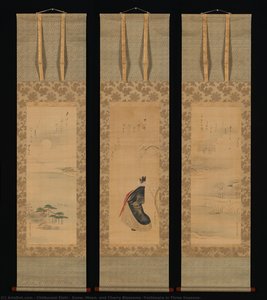
Το έργο Snow, Moon, and Cherry Blossoms (Yoshiwara in Three Seasons) (801) είναι το ποίτευμα του Τσόμπουνσάι Είσι που τραβάει τα περισσότερα βλέμματα· το πρωτότυπο ανήκει στο Μετροπολιτικό Μουσείο Τέχνης, Νέα Υόρκη. Μετά από αυτό, το βλέμμα στρέφεται στο Three Gods of Good Fortune Visit the Yoshiwara; or “Scenes of Pleasure at the Height of Spring” (801) και στο The Salt Maidens, Murasame with Yukihira's Hat (1790). Ανάμεσα στα 69 έργα του Τσόμπουνσάι Είσι στον κατάλογό μας, αυτά τα 68 είναι τα πιο διάσημα, το καθένα ένα μοναδικό πρωτότυπο που παρουσιάζεται με την χρονολογία του, το μουσείο του και τον λόγο για τον οποίο παραμένει αιώνιο.

1756 – 1829, Τόκιο Ukiyo-e Περισσότερα έργα: Μετροπολιτικό Μουσείο Τέχνης

Τα 10 κορυφαία έργα του Τσόμπουνσάι Είσι, μέσα από το βλέμμα της γκαλερί

1
Snow, Moon, and Cherry Blossoms (Yoshiwara in Three Seasons) (801) του Τσόμπουνσάι Είσι

Snow, Moon, and Cherry Blossoms (Yoshiwara in Three Seasons)

801 · Woodblock Print · Μετροπολιτικό Μουσείο Τέχνης, Νέα Υόρκη

Introduction Chōbunsai Eishi was a prominent Japanese artist of the Ukiyo-e school, which flourished during the Edo period (1603-1868). He is best known for his portraits of beautiful women and his innovative use of color. The Painting: Snow, Moon, and Cherry Blossoms "Snow, Moon, and Cherry Blossoms" is a masterpiece by Chōbunsai Eishi, which exemplifies his unique style and technique. The painting depicts a woman in traditional Japanese attire, standing…

2
Three Gods of Good Fortune Visit the Yoshiwara; or “Scenes of Pleasure at the Height of Spring” (801) του Τσόμπουνσάι Είσι

Three Gods of Good Fortune Visit the Yoshiwara; or “Scenes of Pleasure at the Height of Spring”

Introduction to Chōbunsai Eishi and Ukiyo-e Art Movement Chōbunsai Eishi was an artist of samurai descent who also created prints, illustrating several handscrolls showing patrons traveling to the pleasure quarters of Yoshiwara. The Ukiyo-e art movement, which flourished from the 17th through 19th centuries in Japan, produced woodblock prints and paintings depicting various subjects such as female beauties, kabuki actors, sumo wrestlers, scenes from history and folk tales, travel scenes…

Τα διάσημα έργα του Τσόμπουνσάι Είσι, από το 11 έως το 68

11Courtesan with a Letter in Her Mouth (1815) του Τσόμπουνσάι ΕίσιCourtesan with a Letter in Her Mouth1815 · Μετροπολιτικό Μουσείο Τέχνης 12Courtesan with Fan and Koto (701) του Τσόμπουνσάι ΕίσιCourtesan with Fan and Koto701 13Beauty At Her Toilette Edo Period, Bunka Era του Τσόμπουνσάι ΕίσιBeauty At Her Toilette Edo Period, Bunka Era 14Concours De Plaisirs Des Quatre Saisons του Τσόμπουνσάι ΕίσιConcours De Plaisirs Des Quatre Saisons 15A girl representing a celestial musician playing the biwa του Τσόμπουνσάι ΕίσιA girl representing a celestial musician playing the biwa 16Beauty under Cherry Blossoms (1868) του Τσόμπουνσάι ΕίσιBeauty under Cherry Blossoms1868 · University of Michigan Museum of Art 17Prostitute at a Parade του Τσόμπουνσάι ΕίσιProstitute at a ParadeMinneapolis Institute of Art 18A Prostitute and her attendants under a cherry tree του Τσόμπουνσάι ΕίσιA Prostitute and her attendants under a cherry treeMinneapolis Institute of Art 19He Mountain Woman του Τσόμπουνσάι ΕίσιHe Mountain Woman 20Kokaidan Rokubu Goroshi του Τσόμπουνσάι ΕίσιKokaidan Rokubu Goroshi 21Kokaidan Heterogamy του Τσόμπουνσάι ΕίσιKokaidan Heterogamy 22Courtesan and Attendant του Τσόμπουνσάι ΕίσιCourtesan and AttendantΜετροπολιτικό Μουσείο Τέχνης 23Three Beauties Viewing Cherry Blossoms του Τσόμπουνσάι ΕίσιThree Beauties Viewing Cherry BlossomsΜετροπολιτικό Μουσείο Τέχνης 24Untitled του Τσόμπουνσάι ΕίσιUntitled 25A Parody Of The Well Curb From Tales Of Ise του Τσόμπουνσάι ΕίσιA Parody Of The Well Curb From Tales Of Ise 26A Beauty With A Sprig Of Cherry Blossom του Τσόμπουνσάι ΕίσιA Beauty With A Sprig Of Cherry Blossom 27From The Series Shokoku Meisho Hyakkei του Τσόμπουνσάι ΕίσιFrom The Series Shokoku Meisho Hyakkei 28Three Women and a Boy Along the Sumida River του Τσόμπουνσάι ΕίσιThree Women and a Boy Along the Sumida River 29A Group Of Courtesans And Kamuro In A Large Boat Playing On Drums And On The Shamisen του Τσόμπουνσάι ΕίσιA Group Of Courtesans And Kamuro In A Large Boat Playing On Drums And On The Shamisen 30The Courtesan Tokiwazu Of The Chojiya Strolling With Her Kamuro And Other Attendants On New Year's Day του Τσόμπουνσάι ΕίσιThe Courtesan Tokiwazu Of The Chojiya Strolling With Her Kamuro And Other Attendants On New Year's Day 31Courtesan Holding a Poetry Slip (1810) του Τσόμπουνσάι ΕίσιCourtesan Holding a Poetry Slip1810 32Hanging Scroll: Woman in a Dark Kimono του Τσόμπουνσάι ΕίσιHanging Scroll: Woman in a Dark KimonoCincinnati Art Museum 33River View in Snow του Τσόμπουνσάι ΕίσιRiver View in SnowMinneapolis Institute of Art 34A Bust Portrait Of A Young Girl του Τσόμπουνσάι ΕίσιA Bust Portrait Of A Young Girl 35A Group Of Five Japanese του Τσόμπουνσάι ΕίσιA Group Of Five Japanese 36Standing courtesan του Τσόμπουνσάι ΕίσιStanding courtesan 37Purple Flowers Of Edo του Τσόμπουνσάι ΕίσιPurple Flowers Of Edo 38A Group Of Five Oban Bijin του Τσόμπουνσάι ΕίσιA Group Of Five Oban Bijin 39Beauty Writing A Poem On A Fan του Τσόμπουνσάι ΕίσιBeauty Writing A Poem On A Fan 40Three Bijin του Τσόμπουνσάι ΕίσιThree Bijin 41Itsutomi, From The Series Seiro Geisha Erami του Τσόμπουνσάι ΕίσιItsutomi, From The Series Seiro Geisha Erami 42Matsuchiyama In Autumn; Mimeguri Shrine In Winter του Τσόμπουνσάι ΕίσιMatsuchiyama In Autumn; Mimeguri Shrine In Winter 43Portrait Of A Beauty Seated At A Desk του Τσόμπουνσάι ΕίσιPortrait Of A Beauty Seated At A Desk 44From The Series Imayo Irokue No Ito του Τσόμπουνσάι ΕίσιFrom The Series Imayo Irokue No Ito 45Portrait Of The Courtesan Mitsuhana Of The Ohishiya του Τσόμπουνσάι ΕίσιPortrait Of The Courtesan Mitsuhana Of The Ohishiya 46'hana No En' From 'eight Views Of Disguised Genji του Τσόμπουνσάι Είσι'hana No En' From 'eight Views Of Disguised Genji 47A Beauty Playing With Her Hairpins του Τσόμπουνσάι ΕίσιA Beauty Playing With Her Hairpins 48Woodcut του Τσόμπουνσάι ΕίσιWoodcut 49Seated in an interior του Τσόμπουνσάι ΕίσιSeated in an interior 50A Beauty On A Yellow Background Holding The Cord Of A Model Of A Snapper του Τσόμπουνσάι ΕίσιA Beauty On A Yellow Background Holding The Cord Of A Model Of A Snapper 51Shiratsuyu of the ogiya του Τσόμπουνσάι ΕίσιShiratsuyu of the ogiya 52Daikoku, From The Series Fukujin Takara Awase του Τσόμπουνσάι ΕίσιDaikoku, From The Series Fukujin Takara Awase 53Courtesans From The Tamaya Yamazo Brothel του Τσόμπουνσάι ΕίσιCourtesans From The Tamaya Yamazo Brothel 54Portrait Of The Courtesan Seated By A Bookstand του Τσόμπουνσάι ΕίσιPortrait Of The Courtesan Seated By A Bookstand 55Praying for rain του Τσόμπουνσάι ΕίσιPraying for rain 56House cleaning του Τσόμπουνσάι ΕίσιHouse cleaning 57Two Young Girls And A Man Paddling In The River του Τσόμπουνσάι ΕίσιTwo Young Girls And A Man Paddling In The River 58Portrait Of The Courtesan Holding A Brush του Τσόμπουνσάι ΕίσιPortrait Of The Courtesan Holding A Brush 59Beauty dreaming of the tales of ise edo period του Τσόμπουνσάι ΕίσιBeauty dreaming of the tales of ise edo period 60Sumidagawa, From The Series Goshiki No Asobi του Τσόμπουνσάι ΕίσιSumidagawa, From The Series Goshiki No Asobi 61The Courtesan Segawa Of Matsubaya With Two Shinzo And Two Kamuro του Τσόμπουνσάι ΕίσιThe Courtesan Segawa Of Matsubaya With Two Shinzo And Two Kamuro 62Fujin Sogaku Juttai του Τσόμπουνσάι ΕίσιFujin Sogaku Juttai 63A Sheet From A Polyptych Depicting Young Girls Collecting Clams At The Seaside του Τσόμπουνσάι ΕίσιA Sheet From A Polyptych Depicting Young Girls Collecting Clams At The Seaside 64The Left-hand Sheet Of A Pentaptych Showing Two Young Girls And A Young Man In A Pleasure Boat του Τσόμπουνσάι ΕίσιThe Left-hand Sheet Of A Pentaptych Showing Two Young Girls And A Young Man In A Pleasure Boat 65Cherry Blossom Viewing At Gotenyama Hill του Τσόμπουνσάι ΕίσιCherry Blossom Viewing At Gotenyama Hill 66Nanamachi of the Yotsumeya walking with attendants Sumano and Akashi under a cherry tree του Τσόμπουνσάι ΕίσιNanamachi of the Yotsumeya walking with attendants Sumano and Akashi under a cherry tree 67Shellfish and Apparitions of the Yoshiwara Pleasure Quarter (1811) του Τσόμπουνσάι ΕίσιShellfish and Apparitions of the Yoshiwara Pleasure Quarter1811 68Beautiful Woman Enjoying Firefly Catching του Τσόμπουνσάι ΕίσιBeautiful Woman Enjoying Firefly CatchingFukuda Art Museum

Τα θέματα που κίνησαν το ενδιαφέρον του Τσόμπουνσάι Είσι

Τα τέσσερα θέματα που εμφανίζονται πιο συχνά σε αυτά τα πρωτότυπα έργα, το καθένα με το εξαιρετικό του παράδειγμα.

Τα μουσεία που διατηρούν τα πρωτότυπα έργα του Τσόμπουνσάι Είσι

Τα 7 μουσεία που φιλοξενούν το μεγαλύτερο μέρος των έργων σε αυτήν τη σελίδα.

Μουσεία Πόλη Έργα του Τσόμπουνσάι Είσι Πάτρια από αυτή τη λίστα
Μετροπολιτικό Μουσείο Τέχνης, Νέα ΥόρκηΜετροπολιτικό Μουσείο Τέχνης Νέα Υόρκη 5 Snow, Moon, and Cherry Blossoms (Yoshiwara in Three Seasons), Three Gods of Good Fortune Visit the Yoshiwara; or “Scenes of Pleasure at the Height of Spring”, Courtesan with a Letter in Her Mouth
Minneapolis Institute of Art, MinneapolisMinneapolis Institute of Art Minneapolis 5 Moonlight [left of the pair Beauties in Spring], Rain [right of the pair Beauties in Spring], Prostitute at a Parade
Art Institute of Chicago, ΣικάγκοArt Institute of Chicago Σικάγκο 4 The Salt Maidens, Murasame with Yukihira's Hat, The Salt Maidens, Matsukaze with Yukihira's Coat, Beauty Replacing Her Hairpin
Μουσείο Τέχνης Κλίβελαντ, ΚλίβελαντΜουσείο Τέχνης Κλίβελαντ Κλίβελαντ 1 Beauty in a Boat on Sumida River
University of Michigan Museum of Art, Άν ΑρμπορUniversity of Michigan Museum of Art Άν Αρμπορ 1 Beauty under Cherry Blossoms
Cincinnati Art Museum, ΣινσινάτιCincinnati Art Museum Σινσινάτι 1 Hanging Scroll: Woman in a Dark Kimono
Fukuda Art Museum, ΚιότοFukuda Art Museum Κιότο 1 Beautiful Woman Enjoying Firefly Catching

Ο Τσόμπουνσάι Είσι μέσα από τις δεκαετίες: ένα μοναδικό πρωτότυπο για κάθε εποχή

Έργα ανά δεκαετία

Επιλέξτε μια δεκαετία για να δείτε το πρωτότυπο έργο που την χαρακτηρίζει.

Οι πίνακες του Τσόμπουνσάι Είσι: ερωτήσεις για την γκαλερί

Ποιο είναι το πιο διάσημο έργο του Τσόμπουνσάι Είσι;Αποκαλύψτε την απάντηση

Snow, Moon, and Cherry Blossoms (Yoshiwara in Three Seasons) (801), Μετροπολιτικό Μουσείο Τέχνης, Νέα Υόρκη. Στη συνέχεια ακολουθούν το Three Gods of Good Fortune Visit the Yoshiwara; or “Scenes of Pleasure at the Height of Spring” (801) και το The Salt Maidens, Murasame with Yukihira's Hat (1790).

Ποια είναι τα δέκα πιο διάσημα έργα του Τσόμπουνσάι Είσι;Αποκαλύψτε την απάντηση

Snow, Moon, and Cherry Blossoms (Yoshiwara in Three Seasons), Three Gods of Good Fortune Visit the Yoshiwara; or “Scenes of Pleasure at the Height of Spring”, The Salt Maidens, Murasame with Yukihira's Hat, The Salt Maidens, Matsukaze with Yukihira's Coat, Mounted Archer and Courtesan with Bow, Beauty Replacing Her Hairpin, Moonlight [left of the pair Beauties in Spring], Rain [right of the pair Beauties in Spring], Beauty in a Boat on Sumida River και A Courtesan Reading a Letter. Η κατάταξη παραπάνω αναγράφει το έτος και το μουσείο για το κάθε έργο.

Πόσα έργα του Τσόμπουνσάι Είσι είναι γνωστά;Αποκαλύψτε την απάντηση

Ο κατάλογός μας περιλαμβάνει 69 έργα του Τσόμπουνσάι Είσι, με ημερομηνίες από 1790 έως 1822.

Πού μπορούν να θαυμαστούν τα πιο διάσημα πρωτότυπα έργα του Τσόμπουνσάι Είσι;Αποκαλύψτε την απάντηση

Κυρίως σε Μετροπολιτικό Μουσείο Τέχνης (Νέα Υόρκη), Minneapolis Institute of Art (Minneapolis) και Art Institute of Chicago (Σικάγκο). Ο πίνακας μουσείου παραπάνω τους περιλαμβάνει όλους.

Κατά ποια περίοδο δημιούργησε ο/η Τσόμπουνσάι Είσι τα πιο γνωστά του/της έργα;Αποκαλύψτε την απάντηση

Κατά την περίοδο 1790s: 6 από τα 68 έργα σε αυτήν τη σελίδα δημιουργήθηκαν τότε, με The Salt Maidens, Murasame with Yukihira's Hat από αυτά να είναι μοναδικά.

Ποιο διάσημο έργο του Τσόμπουνσάι Είσι είναι το παλαιότερο και ποιο το νεότερο;Αποκαλύψτε την απάντηση

Σε αυτήν τη σελίδα, το παλαιότερο είναι The Salt Maidens, Murasame with Yukihira's Hat (1790) και το νεότερο A Courtesan Reading a Letter (1822).

Ποια θέματα προτίμησε ο/η Τσόμπουνσάι Είσι;Αποκαλύψτε την απάντηση

Girls (5), Portraits (5) και Cherry blossoms (4), σε συνολικά 68 έργα σε αυτήν τη σελίδα.

Ποιο καλλιτεχνικό κίνημα ανήκει το έργο του Τσόμπουνσάι Είσι;Αποκαλύψτε την απάντηση

Ukiyo-e, όπως προκύπτει από τα πρωτότυπα σε αυτήν τη σελίδα.

Ποια πρωτότυπα έργα του Τσόμπουνσάι Είσι μπορώ να δω στο Μετροπολιτικό Μουσείο Τέχνης;Αποκαλύψτε την απάντηση

Snow, Moon, and Cherry Blossoms (Yoshiwara in Three Seasons), Three Gods of Good Fortune Visit the Yoshiwara; or “Scenes of Pleasure at the Height of Spring” και Courtesan with a Letter in Her Mouth: το Μετροπολιτικό Μουσείο Τέχνης, Νέα Υόρκη διαθέτει 5 από τα έργα σε αυτήν τη σελίδα.

Τσόμπουνσάι Είσι: ένα πορτρέτο του καλλιτέχνη

Chobunsai Eishi: The Poet of Beauty

Chobunsai Eishi (1756-1829), also known as Hosoda Tokitomi, stands as a pivotal figure in the vibrant world of Edo-period Japanese art. Born into a distinguished samurai family within the prestigious Fujiwara clan – a lineage tracing back to influential roles within the shogunate – Eishi’s life was one of privilege and ultimately, artistic liberation. His early years were marked by service within the Tokugawa court, a position he relinquished in 1789 to dedicate himself fully to his passion: capturing the exquisite beauty of women and the evocative narratives of classic literature. Eishi's legacy rests primarily on his masterful *bijin-ga* – portraits of beautiful women – but his work also encompasses scenes drawn from celebrated tales like “The Tale of Genji,” demonstrating a profound understanding of both artistic technique and cultural storytelling.

Early Life and Artistic Foundations

Eishi’s origins were steeped in tradition and influence. His grandfather, Hosoda Tokitoshi, had served as Treasury Minister to the shogunate, providing his family with a secure position within the imperial system. This background instilled in Eishi a sense of decorum and an appreciation for refined aesthetics. While the exact circumstances surrounding his artistic awakening remain somewhat shrouded in mystery, it’s believed he received early instruction from Kanō Michinobu, a prominent master of the Kanō school of painting – renowned for its meticulous detail and stylized depictions of nature and religious subjects. The influence of this training is evident in Eishi's initial works, which shared some stylistic similarities with the Kanō tradition. However, Eishi quickly forged his own distinctive path, establishing himself as a leading figure within the *ukiyo-e* genre, known for its woodblock prints capturing fleeting moments of beauty and everyday life. The name “Eishi,” bestowed upon him – whether by Shogun Ieharu or through tradition – marked a significant step in his artistic journey, signifying his recognition as a skilled artist.

A Rivalry of Styles: Kiyonaga and Utamaro

Eishi’s rise to prominence coincided with the flourishing careers of two other masters of *bijin-ga*: Kitagawa Kiyonaga and Utamaro Nishimura. Initially, Eishi found himself in direct competition with Kiyonaga, whose bold compositions and dramatic use of color set a high standard for portraiture. However, Eishi’s unique approach – characterized by an emphasis on elegance, subtlety, and a nuanced portrayal of female beauty – gradually established him as a distinct voice within the field. He skillfully captured not just physical appearance but also the inner lives and emotions of his subjects, creating portraits that resonated with viewers long after they were created. While Kiyonaga favored grand scale and theatrical presentation, Eishi excelled at conveying intimacy and grace, often depicting women in quiet moments of contemplation or delicate activities. This subtle difference in style ultimately cemented Eishi’s place alongside Utamaro as one of the most celebrated *bijin-ga* artists of his time.

Technique and Subject Matter

Eishi's technical prowess was remarkable, particularly for a period when woodblock printing was still evolving. He mastered the art of color layering – *nishiki-e*, utilizing multiple colors to create rich, luminous effects. His prints often featured subdued tones, reflecting contemporary regulations that discouraged ostentatious displays of wealth and extravagance. However, Eishi’s skill lay not just in his technical execution but also in his ability to imbue his subjects with a sense of life and personality. He frequently depicted women engaged in literary pursuits, such as reading or writing poetry – drawing inspiration from classic tales like “The Tale of Genji.” These scenes offered glimpses into the lives of women during the Edo period, revealing their intellectual interests and social roles. Notably, Eishi’s later works became increasingly characterized by elongated figures, with heads disproportionately small—a stylistic choice that emphasized elegance and refinement.

Legacy and Influence

Following 1801, Eishi abandoned print design to dedicate himself entirely to painting, a decision that solidified his reputation as a master of the brush. He was granted the honorary title *Jibukyō* (治部卿), recognizing his exceptional talent and contributions to the arts. His final years were marked by quiet contemplation and artistic refinement. Eishi’s work continues to captivate audiences today, admired for its exquisite beauty, subtle emotional depth, and masterful technical execution. His influence can be seen in subsequent generations of *ukiyo-e* artists, who drew inspiration from his elegant style and innovative approach to portraiture. Chobunsai Eishi remains a testament to the power of artistic vision and the enduring appeal of capturing the beauty of human experience through art. His prints are held in major museums worldwide, ensuring that his legacy will continue to inspire and delight for centuries to come.