

Eine Symphonie des Glaubens und der architektonischen Innovation
Die Basilika di Sant’Antonio in Padua steht als tiefgreifendes Zeugnis jahrhundertelanger Hingabe und als außergewöhnliche Konvergenz architektonischer Stile – ein wahres Palimpsest, das sich in die Landschaft der Region Venetien eingeschrieben hat. Kurz nach dem Tod des Heiligen Antonius im Jahr 1231 gegründet, spiegelte ihr ursprüngliches Konzept die asketischen Ideale des Franziskanerordens wider und manifestierte sich zunächst als Santa Maria Mater Domini, bevor sie sich rasch in eine der am meisten verehrten Pilgerstätten Italiens verwandelte. Heute präsentiert sich die Basilika als ein Bauwerk, das sich einer einfachen Kategorisierung entzieht; sie reflektiert eine vielschichtige Geschichte, geprägt von romanischer Solidität, gotischem Streben und byzantinische Mystik. Diese einzigartige Verschmelzung schafft eine visuelle Sprache, die in Europa ihresgleichen sucht, wo die schwere, erdverbundene Natur ihrer frühen Fundamente auf die ätherischen, emporstrebenden Qualitäten ihrer späteren Erweiterungen trifft.
Die architektonische Reise durch die Basilika ist eine der ständigen Evolution. Die Joche des Mittelschiffs werden von hoch aufragenden Bögen und Kreuzrippengewölben unterbrochen, die eine bewusste Hommage an die großen Kathedralen Frankreichs darstellen und eine Atmosphäre feierlicher Kontemplation und spiritueller Erhabenheit schaffen. Doch beim Blick nach oben begegnet man den prächtigen, byzantinisch beeinflussten Kuppeln, die den Glanz des Markusdoms in Venedig widerspiegeln. Diese Kuppeln verleihen dem Innenraum eine jenseitige Qualität und symbolisieren eine Brücke zwischen dem Irdischen und dem Göttlichen. Die Außenlandschaft wird von der monumentalen Reiterstatue des Gattamelata von Donatello dominiert – ein Meisterwerk, das nicht nur den bürgerlichen Stolz Paduas einfängt, sondern auch die humanistischen Ideale verkörpert, die während der Renaissance aufblühten, und so die heilige Stätte fest in der breiteren kulturellen Wiedergeburt jener Ära verankert.
Meisterwerke aus Bronze und Fresko
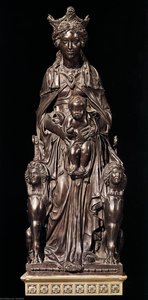
Die wahre Seele der Basilika ruht in ihren intimen Kapellen, wo die künstlerischen Schätze der Renaissance das reiche kulturelle Erbe Paduas erstrahlen lassen. Die Werke von Donatello, einem der einflussreichsten Bildhauer des fünfzehnten Jahrhunderts, sind besonders atemberaubend. Seine Bronzestatue der Madonna mit Kind , die 1448 für den Hochaltar geschaffen wurde, ist beispielhaft für den Stil der Frührenaissance, da sie vom starren Traditionalismus abweicht, um eine menschlichere, zärtlichere Verbindung zwischen Mutter und Kind darzustellen. In ähnlicher Weise dient sein Bronzerelief, das Wunder des Herzens des Geizigen , als meisterhafte Darstellung von Glauben und göttlicher Gnade, wobei anatomische Präzision und expressiver Emotion genutzt werden, um die Erzählung von Zachäus' wunderbarem Aufstieg zum Leben zu erwecken.
Über die skulpturale Brillanz hinaus bietet die Basilika eine tiefgreifende Begegnung mit dem revolutionären Einsatz der Perspektive durch die Fresken von Andrea Mantegna. In der Lunetta – einer kleinen Kapelle mit Blick auf die Piazza del Santo – stellt Mantegnas Werk einen entscheidenden Moment der Kunstgeschichte dar, indem er das Wesen des humanistischen Denkens durch akribische Details und räumliche Tiefe einfängt. Die Kapelle des Heiligen Antonius selbst dient als spirituelles Herz des Komplexes und beherbergt das Grab des Heiligen, das mit exquisiten Marmor- und Bronzearbeiten geschmückt ist. Für den Sammler oder Liebhaber der schönen Künste sind diese Werke weit mehr als bloße Dekoration; sie sind tiefgreifende Schnittpunkte, an denen technische Meisterschaft auf spirituelle Transzendenz trifft, was die Basilika zu einem Reiseziel macht, das weiterhin Ehrfurcht gebietet und als Eckpfeiler der europäischen künstlerischen Identität dient.