
 Vorschau anzeigen
 Versenden
 Teilen
 Details anzeigen

 Herunterladen
 Ähnliche Objekte
 Röntgenaufnahme
 Diashow
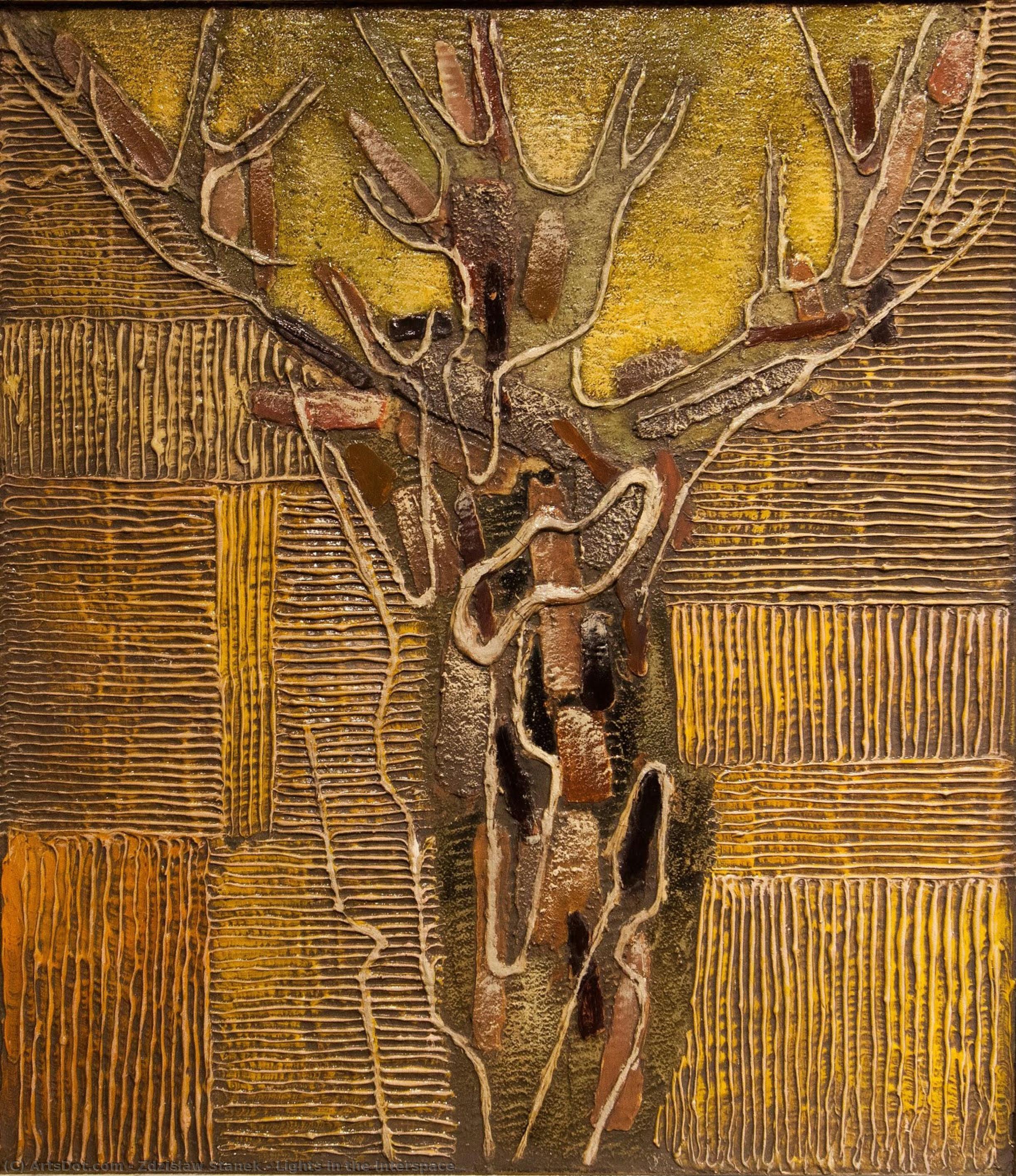
Lights in the Interspace
 Geometric Abstraction
 1960
1960- Modern
 62.0 x 54.0 cm
 Museum der Geschichte Katowic
 Weiterlesen
Erwerben Sie ein hochauflösendes, optimiertes digitales Bild, das der Online-Vorschau weit überlegen ist.
Jede Datei wird von unseren hauseigenen Spezialisten mit modernsten Werkzeugen und fachmännischer manueller Retusche sorgfältig vorbereitet. Wir stellen sicher, dass jedes Bild eine außergewöhnliche Klarheit, präzise Farbgenauigkeit und feinste Details aufweist.
Die endgültige Datei wird innerhalb von 72 Stunden per E-Mail zugestellt und ist für den sofortigen Einsatz in professionellen, redaktionellen und Druckumgebungen optimiert. Es handelt sich um dieselbe Qualität, der führende Designstudios, Verlage und Galerien vertrauen.
Digitales Bild
Laden Sie eine hochauflösende Datei für die persönliche Präsentation, den Druck und kreative Projekte herunter. ( Druck bestellen Handgemalte Reproduktion bestellen)
In jeder Bestellung digitaler Bilder enthalten
Professionelle digitale Bereitstellung, garantiert
Wenn Sie sich für OriginalUniqueArt.com entscheiden, erhalten Sie nicht nur ein Bild – Sie erhalten ein professionell aufbereitetes digitales Kunstwerk, das mit höchster Präzision erstellt und durch eine Zufriedenheitsgarantie abgesichert wird. Hier ist alles, was automatisch mit Ihrer Bestellung geliefert wird:

Schnelle E-Mail-Zustellung
Ihre hochauflösende digitale Bilddatei wird Ihnen innerhalb von 72 Stunden nach der Bestellung per E-Mail zugestellt – bereit zur sofortigen Verwendung.

KI-optimierte digitale Datei
Ihre Kunstwerke werden professionell mithilfe fortschrittlicher KI-Tools und manueller Bearbeitung optimiert, um maximale Detailtreue, Klarheit und Farbgenauigkeit zu gewährleisten.

Lebenslanger kostenloser Neudruckservice
Datei versehentlich gelöscht oder verloren? Keine Sorge – wir senden sie Ihnen jederzeit kostenlos erneut zu.

Keine Einfuhrgebühren – jemals
Genießen Sie Ihr Kunstwerk sofort ohne Zollgebühren, Einfuhrabgaben oder Versandkosten – digitale Downloads sind immer steuerfrei.

Garantierte Farbtreue
Wir garantieren, dass Ihr digitales Bild mithilfe professioneller Werkzeuge und Farbmanagement die Originalfarben so präzise wie möglich wiedergibt.

60-Tage-Zufriedenheitsgarantie
Sollten Sie mit Ihrem digitalen Bild nicht zufrieden sein, werden wir es überarbeiten oder Ihnen innerhalb von 60 Tagen 100% erstatten – ohne Wenn und Aber.

100% Geld-zurück-Garantie
Nicht zufrieden? Erhalten Sie innerhalb von 60 Tagen nach Erhalt Ihrer digitalen Datei eine vollständige Rückerstattung – ohne Angabe von Gründen.

Rabatte bei Großbestellungen
3 Bilder kaufen, 10% sparen – 5 Bilder kaufen, 15% sparen – Ab 10 Bildern 20% sparen. Ideal für kreative Projekte, Galerien und Agenturen.
Details zum Sammlerstück
A Symphony of Light and Nature
In the evocative masterpiece Lights in the Interspace, created in 1960, the Polish visionary Zdzisław Stanek invites us into a realm where the boundaries between the physical world and the ethereal plane begin to dissolve. At first glance, the viewer is greeted by the familiar silhouette of a tree, its sturdy trunk anchoring the composition amidst a delicate network of reaching branches and soft foliage. Yet, beneath this naturalistic surface lies a profound exploration of space and luminosity. The painting captures a moment of quiet vitality, where the presence of two small birds—one perched near the upper left and another drifting toward the right—infuses the stillness with a rhythmic pulse of life. These avian figures act as silent witnesses to the interplay of light, transforming a simple landscape into a meditative study of movement within a frozen moment.
The technique employed by Stanek reflects his deep-seated connection to the avant-garde theories of Wład::adysław Strzemiński, particularly the concept of light as an active, transformative force. Rather than merely illuminating the scene, the light in this work seems to emerge from the "interspace" itself, weaving through the leaves and defining the edges of the branches with a spectral glow. The artist utilizes a delicate balance of form and atmosphere, where the organic textures of the bark and leaves are softened by an almost atmospheric haze. This creates a sense of depth that is not merely perspectival but emotional, drawing the collector into a space that feels both intimate and infinitely expansive.
The Legacy of Polish Abstraction
To understand the profound impact of Lights in the Interspace, one must consider Stanek’s position within the mid-20th-century Polish art movement. Emerging from the intellectual crucible of Łódź, Stanek was a pioneer who resisted the easy comforts of prevailing trends to pursue a more rigorous, geometric, and light-centric language. This particular work serves as a beautiful bridge between representational nature and abstract experimentation. While the subject matter remains grounded in the organic world, the way the light interacts with the structural elements of the tree hints at the artist's fascination with how perception is shaped by luminosity. It is a piece that embodies the tension between what we see with our eyes and what we feel through the subtle shifts in shadow and radiance.
For the discerning collector or interior designer, this painting offers more than just aesthetic beauty; it provides a sophisticated focal point that commands attention through subtlety rather than noise. The muted yet luminous palette allows it to integrate seamlessly into high-end contemporary spaces, adding a layer of intellectual depth and historical significance. Whether placed in a minimalist gallery setting or a richly textured study, the artwork acts as a window into a contemplative era of art history. Owning a reproduction of such a significant work means bringing a piece of Poland's modernist soul into one's environment—a constant reminder of the beauty found in the delicate balance between light, life, and the spaces that connect them.
Biografie des Künstlers
Zdzislaw Stanek: A Pioneer of Light and Geometric Abstraction
Zdzisław Stanek (1925 – 1996) stands as a singular figure in Polish art history, recognized for his unwavering dedication to experimentation and his profound engagement with the theoretical framework established by Władysław Strzemiński. He wasn’t merely an artist; he was a relentless explorer of visual language, consistently pushing boundaries and resisting the allure of prevailing artistic trends—a characteristic that cemented his reputation as one of Poland's most distinctive voices during the mid-20th century.Early Life and Artistic Formation
Born in Łódź, Poland, Stanek’s formative years were marked by an early fascination with Strzemiński’s groundbreaking theories on art, particularly his concept of “light” as a fundamental element shaping perception and artistic expression. Strzemiński championed the idea that light wasn't simply illumination but an active force capable of transforming matter and conveying emotion—a perspective that deeply resonated with Stanek’s artistic sensibilities. This influence is palpable throughout his oeuvre, where bold brushstrokes and vibrant colors coalesce to create canvases imbued with a luminous quality reminiscent of Strzemiński’s pioneering investigations into light forms. He studied at the Krakow Academy of Fine Arts, immersing himself in the intellectual currents that would shape his artistic trajectory.Artistic Style and Influences
Stanek's artistic style evolved continuously, reflecting the diverse currents of modern art that captivated him. He drew inspiration from movements like Cubism and Cyber Art, skillfully integrating geometric shapes—particularly cubes and spheres—into his compositions. However, unlike many artists of his time who adhered rigidly to stylistic conventions, Stanek prioritized a dynamic interplay between form and color. Light became an indispensable tool in his artistic arsenal, utilized not merely for illumination but as a means of generating depth, dimensionality, and conveying psychological nuance. His paintings often depict scenes bathed in ethereal light, inviting viewers into contemplative spaces where visual elements converge to evoke feelings of melancholy and introspection. The artist’s exploration of organic forms—borrowed from the natural world—added another layer of complexity to his artistic vision.Notable Works and Exhibitions
Among Stanek’s most celebrated creations is “Still Life with Leeks Bunch, Apples and Cheese,” a masterful demonstration of his ability to balance compositional harmony with chromatic richness. The artwork captures the subtle textures and hues of everyday objects—vegetables, fruit, and dairy products—transforming them into symbols of domesticity and contemplation. Stanek’s work gained recognition through exhibitions at prestigious institutions such as the Museum Pomorskie (Danzig) and the National Museum in Warsaw, establishing him as a pivotal figure within Polish artistic discourse. These presentations underscored his commitment to conveying complex ideas through visual media—a testament to his enduring legacy as an innovator of modern art. Furthermore, he participated in significant events showcasing contemporary Polish art, solidifying his position as a prominent voice during his time.Legacy and Significance
Zdzisław Stanek’s unwavering pursuit of artistic originality continues to inspire contemporary artists. His canvases stand as emblems of experimentation, challenging conventional notions of representation and prioritizing the expressive potential of abstract forms. Exploring works like “Painting-form V” and “Lightnude II,” one observes a masterful blending of Cubist influences with Surrealist sensibilities—a stylistic fusion that exemplifies Stanek’s refusal to confine himself to established artistic paradigms. His exploration of light forms, particularly evident in pieces such as "Part of the Lightforms of Stone X," reflects Strzemiński's core tenets and contributes to a broader understanding of Polish art history. Stanek remains an artist whose work embodies the spirit of intellectual curiosity and artistic courage—a beacon for those striving to forge new paths within the realm of visual expression.
Zdzisław Stanek
1925 - 1996 , Polen
Kurzinfos
- Artistic Movement Or Style: Cubism, Cyber Art
- Artists Or Movements Influenced By This Artist: ['Cyber art']
- Artists Who Influenced This Artist: ['Władysław Strzemiński']
- Date Of Death: 1996
- Full Name: Zdzisław Stanek
- Nationality: Polish
- Notable Artworks:
- Still life with leeks bunch,
- Apples and cheese
- Place Of Birth: Łódź, Poland

