

 Vorschau anzeigen
 Versenden
 Teilen
 Details anzeigen
 Leitfaden

 Herunterladen
 Ähnliche Objekte
 Röntgenaufnahme
 Diashow
 Statistiken
Home Is a Foreign Place
 Woodblock Print
- WallArt
- Minimalism
 1999
1999 330.0 x 407.0 cm
 Museum of Modern Art
 Weiterlesen
Die auf dieser Seite dargestellten Kunstwerke sind urheberrechtlich geschützt, was bedeutet, dass wir keine identische Reproduktion rechtmäßig erstellen oder verkaufen dürfen. Dieser Schutz wird durch internationale Abkommen wie die Berner Übereinkunft und durch nationale Gesetze, einschließlich derer, die von den US-Urheberrecht – Titel 17.
Als respektvolle und rechtlich einwandfreie Alternative bieten wir individuelle, handgemalte Kunstwerke an, die vom Original inspiriert sind. Unsere geschickten und professionellen Künstler studieren sorgfältig den Stil, die Stimmung und das künstlerische Wesen des Originals, um ein neues, einzigartiges Werk zu schaffen, das dasselbe Gefühl hervorruft – während es zugleich eine eigenständige Originalschöpfung bleibt.
Diese Methode entspricht vollumfänglich den Urheberrechtsbestimmungen, da sie keine Kopie oder Vervielfältigung des geschützten Kunstwerks darstellt. Stattdessen handelt es sich um eine kreative Neuinterpretation – ein neues Gemälde, das vom Original inspiriert, aber nicht identisch mit ihm ist.
Handgefertigte Ölreproduktion
Handgemaltes Ölgemälde auf Leinwand in Ihrer Wunschgröße und mit Rahmen, auf Bestellung von unseren Künstlern angefertigt. ( Zum Druck wechseln Zum digitalen Bild wechseln)




P118B €10

P118H €10

P118W €10

P438Z €10

P508JH €12

P508YH €12

P805H €10

P805Z €10

P919BZ €10

P919G €10

P919XJ €10

P959ZH €10

P968JZ €12

W106C €8

W218G €10

W218JH €8

W218Y €10

W307PJ €10

W316G €10

W316PJ €8

W316Y €10

W398PJ €8

W4111J €10

W500HY €15

W500JH €15

W692G €12

W849H €8

W940BG €15

W953PJ €8




Wählen Sie aus unseren vordefinierten Formaten, die den ursprünglichen Proportionen des Kunstwerks entsprechen.

Geben Sie die Breite und die Höhe an, die Sie für Ihren Rahmen oder Ihre Wand benötigen. Da dieses Werk handgemalt ist, kann der Künstler bei einer anderen Form etwas mehr um das Bild herum malen oder etwas abschneiden – Sie entscheiden. Wir senden Ihnen ein digitales Mockup zur Freigabe, bevor mit dem Malen begonnen wird. Das auf dieser Seite gezeigte Bild stellt nicht das tatsächliche Ergebnis dar – dies tut nur das Mockup.
Nach der Bestellung wird das OriginalUniqueArt.com-Team dem Kunden Anweisungen per E-Mail zusenden und eine Mockup-Vorschau bereitstellen.
Weltweiter Versand () in nur 3 bis 4 Wochen statt der üblichen 5 Wochen. (25 Oktober). Keine Kompromisse bei der Qualität.

Kostenloser weltweiter Expressversand

Hochwertige Leinenleinwand

Umfassender Versicherungsschutz beim Versand

Zollgebühren-Rückerstattungsgarantie

Garantie für exakte Farbtreue

100 Tage Rückgaberecht (nur bei Mängeln)

100% Geld-zurück-Garantie

Mengenrabatt verfügbar
 Die Glasoption ist nur für Größen unter 110 cm verfügbar.

Home Is a Foreign Place
Art der Reproduktion
Format der Reproduktion
-


Endpreis
€ 263
Zarina Hashmi’s “Home Is a Foreign Place”: A Cartographic Meditation on Displacement
Zarina Hashmi's "Home Is a Foreign Place," created in 1999, isn’t merely a collection of woodcuts; it’s a profound and deeply personal exploration of belonging, displacement, and the enduring power of memory. This portfolio, comprised of thirty-six meticulously crafted prints, stands as one of the artist's most significant achievements, embodying her signature style – a delicate balance between minimalism and richly layered symbolism. Hashmi, born in Aligarh, India, and later navigating a life shaped by migration and exile, used this series to grapple with the complex emotional landscape of identity forged through movement and loss.
The artwork’s foundation lies in its deliberate simplicity. Each sheet employs a restricted palette – primarily black ink on Kozo paper – creating an almost austere visual experience. Yet, within this apparent restraint resides a remarkable complexity. Hashmi masterfully utilizes geometric forms—lines, circles, squares, and rectangles—to evoke architectural elements, topographical maps, and even the subtle textures of domestic spaces. These shapes aren’t randomly arranged; they are carefully positioned to suggest pathways, borders, and thresholds – visual metaphors for the journeys undertaken throughout her life.
The Language of Urdu: A Return to Roots
Crucially, "Home Is a Foreign Place" isn't presented in isolation. Each print is accompanied by a word or phrase written in Urdu, Hashmi’s native language. This deliberate inclusion elevates the work beyond mere visual abstraction; it transforms each image into a fragment of poetry, a whispered echo of her heritage. The use of Urdu serves as both a grounding force – anchoring the artwork to her roots—and a poignant reminder of the linguistic and cultural losses inherent in displacement. As Hashmi herself explained, she often began with words, allowing them to guide the visual composition, creating a dialogue between language and image.
The choice of Urdu is particularly significant given its role as a ‘translation’ for Hashmi – a means of expressing complex emotions and experiences that couldn't be fully conveyed through English. The script itself becomes a symbol of continuity, connecting her past to the present, and offering a pathway back to a sense of belonging.
Technique and Inspiration: Hayter’s Legacy
Hashmi’s artistic journey was deeply influenced by Stanley William Hayter, a pioneering British printmaker who ran Atelier 17 in Paris. She apprenticed with him for several years, mastering the techniques of woodblock printing and exploring the possibilities of monotype. This training is evident in the precision and control displayed throughout “Home Is a Foreign Place.” The intricate lines, carefully carved into the blocks, demonstrate a deep understanding of printmaking processes, while the subtle variations in ink density create nuanced tonal effects.
Furthermore, Hashmi’s work reflects broader artistic currents of the late 20th century, including minimalism and conceptual art. She draws inspiration from artists like Kazimir Malevich, whose reductive geometric forms explored spiritual concepts, and from the principles of Islamic art – particularly its emphasis on geometry and symmetry. The portfolio's grid-like arrangement mirrors the order and balance found in traditional Islamic architecture, creating a visual harmony that reinforces the artwork’s themes of stability and continuity amidst change.
Emotional Resonance: A Portrait of an Exiled Soul
"Home Is a Foreign Place" is not simply a visually striking work; it's a deeply moving meditation on the human condition. It speaks to the universal experience of displacement, loss, and the yearning for connection. The artwork’s quiet intensity invites viewers to contemplate their own sense of belonging—to consider what constitutes ‘home,’ both physically and emotionally. The subtle shifts in scale, perspective, and composition create a sense of unease and uncertainty, mirroring the emotional complexities of Hashmi's life.
Reproductions of this powerful artwork offer a unique opportunity to bring its contemplative spirit into any space. Its minimalist aesthetic complements a wide range of interior design styles, while its rich symbolism invites ongoing reflection and conversation. “Home Is a Foreign Place” remains a testament to Zarina Hashmi’s extraordinary artistic vision—a poignant reminder that even in the face of displacement, the search for meaning and connection endures.
Fragen & Antworten
Wie wird die Farbpalette von "Home Is a Foreign Place" von Zarina Hashmi beschrieben?
Die Farbpalette von "Home Is a Foreign Place" von Zarina Hashmi wird als Pastels beschrieben. Es handelt sich um eine kompakte Beschreibung der Farben des Werkes.
Ist Zarina Hashmi, der Schöpfer von „Home Is a Foreign Place“, unter anderen Namen bekannt?
Weitere unter denen Zarina Hashmi, Schöpfer von „Home Is a Foreign Place“, bekannt ist, umfassen Zarina.
Wofür wird eine Reproduktion von "Home Is a Foreign Place" von Zarina Hashmi empfohlen?
Die empfohlene Verwendung eines Drucks von „Home Is a Foreign Place“ ist Reflective.
Künstlerbiografie
Frühes Leben und Werdegang
Zarina Hashmi, eine indisch-amerikanische Künstlerin und Grafikerin, wurde am 16. Juli 1937 geboren. Ihr Lebenswerk sollte tiefgreifend von Themen wie Heimat, Vertreibung, Grenzen, Reise und Erinnerung geprägt sein – Motive, die ihre eigenen Erfahrungen als vertriebene Person widerspiegeln.Künstlerischer Stil und Themen
Verbunden mit der Bewegung des Minimalismus nutzte das Werk von Zarina Hashmi abstrakte und geometrische Formen, um beim Betrachter eine spirituelle Resonanz hervorzurufen. Ihre Kunst zeichnet auf ergreifende Weise ihre Lebensgeschichte nach und thematisiert wiederkehrend die Konzepte von Heimat, Ort, Grenzen und dem Vergehen der Zeit.- Minimalismus: Zarinas Werk neigt zum Minimalismus, wird jedoch durch seine Textur und Materialität sanft abgemildert.
- Vertreibung und Erinnerung: Ihre Kunst reflektiert ihre eigenen Erfahrungen als vertriebene Person und erkundet die Ideen von Heimat, Ort, Grenzen und dem Gedächtnis.
- Urdu-Inschriften: Die Verwendung von Urdu-Schriftzeichen in ihrem Werk beschwört ihre Muttersprache herauf und steht für eine lebenslange „Übersetzung“ künstlerischen und sprachlichen Ausdrucks.
Bedeutende Werke und Ausstellungen
Home is a Foreign Place, 1999 (ein Portfolio aus 36 Chine-Collé-Holzschnitten mit auf Papier gedrucktem Urdu-Text, montiert auf Papier; The Metropolitan Museum of Art, Erwerb, Schenkung der George Economou Collection), ist ein herausragendes Beispiel für Zarinas Schaffen. Dieses Werk sowie weitere Arbeiten können im Bereich Zarina Hashmis Kunstwerke auf OriginalUniqueArt.com entdeckt werden.Vermächtnis und Erinnerung
Mit dem Tod von Zarina Hashmi am 25. April 2020 ging eine bedeutende kulturelle Persönlichkeit verloren. Ihre Lebensgeschichte, wie sie in ihrer Kunst zum Ausdruck kommt, löst weiterhin spirituelle Reaktionen bei den Betrachtern aus und stellt sicher, dass ihr Vermächtnis fortbesteht. Betrachten Sie Zarina Hashmis Kunstwerke auf OriginalUniqueArt.com Erfahren Sie mehr über Zarina Hashmi auf Wikipedia
Zarina Hashmi
1937 - 2020 , Indien
Kurzinfos
- Bemerkenswerte Kunstwerke:
- Porträt eines Künstlers (Pool mit zwei Figuren)
- Ein größerer Spritzer
- Blaue Gitarren-Serie
- Geburtsdatum: 9. Juli 1937
- Geburtsort: Bradford, England
- Künstler, Die Diesen Künstler Beeinflusst Haben:
- Pablo Picasso
- Wallace Stevens
- Künstlerische Bewegung Oder Stil: Pop Art, Britische Pop-Art
- Nationalität: Britisch
- Vollständiger Name: David Hockney
- Von Diesem Künstler Beeinflusste Künstler Oder Bewegungen:
- Jeff Koons
- Andy Warhol
Ähnliche Artikel
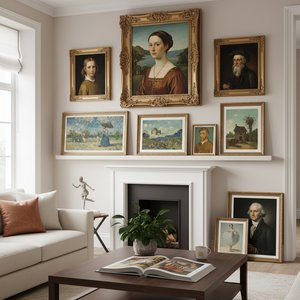
Die 25 Meisterwerke der National Gallery Washington: Kunst für Ihr Zuhause | OriginalUniqueArt
Entdecken Sie die 25 ikonischsten Meisterwerke der National Gallery Washington! Von Cézanne bis Picasso – erfahren Sie die Geschichten hinter berühmten Gemälden, Kunststilen & Farbpaletten. Hochwertige Kunstdrucke online bei OriginalUniqueArt.com.
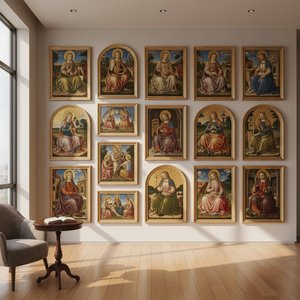
Fra Angelico: Die 25 Meisterwerke des italienischen Frührenaissance-Malers | OriginalUniqueArt
Entdecken Sie die 25 schönsten Meisterwerke von Fra Angelico! Erleben Sie religiöse Kunst der italienischen Renaissance, himmlische Fresken & Panelgemälde. Finden Sie hochwertige Kunstdrucke und Reproduktionen für Ihr Zuhause auf OriginalUniqueArt.com.
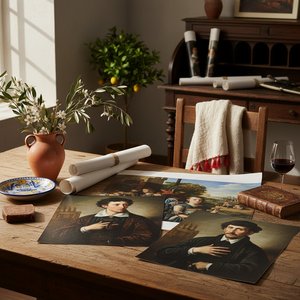
Museo del Prado: Die 25 Meisterwerke – Kunst für Ihr Zuhause | OriginalUniqueArt
Entdecken Sie die 25 Meisterwerke des Museo del Prado! Von Velázquez bis Goya – Kunstgeschichte, Techniken & Geschichten berühmter Gemälde. Finden Sie hochwertige Reproduktionen für Ihr Zuhause auf OriginalUniqueArt.com.

Pierre-Auguste Renoir: Die 25 Meisterwerke des Impressionismus für Ihr Zuhause | OriginalUniqueArt
Entdecken Sie die 25 schönsten Meisterwerke von Pierre-Auguste Renoir! Tauchen Sie ein in die Welt des Impressionismus, erleben Sie berühmte Gemälde wie 'Bal au moulin de la Galette' und finden Sie hochwertige Kunstdrucke für Ihr Zuhause. Jetzt auf OriginalUniqueArt.com!
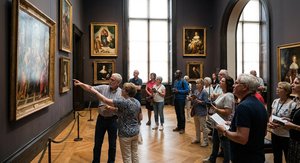
Alte Pinakothek München: Die 25 Meisterwerke für Ihr Zuhause | OriginalUniqueArt
Entdecken Sie die 25 Meisterwerke der Alten Pinakothek München! Von Dürer bis Rembrandt – erleben Sie Kunstgeschichte hautnah. Hochwertige Kunstdrucke & Leinwandbilder für Ihr Zuhause bei OriginalUniqueArt.com.
