

 In echtem Maßstab anzeigen
 Versenden als Grußkarte
 Teilen
 Details anzeigen
 Leitfaden öffnen

 Herunterladen
 Ähnliche Objekte
 Röntgenaufnahme
 Diashow
 Besucherstatistiken
Forest Interior


 Mehr anzeigen
Handgefertigte Ölreproduktion
Handgemaltes Ölgemälde auf Leinwand in Ihrer Wunschgröße und mit Rahmen, auf Bestellung von unseren Künstlern angefertigt. ( Zum Druck wechseln Zum digitalen Bild wechseln)




P118B €10

P118H €10

P118W €10

P438Z €10

P508JH €12

P508YH €12

P805H €10

P805Z €10

P919BZ €10

P919G €10

P919XJ €10

P959ZH €10

P968JZ €12

W106C €8

W218G €10

W218JH €8

W218Y €10

W307PJ €10

W316G €10

W316PJ €8

W316Y €10

W398PJ €8

W4111J €10

W500HY €15

W500JH €15

W692G €12

W849H €8

W940BG €15

W953PJ €8




Wählen Sie aus unseren vordefinierten Formaten, die den ursprünglichen Proportionen des Kunstwerks entsprechen.

Geben Sie die Breite und die Höhe an, die Sie für Ihren Rahmen oder Ihre Wand benötigen. Da dieses Werk handgemalt ist, kann der Künstler bei einer anderen Form etwas mehr um das Bild herum malen oder etwas abschneiden – Sie entscheiden. Wir senden Ihnen ein digitales Mockup zur Freigabe, bevor mit dem Malen begonnen wird. Das auf dieser Seite gezeigte Bild stellt nicht das tatsächliche Ergebnis dar – dies tut nur das Mockup.
Nach der Bestellung wird das OriginalUniqueArt.com-Team dem Kunden Anweisungen per E-Mail zusenden und eine Mockup-Vorschau bereitstellen.
Weltweiter Versand () in nur 3 bis 4 Wochen statt der üblichen 5 Wochen. (21 Oktober). Keine Kompromisse bei der Qualität.

Kostenloser weltweiter Expressversand

Hochwertige Leinenleinwand

Vollständiger Versicherungsschutz beim Versand

Zollgebühren-Rückerstattungsgarantie

Garantie für exakte Farbtreue

100-tägiges Rückgaberecht (nur bei Mängeln)

100% Geld-zurück-Garantie

Angebot für Mengenrabatt
 Die Glasoption ist nur für Größen unter 110 cm verfügbar.

Forest Interior
Reproduktionsmedium
Format der Reproduktion
-


Gesamtpreis
€ 262
A Symphony of Crimson and Light
In the quiet depths of Forest Interior, painted in 1865, the viewer is invited into a sanctuary of light and color that transcends the boundaries of a mere landscape. William Trost Richards, a master of American realism, captures a moment of profound stillness within the heart of the woods. The scene is dominated by a breathtaking palette of vibrant reds and warm ochres, as if the very air is infused with the glow of an eternal autumn afternoon. This is not merely a depiction of trees; it is an immersive experience where the delicate interplay of light filtering through the canopy creates a sense of warmth that radiates from the canvas, offering a serene escape from the complexities of the modern world.
The composition is masterfully layered to create an extraordinary sense of depth and texture. Richards employs a technique that draws the eye from the immediate foreground—where a solitary bird rests, adding a pulse of life and movement to the stillness—into the receding layers of the forest. The meticulous attention to detail in the foliage allows each leaf to appear almost tangible, while the soft blending of distant shadows provides a misty, atmospheric quality. This careful balance between sharp, photographic precision and painterly softness is what makes this piece so captivating for those looking to add a sense of organic elegance to a curated interior.
The Legacy of the Hudson River School
To understand the soul of Forest Interior, one must look toward the historical currents of the mid-19th century. As a contemporary of the great Hudson River School, Richards shared their reverence for the American wilderness, yet he brought a unique, almost scientific devotion to the truth of nature. While others sought the dramatic and the sublime, Richards found divinity in the minute: the way light hits a vein in a leaf or how shadows pool at the base of an ancient trunk. His work serves as a bridge between romanticism and realism, capturing the majesty of the natural world with a precision that honors the environment's inherent complexity.
For the discerning collector or interior designer, this painting offers more than just aesthetic beauty; it provides a focal point of emotional resonance. The inclusion of life within the landscape—the subtle presence of fauna amidst the flora—symbolizes the interconnectedness of all living things, evoking themes of peace, preservation, and wonder. Whether placed in a sunlit gallery or as a centerpiece in a sophisticated living space, this reproduction of Richards' masterpiece brings with it a timeless dignity, reminding us of the quiet splendor that exists when we pause to truly observe the world around us.
Fragen & Antworten
Für welchen Raum wird "Forest Interior" von William Trost Richards empfohlen?
Der empfohlene Raum für "Forest Interior" von William Trost Richards ist ein Living Room. Dieser Vorschlag kann natürlich an Ihr Interieur angepasst werden.
Kann ich eine Ölreproduktion von "Forest Interior" bestellen?
Handgemalte Kopien von "Forest Interior" von William Trost Richards werden auf diese Website verkauft: eine handgemalte Ölreproduktion auf Leinenleinwand, bestellbar über die Seite Handgemalte Reproduktion.
Warum ist der Urheberrechtsstatus von "Forest Interior" so, wie er ist?
"Forest Interior" von William Trost Richards ist gemeinfrei – das Urheberrecht ist abgelaufen. Die Dauer des Urheberrechts beginnt mit dem Tod des Künstlers, der im Jahr 1905 verstarb.
Biografie des Künstlers
Frühes Leben und Ausbildung
William Trost Richards, ein bedeutender amerikanischer Landschaftskünstler, wurde am 14. November 1833 in Philadelphia, Pennsylvania, geboren. Zwischen 1850 und 1855 studierte er nebenberuflich bei dem deutschen Künstler Paul Weber, während er als Designer und Illustrator von ornamentalem Metallwerk tätig war.Künstlerische Karriere
Richards' erste öffentliche Ausstellung fand im Rahmen einer Ausstellung in New Bedford, Massachusetts, statt, die 1858 vom Künstler Albert Bierstadt organisiert wurde. Im Jahr 1862 wurde er zum Ehrenmitglied der National Academy of Design und 1871 zum Akademiker gewählt. Richards verbrachte sechs Sommer an der Ostküste, nachdem er 1866 nach einer einjährigen Reise durch Europa zurückgekehrt war.Bekannte Werke und Stil
Richards schuf zahlreiche gefeierte Aquarellansichten der White Mountains, von denen sich mehrere heute in der Sammlung des Metropolitan Museum of Art befinden. Seine Werke sind heute in vielen bedeutenden amerikanischen Museen zu sehen, darunter die National Gallery, das Saint Louis Art Museum und das Smithsonian American Art Museum. Richards' Stil ist durch sorgfältige faktische Wiedergaben gekennzeichnet, wobei er den romantisierten Ansatz anderer Hudson River Painter ablehnt. Seine Ansichten der White Mountains sind fast fotografisch realistisch.Vermächtnis
Die Tochter von William Trost Richards, Anna Richards Brewster, wurde ebenfalls Malerin. Richards' Werke finden sich in verschiedenen Museen, darunter die oben genannten sowie das Thyssen-Bornemisza Museum und das Crystal Bridges Museum of American Art.- Betrachten Sie Richards' Gemälde "Lago Avernus" auf OriginalUniqueArt.com
- Entdecken Sie weitere Werke von William Trost Richards auf OriginalUniqueArt.com
- Erfahren Sie mehr über William Trost Richards auf Wikipedia
- 14. November 1833: Geburt in Philadelphia, Pennsylvania
- 1862: Wahl zum Ehrenmitglied der National Academy of Design
- 1871: Wahl zum Akademiker
- 8. November 1905: Versterben in Newport, Rhode Island
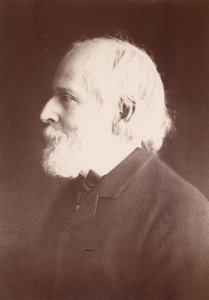
William Trost Richards
1833 - 1905 , Vereinigte Staaten von Amerika
Eckdaten zum Künstler
- Beeinflusste Künstler:
- Albert Bierstadt
- Paul Weber
- Bekannte Werke: ['Lago Avernus']
- Geburtsdatum: 14. November 1833
- Geburtsort: Philadelphia, USA
- Künstlerische Richtung: Hudson River School
- Nationalität: Amerikanisch
- Sterbedatum: 8. November 1905
- Vollständiger Name: William Trost Richards
Verwandte Artikel
Capturing the Light: A Journey Through the Soul of American Impressionism and the Hudson River School
Explore the luminous beauty of American Impressionism and the Hudson River School. Discover a curated journey through light, landscape, and history, celebrating the enduring legacy of masters through exquisite, hand-painted oil reproductions for the discerning art lover.
Capturing the American Spirit: A Journey Through Iconic Landscapes and the Legacy of the Hudson River School
Explore the profound beauty of American art history. From the Hudson River School to iconic landscapes, discover a curated journey through the masterpieces that defined a nation's spirit and the enduring legacy of American Romanticism.

Wild & Untamed: The High-Impact Energy of American Romanticism and the Hudson River School
Experience the raw power of American Romanticism. Explore the high-impact energy of the Hudson River School through premium, hand-painted oil reproductions that capture the sublime beauty and untamed spirit of the American wilderness for discerning collectors.

The Sublime Landscape: Exploring the Hudson River School Movement
Explore the captivating world of the Hudson River School! Discover the history, artists, and defining characteristics of this iconic American art movement. Learn about Romanticism's influence & find inspiration for your collection.
Die 10 Meisterwerke der Hudson River School: Kunst für Ihr Zuhause | OriginalUniqueArt
Entdecken Sie die 10 prägendsten Meisterwerke der Hudson River School! Erfahren Sie mehr über Thomas Cole, Frederic Church & Co. und ihre atemberaubenden Landschaftsbilder. Hochwertige Kunstdrucke für Ihr Zuhause – jetzt auf OriginalUniqueArt.com!
