In echtem Maßstab anzeigen
 Versenden als Grußkarte
 Teilen
 Details anzeigen
 Leitfaden öffnen

 Herunterladen
 Ähnliche Objekte
 Röntgenaufnahme
 Diashow
 Besucherstatistiken
The Madhouse
 British Rococo
 1735
1735 62.0 x 75.0 cm
 Mehr anzeigen
Giclée / Kunstdruck
Giclée- oder Leinwanddruck in Museumsqualität mit schneller Produktion und flexiblen Veredelungsoptionen. ( Handgemalte Reproduktion kaufen Zum digitalen Bild wechseln)




P118B €10

P118H €10

P118W €10

P438Z €10

P508JH €12

P508YH €12

P805H €10

P805Z €10

P919BZ €10

P919G €10

P919XJ €10

P959ZH €10

P968JZ €12

W106C €8

W218G €10

W218JH €8

W218Y €10

W307PJ €10

W316G €10

W316PJ €8

W316Y €10

W398PJ €8

W4111J €10

W500HY €15

W500JH €15

W692G €12

W849H €8

W940BG €15

W953PJ €8




Wählen Sie aus unseren vordefinierten Formaten, die den ursprünglichen Proportionen des Kunstwerks entsprechen.

Sie können Ihre eigenen Maße eingeben, um ein bestimmtes Format oder einen speziellen Platz einzupassen. Wenn das von Ihnen gewählte Format nicht den Proportionen des Originalbildes entspricht, werden wir das Kunstwerk entweder beschneiden oder das Bild mit einem gespiegelten oder einfarbigen Rand erweitern. Ein digitaler Entwurf wird Ihnen zur Genehmigung zugesandt, bevor die Produktion beginnt.
Bitte beachten Sie, dass die Vorschau auf dem Bildschirm nicht den tatsächlichen Zuschnitt oder die Erweiterung widerspiegelt. Nur der Entwurf zeigt die endgültige Komposition präzise an.
Obwohl Sondermaße verfügbar sind, empfehlen wir die Auswahl eines Maßes aus der vordefinierten Liste, um die ursprünglichen Proportionen zu bewahren.
Weltweiter Versand () innerhalb von 2 Wochen statt der üblichen 4/5 Wochen. (10 Oktober)

Kostenloser weltweiter Expressversand

Hochwertige Leinenleinwand

Vollständiger Versicherungsschutz beim Versand

Zollgebühren-Rückerstattungsgarantie

Garantie für exakte Farbtreue

100-tägiges Rückgaberecht (nur bei Mängeln)

100% Geld-zurück-Garantie

Angebot für Mengenrabatt
 Die Glasoption ist nur für Größen unter 110 cm verfügbar.

The Madhouse
Giclée / Kunstdruck
Format der Reproduktion
-


Gesamtpreis
€ 69
A Window into Victorian Morality: Examining William Hogarth’s “The Madhouse”
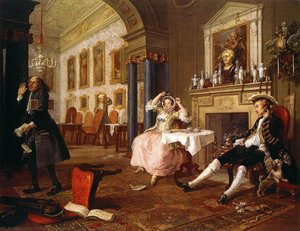
William Hogarth's "The Madhouse," completed in 1735, transcends mere depiction; it serves as a meticulously crafted commentary on the social anxieties and moral failings of his era. More than just a painting, it’s a snapshot frozen in time—a moment captured by an artist acutely attuned to the complexities of human experience within the context of burgeoning Enlightenment ideals colliding with deeply entrenched societal prejudices. This artwork isn't simply aesthetically pleasing; it demands contemplation, prompting viewers to confront uncomfortable truths about ambition, vanity, and the consequences of unchecked indulgence.- Subject Matter: The scene portrays a grim tableau – a room crammed with individuals, dominated by a man lying motionless on the floor, presumably deceased or incapacitated. This unsettling image immediately establishes a thematic core centered around mortality, vulnerability, and the precariousness of human existence.
- Style & Technique: Hogarth’s style is distinctly Rococo-influenced yet firmly rooted in realism. He eschewed the decorative flourishes favored by aristocratic patrons, prioritizing instead an unflinching portrayal of everyday life—albeit one infused with moral judgment. The artist employed etching and engraving alongside watercolor to achieve remarkable detail and tonal gradation, techniques that would become hallmarks of his oeuvre.
Historical Context: London’s Moral Landscape in the Enlightenment Era
“The Madhouse” emerged during a pivotal period in British history—the Enlightenment. Philosophers like Voltaire and Rousseau championed reason and challenged traditional dogma, fostering debates about ethics and social responsibility. However, beneath this veneer of intellectual progress lurked pervasive hypocrisy concerning issues such as poverty, prostitution, and the exploitation of women. Hogarth skillfully captured these tensions, presenting a stark contrast between idealized notions of virtue and the grim realities faced by ordinary citizens. The painting reflects anxieties surrounding mental illness—a topic gaining increasing attention during this time—and critiques the societal pressures that contribute to moral decay.Symbolism & Narrative Depth: Decoding Hogarth’s Visual Language
Beyond its immediate visual impact, “The Madhouse” is laden with symbolic significance. The man on the floor represents not merely physical death but also spiritual ruin—a consequence of pursuing pleasure without regard for moral considerations. The surrounding figures embody various facets of human folly: a gentleman attempting to conceal his illicit affair, a woman displaying blatant disregard for propriety, and others consumed by avarice and self-interest. Hogarth’s masterful use of composition directs the viewer's gaze across the room, emphasizing the interconnectedness of these characters and highlighting the destructive power of societal corruption. The clock serves as a poignant reminder of time slipping away—a symbol of wasted opportunity and impending judgment.Emotional Resonance: Confronting Mortality and Moral Responsibility
Ultimately, “The Madhouse” compels viewers to confront uncomfortable truths about human nature and the importance of ethical conduct. Hogarth’s unflinching gaze doesn't offer solace or reassurance; instead, it challenges us to examine our own values and consider the repercussions of our actions. The painting’s unsettling atmosphere—characterized by darkness, decay, and palpable tension—effectively communicates a profound sense of melancholy and moral unease. It remains a powerful testament to Hogarth’s artistic genius and his enduring ability to provoke contemplation on timeless themes of mortality, virtue, and societal critique.Fragen & Antworten
In welchem Jahr wurde "The Madhouse" von William Hogarth geschaffen?
"The Madhouse" von William Hogarth entstand im Jahr 1735.
Welche Farbe sticht in "The Madhouse" am meisten hervor?
Quinacridone Magenta (#7b5c50) ist die dominierende Farbe von "The Madhouse" von William Hogarth.
Gibt es für "The Madhouse" eine Augmented-Reality-Vorschau?
Die AR-Vorschau-Seite von "The Madhouse" von William Hogarth nutzt Augmented Reality, um das Kunstwerk auf einem kompatiblen Gerät in Ihrem eigenen Raum anzuzeigen.
Welchem Künstler wird "The Madhouse" zugeschrieben?
Der Künstler hinter „The Madhouse“ ist William Hogarth. Das Werk ist unter dem Namen von William Hogarth katalogisiert.
In welchem Alter schuf William Hogarth „The Madhouse"?
William Hogarth war 38 Jahre alt, als The Madhouse im Jahr 1735 geschaffen wurde. Das Alter berechnet sich aus dem Geburtsjahr des Künstlers, 1697.
Wie kann ich "The Madhouse" von William Hogarth als Diashow ansehen?
"The Madhouse" von William Hogarth kann als Diashow auf der Diashow-Seite des Kunstwerks betrachtet werden.
Wie kann ich eine digitale Datei von "The Madhouse" von William Hogarth erhalten?
Um eine digitale Datei von "The Madhouse" von William Hogarth zu erhalten, bestellen Sie ein hochauflösender digitaler Bild-Download auf diese Seite.
Biografie des Künstlers
frühes Leben und Einflüsse
William Hogarth, ein vielseitiger englischer Künstler, wurde am 10. November 1697 in London geboren. Sein frühes Leben war geprägt von seiner Lehre beim Graveur Ellis Gamble in Leicester Fields, wo er seine Fähigkeiten im Bereich der Werbeplakatinlagen entwickelte. Diese Erfahrung beeinflusste seinen künstlerischen Ton erheblich und trug zu seinem oft scharfen, kritischen Stil bei.Künstlerische Karriere
Hogarths kreativer Horizont umspannte realistische Porträts bis hin zu bahnbrechenden, humorvollen Bildreihen, die als "moderne moralische Themen" bezeichnet wurden. Er ist berühmt für seine Werke A Harlot's Progress, A Rake's Progress und Marriage a-la-Mode. Sein unverwechselbarer Stil war so einflussreich, dass ähnliche satirische politische Illustrationen oft als "hogarthian" bezeichnet werden.Bekannte Werke und ihre Bedeutung
- The Marriage Contract (Klassizismus, Öl auf Leinwand): Dieses Gemälde zeigt Hogarths Meisterschaft in der Satire und kritisiert die gesellschaftlichen Narrative seiner Zeit. [https://OriginalUniqueArt.com/@@/8bwmb6-william-hogarth-the-marriage-contract](https://OriginalUniqueArt.com/@@/8bwmb6-william-hogarth-the-marriage-contract)
- A Harlot's Progress (satirische Kunst, Holzschnitt): Diese Reihe von Gemälden ist ein Beweis für Hogarths Fähigkeit, die menschliche Form mit Anmut und Kraft einzufangen und oft explizit sexuelle Inhalte zu integrieren. [https://OriginalUniqueArt.com/@/william-hogarth](https://OriginalUniqueArt.com/@/william-hogarth)
Vermächtnis und Einfluss
Hogarths Kunst erlangte immense Popularität und wurde durch Drucke massenproduziert, was ihn zum bedeutendsten englischen Künstler seiner Zeit machte. Charles Lamb, der Essayist, bemerkte berühmt, dass Hogarths Bilder wie Bücher waren, die man lesen musste, anstatt sie nur anzusehen.Museen und Sammlungen
Das British Museum, mit seiner umfangreichen Sammlung von kulturellen Kunstobjekten und Antiquitäten, ist eine bedeutende Institution im Vereinigten Königreich. [https://en.wikipedia.org/wiki/british_museum](https://en.wikipedia.org/wiki/british_museum) Obwohl es sich nicht speziell auf Hogarths Werk konzentriert, repräsentiert es den breiteren Kontext der britischen Kunst und Kultur.Fazit
William Hogarths Vermächtnis als satirischer Künstler beeinflusst weiterhin die Kunstwelt. Seine Werke, wie The Marriage Contract und A Harlot's Progress, sind nicht nur für ihren künstlerischen Wert, sondern auch für ihre scharfe Kritik an gesellschaftlichen Narrativen von Bedeutung. Entdecken Sie Hogarths weiteres Werk unter [https://OriginalUniqueArt.com/@/william-hogarth](https://OriginalUniqueArt.com/@/william-hogarth).
William Hogarth
1697 - 1764 , Vereinigtes Königreich
Eckdaten zum Künstler
- Beeinflusste Künstler:
- James Gillray
- George Cruikshank
- Bemerkenswerte Werke:
- A Harlot's Progress
- A Rake's Progress
- Marriage A-la-Mode
- The Marriage Contract
- Geburtsdatum: 10. November 1697
- Geburtsort: London, Vereinigtes Königreich
- Künstlerische Bewegung: Satirische Kunst, Realismus
- Künstlerische Einflüsse:
- Niederländische Genremalerei
- Französische Karikatur
- Jonathan Swift, Henry Fielding
- Nationalität: Britisch
- Vollständiger Name: William Hogarth
Verwandte Artikel

Engraving: A Historical Survey of Technique, Artistic Expression & Enduring Legacy
Explore the rich history of engraving with OriginalUniqueArt. Discover techniques, iconic artists like Dürer & Callot, collecting tips, and expert guidance for preserving your art investment. Learn about intaglio printing & more!

Die filigrane Welt des Kupferstichs: Technik, Kunst und bleibendes Erbe
Entdecken Sie die faszinierende Welt des Kupferstichs! Erfahren Sie alles über Technik, Geschichte, Künstler und Sammlungen – mit Expertenwissen von OriginalUniqueArt.

William Hogarth: Satire als Spiegel der Gesellschaft – Eine Neubewertung des Begründers moderner britischer Kunst
Entdecken Sie William Hogarths satirische Meisterwerke! Eine tiefgehende Analyse seiner Gesellschaftskritik im London des 18. Jahrhunderts. Erfahren Sie mehr über seine Kunst und seinen bleibenden Einfluss.

Giclée Prints: Archival Quality & Aesthetic Nuances for the Discerning Collector
Explore the world of giclée prints with OriginalUniqueArt. Learn about archival quality, aesthetic nuances & investment potential. Expert guidance for discerning art collectors seeking museum-quality reproductions and lasting value.
Die 10 legendärsten Radierungen: Meisterwerke, die Kunstgeschichte schrieben | OriginalUniqueArt
Entdecken Sie die 10 legendärsten Radierungen von Dürer, Rembrandt & Goya! Erfahren Sie die Geschichten hinter diesen Meisterwerken der Kunstgeschichte und lassen Sie sich von Druckgrafik inspirieren. Hochwertige Kunstdrucke auf OriginalUniqueArt.com – für Ihr Zuhause.