
 Vorschau anzeigen
 Versenden
 Teilen
 Details anzeigen

 Herunterladen
 Ähnliche Objekte
 Röntgenaufnahme
 Diashow
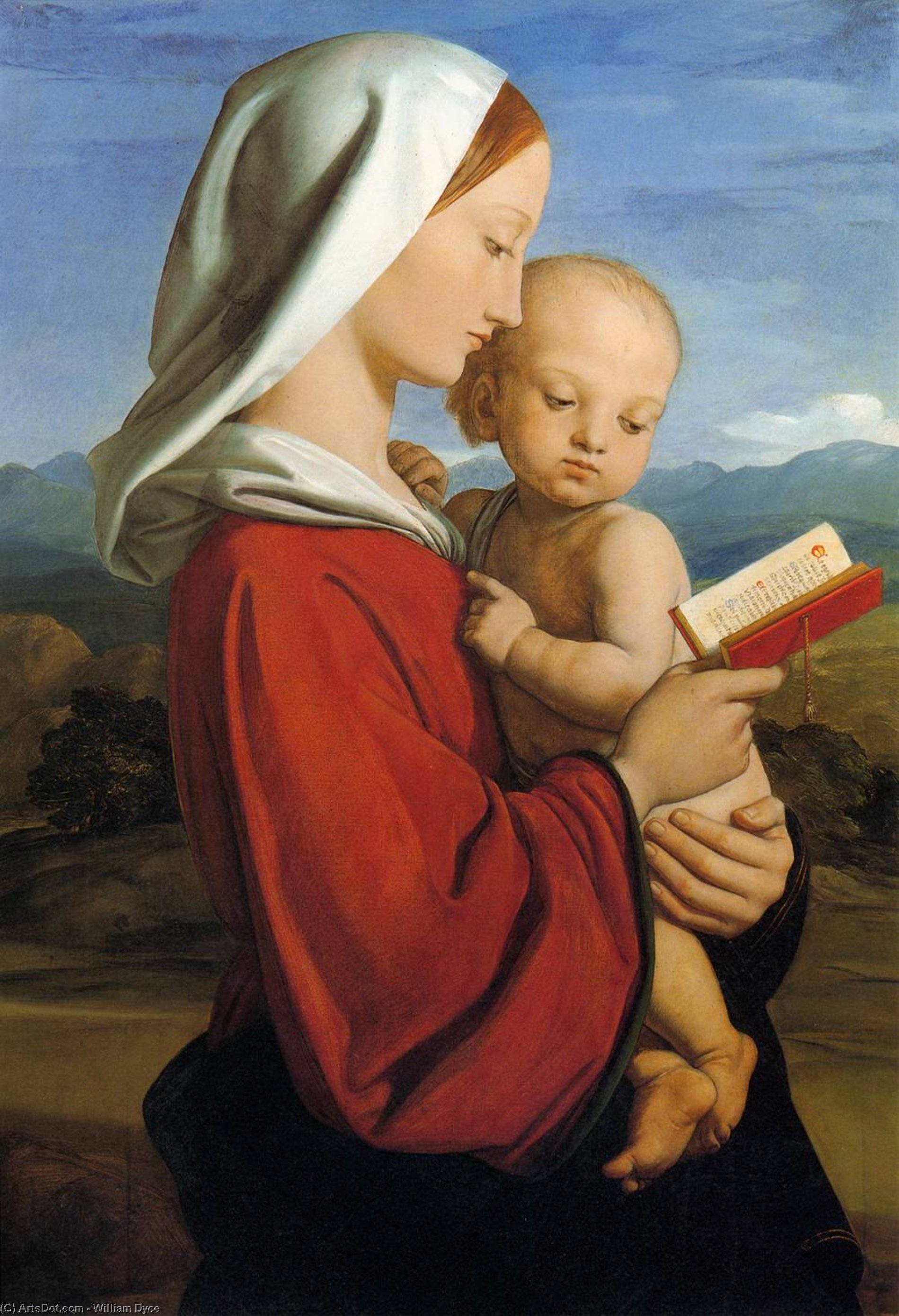
The Virgin and Child
 Oil On Canvas
- WallArt
- Romantic Revival
 1845
1845- 19th Century
 81.0 x 58.0 cm
 Royal Collection
 Weiterlesen
Erwerben Sie ein hochauflösendes, optimiertes digitales Bild, das der Online-Vorschau weit überlegen ist.
Jede Datei wird von unseren hauseigenen Spezialisten mit modernsten Werkzeugen und fachmännischer manueller Retusche sorgfältig vorbereitet. Wir stellen sicher, dass jedes Bild eine außergewöhnliche Klarheit, präzise Farbgenauigkeit und feinste Details aufweist.
Die endgültige Datei wird innerhalb von 72 Stunden per E-Mail zugestellt und ist für den sofortigen Einsatz in professionellen, redaktionellen und Druckumgebungen optimiert. Es handelt sich um dieselbe Qualität, der führende Designstudios, Verlage und Galerien vertrauen.
Digitales Bild
Laden Sie eine hochauflösende Datei für die persönliche Präsentation, den Druck und kreative Projekte herunter. ( Druck bestellen Handgemalte Reproduktion bestellen)
In jeder Bestellung digitaler Bilder enthalten
Professionelle digitale Bereitstellung, garantiert
Wenn Sie sich für OriginalUniqueArt.com entscheiden, erhalten Sie nicht nur ein Bild – Sie erhalten ein professionell aufbereitetes digitales Kunstwerk, das mit höchster Präzision erstellt und durch eine Zufriedenheitsgarantie abgesichert wird. Hier ist alles, was automatisch mit Ihrer Bestellung geliefert wird:

Schnelle E-Mail-Zustellung
Ihre hochauflösende digitale Bilddatei wird Ihnen innerhalb von 72 Stunden nach der Bestellung per E-Mail zugestellt – bereit zur sofortigen Verwendung.

KI-optimierte digitale Datei
Ihre Kunstwerke werden professionell mithilfe fortschrittlicher KI-Tools und manueller Bearbeitung optimiert, um maximale Detailtreue, Klarheit und Farbgenauigkeit zu gewährleisten.

Lebenslanger kostenloser Neudruckservice
Datei versehentlich gelöscht oder verloren? Keine Sorge – wir senden sie Ihnen jederzeit kostenlos erneut zu.

Keine Einfuhrgebühren – jemals
Genießen Sie Ihr Kunstwerk sofort ohne Zollgebühren, Einfuhrabgaben oder Versandkosten – digitale Downloads sind immer steuerfrei.

Garantierte Farbtreue
Wir garantieren, dass Ihr digitales Bild mithilfe professioneller Werkzeuge und Farbmanagement die Originalfarben so präzise wie möglich wiedergibt.

60-Tage-Zufriedenheitsgarantie
Sollten Sie mit Ihrem digitalen Bild nicht zufrieden sein, werden wir es überarbeiten oder Ihnen innerhalb von 60 Tagen 100% erstatten – ohne Wenn und Aber.

100% Geld-zurück-Garantie
Nicht zufrieden? Erhalten Sie innerhalb von 60 Tagen nach Erhalt Ihrer digitalen Datei eine vollständige Rückerstattung – ohne Angabe von Gründen.

Rabatte bei Großbestellungen
3 Bilder kaufen, 10% sparen – 5 Bilder kaufen, 15% sparen – Ab 10 Bildern 20% sparen. Ideal für kreative Projekte, Galerien und Agenturen.
Details zum Sammlerstück
A Tender Devotion Against a Grand Backdrop
This evocative painting, depicting The Virgin and Child, immediately draws the viewer into a moment of profound intimacy. At its heart lies the tender connection between mother and son; Mary cradles her young boy with palpable love and exquisite care. Her face, veiled in delicate fabric, speaks volumes of purity and modesty, lending an air of timeless grace to the sacred subject matter. The composition is masterfully balanced, guiding the eye across the gentle curve of their embrace while simultaneously expanding outward into the dramatic vista behind them.
The Majesty of Setting: Landscape and Symbolism
What elevates this piece beyond a simple portrait is the breathtaking inclusion of the mountainous landscape that frames the figures. These imposing peaks, visible on both sides, do more than merely decorate the background; they lend the scene an epic scope, suggesting a journey or perhaps a moment of quiet exile amidst grand natural forces. The mountains serve as a powerful counterpoint to the soft humanity in the foreground. Symbolically, this juxtaposition—the eternal, enduring nature of the landscape against the fleeting, perfect bond of motherhood—lends the artwork a deep resonance, inviting contemplation on themes of divine protection and human connection.
William Dyce's Brushwork and Artistic Hand
Painted in 1845 by William Dyce, an artist whose career spanned the vibrant artistic currents of the mid-Victorian era, this work showcases his skilled handling of both portraiture and atmospheric depth. Dyce, trained rigorously at esteemed academies, imbued his subjects with a polished realism characteristic of the period, yet infused it with a romantic sensibility. Observe how the light seems to catch the folds of Mary's veil and illuminate the smooth skin of the child—this careful attention to texture and luminosity speaks to a high degree of technical mastery. The technique allows the viewer to feel the weight of the fabric and the cool air emanating from the distant peaks.
Creating an Atmosphere for Your Space
For the discerning collector or designer, this reproduction offers more than just wall decor; it offers a focal point steeped in narrative emotion. Its dimensions of 81 x 58 cm allow it to anchor a significant space—perhaps a formal drawing-room, a chapel niche, or an elegant study. The blend of sacred subject matter with dramatic naturalism ensures that the piece feels both reverent and beautifully integrated into contemporary interior design schemes. It is a work that whispers stories of devotion while commanding attention through its sheer scale and emotional depth.
Biografie des Künstlers
Early Life and Artistic Training
William Dyce (1806–1864) was born in Aberdeen, Scotland, the son of Dr William Dyce FRSE, a physician and fellow of the Royal Society, and Margaret Chalmers, daughter of a wealthy banker. His family fostered an appreciation for learning and culture, equipping him with a strong foundation for his future artistic pursuits. He attended Marischal College, Aberdeen’s university, where he earned a Master's degree at just sixteen years old—a remarkable achievement for the time. Recognizing his talent for design, Dyce pursued formal training at the Royal Academy Schools in Edinburgh and London, immersing himself in the study of classical art and mastering techniques vital to his later career. His formative years were marked by exposure to influential artistic ideas circulating within Scotland and England, shaping his aesthetic sensibilities and establishing him as a student deeply committed to artistic excellence.Italian Influences and Artistic Development
Dyce’s first major journey abroad occurred in 1825 when he travelled to Rome—a pivotal moment that irrevocably altered the trajectory of his artistic life. Inspired by the grandeur of Renaissance art and captivated by the spirit of the Nazarene painters, Dyce spent nine months diligently studying the works of Titian and Poussin, absorbing their compositional principles and mastering their masterful use of colour. This immersion in Italian artistic tradition profoundly impacted his style, fostering a preference for detailed observation and conveying profound spiritual contemplation—characteristics that would become hallmarks of his oeuvre. He returned to Aberdeen in 1826, continuing to hone his skills as a painter and producing several notable works, including Bacchus Nursed by the Nymphs of Nysa, which garnered considerable acclaim.Edinburgh Years and Portraiture
Dyce established himself in Edinburgh as a portraitist during the mid-1830s, securing commissions from prominent figures of Scottish society. His meticulous attention to detail—particularly his ability to capture subtle expressions and psychological nuances—earned him considerable renown. He skillfully blended classical influences with Romantic sensibilities, producing portraits that were both aesthetically refined and emotionally resonant. Simultaneously, he championed the cause of art education, advocating for the establishment of a school of design in Edinburgh—a position he held until 1843, where he oversaw its expansion and modernization.London Engagement and Architectural Patronage
In 1837 Dyce moved to London, accepting the role of Master of the School of Design at Somerset House. This marked a significant turning point in his career, propelling him into the heart of Victorian artistic discourse and securing him access to influential patrons—most notably Prince Albert. He undertook extensive research into art education practices abroad, informing the creation of the “South Kensington System,” which would dominate English art instruction for decades to come. Dyce’s involvement extended beyond pedagogical endeavors; he served as a consultant on architectural projects, including the design of the new Houses of Parliament—a project that showcased his mastery of fresco painting and cemented his reputation as one of Britain's foremost artists. ## Major Achievements and Legacy Dyce’s artistic legacy rests primarily upon two monumental undertakings: the decoration of Westminster Abbey and the creation of the Houses of Parliament. His frescoes in Westminster Abbey—particularly Neptune Resigning to Britannia—represent a triumph of Victorian ambition and artistic vision, embodying the grandeur of imperial Britain and demonstrating Dyce's unparalleled skill in fresco technique. However, his most celebrated work remains Pegwell Bay, Kent—a landscape painting that exemplifies Dyce’s meticulous observation of nature and his ability to convey profound emotional depth. Furthermore, Dyce’s contributions to art education—the establishment of the Royal College of Art and his advocacy for innovative pedagogical approaches—have endured as a testament to his unwavering belief in the transformative power of artistic training. William Dyce remains an artist whose work embodies the spirit of Victorian Britain—characterized by intellectual curiosity, moral earnestness, and a fervent devotion to elevating human culture.
William Dyce
1806 - 1864 , Vereinigtes Königreich
Kurzinfos
- Artistic Movement Or Style: Pre-Raphaeliten
- Artists Who Influenced This Artist:
- Johann Friedrich Overbeck
- John Ruskin
- Date Of Birth: 1806-09-19
- Date Of Death: 1864-02-14
- Full Name: William Dyce
- Nationality: Schottisch
- Notable Artworks:
- Pegwell Bay, Kent
- Die Madonna und das Kind
- Dunstan trennt Edwy und Elgiva
- Place Of Birth: Aberdeen, Vereinigtes Königreich

