Vorschau anzeigen
 Versenden
 Teilen
 Details anzeigen

 Herunterladen
 Ähnliche Objekte
 Röntgenaufnahme
 Diashow
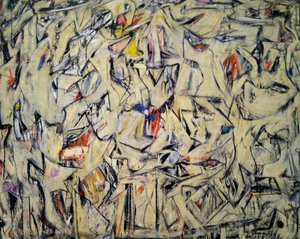
Night


 Weiterlesen
Handgefertigte Ölreproduktion
Handgemaltes Ölgemälde auf Leinwand in Ihrer Wunschgröße und mit Rahmen, auf Bestellung von unseren Künstlern angefertigt. ( Druck bestellen Bild kaufen)




P118B $10

P118H $10

P118W $10

P438Z $10

P508JH $12

P508YH $12

P805H $10

P805Z $10

P919BZ $10

P919G $10

P919XJ $10

P959ZH $10

P968JZ $12

W106C $8

W218G $10

W218JH $8

W218Y $10

W307PJ $10

W316G $10

W316PJ $8

W316Y $10

W398PJ $8

W4111J $10

W500HY $15

W500JH $15

W692G $12

W849H $8

W940BG $15

W953PJ $8




Wählen Sie aus unseren vordefinierten Formaten, die den ursprünglichen Proportionen des Kunstwerks entsprechen.

Sie können Ihre eigenen Maße eingeben, um einen bestimmten Rahmen oder Platz auszufüllen. Wenn die gewählte Größe nicht den Proportionen des Originalbildes entspricht, werden wir das Kunstwerk entweder beschneiden oder das Gemälde durch zusätzliche, handgemalte Elemente erweitern. Ein digitales Mockup wird Ihnen zur Genehmigung zugesandt, bevor die Produktion beginnt.
Bitte beachten Sie, dass die Bildschirmvorschau nicht die tatsächliche Beschneidung oder Erweiterung widerspiegelt. Nur das Mockup zeigt die endgültige Komposition exakt an.
Obwohl Sondermaße verfügbar sind, empfehlen wir, eine Größe aus der vordefinierten Liste zu wählen, um die ursprünglichen Proportionen beizubehalten.
Nach der Bestellung wird das OriginalUniqueArt.com-Team dem Kunden Anweisungen per E-Mail zusenden und eine Mockup-Vorschau bereitstellen.
Weltweiter Versand () in nur 3 bis 4 Wochen statt der üblichen 5 Wochen. (30 August). Keine Kompromisse bei der Qualität.

Kostenloser weltweiter Expressversand

Hochwertige Leinenleinwand

Umfassender Versicherungsschutz beim Versand

Zollgebühren-Rückerstattungsgarantie

Garantie für exakte Farbtreue

60 Tage Rückgaberecht (nur bei Mängeln)

100% Geld-zurück-Garantie

Mengenrabatt verfügbar
 Die Glasoption ist nur für Größen unter 110 cm verfügbar.

Night
Art der Reproduktion
Format der Reproduktion
-


Gesamtpreis
$ 300
A Visceral Encounter with Mortality
In the hauntingly rendered depths of Willem de Kooning’s 1948 masterpiece, “Night,” viewers are not merely observers but participants in a profound existential drama. The painting presents a striking, unsettling juxtaposition: a female face emerges from the shadows, only to be overlaid with the stark, skeletal imagery of a skull. This collision of beauty and decay establishes a central preoccupation that has defined much of de Kooning’s illustrious career. It is an image that refuses to offer comfort, instead forcing a confrontation with the fragility of life. The subject matter transcends simple portraiture, acting as a window into the human condition where the vitality of femininity battles against the encroaching darkness of mortality.
The emotional resonance of the piece is amplified by its place within the heart of Abstract Expressionism. Born from the profound disillusionment and psychological upheaval of the post-World War II era, "Night" embodies the movement's characteristic intensity. De Kooning abandons the safety of realism to prioritize raw feeling over precise form. There is a palpable sense of anxiety woven into every stroke, reflecting a period when artists were grappling with the trauma of global conflict and the terrifying uncertainties of a new atomic age. To stand before this work is to feel the weight of that historical tension, making it an essential piece for those who appreciate art that speaks to the deepest, often unspoken, layers of the human psyche.
The Language of Gesture and Texture
Technically, "Night" is a masterclass in the action painting style that would soon define the New York School. De Kooning utilized a bold, visceral palette—dominated by deep blacks, fiery reds, and jarring yellows—to create a sense of movement and instability. His technique relies heavily on thick impasto, where layers of oil paint are applied with such vigor that the canvas takes on a three-dimensional, sculptural quality. These heavy, deliberate strokes do not merely depict a scene; they record the physical and emotional energy of the artist himself. The texture is so dense that it creates a rhythmic, almost turbulent surface, mirroring the internal chaos of the subject matter.
Beyond the central figures, the composition is enriched by subtle, enigmatic elements that invite endless reinterpretation. A checkered pattern drifts through the background, adding a layer of geometric tension and depth that contrasts sharply with the organic, fluid forms of the face and skull. The presence of fragmented motifs—hints of a bird or perhaps a distant car—suggests a world in flux, where the boundaries between the subconscious and reality are perpetually blurred. For the discerning collector or interior designer, this painting offers more than just visual impact; it provides a sophisticated focal point that commands attention through its complexity, making it a timeless addition to any space dedicated to profound artistic expression.
Über den Künstler
frühes Leben und Karriere
Willem de Kooning, ein renommierter niederländisch-amerikanischer abstrakter Expressionist, wurde am 24. April 1904 in Rotterdam, Niederlande, geboren. Seine Eltern, Leendert de Kooning und Cornelia Nobel, trennten sich 1907, und Willem de Kooning lebte zunächst mit seinem Vater, bevor er in die Obhut seiner Mutter überging. Er verließ die Schule 1916 und arbeitete als Lehrling in einer Werbeagentur.Künstlerische Entwicklung
De Kooning besuchte von 1916 bis 1924 Abendkurse an der Akademie für Bildende Künste und Technische Wissenschaften in Rotterdam. Im Jahr 1927 zog er nach New York City, wo er als Hausmaler arbeitete und seinen einzigartigen künstlerischen Stil entwickelte.Abstrakter Expressionismus
De Koonings Werk verschob sich in den späten 1950er Jahren hin zum abstrakten Expressionismus, der durch kräftige Pinselstriche und leuchtende Farben gekennzeichnet ist. Sein Gemälde Woman I (1950-1952) ist ein wegweisendes Werk dieser Bewegung, das Figuration mit Spontaneität und emotionaler Intensität verbindet.Bekannte Werke und Sammlungen
* The Glazier (137 x 112 cm, Öl auf Leinwand): Ein düsteres, erdtoniges Gemälde, inspiriert von den Fresken von Boscoreale. * Door to the River (Abstrakter Expressionismus): Ein breitschichtiges Gemälde, das an seine Tätigkeit als Hausmaler erinnert. * Standing Man (Abstrakter Expressionismus): Ein charakteristisches Beispiel für De Koonings abstrakten Expressionismus.Museen und Sammlungen
* Museum Boijmans van Beuningen, Rotterdam, Niederlande: Bietet eine beeindruckende Sammlung von über 151.000 Kunstwerken. * Universitätsbibliothek Leiden, Niederlande: Ein bedeutendes Kulturzentrum mit über 5.200.000 Büchern und 1.000.000 E-Books. Willem de Koonings Vermächtnis inspiriert weiterhin Künstler und Kunstliebhaber gleichermaßen und festigt seinen Platz als Pionier des abstrakten Expressionismus.
Willem de Kooning
1904 - 1997 , Niederlande
Kurzinfos
- Beeinflusste Künstler: ['Arshile Gorky']
- Bemerkenswerte Werke:
- Frau I
- The Glazier
- Excavation
- Geburtsdatum: 24. April 1904
- Geburtsort: Rotterdam, Niederlande
- Künstlerische Bewegung: Abstrakter Expressionismus
- Nationalität: Niederländisch-Amerikanisch
- Todatum: 1997
- Vollständiger Name: Willem de Kooning
Ähnliche Artikel

Abstrakter Expressionismus: Die 10 Meisterwerke, die eine Kunstbewegung prägten |
Entdecken Sie die 10 Meisterwerke des Abstrakten Expressionismus! Von Jackson Pollock bis Mark Rothko – erfahren Sie die Geschichten hinter ikonischen Gemälde und finden Sie hochwertige Reproduktionen für Ihr Zuhause. Jetzt bei entdecken!

Goya: Die 25 Meisterwerke des spanischen Genies – Kunst für Ihr Zuhause | OriginalUniqueArt
Entdecken Sie die 25 Meisterwerke von Francisco Goya! Tauchen Sie ein in die düstere Romantik spanischer Malerei, Porträts & Historienbilder. Hochwertige Kunstdrucke auf OriginalUniqueArt.com – für Kunstliebhaber und stilvolles Wohnen.

Willem de Kooning: Abstraktion, Geste und die Entwicklung der Nachkriegsamerikanischen Malerei
Entdecken Sie Willem de Koonings revolutionäre Kunst und die Entwicklung des Abstrakten Expressionismus. Expertenanalyse, Investitionspotenzial & Sammlerwert – erfahren Sie mehr auf OriginalUniqueArt.
Beyond Representation: Exploring the Emotional Landscape of Abstract Expressionism
Explore the profound emotional world of Abstract Expressionism with OriginalUniqueArt. Discover key artists like Pollock & Rothko, learn about collecting, and find museum-quality reproductions to inspire your space.

Kandinsky: Die 25 Meisterwerke des Abstrakten – Kunst für Ihr Zuhause | OriginalUniqueArt
Entdecken Sie die 25 bedeutendsten Gemälde von Wassily Kandinsky! Tauchen Sie ein in die Welt der abstrakten Kunst, des Expressionismus und der Farbkomposition. Hochwertige Kunstdrucke & Inspiration für Ihr Zuhause auf OriginalUniqueArt.com.