Vorschau anzeigen
 Versenden
 Teilen
 Details anzeigen

 Herunterladen
 Ähnliche Objekte
 Röntgenaufnahme
 Diashow
 Statistiken
Asheville


 Weiterlesen
Giclée / Kunstdruck
Giclée- oder Leinwanddruck in Museumsqualität mit schneller Produktion und flexiblen Veredelungsoptionen. ( Handgemalte Reproduktion bestellen Zum digitalen Bild wechseln)




P118B $10

P118H $10

P118W $10

P438Z $10

P508JH $12

P508YH $12

P805H $10

P805Z $10

P919BZ $10

P919G $10

P919XJ $10

P959ZH $10

P968JZ $12

W106C $8

W218G $10

W218JH $8

W218Y $10

W307PJ $10

W316G $10

W316PJ $8

W316Y $10

W398PJ $8

W4111J $10

W500HY $15

W500JH $15

W692G $12

W849H $8

W940BG $15

W953PJ $8




Wählen Sie aus unseren vordefinierten Formaten, die den ursprünglichen Proportionen des Kunstwerks entsprechen.

Sie können Ihre eigenen Maße eingeben, um ein bestimmtes Format oder einen speziellen Platz einzupassen. Wenn das von Ihnen gewählte Format nicht den Proportionen des Originalbildes entspricht, werden wir das Kunstwerk entweder beschneiden oder das Bild mit einem gespiegelten oder einfarbigen Rand erweitern. Ein digitaler Entwurf wird Ihnen zur Genehmigung zugesandt, bevor die Produktion beginnt.
Bitte beachten Sie, dass die Vorschau auf dem Bildschirm nicht den tatsächlichen Zuschnitt oder die Erweiterung widerspiegelt. Nur der Entwurf zeigt die endgültige Komposition präzise an.
Obwohl Sondermaße verfügbar sind, empfehlen wir die Auswahl eines Maßes aus der vordefinierten Liste, um die ursprünglichen Proportionen zu bewahren.
Weltweiter Versand () innerhalb von 2 Wochen statt der üblichen 4/5 Wochen. (11 September)

Kostenloser weltweiter Expressversand

Hochwertige Leinenleinwand

Umfassender Versicherungsschutz beim Versand

Zollgebühren-Rückerstattungsgarantie

Garantie für exakte Farbtreue

100-Tage-Rückgaberecht (nur bei Mängeln)

100% Geld-zurück-Garantie

Mengenrabatt verfügbar
 Die Glasoption ist nur für Größen unter 110 cm verfügbar.

Asheville
Giclée / Kunstdruck
Format der Reproduktion
-


Gesamtpreis
$ 80
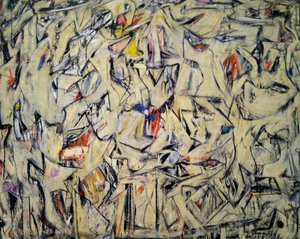
Asheville – A Portrait of Turbulent Emotion
- Subject Matter Willem de Kooning’s “Asheville” isn't simply a depiction of a face; it’s an embodiment of psychological turmoil. Painted in 1948, during the height of his Abstract Expressionist period, the portrait captures a moment of intense confrontation with oneself – a visual representation of inner struggle and unresolved anxieties.
- Style The painting exemplifies the stylistic hallmarks of Abstract Expressionism: spontaneous gesture, fragmented form, and a deliberate rejection of representational accuracy. De Kooning abandons any illusion of realism, prioritizing instead the conveyance of feeling through expressive brushstrokes and textural variations.
- Technique De Kooning employed a thick impasto technique – applying paint in layers with considerable pressure – creating a surface that is deeply textured and visually arresting. The aggressive application of pigment contributes significantly to the painting’s emotional impact, mirroring the artist's own turbulent state of mind.
- Historical Context “Asheville” emerged from the crucible of postwar America, coinciding with the burgeoning movement of Abstract Expressionism that challenged artistic conventions and championed individualism. It stands alongside monumental canvases by artists like Jackson Pollock and Mark Rothko, reflecting a broader cultural preoccupation with confronting existential anxieties.
- Symbolism The prominent red nose and mouth – recurring motifs in De Kooning’s oeuvre – are interpreted as symbols of aggression, defiance, and suppressed emotion. Coupled with the fragmented facial features and swirling brushstrokes, these elements invite contemplation on themes of vulnerability, resilience, and the complexities of human experience.
The Clockwork Soul: Time and Reflection
Two clocks dominate the composition, positioned strategically on either side of the face. These aren’t merely decorative elements; they represent a preoccupation with time – its relentless passage and its inescapable influence on human consciousness. The clocks' stillness juxtaposed against the dynamic brushstrokes underscore the paradoxical nature of reflection: attempting to grasp the elusive present while simultaneously grappling with memories of the past.
Objects of Contemplation: Bowls, Cups & Vessels
Scattered throughout the scene are three bowls and a cup. These objects serve as visual anchors, grounding the painting within a domestic setting – perhaps symbolizing the artist’s attempt to impose order upon chaos. However, their placement is deliberately asymmetrical, mirroring the fractured emotional landscape depicted in the portrait itself.
A Canvas of Raw Emotion: De Kooning's Legacy
“Asheville” solidified Willem de Kooning’s reputation as one of the most influential figures in Abstract Expressionism. Its uncompromising commitment to expressive gesture and its unflinching portrayal of psychological vulnerability continue to resonate with artists and audiences alike. More than just a painting, it's a visceral testament to the transformative power of art – demonstrating how visual language can transcend literal representation to communicate profound emotional truths.
Interior Design Inspiration
The bold textural surface and chromatic palette of “Asheville” offer compelling inspiration for interior designers seeking to inject dynamism and emotion into their spaces. Consider incorporating analogous colors – shades that harmonize visually – alongside textured fabrics or wall coverings to evoke a similar sense of restless energy and psychological depth.
Über den Künstler
frühes Leben und Karriere
Willem de Kooning, ein renommierter niederländisch-amerikanischer abstrakter Expressionist, wurde am 24. April 1904 in Rotterdam, Niederlande, geboren. Seine Eltern, Leendert de Kooning und Cornelia Nobel, trennten sich 1907, und Willem de Kooning lebte zunächst mit seinem Vater, bevor er in die Obhut seiner Mutter überging. Er verließ die Schule 1916 und arbeitete als Lehrling in einer Werbeagentur.Künstlerische Entwicklung
De Kooning besuchte von 1916 bis 1924 Abendkurse an der Akademie für Bildende Künste und Technische Wissenschaften in Rotterdam. Im Jahr 1927 zog er nach New York City, wo er als Hausmaler arbeitete und seinen einzigartigen künstlerischen Stil entwickelte.Abstrakter Expressionismus
De Koonings Werk verschob sich in den späten 1950er Jahren hin zum abstrakten Expressionismus, der durch kräftige Pinselstriche und leuchtende Farben gekennzeichnet ist. Sein Gemälde Woman I (1950-1952) ist ein wegweisendes Werk dieser Bewegung, das Figuration mit Spontaneität und emotionaler Intensität verbindet.Bekannte Werke und Sammlungen
* The Glazier (137 x 112 cm, Öl auf Leinwand): Ein düsteres, erdtoniges Gemälde, inspiriert von den Fresken von Boscoreale. * Door to the River (Abstrakter Expressionismus): Ein breitschichtiges Gemälde, das an seine Tätigkeit als Hausmaler erinnert. * Standing Man (Abstrakter Expressionismus): Ein charakteristisches Beispiel für De Koonings abstrakten Expressionismus.Museen und Sammlungen
* Museum Boijmans van Beuningen, Rotterdam, Niederlande: Bietet eine beeindruckende Sammlung von über 151.000 Kunstwerken. * Universitätsbibliothek Leiden, Niederlande: Ein bedeutendes Kulturzentrum mit über 5.200.000 Büchern und 1.000.000 E-Books. Willem de Koonings Vermächtnis inspiriert weiterhin Künstler und Kunstliebhaber gleichermaßen und festigt seinen Platz als Pionier des abstrakten Expressionismus.
Willem de Kooning
1904 - 1997 , Niederlande
Kurzinfos
- Beeinflusste Künstler: ['Arshile Gorky']
- Bemerkenswerte Werke:
- Frau I
- The Glazier
- Excavation
- Geburtsdatum: 24. April 1904
- Geburtsort: Rotterdam, Niederlande
- Künstlerische Bewegung: Abstrakter Expressionismus
- Nationalität: Niederländisch-Amerikanisch
- Todatum: 1997
- Vollständiger Name: Willem de Kooning
Ähnliche Artikel
Beyond Representation: Exploring the Emotional Landscape of Abstract Expressionism
Explore the profound emotional world of Abstract Expressionism with OriginalUniqueArt. Discover key artists like Pollock & Rothko, learn about collecting, and find museum-quality reproductions to inspire your space.

Kandinsky: Die 25 Meisterwerke des Abstrakten – Kunst für Ihr Zuhause | OriginalUniqueArt
Entdecken Sie die 25 bedeutendsten Gemälde von Wassily Kandinsky! Tauchen Sie ein in die Welt der abstrakten Kunst, des Expressionismus und der Farbkomposition. Hochwertige Kunstdrucke & Inspiration für Ihr Zuhause auf OriginalUniqueArt.com.

Abstrakter Expressionismus: Die 10 Meisterwerke, die eine Kunstbewegung prägten |
Entdecken Sie die 10 Meisterwerke des Abstrakten Expressionismus! Von Jackson Pollock bis Mark Rothko – erfahren Sie die Geschichten hinter ikonischen Gemälde und finden Sie hochwertige Reproduktionen für Ihr Zuhause. Jetzt bei entdecken!

Goya: Die 25 Meisterwerke des spanischen Genies – Kunst für Ihr Zuhause | OriginalUniqueArt
Entdecken Sie die 25 Meisterwerke von Francisco Goya! Tauchen Sie ein in die düstere Romantik spanischer Malerei, Porträts & Historienbilder. Hochwertige Kunstdrucke auf OriginalUniqueArt.com – für Kunstliebhaber und stilvolles Wohnen.

Willem de Kooning: Abstraktion, Geste und die Entwicklung der Nachkriegsamerikanischen Malerei
Entdecken Sie Willem de Koonings revolutionäre Kunst und die Entwicklung des Abstrakten Expressionismus. Expertenanalyse, Investitionspotenzial & Sammlerwert – erfahren Sie mehr auf OriginalUniqueArt.