

 Vorschau anzeigen
 Versenden
 Teilen
 Details anzeigen
 Leitfaden

 Herunterladen
 Ähnliche Objekte
 Röntgenaufnahme
 Diashow
 Statistiken
Kawachi


 Weiterlesen
Handgefertigte Ölreproduktion
Handgemaltes Ölgemälde auf Leinwand in Ihrer Wunschgröße und mit Rahmen, auf Bestellung von unseren Künstlern angefertigt. ( Zum Druck wechseln Zum digitalen Bild wechseln)




P118B €10

P118H €10

P118W €10

P438Z €10

P508JH €12

P508YH €12

P805H €10

P805Z €10

P919BZ €10

P919G €10

P919XJ €10

P959ZH €10

P968JZ €12

W106C €8

W218G €10

W218JH €8

W218Y €10

W307PJ €10

W316G €10

W316PJ €8

W316Y €10

W398PJ €8

W4111J €10

W500HY €15

W500JH €15

W692G €12

W849H €8

W940BG €15

W953PJ €8




Wählen Sie aus unseren vordefinierten Formaten, die den ursprünglichen Proportionen des Kunstwerks entsprechen.

Geben Sie die Breite und die Höhe an, die Sie für Ihren Rahmen oder Ihre Wand benötigen. Da dieses Werk handgemalt ist, kann der Künstler bei einer anderen Form etwas mehr um das Bild herum malen oder etwas abschneiden – Sie entscheiden. Wir senden Ihnen ein digitales Mockup zur Freigabe, bevor mit dem Malen begonnen wird. Das auf dieser Seite gezeigte Bild stellt nicht das tatsächliche Ergebnis dar – dies tut nur das Mockup.
Nach der Bestellung wird das OriginalUniqueArt.com-Team dem Kunden Anweisungen per E-Mail zusenden und eine Mockup-Vorschau bereitstellen.
Weltweiter Versand () in nur 3 bis 4 Wochen statt der üblichen 5 Wochen. (25 Oktober). Keine Kompromisse bei der Qualität.

Kostenloser weltweiter Expressversand

Hochwertige Leinenleinwand

Umfassender Versicherungsschutz beim Versand

Zollgebühren-Rückerstattungsgarantie

Garantie für exakte Farbtreue

100 Tage Rückgaberecht (nur bei Mängeln)

100% Geld-zurück-Garantie

Mengenrabatt verfügbar
 Die Glasoption ist nur für Größen unter 110 cm verfügbar.

Kawachi
Art der Reproduktion
Format der Reproduktion
-


Endpreis
€ 263
A Mountain’s Breath: Utagawa Hiroshige's "Kawachi"
Utagawa Hiroshige’s “Kawachi,” painted in 1853, isn’t merely a landscape; it’s a distilled moment of profound serenity captured with the meticulous precision and poetic sensibility that defined his career. This woodblock print, rendered in rich Prussian blue and earthy ochre tones, transports us to the heart of Japan's mountainous interior – a region often overlooked yet brimming with spiritual significance. The scene unfolds along a gently flowing river, framed by the imposing silhouette of Mount Otoko rising majestically in the distance. The composition is deceptively simple, yet layered with subtle details that invite prolonged contemplation.
Hiroshige’s mastery lies not just in his technical skill but in his ability to imbue a static image with a sense of movement and atmosphere. The river itself seems to breathe, its surface reflecting the diffused light of the sky. The trees lining the banks are depicted with an almost frenetic energy – each leaf meticulously rendered, suggesting a constant rustle in the breeze. This isn’t a photograph; it's a carefully constructed illusion designed to evoke the feeling of being *there*, enveloped by the natural world.
The Edo Aesthetic and the Poetics of Place
“Kawachi” is deeply rooted in the aesthetic principles of the Edo period (1603-1868), a time of relative peace and prosperity in Japan. During this era, *ukiyo-e* – “pictures of the floating world” – flourished, offering a diverse range of subjects from courtesans and actors to landscapes and historical events. However, Hiroshige’s approach transcended mere entertainment; he sought to capture the essence of Japanese life and nature, imbuing his works with a sense of melancholy and transience—a core theme of *wabi-sabi*.
The title itself, “Kawachi,” refers to a province in western Japan, specifically the area surrounding present-day Osaka. Hiroshige wasn’t simply documenting this location; he was attempting to convey its spirit – a feeling of quiet contemplation and connection with the natural world. This focus on place, rather than grand historical narratives or dramatic events, distinguished his work from earlier *ukiyo-e* styles.
Technique: The Art of Prussian Blue and Karami-zuri
The print’s arresting blue hue is largely due to the innovative use of Prussian blue pigment, a relatively new import to Japan at the time. Hiroshige was one of the first Japanese artists to embrace this vibrant color, which allowed him to create dramatic skies and deep shadows with unprecedented intensity. The color palette is further complemented by subtle washes of ochre, umber, and grey, creating a sense of depth and atmospheric perspective.
The print was created using the *karami-zuri* (key block) technique, a complex process involving multiple woodblocks – one for the ink (mica), one for the colors, and one for the outlines. This allowed Hiroshige to achieve incredible detail and tonal variation within each color area. The careful layering of these blocks is evident in the subtle gradations of blue and the delicate rendering of the foliage.
Symbolism and Emotional Resonance
Beyond its technical brilliance, “Kawachi” resonates with a profound sense of emotional depth. The solitary figure on the riverbank – likely a traveler or pilgrim – suggests a yearning for connection and spiritual renewal. The vastness of the mountains in the distance evokes a feeling of humility and insignificance in the face of nature’s grandeur.
Hiroshige's landscapes weren't simply pretty pictures; they were invitations to contemplate the ephemeral nature of life, the beauty of impermanence, and the enduring power of the natural world. “Kawachi” stands as a testament to his artistic vision—a timeless masterpiece that continues to captivate viewers with its serene beauty and profound emotional resonance.
Fragen & Antworten
Welchen Stellenwert nimmt "Kawachi" innerhalb der Ukiyo-e ein?
Innerhalb der Ukiyo-e-Strömung weist „Kawachi“ ein Iconic Bekanntheitsniveau auf.
Wie intensiv sind die Farben von "Kawachi"?
Die Farbsättigung von "Kawachi" beträgt Muted bei einer Intensität von Monochromatic.
Welche emotionale Stimmung vermittelt "Kawachi" von Utagawa Hiroshige?
„Kawachi“ vermittelt ein Tranquil Gefühl. Der emotionale Ton beschreibt den Eindruck, den das Werk hinterlässt.
Künstlerbiografie
Biografie eines japanischen Kunstikonen
Utagawa Hiroshige, ein renommierter japanischer Ukiyo-e Künstler, lebte von 1797 bis 1858. Er gilt weithin als der letzte große Meister dieses traditionellen Genres. Hiroshiges Werk zeichnet sich durch einen poetischen und stimmungsvollen Ansatz aus, der ihn von den kühneren, formelleren Drucken seiner Zeitgenossen unterscheidet.Künstlerischer Stil und Techniken
Hiroshiges Farbgebung war subtil, aber wesentlich für seine Drucke. Er verwendete oft mehrere Durchgänge im selben Bereich und nutzte die Technik des Bokashi (Farbverlauf), was arbeitsintensiv war, aber einen einzigartigen visuellen Effekt erzielte. Zu seinen berühmtesten Werken gehören die fünfzig-drei Stationen der Tōkaidō und die hundert berühmten Ansichten von Edo, die beide seine Meisterschaft in Landschaftsserien demonstrieren.Einfluss auf die westliche Kunst
Hiroshiges Werk hatte einen tiefgreifenden Einfluss auf die westliche Kunst, insbesondere während des späten 19. Jahrhunderts im Trend des Japonismus. Künstler wie Édouard Manet und Claude Monet ließen sich von japanischen Drucken beeinflussen, während Post-Impressionisten wie Vincent van Gogh Hiroshiges Kompositionen sammelten und studierten.Leben und Entwicklung
Geboren 1797 in Tokio als Andō Tokutarō, begann Hiroshige seine künstlerische Laufbahn mit der Beschäftigung in einem Buchladen, bevor er sich dem Ukiyo-e widmete. Er studierte unter Utagawa Toyohiro und übernahm schließlich den Namen Utagawa Hiroshige. Seine frühen Arbeiten waren Porträts und Szenen aus Kabuki-Stücken, doch seine wahre Berufung fand er in der Landschaftsdarstellung. Die Reise entlang der Tōkaidō, einer wichtigen Handelsroute, inspirierte ihn zu seiner berühmten Serie "Fünfzig-drei Stationen der Tōkaidō", die das Leben und die Landschaften Japans auf eindrucksvolle Weise festhielt. Später widmete er sich den "Hundert berühmten Ansichten von Edo", einer umfassenden Darstellung der Stadt Tokio in all ihren Facetten.Vermächtnis
Nach Hiroshiges Tod im Jahr 1858 erlebte das Ukiyo-e Genre einen raschen Niedergang aufgrund der Westlicherung nach der Meiji-Restauration von 1868. Sein Einfluss auf die westliche Kunst bleibt jedoch bedeutsam, und viele Künstler lassen sich weiterhin von seinen Werken inspirieren.- Die Ukiyo-e Kunstbewegung - Erfahren Sie mehr über das Genre, das Hiroshiges Werk definierte.
- Ukiyo-e auf Wikipedia - Erkunden Sie die Geschichte und Bedeutung von Ukiyo-e in der japanischen Kunst.
- Fuji Kunst Museum Japan - Entdecken Sie ein renommiertes Museum, das sowohl japanische als auch westliche Kunst ausstellt, darunter Werke, die von Hiroshiges Stil inspiriert sind.
- Die fünfzig-drei Stationen der Tōkaidō
- Die hundert berühmten Ansichten von Edo
- Einfluss auf Vincent van Goghs "Japonaiserie"-Serie, einschließlich Japonaiserie blühender Pflaumenbaum nach Hiroshige
- 1797: Geburt in Japan
- 1858: Verstarb, was den Beginn eines raschen Niedergangs des Ukiyo-e Genres markierte.

Utagawa Hiroshige
1797 - 1858 , Japan
Kurzinfos
- Bemerkenswerte Werke:
- Fünfzigdreißig Stationen des Tōkaidō
- Hundert berühmte Ansichten von Edo
- Geburtsdatum: 1797
- Geburtsort (Stadt Und Land): Tokio, Japan
- Künstler Oder Bewegungen, Die Von Diesem Künstler Beeinflusst Wurden:
- Édouard Manet
- Claude Monet
- Vincent van Gogh
- Künstlerische Bewegung Oder Stil: Ukiyo-e
- Nationalität: Japanisch
- Todatum: 1858
- Vollständiger Name: Utagawa Hiroshige
Ähnliche Artikel
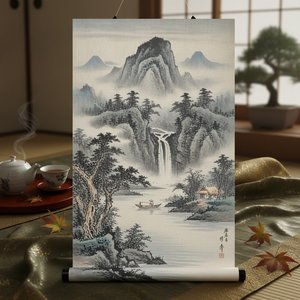
Serenity on Canvas: A Guide to the Timeless Beauty of Japanese Landscape Painting
Discover the serene beauty of Japanese landscape painting. From Hokusai's iconic woodblock prints to meditative sumi-e ink washes, explore a visual journey through the 'floating world' and learn how to bring this timeless Zen aesthetic into your modern home decor.
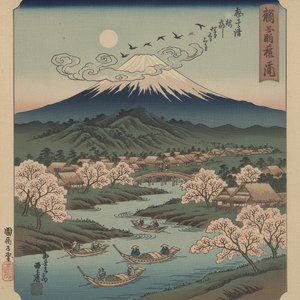
Ando Hiroshiges poetische Vision: Landschaftstransformation und die Ukiyo-e-Bewegung im Japan des 19. Jahrhunderts
Entdecken Sie die faszinierende Welt der Ukiyo-e! Erfahren Sie mehr über Ando Hiroshige, seine Meisterwerke und den Einfluss dieser japanischen Kunstform auf die westliche Malerei. Expertenwissen & historische Einblicke.
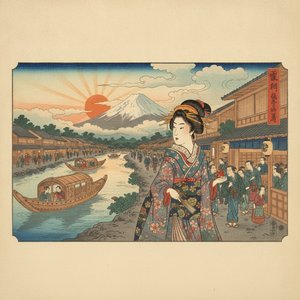
Ukiyo-e Unlocked: The Bold Japanese Art Movement That Defined Modern Pop Culture
Dive into the high-energy world of Ukiyo-e. Discover how Japan's 'floating world' woodblock prints pioneered bold colors and graphic storytelling, shaping the DNA of modern pop culture, anime, and street art. Explore the masters that defined a visual revolution.
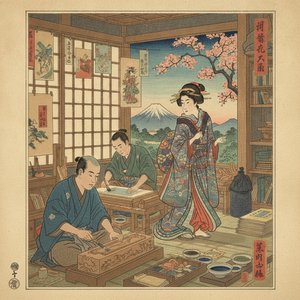
Floating World: The Captivating Art and Legacy of Japanese Ukiyo-e
Explore the profound beauty of Japanese Ukiyo-e. Discover the history, masters like Hokusai, and the enduring legacy of the 'Floating World' through an expert art-historical lens.

Katsushika Hokusai: Die 25 Meisterwerke des Ukiyo-e – Kunst für Ihr Zuhause | OriginalUniqueArt
Entdecken Sie die 25 Meisterwerke von Katsushika Hokusai! Tauchen Sie ein in die Welt des Ukiyo-e, berühmte Holzschnitte wie 'Die große Welle' & Fuji-Ansichten. Hochwertige Kunstdrucke für Ihr Zuhause – jetzt auf OriginalUniqueArt.com!


