

 In echtem Maßstab anzeigen
 Versenden als Grußkarte
 Teilen
 Details anzeigen
 Leitfaden öffnen

 Herunterladen
 Ähnliche Objekte
 Röntgenaufnahme
 Diashow
 Besucherstatistiken
Pigs at a Trough


 Mehr anzeigen
Giclée / Kunstdruck
Giclée- oder Leinwanddruck in Museumsqualität mit schneller Produktion und flexiblen Veredelungsoptionen. ( Handgemalte Reproduktion kaufen Zum digitalen Bild wechseln)




P118B €10

P118H €10

P118W €10

P438Z €10

P508JH €12

P508YH €12

P805H €10

P805Z €10

P919BZ €10

P919G €10

P919XJ €10

P959ZH €10

P968JZ €12

W106C €8

W218G €10

W218JH €8

W218Y €10

W307PJ €10

W316G €10

W316PJ €8

W316Y €10

W398PJ €8

W4111J €10

W500HY €15

W500JH €15

W692G €12

W849H €8

W940BG €15

W953PJ €8




Wählen Sie aus unseren vordefinierten Formaten, die den ursprünglichen Proportionen des Kunstwerks entsprechen.

Geben Sie die Breite und die Höhe an, die Sie benötigen, damit der Druck perfekt in Ihren Rahmen oder an Ihre Wand passt. Ein Druck kann nur beschnitten werden und niemals größer als das Originalbild gemacht werden; daher verliert ein Format mit einer anderen Proportion einen Teil des Bildes. Wir senden Ihnen ein digitales Mockup zur Freigabe, bevor wir den Druck ausführen. Das auf dieser Seite gezeigte Bild zeigt nicht den tatsächlichen Beschnitt – dies ist nur im Mockup ersichtlich.
Weltweiter Versand () innerhalb von 2 Wochen statt der üblichen 4/5 Wochen. (25 Oktober)

Kostenloser weltweiter Expressversand

Hochwertige Leinenleinwand

Vollständiger Versicherungsschutz beim Versand

Zollgebühren-Rückerstattungsgarantie

Garantie für exakte Farbtreue

100-tägiges Rückgaberecht (nur bei Mängeln)

100% Geld-zurück-Garantie

Angebot für Mengenrabatt
 Die Glasoption ist nur für Größen unter 110 cm verfügbar.

Pigs at a Trough
Giclée / Kunstdruck
Format der Reproduktion
-


Gesamtpreis
€ 70
A Rustic Revelry: Thomas Rowlandson’s “Pigs at a Trough”
Thomas Rowlandson's "Pigs at a Trough," painted circa 1790, isn’t merely a depiction of farmyard animals; it’s a vibrant snapshot of Georgian England brimming with social commentary and delightfully mischievous humor. This small yet powerfully evocative work, now housed within the Yale Center for British Art, offers a glimpse into a world where satire and observation intertwined seamlessly, revealing both the pleasures and absurdities of everyday life.
Rowlandson, a master caricaturist renowned for his biting political illustrations and intimate portrayals of human folly, employed a remarkably direct technique here. The scene unfolds with an almost palpable immediacy – we’re not observing from a distance but rather immersed within the muddy chaos of the trough. His pen and ink lines are bold and confident, capturing the physicality of the pigs with remarkable accuracy; their plump bodies, bristly coats, and greedy postures practically leap off the cream-laid paper. The brown wash adds depth and texture, emphasizing the damp earth and the glistening sheen of the water. Notice how Rowlandson skillfully uses light and shadow to define each animal, creating a sense of three-dimensionality that belies the painting’s diminutive size.
A Scene Steeped in Social Observation
“Pigs at a Trough” is more than just a charming pastoral scene; it's a subtle critique of societal values. Rowlandson was known for his sharp wit and willingness to expose hypocrisy, and this painting is no exception. The image subtly alludes to the extravagance and excess prevalent in Georgian society – a stark contrast to the simple, almost primal act of foraging for food. The abundance of pigs suggests a commentary on resourcefulness and perhaps even a gentle mockery of those who indulged in unnecessary displays of wealth. It’s a reminder that beneath the veneer of refinement, there often lay a deeper current of practicality and, occasionally, a touch of desperation.
Echoes of Folklore and Myth
The image resonates with elements of folklore and myth, particularly the enduring legend of “pig-faced women.” While not explicitly depicted here, the scene evokes the story of a noblewoman cursed to appear as a pig after rejecting a beggar. This tale, popular in England and Ireland during the 18th century, speaks to anxieties about social status, beauty standards, and the consequences of arrogance. Rowlandson’s painting subtly taps into this cultural memory, suggesting a connection between earthly abundance and potential misfortune – a reminder that even the most seemingly prosperous life can be fraught with unexpected challenges.
A Timeless Appeal
“Pigs at a Trough” endures as a testament to Rowlandson’s artistic genius and his keen understanding of human nature. Its playful composition, vibrant colors, and subtle social commentary combine to create an image that is both entertaining and thought-provoking. It's a painting that invites us to pause, observe, and perhaps even question the values we hold dear. Reproductions of this delightful work continue to captivate audiences today, offering a window into a bygone era and reminding us of the enduring power of humor and satire.
Fragen & Antworten
Gehört "Pigs at a Trough" von Thomas Rowlandson zu den begehrten Kunstwerken der Satirical Caricature-Epoche?
"Pigs at a Trough" wird im Katalog als Recognized unter den Werken der Satirical Caricature geführt.
Welche Farbsättigung weist "Pigs at a Trough" von Thomas Rowlandson auf?
Die Farben von "Pigs at a Trough" von Thomas Rowlandson weisen eine Subtle Color Sättigung auf. Die Sättigung beschreibt, wie lebhaft oder gedämpft die Farben sind.
Gibt es Werke, die "Pigs at a Trough" ähneln?
Werke, die "Pigs at a Trough" ähneln, sind auf der Ähnliche Werke-Seite des Kunstwerks aufgelistet.
Biografie des Künstlers
Frühes Leben und Ausbildung
Thomas Rowlandson, ein renommierter englischer Künstler und Karikaturist, wurde am 13. Juli 1756 in Old Jewry, City of London geboren. Er wurde am 23. Juli 1757 in St Mary Colechurch, London getauft, die Kinder von William und Mary Rowlandson. Rowlandsons frühes Leben war geprägt von den finanziellen Schwierigkeiten seines Vaters, was dazu führte, dass sich die Familie 1759 nach Richmond, North Yorkshire, verlegte.Künstlerische Ausbildung und frühe Werke
Rowlandson erhielt seine künstlerische Ausbildung an der Schule von Dr. Barvis in Soho Square, wo er seine Zeichenkünste zusammen mit bemerkenswerten Klassenkameraden wie Richard Burke, dem Sohn des Politikers Edmund Burke, verbesserte. Seine frühen Arbeiten, die durch humorvolle Charaktere gekennzeichnet waren, fanden sich oft in den Rändern seiner Schulbücher wieder. Nach Abschluss seines Studiums wurde Rowlandson 1772 Student der Royal Academy, wo er sechs Jahre lang sein Handwerk entwickelte, darunter zwei Jahre unter Jean-Baptiste Pigalle in Paris. Diese Zeit legte den Grundstein für seinen späteren Erfolg als Karikaturist und Künstler.Bemerkenswerte Werke und Kooperationen
Rowlandsons Zusammenarbeit mit Verleger Rudolph Ackermann führte zur Entstehung mehrerer beliebter Werke, darunter:- The Schoolmaster's Tour (1809), eine Reihe von Tafeln mit illustrativen Versen von Dr. William Combe.
- The Tour of Dr. Syntax in Search of the Picturesque (1812), das bis 1813 seine fünfte Auflage erreichte.
- Dr. Syntax in Search of Consolation (1820) und The Third Tour of Dr. Syntax in Search of a Wife (1821).
Entwicklung, Beeinflussung und historische Bedeutung
Rowlandson entwickelte einen einzigartigen Stil, der sich durch überspitzte Karikaturen, satirische Beobachtungen des gesellschaftlichen Lebens und eine meisterhafte Darstellung menschlicher Figuren auszeichnete. Er wurde von Künstlern wie Hogarth beeinflusst, teilte aber auch seine eigene, unverwechselbare Vision. Seine Werke spiegeln die sozialen und politischen Verhältnisse des frühen 19. Jahrhunderts wider und bieten einen wertvollen Einblick in das Leben der damaligen Zeit. Rowlandsons Fähigkeit, menschliche Schwächen und Absurditäten mit Humor darzustellen, machte ihn zu einem beliebten Künstler seiner Zeit und trug dazu bei, die Karikatur als Kunstform zu etablieren. Seine satirischen Darstellungen von Politikern, Adligen und dem einfachen Volk machten ihn zu einer wichtigen Stimme der Kritik in einer sich wandelnden Gesellschaft.Museumsbestände und Vermächtnis
Rowlandsons Werk ist in verschiedenen Museumsbeständen zu finden, darunter auch bei OriginalUniqueArt.com, das eine umfangreiche Sammlung seiner Kunstwerke beherbergt. Einige bemerkenswerte Stücke sind:- Hengar House the Seat of Matthw Mitchell [sic] Esqr., Cornwall (1812), verkauft bei Sotheby's im Jahr 1959.
- Glorious Defeat of the Dutch Navy Octr 10 1797, by Admirals Lord Duncan and Sir Richard Onslow (1797).

Thomas Rowlandson
1756 - 1827 , Vereinigtes Königreich
Eckdaten zum Künstler
- Bemerkenswerte Werke:
- The Schoolmaster’s Tour
- Dr. Syntax in Search...
- Glorious Defeat of Dutch Navy
- Geburtsdatum: 13. Juli 1756
- Geburtsort (Stadt, Land): London, Vereinigtes Königreich
- Künstler, Die Diesen Künstler Beeinflussten:
- William Hogarth
- Jean-Baptiste Pigalle
- Künstlerische Bewegung Oder Stil: Karikatur, Satire
- Nationalität: Britisch
- Sterbedatum: 1827
- Vollständiger Name: Thomas Rowlandson
Verwandte Artikel
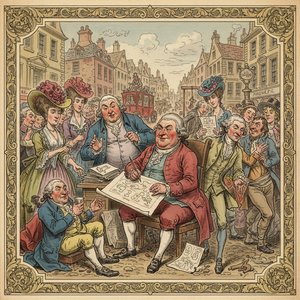
Thomas Rowlandson: Satire als Spiegel der georgianischen Gesellschaft und Kunst
Entdecken Sie das satirische Werk von Thomas Rowlandson! Erfahren Sie mehr über seine Kunst, den gesellschaftlichen Kontext des georgianischen Englands und seinen Einfluss auf die Kunstgeschichte. Expertenanalyse & Hintergrundinformationen.

The Enduring Legacy of Fine Art Prints: Technique, History & Aesthetic Impact
Explore the rich history & techniques of fine art prints. Discover investment potential, assess authenticity, and learn how to preserve your collection with expert guidance. Trusted insights for discerning collectors.

Giclée Prints: Archival Quality & Aesthetic Nuances for the Discerning Collector
Explore the world of giclée prints with OriginalUniqueArt. Learn about archival quality, aesthetic nuances & investment potential. Expert guidance for discerning art collectors seeking museum-quality reproductions and lasting value.
The Enduring Legacy of Printmaking: Techniques, Themes & Artistic Innovation Across Centuries
Explore the rich history of printmaking with OriginalUniqueArt. Discover techniques from intaglio to lithography, learn about collecting valuable prints & find museum-quality reproductions. Expert insights for art enthusiasts and collectors.

Echoes of Time: Exploring the Enduring Appeal & Historical Context of Vintage Art Prints
Explore the captivating world of vintage art prints! Discover their history, collecting tips & enduring appeal. Expert insights on chromolithography and building a legacy collection with OriginalUniqueArt.


