

 In echtem Maßstab anzeigen
 Versenden als Grußkarte
 Teilen
 Details anzeigen
 Leitfaden öffnen

 Herunterladen
 Ähnliche Objekte
 Röntgenaufnahme
 Diashow
 Besucherstatistiken
Joseph Banks


 Mehr anzeigen
Handgefertigte Ölreproduktion
Handgemaltes Ölgemälde auf Leinwand in Ihrer Wunschgröße und mit Rahmen, auf Bestellung von unseren Künstlern angefertigt. ( Zum Druck wechseln Zum digitalen Bild wechseln)




P118B €10

P118H €10

P118W €10

P438Z €10

P508JH €12

P508YH €12

P805H €10

P805Z €10

P919BZ €10

P919G €10

P919XJ €10

P959ZH €10

P968JZ €12

W106C €8

W218G €10

W218JH €8

W218Y €10

W307PJ €10

W316G €10

W316PJ €8

W316Y €10

W398PJ €8

W4111J €10

W500HY €15

W500JH €15

W692G €12

W849H €8

W940BG €15

W953PJ €8




Wählen Sie aus unseren vordefinierten Formaten, die den ursprünglichen Proportionen des Kunstwerks entsprechen.

Geben Sie die Breite und die Höhe an, die Sie für Ihren Rahmen oder Ihre Wand benötigen. Da dieses Werk handgemalt ist, kann der Künstler bei einer anderen Form etwas mehr um das Bild herum malen oder etwas abschneiden – Sie entscheiden. Wir senden Ihnen ein digitales Mockup zur Freigabe, bevor mit dem Malen begonnen wird. Das auf dieser Seite gezeigte Bild stellt nicht das tatsächliche Ergebnis dar – dies tut nur das Mockup.
Nach der Bestellung wird das OriginalUniqueArt.com-Team dem Kunden Anweisungen per E-Mail zusenden und eine Mockup-Vorschau bereitstellen.
Weltweiter Versand () in nur 3 bis 4 Wochen statt der üblichen 5 Wochen. (24 Oktober). Keine Kompromisse bei der Qualität.

Kostenloser weltweiter Expressversand

Hochwertige Leinenleinwand

Vollständiger Versicherungsschutz beim Versand

Zollgebühren-Rückerstattungsgarantie

Garantie für exakte Farbtreue

100-tägiges Rückgaberecht (nur bei Mängeln)

100% Geld-zurück-Garantie

Angebot für Mengenrabatt
 Die Glasoption ist nur für Größen unter 110 cm verfügbar.

Joseph Banks
Reproduktionsmedium
Format der Reproduktion
-


Gesamtpreis
€ 263
A Portrait of Scientific Grandeur: Joseph Banks by Thomas Phillips
Thomas Phillips’s “Portrait of Joseph Banks” is more than simply a likeness; it's a meticulously crafted tableau of scientific ambition, colonial aspiration, and the burgeoning confidence of the British Enlightenment. Completed in 1809, this remarkable painting captures Sir Joseph Banks – a man who profoundly shaped our understanding of the natural world – at the apex of his influence as President of the Royal Society and a key figure in Captain James Cook’s groundbreaking voyages. The image isn't merely a representation of a man; it’s an embodiment of a nation’s expanding horizons, a visual testament to the era’s fervent belief in exploration and discovery.
The composition immediately draws the eye to Banks himself, seated with dignified composure within the opulent confines of the Royal Society's Presidential chair. The chair, adorned with its coat of arms – a potent symbol of authority and scientific prestige – anchors him firmly within his position of leadership. His posture is one of quiet strength, yet there’s an undeniable air of intellectual curiosity about him; his gaze, directed directly at the viewer, invites engagement and suggests a mind constantly engaged in observation and analysis. The subtle tilt of his head, combined with the slight downward cast of his eyes, hints at a contemplative nature, a man deeply immersed in the intricacies of the natural world.
The Language of Detail: Technique and Style
Phillips’s mastery lies not just in capturing Banks's likeness but in rendering the textures and nuances of his attire and surroundings with astonishing precision. The painting is executed in the style of English portraiture prevalent during the early 19th century, characterized by a refined elegance and an emphasis on realistic detail. The use of oil paints allows for a remarkable depth of color and shading, creating a sense of three-dimensionality that brings the scene to life. Note the meticulous rendering of Banks’s coat – the rich fabric, the subtle sheen of the buttons, the intricate embroidery—each element contributing to an overall impression of wealth, status, and scholarly dedication.
The background is equally significant. The marble fireplace, with its lion's head motif, speaks to the grandeur of the Royal Society’s headquarters. The inclusion of a manuscript detailing botanical discoveries – a clear reference to Banks’s life’s work – subtly reinforces his scientific credentials. Even the placement of the mace cushion and inkstand, symbols of authority and intellectual pursuit, are carefully considered, adding layers of meaning to the composition.
A Symbol of Colonial Ambition
“Portrait of Joseph Banks” is inextricably linked to the era’s colonial ambitions. Banks's role in Cook’s voyages was pivotal in establishing British presence in Australia and shaping early scientific understanding of the Pacific region. The painting, therefore, can be interpreted as a visual endorsement of this expansionist policy. Banks’s confident demeanor and association with the Royal Society project an image of British intellectual superiority—a narrative designed to justify colonial endeavors.
However, it's crucial to acknowledge the complexities inherent in this interpretation. While the painting undoubtedly celebrates British scientific achievement, it also reflects the ethical dilemmas associated with colonialism. Banks’s legacy is one of both remarkable discovery and complicity in a system that profoundly impacted Indigenous populations. Considering these historical nuances adds depth and resonance to our understanding of the artwork.
Emotional Resonance and Lasting Legacy
Beyond its historical context, “Portrait of Joseph Banks” possesses a powerful emotional resonance. The painting evokes a sense of intellectual curiosity, quiet determination, and the enduring human desire to explore and understand the world around us. Banks’s gaze invites viewers to share in his passion for knowledge and his belief in the transformative power of scientific discovery.
Reproductions of this iconic portrait continue to captivate audiences today, serving as a reminder of a pivotal figure in the history of science and exploration. It stands not just as a beautiful work of art but as a window into a fascinating era—an era defined by both remarkable progress and profound ethical challenges.
Fragen & Antworten
Welche Farbe sticht in "Joseph Banks" am meisten hervor?
Espresso (#443225) ist die dominierende Farbe von "Joseph Banks" von Thomas Phillips.
Welche Phase in der Entwicklung von Thomas Phillips repräsentiert "Joseph Banks"?
"Joseph Banks" repräsentiert die Early Maturity von Thomas Phillips.
Welche Stellung nimmt „Joseph Banks“ unter den wiederkehrenden Motiven von Thomas Phillips ein?
Zu den wiederkehrenden Themen von Thomas Phillips gehören neoclassical ideals, scientific observation, british colonial ambitions, exploration, royal society patronage, prestige, portraiture’s social commentary”, banks's legacy; „Joseph Banks“ konzentriert sich auf portraiture, naturalism, botany, science, exploration, society, british art.
Biografie des Künstlers
Frühes Leben und Ausbildung
Thomas Phillips, ein bedeutender englischer Porträt- und Historienmaler, wurde am 18. Oktober 1770 in Dudley, Worcestershire, geboren. Seine künstlerische Reise begann mit dem Erlernen der Glasmalerei in Birmingham unter der Anleitung von Francis Eginton. Im Jahr 1790 besuchte Phillips London, wo er Benjamin West kennenlernte, der ihn in die Kunstwelt einführte.Künstlerisches Schaffen und bemerkenswerte Werke
Phillips' frühe Arbeiten umfassten das Malen von Fenstern in der St. George’s Chapel in Windsor. Er wurde 1791 Schüler der Royal Academy und präsentierte dort seine Talente in verschiedenen Ausstellungen:- Ein Löwe greift ein Pferd an (nicht von Phillips, aber ein bemerkenswertes Beispiel für den Romantikstil) – dieses Gemälde, obwohl nicht von Phillips, ist ein Spiegelbild des Stils der Epoche. (Mehr über Ein Löwe greift ein Pferd an)
- Der Tod des Earl of Shrewsbury in der Schlacht von Castillon, Ruth und Naomi und Elijah stellt den Witwensohn wieder her (1792-1795) – diese frühen Werke demonstrieren Phillips' Vielseitigkeit.
- Venus und Adonis (1808) – dieses Gemälde, das als sein Diplomarbeit präsentiert wurde, gilt als eines seiner besten kreativen Werke abseits von Vertreibung aus dem Paradies.
Vermächtnis und spätere Jahre
Phillips wurde 1808 zum Royal Academician gewählt. Er malte weiterhin bemerkenswerte Persönlichkeiten, darunter den Prince of Wales, die Marchioness of Stafford und Lord Thurlow. Zu seinen Beiträgen zur Ausstellung der Royal Academy im Jahr 1809 gehörte ein Porträt von Sir Joseph Banks, das von Niccolo Schiavonetti graviert wurde. Phillips' späte Jahre waren durch seine Wahl zum Professor für Malerei an der Royal Academy im Jahr 1825 gekennzeichnet, nachdem er Henry Fuseli abgelöst hatte. Er trat 1832 zurück und veröffentlichte 1833 seine Vorlesungen über die Geschichte und Prinzipien der Malerei.Bemerkenswerte Erwähnungen und künstlerischer Stil
Phillips' Werk zeichnet sich durch seine Liebe zum Detail und Realismus aus, was die Einflüsse seiner Zeit widerspiegelt. Seine Themen umfassten oft komplexe Ikonographie mit einem Fokus auf narrative Malerei und kleine Porträts.- Wichtige Werke: Porträt von Mrs. Charles Schreiber (1912) – obwohl nicht von Phillips, zeigt dieses Werk den Stil seiner Zeitgenossen. (Mehr über Porträt von Mrs. Charles Schreiber)
- Künstlerische Bewegung: Frühnetherländische Malerei, die die Entwicklung der nordeuropäischen Renaissance beeinflusste.
- Museumsbestände: Die Royal Academy of Arts, London (https://OriginalUniqueArt.com/@/royal-academy-of-arts)
Schlussfolgerung
Phillips' Vermächtnis ist ein Beweis für sein Engagement für die Welt der Kunst. Durch seine Arbeit sehen wir die Entwicklung künstlerischer Stile und den Einfluss seiner Zeitgenossen auf die Entwicklung moderner Maltechniken. (Mehr über Thomas Phillips)
Thomas Phillips
1770 - 1845 , Vereinigtes Königreich
Eckdaten zum Künstler
- Bemerkenswerte Werke:
- Venus und Adonis
- Tod des Earl of Shrewsbury
- Ruth und Naomi
- Elijah stellt den Sohn wieder her
- Geburtsdatum: 18. Oktober 1770
- Geburtsort: Dudley, Vereinigtes Königreich
- Künstlerische Bewegung: Frühniederländische Malerei
- Künstlerische Einflüsse:
- Benjamin West
- Henry Fuseli
- Nationalität: Britisch
- Sterbedatum: 1845
- Vollständiger Name: Thomas Phillips
Verwandte Artikel

Thomas Lawrence: Porträtkunst, Macht und Ästhetik der Regency-Gesellschaft
Entdecken Sie das Werk von Thomas Lawrence, dem führenden Porträtmaler der Regency-Zeit. Analysieren Sie Machtinszenierung, innovative Technik und seinen Einfluss auf die britische Kunstgeschichte. Für Kenner und Sammler.

Thomas Phillips: Porträtmalerei, Mäzenatentum und der Aufstieg der viktorianischen Gesellschaftskunst
Entdecken Sie das Leben und Werk von Thomas Phillips – einem Schlüsselkünstler des viktorianischen Zeitalters. Erfahren Sie mehr über seine Porträtmalerei, sein Mäzenatentum und seinen Einfluss auf die Kunstgeschichte Englands.
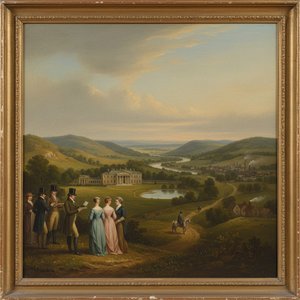
Thomas Barker of Bath: Landscape Painting & Societal Reflection in Early 19th-Century England
Explore the life & work of Thomas Barker of Bath, a key figure in 19th-century English Romanticism. Discover his Parisian success, iconic paintings like 'The Bride of Death', and lasting artistic legacy. Learn more at OriginalUniqueArt.

Majesty on Canvas: A Definitive Guide to Iconic Royal Portraits Through Art History
Explore the profound history of royal portraiture. From Baroque grandeur to Victorian elegance, discover how master artists captured power and lineage on canvas through the timeless medium of oil painting.

Sir Francis Grant: Portraiture, Patronage & Victorian Society
Explore the life & work of Sir Francis Grant, a leading Victorian portraitist. Discover his aristocratic clientele, role at the Royal Academy, and enduring artistic legacy. Learn about art patronage in 19th-century Britain.