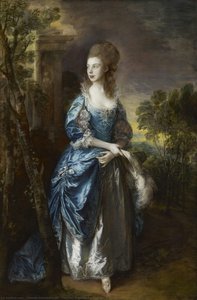
Frühes Leben, Familie und Ausbildung
In der beschaulichen Marktstadt Sudbury im Vereinigten Königreich begann am 14. Mai 1727 die Lebensgeschichte von Thomas Gainsborough. Als jüngster Sohn von John Gainsborough, einem Weber und Wollhändler, wuchs er in einem Umfeld auf, das von handwerklicher Präzision geprägt war. Doch während das Familiengeschäft eine ganz eigene Art der Genauigkeit erforderte, fühlte sich der junge Thomas einer völlig anderen Form des Schöpfungsprozesses zugezogen. Schon in bemerkenswert frühem Alter offenbarte er eine angeborene künstlerische Sensibilität, die ihn förmlich aus dem Inneren heraus nach der Kunst zog. Er war nicht bloß ein Beobachter der Welt um ihn herum; er verspürte das tiefe, wachsende Bedürfnis, sie durch Zeichnung und Malerei festzuhalten.
Diese natürliche Neigung blieb jedoch nicht lange ein bloßes Kindheitsvergnügen. Im Alter von nur dreizehn Jahren wurde die Anziehungskraft der Hauptstadt zu stark, um sie zu ignorieren, und im Jahr 1740 verließ er die vertraute Heimat in Suffolk, um in den geschäftigen Straßen Londons neue Wege zu suchen. Es war dort, wo er nach einer formalen Ausbildung strebte und schließlich unter dem französischen Maler Hubert-François Gravelot studierte. Diese Zeit der Unterweisung verlieh ihm das technische Fundament, das notwendig war, um sein rohes Talent in ein diszipliniertes Handwerk zu verwandeln. Die Eleganz des französischen Stils sollte sich schließlich mit seiner eigenen, sich entwickelnden Vision vermischen und ihm helfen, die einfachen Skizzen seiner Jugend hinter sich zu lassen, um eine weitaus anspruchsvollere Meisterschaft über sein Medium zu erlangen.
Die prägenden Jahre in Ipswich und Bath
Nachdem er die vertraute Geborgenheit seines Elternhauses verlassen hatte, zog Thomas Gainsborough nach 1748 nach Ipswich. Es waren diese Jahre, in denen sein Ruf weit über die lokalen Kreise seiner Jugend hinauszuwachsen begann. Er war nicht länger nur ein junger Mann mit einem Talent für Skizzen, sondern ein aufstrebender Profi, der sich in den Kreisen der Kaufleute und Landadeligen der Region festigte. Diese Übergangsphase ermöglichte es ihm, seine Fähigkeit zu verfeinern, das Wesen seiner Porträtierten einzufangen – eine Meisterschaft, die sich als Eckpfeiler seiner gesamten künstlerischen Laufbahn erweisen sollte.
Im Jahr 1759 vollzog sich ein bedeutender Wendepunkt, als er nach Bath zog. Er ließ sich in der Nummer 17 am „The Circus“ nieder, einem Ort, der ihn unmittelbar in das Herz einer geschäftigen, mondänen Gesellschaft platzierte. Die Stadt war ein Magnet für Wohlhabende und Einflussreiche, und Thomas Gainsborough erwies sich schnell als Künstler, der diese hochgestellten Klientel für sich gewinnen konnte. Sein Aufenthalt in Bath erlaubte es ihm, sich in Kreisen zu bewegen, die sowohl Eleganz als auch ein gewisses gesellschaftliches Prestige verlangten, was seine Kunst unaufhaltsam den anspruchsvollen Geschmacksrichtungen der Ära entgegenführte. In dieser Zeit begann er, die Anforderungen seiner Porträtaufträge mit seiner privaten Hingabe zur Landschaftsmalerei in Einklang zu bringen – eine Dualität, die sein professionelles Leben in der Stadt maßgeblich prägen sollte.
Die Londoner Jahre und das königliche Mäzenatentum
Gegen 1774 wurde die Anziehungskraft der Hauptstadt schließlich zu groß, um sie zu ignorieren, und Thomas Gainsborough zog nach London, um sein endgültiges Glück zu suchen. Er richtete ein Atelier im Pall Mall ein – ein Standort, der ihn unmittelbar in das pulsierende Herz des gesellschaftlichen und künstlerischen Lebens der Metropole versetzte. Es war in dieser prägenden Zeit, dass er die Zukunft der britischen Kunst maßgeblich mitgestaltete, indem er als Gründungsmitglied der Royal Academy fungierte. Seine Präsenz in der Stadt sorgte dafür, dass sein Name stets im selben Atemzug mit den einflussreichsten Persönlichkeiten seiner Ära genannt wurde.
Der Erfolg in der Hauptstadt öffnete ihm die Türen zu den innersten Kreisen der Macht. Er wurde zu einem bevorzugten Maler von König Georg III. und dem Königshaus, wodurch er sich ein Maß an Schirmherrschaft sicherte, das nur wenigen Künstlern vergönnt war. Diese Verbindung zum Thron bescherte ihm einen stetigen Strom prestigeträchtiger Aufträge und ermöglichte es ihm, seine Fähigkeit zu perfektionieren, die Würde und den Status der höchsten gesellschaftlichen Schichten einzufangen. Doch selbst während er sich durch die komplexen Strukturen der Londoner Kunstszene bewegte, blieb seine Sehnsucht nach der Stille des ländlichen Idylls eine Konstante – auch wenn er nun für die mächtigsten Menschen des Königreichs malte.
Technik und künstlerischer Stil
Der Pinsel bewegte sich mit einer gewissen rastlosen Energie über seine Leinwände und bevorzugte schnelle Pinselstriche, die eine Form eher andeuteten, als sie mühsam zu definieren. Er favorisierte eine helle Palette und verband oft sanfte Töne mit tiefen, erdenden Brauntönen, um ein Gefühl von Naturalismus zu erzeugen. Dieser Ansatz ermöglichte eine bemerkenswerte Fließfähigkeit, als ob die Farbe selbst noch in Bewegung wäre. Er suchte nicht bloß danach, ein Gesicht festzuhalten, sondern wollte das subtile Zusammenspiel zwischen menschlicher Emotion und der Pracht der natürlichen Welt einfangen. In seinen Händen waren das Porträtierte und die Umgebung niemals wirklich getrennte Einheiten.
Diese Verbindung wurde in seiner Gewohnheit am deutlichsten, Landschaften nahtlos in seine Porträts zu integrieren. Er platzierte seine Subjekte in der weiten, offenen Luft der englischen Landschaft und ließ die Atmosphäre des Himmels und die Textur der Bäume den Charakter der dargestellten Person prägen. Diese Methode erlaubte es ihm, die Lücke zwischen den formalen Anforderungen der Porträtmalerei und seiner eigenen tief verwurzelten Leidenschaft für die Landschaft zu schließen. Sein Werk stützte sich oft auf die Diaphanität seiner Striche, wobei er skizzenhafte Markierungen nutzte, um die zarte Textur von Seide oder das flüchtige Licht auf einem Feld zu suggerieren.
Hauptwerke und Meisterwerke
Mit seinem Pinsel suchte Thomas Gainsborough oft danach, die Würde des Porträtierten mit dem weitläufigen, pulsierenden Leben der Natur zu vereinen. In Mr and Mrs Andrews vollbrachte er weit mehr, als nur ein Paar festzuhalten; er porträtierte die Landschaft selbst, die das Ehepaar besaß, und verankerte so deren sozialen Status direkt im Boden der Heimat. Diese tiefe Verbindung zwischen Mensch und Ort entwickelte sich zu einem wiederkehrenden Thema, während er sich in den Kreisen des Landadels bewegte. Selbst seine intimeren Studien besitzen eine bemerkenswerte Charaktertiefe, wie etwa das Porträt von Mrs. Sarah Siddons, das er im Jahr 1785 schuf.
Es gibt Werke, die ein ganz eigenes Leben zu besitzen scheinen und weit über den Rahmen einer traditionellen Galerie hinausstrahlen. The Blue Boy, ein Ölgemälde auf Leinwand, wird vermutet, das Porträt von Jonathan Buttall darzustellen, doch es hat eine Präsenz erreicht, die seinen ursprünglichen Zweck längst transzendiert hat. Es ist ein Werk, das im Gedächtnis nachhallt, lange nachdem der Betrachter sich bereits abgewandt hat. Sogar ein Stück wie The Gravenor Family fand ein unerwartetes Nachleben, indem es ausgeschnitten und in den Einband eines Buches aus dem Jahr 1983 eingeklebt wurde.
- The Blue Boy
- Mr and Mrs Andrews
- Mrs. Sarah Siddons
- The Gravenor Family
Wo man seine Werke heute bewundern kann
Durch die Räumlichkeiten des Gainsborough House in Sudbury zu wandeln, gleicht einer Zeitreise in jene Umgebung, die seine frühe künstlerische Vision erst genährt hat. Dieses Hausmuseum bewahrt die intime Atmosphäre seiner Kindheit und bietet eine greifbare Verbindung zu der Landschaft von Suffolk, die so oft in seinen Gemälden zum Ausdruck kommt. Es bleibt ein Ort der Stille, an dem die Rhythmen seiner prägenden Jahre noch immer in den Mauern seines Geburtsortes nachhallen.
Das Vermächtnis seiner Pinselführung reicht jedoch weit über die Grenzen von Suffolk hinaus. In Ipswich beherbergt die Christchurch Mansion eine bedeutende Sammlung seiner Gemälde, die seine raffinierten Porträts in einen Dialog mit den Werken anderer großer Meister setzt. Wer nach seinen berühmtesten Meisterwerken sucht, findet in der National Gallery in London einen Ort, an dem man seinem Können unmittelbar begegnen kann. Sein künstlerischer Einfluss erstreckt sich sogar über den Atlantik bis zum Metropolitan Museum of Art in New York, wo seine Leinwände auch fernab der englischen Landschaft von Betrachtern bewundert werden.
- The Blue Boy (um 1770)
- Mr and Mrs Andrews (um 1750)
- Mrs. Thomas Gainsborough, geborene Margaret Burr (1778)
 Zum Druck wechseln
 Weiterlesen







































 Bei Kunstwerken oder Reproduktionen, die an einer Seite größer als 105 cm (ca. 41 Zoll) sind, wird der Rahmen zerlegt als Bausatz geliefert. Diese Methode gewährleistet eine sichere Zustellung und verhindert Schäden während des Transports.


 Vorschau anzeigen

 Versenden
 Teilen
 Details anzeigen
 Leitfaden


 Herunterladen
 Ähnliche Objekte
 Röntgenaufnahme
 Diashow
 Fragen & Antworten
 Statistiken