- Startseite

- Auf Leinwand drucken
- Thomas Gainsborough
- Dr Rice Charleton
 Gemälde kaufen Bild kaufen
 Versenden
 Teilen
 Details anzeigen
 Zu Favoriten hinzufügen

 Herunterladen
 Ähnliche Objekte
 Röntgenaufnahme
 Diashow anzeigen
Dr Rice Charleton


 Weiterlesen
Giclée / Kunstdruck
Giclée- oder Leinwanddruck in Museumsqualität mit schneller Produktion und flexiblen Veredelungsoptionen.




P118B $10

P118H $10

P118W $10

P438Z $10

P508JH $12

P508YH $12

P805H $10

P805Z $10

P919BZ $10

P919G $10

P919XJ $10

P959ZH $10

P968JZ $12

W106C $8

W218G $10

W218JH $8

W218Y $10

W307PJ $10

W316G $10

W316PJ $8

W316Y $10

W398PJ $8

W4111J $10

W500HY $15

W500JH $15

W692G $12

W849H $8

W940BG $15

W953PJ $8




Wählen Sie aus unseren vordefinierten Größen, die den ursprünglichen Proportionen des Kunstwerks entsprechen.

Sie können Ihre eigenen Maße eingeben, um ein bestimmtes Format oder einen speziellen Platz einzupassen. Wenn das von Ihnen gewählte Format nicht den Proportionen des Originalbildes entspricht, werden wir das Kunstwerk entweder beschneiden oder das Bild mit einem gespiegelten oder einfarbigen Rand erweitern. Ein digitaler Entwurf wird Ihnen zur Genehmigung zugesandt, bevor die Produktion beginnt.
Bitte beachten Sie, dass die Vorschau auf dem Bildschirm nicht den tatsächlichen Zuschnitt oder die Erweiterung widerspiegelt. Nur der Entwurf zeigt die endgültige Komposition präzise an.
Obwohl Sondermaße verfügbar sind, empfehlen wir die Auswahl eines Maßes aus der vordefinierten Liste, um die ursprünglichen Proportionen zu bewahren.
Weltweiter Versand () innerhalb von 2 Wochen statt der üblichen 4/5 Wochen. (20 Juli)

Kostenloser weltweiter Expressversand

Hochwertige Leinenleinwand

Umfassender Versicherungsschutz beim Versand

Zollsteuer-Rückerstattungsgarantie

Garantie für echte Farbtreue

60-Tage-Rückgaberecht (nur bei Mängeln)

100% Geld-zurück-Garantie

Mengenrabatt verfügbar
 Die Glasoption ist nur in Größen unter 110 cm verfügbar.

Dr Rice Charleton
Giclée / Kunstdruck
Größe der Reproduktion
-


Endpreis aller Optionen
-
Beschreibung des Sammlerstücks
A Portrait of Refinement: Dr. Rice Charleton by Thomas Gainsborough
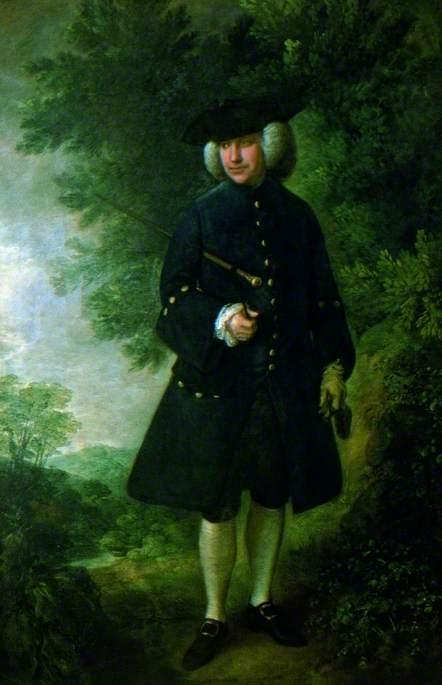
Thomas Gainsborough’s “Dr. Rice Charleton,” painted in 1764, is more than just a portrait; it's a masterful distillation of the Rococo era’s elegance and a subtle commentary on the burgeoning social landscape of Georgian England. The painting immediately draws the eye with its rich palette – deep greens, browns, and ochres layered over a luminous white shirt – creating an atmosphere both opulent and subtly shadowed. The subject himself, Dr. Rice Charleton, a respected physician at Bath’s Mineral Water Hospital, is presented not as a stern scholar but as a man of considerable charm and quiet confidence. His posture is relaxed, his gaze direct, suggesting a personality that commands respect without demanding it.
Gainsborough's skill lies in his ability to capture the fleeting effects of light and atmosphere. The forest background isn’t merely decorative; it’s meticulously rendered with linear perspective – rectangles defining the man’s clothing, oval shapes for his face, and simplified forms for the foliage – yet imbued with a sense of depth through atmospheric perspective. Notice how the trees in the distance fade into paler hues, creating an illusion of vastness and drawing the viewer's eye towards the central figure. The brushstrokes themselves are visible, adding texture to the fabric and suggesting a dynamic energy beneath the surface of the scene.
The Rococo Influence: Grace and Ornamentation
“Dr. Charleton” is firmly rooted in the Rococo style, a movement that flourished in Europe during the 18th century. Characterized by its emphasis on grace, elegance, and ornamentation, Rococo art sought to evoke feelings of pleasure and delight. Gainsborough expertly employs these principles here – the luxurious fabrics, the carefully arranged details, and the overall sense of refinement all speak to this aesthetic. However, unlike the often frivolous nature sometimes associated with Rococo, there’s a quiet dignity in this portrait, reflecting Dr. Charleton's profession and social standing.
The composition is deliberately centered around the figure, creating an intimate connection between the viewer and the subject. The use of diagonals – particularly in the man’s clothing and the lines of the forest – adds a sense of movement and dynamism to the scene. Furthermore, the lighting—a dramatic source from the upper left—casts strong shadows that accentuate his form and contribute to the painting's overall mood. It is not merely a likeness; it’s an evocation of character.
Symbolism and Social Context
Beyond its aesthetic qualities, “Dr. Charleton” offers glimpses into the social context of 18th-century England. The man's attire – a formal coat and cravat – signifies his status and wealth. The forest setting, with its association with nature and virtue, subtly reinforces this message. It’s a visual shorthand for the ideal gentleman: cultured, educated, and connected to the natural world. The inclusion of a medical profession also speaks to the growing importance of medicine during this period.
Interestingly, Gainsborough himself was somewhat ambivalent about portraiture, preferring landscapes. Yet, he recognized its commercial potential and skillfully navigated the demands of his patrons. “Dr. Charleton” exemplifies his ability to synthesize artistic vision with practical considerations – a testament to his enduring legacy as one of Britain’s greatest painters.
A Timeless Masterpiece: Reproduction and Appreciation
Reproductions of "Dr. Rice Charleton" capture the essence of Gainsborough's artistry, allowing viewers to appreciate its beauty and complexity from afar. Whether displayed in a grand hall or a cozy study, this painting continues to resonate with audiences today, offering a window into a bygone era and a celebration of human character. Consider commissioning a hand-painted reproduction – a faithful recreation that preserves the original’s luminosity, texture, and emotional impact for generations to come.
Biografie des Künstlers
Frühes Leben und Ausbildung
Thomas Gainsborough, eine bedeutende Figur der britischen Kunst des 18. Jahrhunderts, wurde am 14. Mai 1727 in Sudbury, Suffolk geboren. Als jüngster Sohn von John Gainsborough, einem Weber und Hersteller von Wollwaren, war Thomas' frühes Leben geprägt von einer angeborenen Leidenschaft für Zeichnung und Malerei. Bereits im Alter von zehn Jahren hatte er sein künstlerisches Talent mit Miniatur-Selbstporträts und kleinen Landschaftsbildern unter Beweis gestellt.Künstlerische Karriere
Thomas’ formelle künstlerische Ausbildung begann 1740 unter der Anleitung von Hubert Gravelot in London. Seine Assoziation mit William Hogarth beeinflusste jedoch maßgeblich seinen Stil. Gainsboroughs Werk zeichnet sich durch seine helle Farbpalette und mühelose Pinseltechnik aus, was ihn von seinen Zeitgenossen unterschied.- Porträt einer Dame in Blau (siehe auf OriginalUniqueArt) demonstriert Gainsboroughs Meisterschaft im Porträt, wobei der ruhige Ausdruck und die zarten Gesichtszüge des Subjekts bemerkenswert detailliert wiedergegeben sind.
- Johann Christian Bach (siehe auf OriginalUniqueArt) beweist seine Fähigkeit, das Wesen seiner Motive einzufangen, wie in diesem Ölgemälde auf Leinwand zu sehen ist.
- Selbstporträt (siehe auf OriginalUniqueArt) (Roy Miles Gallery, London, Großbritannien), ein Beweis für seine Fähigkeiten im Selbstporträt.
- Mary, Countess of Howe (siehe auf OriginalUniqueArt) (244 x 152 cm, Öl auf Leinwand), ein Beispiel für seine Porträts mit einer bedeutenden Persönlichkeit.
Einflüsse und Stilentwicklung
Gainsboroughs künstlerische Entwicklung war von verschiedenen Einflüssen geprägt. Die frühe Ausbildung bei Hubert Gravelot legte den Grundstein für seine Fähigkeiten in der grafischen Darstellung, während die Begegnung mit William Hogarth seinen Stil maßgeblich beeinflusste. Er entwickelte eine einzigartige Herangehensweise an das Porträt, indem er neben der formalen Darstellung auch die Persönlichkeit und Stimmung des Subjekts einzufangen versuchte. Seine Landschaftsbilder zeichnen sich durch eine lockere Pinseltechnik und eine atmosphärische Darstellung aus, die ihn von seinen Zeitgenossen abhebt. Die Rivalität mit Sir Joshua Reynolds befeuerte seinen Ehrgeiz, in beiden Genres herausragende Leistungen zu erzielen.Bemerkenswerte Werke und Standorte
Gainsboroughs Gemälde sind heute in zahlreichen Museen und Galerien weltweit zu bewundern.- Gloucester City Museum - Art Gallery, Gloucester, Großbritannien – entdecken Sie die Meisterwerke dieses Museums, darunter Werke von Charles March Gere und Richard Whitfo.
- Blake Museum, Großbritannien – erkunden Sie die in diesem Museum ausgestellten Kunstwerke, darunter Gemälde wie Irene von Thomas Chidgey.
- Die Charterschule (siehe auf OriginalUniqueArt) – ein beeindruckendes Ölgemälde aus dem Jahr 1748, das die Charterschule darstellt.
- Das Ehrenmitglied Harriott Marsham (siehe auf OriginalUniqueArt) – ein elegantes Porträt einer Dame aus dem 18. Jahrhundert.
- Der Blaue Junge (Jonathan Buttall) (siehe auf OriginalUniqueArt) – ein Meisterwerk der 18. Jahrhundert Porträtmalerei.
- Sir Henry Bate Dudley (siehe auf OriginalUniqueArt) – ein Meisterwerk des Rokoko.
- Herr und Frau Andrews (siehe auf OriginalUniqueArt) – ein atemberaubendes Porträt aus dem Jahr 1748.
Vermächtnis und Bedeutung
Thomas Gainsboroughs Einfluss auf die britische Kunst ist unbestreitbar. Als Gründungsmitglied der Royal Academy spielte er eine entscheidende Rolle bei der Gestaltung der Institution. Seine Werke werden bis heute für ihre Eleganz, ihren Charme und ihre meisterhafte Technik geschätzt. Er inspirierte nachfolgende Generationen von Künstlern und trug maßgeblich zur Entwicklung der britischen Porträt- und Landschaftsmalerei bei. Künstler wie Richard Wilson und William Heath Wilson wurden von seinem Stil beeinflusst. Sein Vermächtnis lebt in seinen zahlreichen Gemälden weiter, die Kunstliebhaber auf der ganzen Welt begeistern.- Richard Wilson – bekannt für seine ruhigen Landschafszenen und idyllischen Ausblicke.
- Sir Joshua Reynolds – Britanniens führender Porträtmaler & Gründer der Royal Academy.
- Hubert François Gravelot – Französischer Rokoko-Grafiker, der die englische Kunst beeinflusste.
- Gainsboroughs Haus in Sudbury – Geburtsort von Thomas Gainsborough.

Thomas Gainsborough
1727 - 1788 , Vereinigtes Königreich
Kurzinfos
- Beeinflusste Künstler:
- Richard Wilson
- Sir Joshua Reynolds
- Hubert François Gravelot
- Bemerkenswerte Werke:
- Porträt einer Dame in Blau
- Johann Christian Bach
- Selbstporträt
- Mary, Countess of Howe
- Herr und Frau Andrews
- Geburtsdatum: 14. Mai 1727
- Geburtsort: Sudbury, Vereinigtes Königreich
- Künstlerischer Stil: Rokoko, Porträtmalerei
- Nationalität: Britisch
- Sterbedatum: 1788
- Vollständiger Name: Thomas Gainsborough
- Von Ihm Beeinflusste Künstler:
- Imitator von Thomas Gainsborough RA
- William Heath Wilson
Ähnliche Artikel
The Rococo Style: Aristocratic Leisure & the Pursuit of Delight in 18th-Century Art
Explore the opulent world of Rococo art! Discover Watteau, Boucher & Nattier's masterpieces. Expert insights for collectors seeking museum-quality reproductions and custom portraits at OriginalUniqueArt.

Die Synthese von Tradition und Technologie: Der moderne Prozess hinter maßgefertigter Kunst
Maßgefertigte Kunstwerke von erfahrenen Künstlern – exklusiv für Sie gefertigt! Ölmalerei, Reproduktionen & personalisierte Porträts. Qualität, Vertrauen & individuelle Beratung bei OriginalUniqueArt.

The Rococo Aesthetic: Opulence, Rebellion & the Pursuit of Pleasure in 18th-Century Art
Explore the opulent world of Rococo art! Discover its origins, key artists like Watteau & Boucher, and lasting influence on design. Expert insights for collectors & enthusiasts.

Sarah Churchill, Countess of Essex: A Patron's Influence on 18th-Century Art & Identity
Explore the fascinating world of Sarah Churchill, Countess of Essex, a pivotal figure in 18th-century art patronage. Discover her influence on Rococo aesthetics and portraiture, and learn about commissioning artworks as a statement of power & identity.
George Stubbs: Anatomische Präzision und romantische Vision in der britischen Kunst des 18. Jahrhunderts
Entdecken Sie das faszinierende Werk von George Stubbs – ein Meister der Tierporträts und Pionier anatomischer Studien. Erfahren Sie mehr über seine einzigartige Verbindung von Kunst und Wissenschaft in unserer Expertenanalyse.