- Startseite

- Auf Leinwand drucken
- theodore hancock
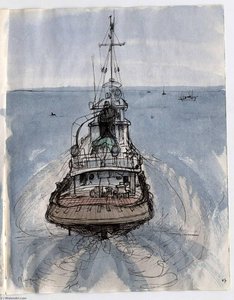
- Schlepper flussabwärts

 Preview
 Gemälde kaufen Bild kaufen
 Versenden
 Teilen
 Details anzeigen
 Zu Favoriten hinzufügen

 Herunterladen
 Ähnliche Objekte
 Röntgenaufnahme
 Diashow anzeigen
Schlepper flussabwärts

 Weiterlesen
Giclée / Kunstdruck
Giclée- oder Leinwanddruck in Museumsqualität mit schneller Produktion und flexiblen Veredelungsoptionen.




































Wählen Sie aus unseren vordefinierten Größen, die den ursprünglichen Proportionen des Kunstwerks entsprechen.

Sie können Ihre eigenen Maße eingeben, um ein bestimmtes Format oder einen speziellen Platz einzupassen. Wenn das von Ihnen gewählte Format nicht den Proportionen des Originalbildes entspricht, werden wir das Kunstwerk entweder beschneiden oder das Bild mit einem gespiegelten oder einfarbigen Rand erweitern. Ein digitaler Entwurf wird Ihnen zur Genehmigung zugesandt, bevor die Produktion beginnt.
Bitte beachten Sie, dass die Vorschau auf dem Bildschirm nicht den tatsächlichen Zuschnitt oder die Erweiterung widerspiegelt. Nur der Entwurf zeigt die endgültige Komposition präzise an.
Obwohl Sondermaße verfügbar sind, empfehlen wir die Auswahl eines Maßes aus der vordefinierten Liste, um die ursprünglichen Proportionen zu bewahren.
Weltweiter Versand () innerhalb von 2 Wochen statt der üblichen 4/5 Wochen. (26 Juli)

Kostenloser weltweiter Expressversand

Hochwertige Leinenleinwand

Umfassender Versicherungsschutz beim Versand

Zollsteuer-Rückerstattungsgarantie

Garantie für echte Farbtreue

60-Tage-Rückgaberecht (nur bei Mängeln)

100% Geld-zurück-Garantie

Mengenrabatt verfügbar
 Die Glasoption ist nur in Größen unter 110 cm verfügbar.

Schlepper flussabwärts
Giclée / Kunstdruck
Größe der Reproduktion
-


Endpreis aller Optionen
-
Beschreibung des Sammlerstücks
Eine dynamische Studie der Industrie: Theodore Hancocks „Tugboat Moving Down River“
Theodore Hancocks „Tugboat Moving Down River“ ist eine fesselnde Skizze, die über eine einfache Darstellung maritimer Aktivität hinausgeht. Dieses Werk, das in einem losen und ausdrucksstarken Stil gehalten ist, bietet einen Einblick in die Fähigkeit des Künstlers, Bewegung und Kraft mit bemerkenswerter Flüssigkeit einzufangen. Es zeigt eine dynamische Szene – ein Schlepper, der durch Wasser navigiert – die mit einer energiegeladenen Qualität versehen ist, die den Betrachter in ihren Sog zieht.
Stil & Technik: Impressionistisches Skizzieren
Hancocks Stil tendiert stark zum Impressionismus und priorisiert das Gefühl von Bewegung gegenüber präziser Realität. Das Kunstwerk ähnelt eher einer vorbereitenden Studie als einem fertigen Stück und zeigt seinen Prozess und seine unmittelbare Reaktion auf das Motiv. Die Technik scheint eine geschickte Mischung aus Tuschemalerei und trockenem Pinselstrich zu sein, wodurch Schichtungen entstehen, die sowohl Feuchtigkeit als auch Textur suggerieren. Achten Sie darauf, wie die variierenden Linienstärken und Schraffuren dieses Gefühl von Tiefe und Dynamik verstärken.
- Medium: Wahrscheinlich Tuschemalerei & Trockener Pinselstrich
- Stil: Impressionistisch, Skizzenhaft
- Hauptmerkmale: Ausdrucksstarke Linien, Schichtungen, diffuses Licht.
Das Motiv & Historischer Kontext
Schlepper waren wesentliche Bestandteile der Industrielandschaft im späten 19. und frühen 20. Jahrhundert – einer Zeit, die mit Hancocks künstlerischer Entwicklung zusammenfällt. Sie stellten Fortschritt, Industrie und die wachsende Kraft der Technologie dar. Obwohl das genaue Datum dieses Stücks unbekannt ist, spiegelt es wahrscheinlich eine Ära wider, in der Wasserwege entscheidende Wirtschaftsadern für Handel und Transport darstellten. Hancocks Entscheidung, einen Schlepper darzustellen, spricht von seinem breiteren Interesse an der Erfassung technologischer Fortschritte ab, einem Thema, das im Laufe seiner Karriere immer wieder auftaucht, einschließlich seiner Arbeit zur Dokumentation des Apollo-Weltraumprogramms.
Emotionale Wirkung & Symbolik
Über seine Darstellung industrieller Aktivität hinaus erweckt „Tugboat Moving Down River“ ein Gefühl von Macht und Schwung. Die energiegeladenen Linien und die kraftvolle Präsenz des Bootes vermitteln das Gefühl eines unaufhaltsamen Fortschritts. Die kühlen Blautöne und Grautöne tragen zu einer leicht verschwommenen Atmosphäre bei, die ein Element der Mystik hinzufügt und die Weite des Flusses andeutet. Obwohl das Motiv scheinbar einfach ist, erhebt Hancock es durch seinen ausdrucksstarken Stil zu einem Werk, das sowohl visuelle Dynamik als auch emotionale Tiefe widerspiegelt.
Dieses Stück ist mehr als nur eine Skizze; es ist ein Moment eingefangen – ein flüchtiger Eindruck von Industrie in Bewegung, geschickt wiedergegeben durch die talentierte Hand Theodore Hancocks. Es bietet einen faszinierenden Einblick in den Prozess des Künstlers und seine Faszination für Technologie und ihre Auswirkungen auf die Welt um ihn herum.
Biografie des Künstlers
Theodore Hancock: A Watercolorist of Industry and the Space Age
Theodore Hancock (1923-1989) wasn’t a name immediately recognized by the public, yet his modernist watercolors hold a unique and compelling place in art history. He was an official NASA artist, capturing the burgeoning technological landscape of the mid-20th century with a keen eye for detail and a subtle, almost understated, elegance. More than just documenting engineering marvels, Hancock imbued his scenes with a sense of wonder and humanity, elevating industrial subjects to the realm of artful observation. His work reflects a fascination with precision, power, and the transformative potential of human ingenuity – particularly as it manifested in the Apollo space program.
Born in Britain but later establishing himself primarily in America, Hancock’s artistic journey was shaped by a confluence of influences. While his early training remains somewhat obscure, he clearly absorbed the principles of British watercolor painting, known for its delicate washes and atmospheric effects. However, it was the rise of modernism – with its emphasis on abstraction, geometric forms, and industrial subject matter – that truly ignited his artistic vision. The post-war era, marked by rapid technological advancement and a growing awareness of global engineering feats, provided an unparalleled source of inspiration. He wasn’t simply depicting machines; he was capturing the *feeling* of progress, the energy of innovation, and the ambition of humankind pushing beyond its earthly boundaries.
The NASA Years: A Unique Commission
Hancock's career took a pivotal turn in 1963 when he was selected as an official NASA artist. This wasn’t merely a matter of illustrating space missions; it represented a significant commission to document the agency’s activities and projects. He spent years traveling extensively, visiting facilities like the Marshall Space Flight Center (MSFC) in Huntsville, Alabama, where he meticulously rendered scenes of rocket development, testing, and assembly. These weren't romanticized depictions of space exploration; they were precise, technical studies – a testament to the complex engineering involved. His watercolors of Saturn V rockets, launch pads, and control rooms are particularly striking for their accuracy and quiet beauty.
The NASA commission afforded Hancock unparalleled access and insight into a world largely unseen by the public. He wasn’t just an observer; he was actively engaged in documenting the process, capturing not only the finished products but also the individuals who brought them to life. This intimate perspective is evident in his portraits of engineers, technicians, and scientists – figures often relegated to the background in traditional depictions of technological advancement. His work served as a visual record of a transformative era, solidifying his legacy as one of the key chroniclers of the Apollo program.
Technique and Style: Precision with a Delicate Touch
Hancock’s watercolor technique was characterized by remarkable precision and control. He employed layering techniques to build up color gradually, creating subtle gradations and atmospheric effects. His use of light and shadow was masterful, lending depth and realism to his subjects. Despite the technical detail, his paintings never feel cold or sterile; there's a warmth and humanity that permeates each piece.
He favored a limited palette – primarily blues, greens, grays, and browns – which he skillfully manipulated to evoke mood and atmosphere. His compositions often featured strong geometric forms, reflecting the inherent structure of the industrial subjects he depicted. There’s a deliberate restraint in his style; he avoids excessive detail or ornamentation, focusing instead on capturing the essence of his subject matter with clarity and elegance. This understated approach is what makes his work so enduring – it speaks to the beauty of functionality and the power of human ingenuity without resorting to sentimentality.
Legacy and Recognition
While largely unknown during his lifetime, Theodore Hancock’s work has gained increasing recognition in recent years. His paintings are now included in museum collections across the United States, testament to their artistic merit and historical significance. They offer a unique window into a pivotal moment in human history – the dawn of the space age – and serve as a reminder of the power of art to document and interpret our collective experience.
Hancock’s legacy extends beyond his individual artworks; he represents a fascinating intersection of art, science, and technology. His work continues to inspire artists and viewers alike, prompting reflection on the relationship between humanity and its creations – and the enduring allure of progress and exploration.

theodore hancock
1923 - 1989
Kurzinfos
- Artistic Movement Or Style: Modernist watercolor
- Date Of Birth: 1923
- Date Of Death: 1989
- Full Name: Theodore Hancock
- Nationality: British-American
- Notable Artworks:
- Apollo space program art
- Industrial landscapes
Ähnliche Artikel

Ephemeral Lines: Exploring Emotional Resonance in Ink Sketching Traditions
Explore the profound art of ink sketching! Discover techniques to express emotion, master line work, and cultivate artistic sensitivity. Learn from historical masters & unlock your creative potential.

Impressionistische Landschaften: Die 10 Meisterwerke, die eine Epoche prägten | OriginalUniqueArt
Entdecken Sie die 10 Meisterwerke des Impressionismus! Von Monet bis Renoir – erleben Sie die Geschichte, Technik und zeitlose Schönheit ikonischer Landschaftsbilder. Hochwertige Kunstdrucke auf OriginalUniqueArt.com. Jetzt entdecken!

T.C. Steele: Ein Hoosier-Visionär des Amerikanischen Impressionismus – Leben, Werk und bleibendes Erbe
Entdecken Sie das faszinierende Leben und Werk von T.C. Steele, einem führenden Vertreter des Amerikanischen Impressionismus. Erfahren Sie mehr über die Hoosier Group, seinen einzigartigen Stil und sein bleibendes Vermächtnis in der Indiana Kunstszene.

Die 10 legendärsten Aquarellwerke der Kunstgeschichte – Meisterwerke für Ihr Zuhause
Entdecken Sie die 10 legendärsten Aquarellwerke der Kunstgeschichte! Von Turner bis Monet – erleben Sie die Geschichten, Techniken & Farben dieser Meisterwerke. Finden Sie hochwertige Kunstdrucke auf OriginalUniqueArt.com und gestalten Sie Ihr Zuhause mit zeitloser Eleganz.

Alfred Sisley: Die vergängliche Essenz der impressionistischen Landschaft – Eine Studie über Licht und Atmosphäre
Entdecken Sie Alfred Sisleys einzigartige Impressionismus-Landschaftsmalerei! Erfahren Sie mehr über seine Technik, Themen und sein Vermächtnis. Expertenanalyse & Informationen auf OriginalUniqueArt.