

 Vorschau anzeigen
 Versenden
 Teilen
 Details anzeigen
 Leitfaden

 Herunterladen
 Ähnliche Objekte
 Röntgenaufnahme
 Diashow
 Q&A
Q&A Statistiken
Komposition I (Stillleben)


 Weiterlesen
Giclée / Kunstdruck
Giclée- oder Leinwanddruck in Museumsqualität mit schneller Produktion und flexiblen Veredelungsoptionen. ( Handgemalte Reproduktion bestellen Zum digitalen Bild wechseln)




P118B €10

P118H €10

P118W €10

P438Z €10

P508JH €12

P508YH €12

P805H €10

P805Z €10

P919BZ €10

P919G €10

P919XJ €10

P959ZH €10

P968JZ €12

W106C €8

W218G €10

W218JH €8

W218Y €10

W307PJ €10

W316G €10

W316PJ €8

W316Y €10

W398PJ €8

W4111J €10

W500HY €15

W500JH €15

W692G €12

W849H €8

W940BG €15

W953PJ €8




Wählen Sie aus unseren vordefinierten Formaten, die den ursprünglichen Proportionen des Kunstwerks entsprechen.

Geben Sie die benötigte Breite und Höhe an, damit der Druck perfekt in Ihren Rahmen oder an Ihre Wand passt. Ein Druck kann nur beschnitten, aber niemals größer als das Originalbild angefertigt werden; daher verliert ein Format mit anderen Proportionen einen Teil des Bildes. Wir senden Ihnen ein digitales Mockup zur Freigabe, bevor wir den Druck ausführen. Das auf dieser Seite gezeigte Bild zeigt nicht den tatsächlichen Beschnitt – dies ist nur im Mockup ersichtlich.
Weltweiter Versand () innerhalb von 2 Wochen statt der üblichen 4/5 Wochen. (29 Oktober)

Kostenloser weltweiter Expressversand

Hochwertige Leinenleinwand

Umfassender Versicherungsschutz beim Versand

Zollgebühren-Rückerstattungsgarantie

Garantie für exakte Farbtreue

100 Tage Rückgaberecht (nur bei Mängeln)

100% Geld-zurück-Garantie

Mengenrabatt verfügbar
 Die Glasoption ist nur für Größen unter 110 cm verfügbar.

Komposition I (Stillleben)
Giclée / Kunstdruck
Format der Reproduktion
-


Endpreis
€ 71
Eine Symphonie der Geometrie: Die Wiederentdeckung von Theo van Doesburgs Komposition I
In der stillen Evolution der Moderne fangen nur wenige Werke den radikalen Wandel von der Darstellung zur reinen Abstraktion so eindringlich ein wie Theo van Doesburgs Komposition I (Stillleben). Dieses im Jahr 1916 geschaffene Meisterwerk dient als tiefgreifende Brücke zwischen der greifbaren Welt und der spirituellen Sphäre der Geometrie. Auf den ersten Blick präsentiert sich dem Betrachter ein vertrautes Tableau – die bescheidene Anordnung von Schalen, Tassen, Äpfeln und einer Vase, die auf einem Tisch ruhen. Doch während man verweilt, beginnen die erkennbaren Formen zu zerfließen. Die Objekte werden nicht bloß dargestellt; sie werden destilliert. Durch eine meisterhafte Anwendung des Neoplastizismus schält van Doesburg die oberflächlichen Texturen der Realität weg, um eine Skelettstruktur aus horizontalen Linien, vertikalen Achsen und überlappenden Kreisen zu enthüllen, die von einem inneren, rhythmischen Leben pulsieren.
Die in diesem Werk angewandte Technik ist ein Zeugnis für das disziplinierte Streben des Künstlers nach Klarheit. Indem er den expressiven, dicken Farbauftrag seiner Zeitgenossen mied, nutzte van Doesburg präzise, akribische Pinselstriche, um das Pigment auf die Leinwand aufzutragen. Diese Methode stellt sicher, dass jede Linienkreuzung und jede Kurve eines Kreises beabsichtt und ausgewogen wirkt. Die Komposition wird durch eine zentrale, baumähnliche Struktur aus konzentrischen Kreisen verankert, die den Blick nach innen zieht und ein Gefühl von Tiefe erzeugt, das der Flachheit der abstrakten Ebene trotzt. Dieses Zusammenspiel zwischen der Schwere der geometrischen Formen und der Leichtigkeit des Negativraums schafft ein visuelles Gleichgewicht, das sowohl intellektuell stimulierend als auch ästhetisch beruhigend wirkt.
Der Geist von De Stijl: Historische und symbolische Resonanz
Um Komposition I zu verstehen, muss man den turbulenten Zeitalter seiner Entstehung betrachten. Gemalt im Schatten des Ersten Weltkriegs, entstand das Werk aus einer Periode intensiver intellektueller Erregung. Van Doesburg suchte zusammen mit Koryphäen wie Piet Mondriaan danach, die De Stijl-Bewegung zu etablieren – eine kollektive Mission, die Rolle der Kunst in einer zerbrochenen Gesellschaft neu zu definieren. Sie glaubten, dass die Kunst durch die Abkehr vom „Sinnlichen“ hin zum „Universellen“ ein neues Gefühl kosmischer Harmonie fördern könne. Das Gemälde ist nicht nur ein Experiment mit Formen; es ist ein philosophisches Manifest. Die dominierenden Kreise innerhalb des Werkes sind tief symbolisch und repräsentieren spirituelle Einheit sowie die unendliche Natur des Kosmos – Konzepte, die stark von den Schriften Wassily Kandinskys beeinflusst wurden.
Für den anspruchsvollen Sammler oder Innenarchitekten bietet dieses Stück mehr als nur visuelles Interesse; es bietet einen emotionalen Anker aus Wärme und Stabilität. Trotz seiner strengen, geometrischen Sprache verleiht die Palette – reich an warmen Tönen – der Leinwand eine überraschende Intimität. Es ist ein Werk, das zur Kontemplation einlädt und den Betrachter dazu auffordert, das Chaos der Außenwelt zu transzendieren und in eine Sphäre reiner Intellektualität und Emotion einzutreten. Ob in einem zeitgenössischen Galerieraum oder als Fokuspunkt in einem anspruchsvollen modernen Interieur platziert – Komposition I strahlt eine zeitlose Eleganz aus, die es zu einer unvergleichlichen Wahl für all jene macht, die Kunst schätzen, die sowohl den Verstand als auch die Seele anspricht.
Fragen & Antworten
Unter welchen anderen Namen ist Theo van Doesburg bekannt?
Theo van Doesburg ist auch unter den Namen Christian Emil Marie Küpper, I.K. Bonset, Aldo Camini, Does bekannt.
Wie viele Personen sehen "Komposition I (Stillleben)"?
Auf der Besucherzahlen-Seite des Kunstwerks finden Sie Statistiken zu "Komposition I (Stillleben)" von Theo van Doesburg: monatliche Aufrufe des Kunstwerks, Aufrufe der Werke des Künstlers sowie eine Aufschlüsselung der jüngsten Besucher nach Land und Sprache.
Für welchen Raum im Zuhause eignet sich eine Reproduktion von "Komposition I (Stillleben)" besonders gut?
"Komposition I (Stillleben)" von Theo van Doesburg wird für ein Wohnzimmer empfohlen. Dieser Vorschlag basiert auf dem Motiv, den Farben und der Stimmung des Werkes.
Künstlerbiografie
Frühes Leben und Karriere
Theo van Doesburg, ein niederländischer Künstler, wurde am 30. August 1883 in Utrecht, Niederlande, geboren. Er ist vor allem bekannt als Gründer und Leiter der De Stijl-Bewegung, einer Bewegung des Neoplasticismus. Van Doesburgs frühe Arbeiten waren von Vincent van Gogh beeinflusst, sowohl in Stil als auch in seinem Themenspektrum.Die Entstehung des Neoplasticismus
Im Jahr 1913 erkannte Van Doesburg nach der Lektüre von Wassily Kandinskys "Rückblicke", dass es eine höhere, spirituellere Ebene in der Malerei gibt, die aus dem Geist und nicht aus dem alltäglichen Leben entspringt. Dies führte zur Entwicklung des Neoplasticismus, auch bekannt als De Stijl. Die Bewegung plädierte für reine Abstraktion und Universalität durch Reduktion auf die wesentlichen Elemente von Form und Farbe.Bemerkenswerte Werke und Kollaborationen
- Study for simultaneous compositions xxii, eine Bleistiftstudie für simultane Kompositionen, ist ein Beispiel für neoplasticistische Kunst. (Befindet sich im Kröller-Müller Museum, Otterlo, Niederlande)
- Van Doesburg arbeitete mit Piet Mondrian an verschiedenen Projekten zusammen, darunter die Zeitschrift De Stijl.
- Er arbeitete auch mit Georges Vantongerloo und Sophie Taeuber-Arp an der Gestaltung von Häusern für Künstler zusammen.
Vermächtnis und Einfluss
Van Doesburgs Werk hatte einen bedeutenden Einfluss auf die Entwicklung der modernen Kunst. Sein Vermächtnis ist in verschiedenen Bereichen der Kunst sichtbar, von der Architektur bis zur Malerei. Die Neoplasticismus-Bewegung beeinflusst Künstler bis heute.- Betrachten Sie Theo van Doesburgs Kunstwerke auf OriginalUniqueArt
- Erfahren Sie mehr über Theo van Doesburg auf Wikipedia
- Entdecken Sie Piet Mondrians Kunstwerke auf OriginalUniqueArt
- 30. August 1883: Theo van Doesburg wurde geboren
- 1913: Entwicklung des Neoplasticismus
- 7. März 1931: Verstarb

Theo van Doesburg
1883 - 1931 , Niederlande
Kurzinfos
- Beeinflusste Künstler: ['Vincent van Gogh']
- Bemerkenswerte Werke: ['Study for Simultaneous Compositions XX II']
- Geburtsdatum: 30. August 1883
- Geburtsort: Utrecht, Niederlande
- Künstlerische Bewegung: De Stijl, Neoplasticismus
- Nationalität: Niederländisch
- Sterbedatum: 7. März 1931
- Vollständiger Name: Theo van Doesburg
- Von Künstlern Beeinflusst:
- Wassily Kandinsky
- Piet Mondrian
Ähnliche Artikel

Geometrische Abstraktion: Die 10 Meisterwerke, die Kunstgeschichte prägten | OriginalUniqueArt.com
Entdecken Sie die 10 Meisterwerke der geometrischen Abstraktion! Von Kandinsky bis Mondrian – erleben Sie die Geschichte, Farben & Formen dieser revolutionären Kunstrichtung. Hochwertige Kunstreproduktionen auf OriginalUniqueArt.com
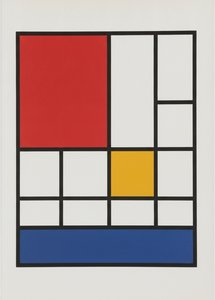
Pure Harmony: Discover the Bold Geometry and Spiritual Order of De Stijl Art
Explore the profound beauty of De Stijl art. Discover how masters like Piet Mondrian used bold geometry and primary colors to seek universal harmony through Neoplasticism. A deep dive into the spiritual order behind the world's most iconic abstract movements.

Beyond Form & Color: Geometric Abstraction's Evolution in 20th/21st Century Art
Explore the evolution of geometric abstraction from Cubism to contemporary art. Discover key artists like Malevich & Mondrian, investment insights, and expert collecting advice at OriginalUniqueArt.
Beyond Form: Exploring the Philosophical Foundations of Geometric Abstraction
Explore the philosophical roots & artistic evolution of geometric abstraction with OriginalUniqueArt. Discover Mondrian, Malevich, De Stijl & more. Expert insights for collectors and art enthusiasts.
Theo van Doesburg: Pionier des De Stijl und die Evolution des Neo-Plastizismus
Entdecken Sie die faszinierende Welt des De Stijl! Erfahren Sie mehr über Theo van Doesburg, Piet Mondrian und die revolutionäre Ästhetik des Neo-Plastizismus. Expertenwissen & historische Einblicke.


