
 Vorschau anzeigen
 Versenden
 Teilen
 Details anzeigen

 Herunterladen
 Ähnliche Objekte
 Röntgenaufnahme
 Diashow
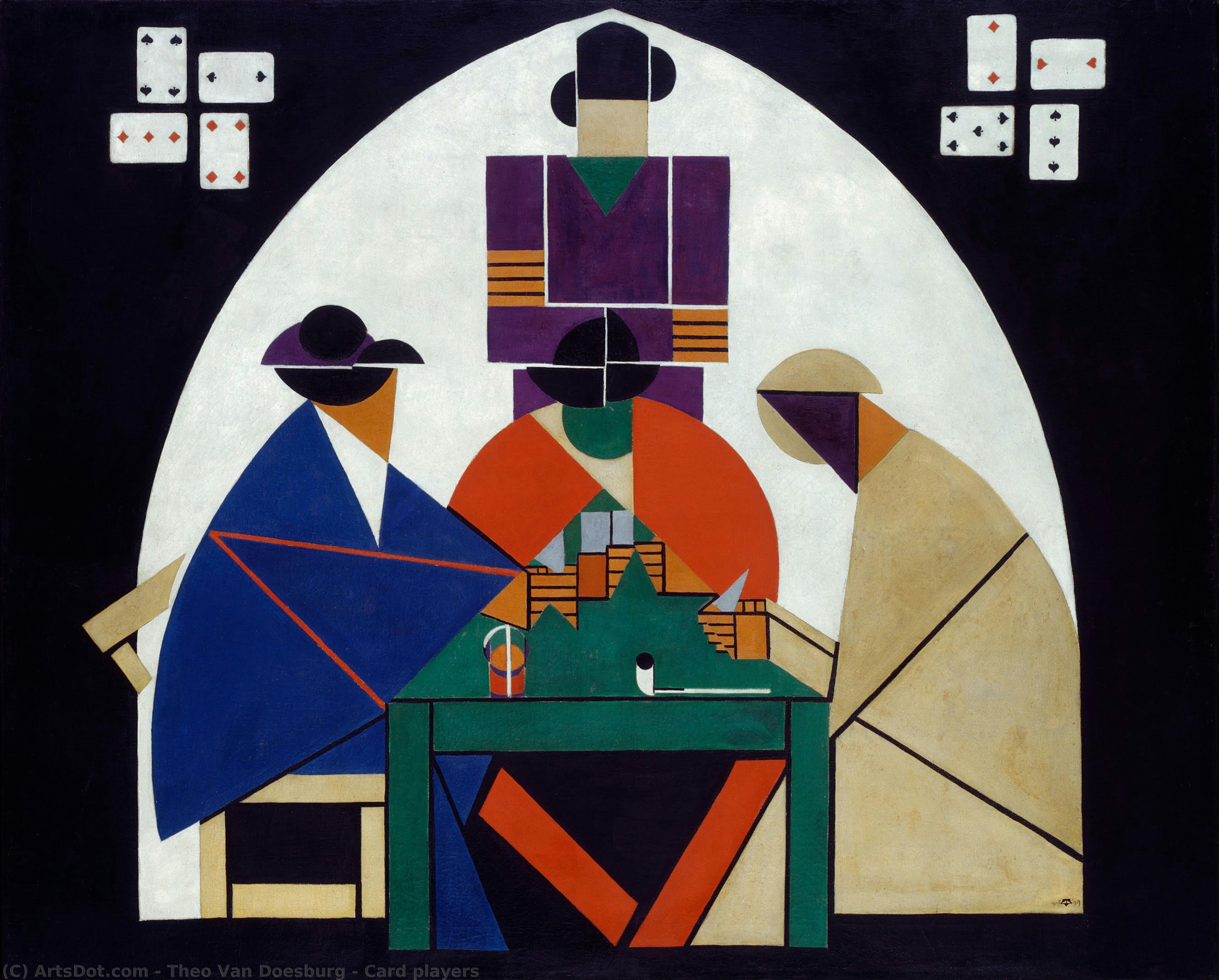
Card players
 Acrylic On Canvas
- WallArt
- Neoplasticism / De Stijl
 1917
1917 1562.0 x 1262.0 cm
 Kunstmuseum
 Weiterlesen
Erwerben Sie ein hochauflösendes, optimiertes digitales Bild, das der Online-Vorschau weit überlegen ist.
Jede Datei wird von unseren hauseigenen Spezialisten mit modernsten Werkzeugen und fachmännischer manueller Retusche sorgfältig vorbereitet. Wir stellen sicher, dass jedes Bild eine außergewöhnliche Klarheit, präzise Farbgenauigkeit und feinste Details aufweist.
Die endgültige Datei wird innerhalb von 72 Stunden per E-Mail zugestellt und ist für den sofortigen Einsatz in professionellen, redaktionellen und Druckumgebungen optimiert. Es handelt sich um dieselbe Qualität, der führende Designstudios, Verlage und Galerien vertrauen.
Digitales Bild
Laden Sie eine hochauflösende Datei für die persönliche Präsentation, den Druck und kreative Projekte herunter. ( Druck bestellen Handgemalte Reproduktion bestellen)
In jeder Bestellung digitaler Bilder enthalten
Professionelle digitale Bereitstellung, garantiert
Wenn Sie sich für OriginalUniqueArt.com entscheiden, erhalten Sie nicht nur ein Bild – Sie erhalten ein professionell aufbereitetes digitales Kunstwerk, das mit höchster Präzision erstellt und durch eine Zufriedenheitsgarantie abgesichert wird. Hier ist alles, was automatisch mit Ihrer Bestellung geliefert wird:

Schnelle E-Mail-Zustellung
Ihre hochauflösende digitale Bilddatei wird Ihnen innerhalb von 72 Stunden nach der Bestellung per E-Mail zugestellt – bereit zur sofortigen Verwendung.

KI-optimierte digitale Datei
Ihre Kunstwerke werden professionell mithilfe fortschrittlicher KI-Tools und manueller Bearbeitung optimiert, um maximale Detailtreue, Klarheit und Farbgenauigkeit zu gewährleisten.

Lebenslanger kostenloser Neudruckservice
Datei versehentlich gelöscht oder verloren? Keine Sorge – wir senden sie Ihnen jederzeit kostenlos erneut zu.

Keine Einfuhrgebühren – jemals
Genießen Sie Ihr Kunstwerk sofort ohne Zollgebühren, Einfuhrabgaben oder Versandkosten – digitale Downloads sind immer steuerfrei.

Garantierte Farbtreue
Wir garantieren, dass Ihr digitales Bild mithilfe professioneller Werkzeuge und Farbmanagement die Originalfarben so präzise wie möglich wiedergibt.

60-Tage-Zufriedenheitsgarantie
Sollten Sie mit Ihrem digitalen Bild nicht zufrieden sein, werden wir es überarbeiten oder Ihnen innerhalb von 60 Tagen 100% erstatten – ohne Wenn und Aber.

100% Geld-zurück-Garantie
Nicht zufrieden? Erhalten Sie innerhalb von 60 Tagen nach Erhalt Ihrer digitalen Datei eine vollständige Rückerstattung – ohne Angabe von Gründen.

Rabatte bei Großbestellungen
3 Bilder kaufen, 10% sparen – 5 Bilder kaufen, 15% sparen – Ab 10 Bildern 20% sparen. Ideal für kreative Projekte, Galerien und Agenturen.
Details zum Sammlerstück
The Genesis of Abstraction: Van Doesburg’s “Card Players”
Theo van Doesburg's "Card Players," painted in the spring of 1917, isn’t merely a depiction of a game; it’s a pivotal moment in the evolution of modern art. Emerging from the fertile ground of early 20th-century experimentation, this work embodies the core tenets of De Stijl and Neoplasticism – a radical departure from representational painting towards pure abstraction. The canvas itself is a carefully constructed stage, dominated by a stark white background that serves to amplify the geometric forms and their interplay. Van Doesburg, deeply influenced by Bart van der Leck’s earlier explorations of fragmented figures, took this concept to its logical extreme, dissolving human form into a series of interlocking, simplified shapes – circles, squares, and lines – arranged with meticulous precision.

Image: Card Players by Theo van Doesburg (Kunstmuseum Den Haag)
Deconstructing the Human Form: A Geometric Language
The figures within “Card Players” are not portraits in the traditional sense. Instead, they’ve been meticulously broken down and rebuilt using a vocabulary of pure geometry. The seated man, leaning forward with an air of focused concentration, is rendered as a collection of overlapping rectangles and circles. His posture, his hands – even the suggestion of his face – are conveyed through these abstracted shapes, creating a sense of both familiarity and detachment. The other figures share this treatment, their bodies dissolving into a dynamic arrangement of lines and forms that suggest movement and interaction without explicitly depicting action. This deliberate fragmentation reflects Van Doesburg’s belief that art should transcend the limitations of imitation and instead communicate directly through its formal elements – color, line, shape.
The painting's composition is remarkably balanced, achieved through a careful consideration of negative space and the relationships between the geometric forms. The stark contrast between the white background and the dark shapes creates a powerful visual impact, drawing the viewer’s eye to the intricate arrangement of elements on the canvas. It’s a testament to Van Doesburg's mastery of abstraction – a demonstration that beauty and meaning can be found not in representation but in the precise manipulation of form.
Historical Context: The Birth of De Stijl
“Card Players” was created during a period of intense artistic ferment, as European artists grappled with the challenges of modernity. The rise of industrialization, urbanization, and new technologies were profoundly impacting society, leading to a questioning of traditional values and aesthetics. Van Doesburg, along with Piet Mondrian and other members of De Stijl, sought to create a new visual language that reflected this changing world – one based on clarity, simplicity, and geometric harmony. The movement’s core principles extended beyond painting to encompass architecture, design, and even music, aiming for a total synthesis of art and life.
Van Doesburg's encounter with Bart van der Leck’s earlier work in 1916 proved crucial to the development of this aesthetic. Van der Leck’s fragmented figures provided a springboard for Van Doesburg’s own explorations, leading him to embrace abstraction as a means of expressing universal truths and spiritual values. “Card Players” stands as a direct result of this intellectual and artistic dialogue – a culmination of these ideas into a single, powerful image.
Symbolism and Emotional Resonance
While seemingly simple in its composition, "Card Players" is rich with symbolic meaning. The game itself represents human interaction, competition, and the pursuit of pleasure. The abstracted figures suggest a detachment from individual identity, inviting viewers to contemplate the universal themes of social dynamics and the nature of reality. The stark white background symbolizes purity and clarity, while the geometric forms represent order and harmony – values that were central to De Stijl’s philosophy.
Ultimately, “Card Players” is a work of profound emotional resonance. Despite its abstract form, it evokes a sense of quiet contemplation and intellectual curiosity. It's an invitation to engage with the complexities of modern life through the lens of geometric abstraction – a timeless masterpiece that continues to inspire artists and art lovers alike.
Biografie des Künstlers
Frühes Leben und Karriere
Theo van Doesburg, ein niederländischer Künstler, wurde am 30. August 1883 in Utrecht, Niederlande, geboren. Er ist vor allem bekannt als Gründer und Leiter der De Stijl-Bewegung, einer Bewegung des Neoplasticismus. Van Doesburgs frühe Arbeiten waren von Vincent van Gogh beeinflusst, sowohl in Stil als auch in seinem Themenspektrum.Die Entstehung des Neoplasticismus
Im Jahr 1913 erkannte Van Doesburg nach der Lektüre von Wassily Kandinskys "Rückblicke", dass es eine höhere, spirituellere Ebene in der Malerei gibt, die aus dem Geist und nicht aus dem alltäglichen Leben entspringt. Dies führte zur Entwicklung des Neoplasticismus, auch bekannt als De Stijl. Die Bewegung plädierte für reine Abstraktion und Universalität durch Reduktion auf die wesentlichen Elemente von Form und Farbe.Bemerkenswerte Werke und Kollaborationen
- Study for simultaneous compositions xxii, eine Bleistiftstudie für simultane Kompositionen, ist ein Beispiel für neoplasticistische Kunst. (Befindet sich im Kröller-Müller Museum, Otterlo, Niederlande)
- Van Doesburg arbeitete mit Piet Mondrian an verschiedenen Projekten zusammen, darunter die Zeitschrift De Stijl.
- Er arbeitete auch mit Georges Vantongerloo und Sophie Taeuber-Arp an der Gestaltung von Häusern für Künstler zusammen.
Vermächtnis und Einfluss
Van Doesburgs Werk hatte einen bedeutenden Einfluss auf die Entwicklung der modernen Kunst. Sein Vermächtnis ist in verschiedenen Bereichen der Kunst sichtbar, von der Architektur bis zur Malerei. Die Neoplasticismus-Bewegung beeinflusst Künstler bis heute.- Betrachten Sie Theo van Doesburgs Kunstwerke auf OriginalUniqueArt
- Erfahren Sie mehr über Theo van Doesburg auf Wikipedia
- Entdecken Sie Piet Mondrians Kunstwerke auf OriginalUniqueArt
- 30. August 1883: Theo van Doesburg wurde geboren
- 1913: Entwicklung des Neoplasticismus
- 7. März 1931: Verstarb

Theo van Doesburg
1883 - 1931 , Niederlande
Kurzinfos
- Beeinflusste Künstler: ['Vincent van Gogh']
- Bemerkenswerte Werke: ['Study for Simultaneous Compositions XX II']
- Geburtsdatum: 30. August 1883
- Geburtsort: Utrecht, Niederlande
- Künstlerische Bewegung: De Stijl, Neoplasticismus
- Nationalität: Niederländisch
- Sterbedatum: 7. März 1931
- Vollständiger Name: Theo van Doesburg
- Von Künstlern Beeinflusst:
- Wassily Kandinsky
- Piet Mondrian

