- Startseite

- Digitales Kunstwerk
- The Royal Mint
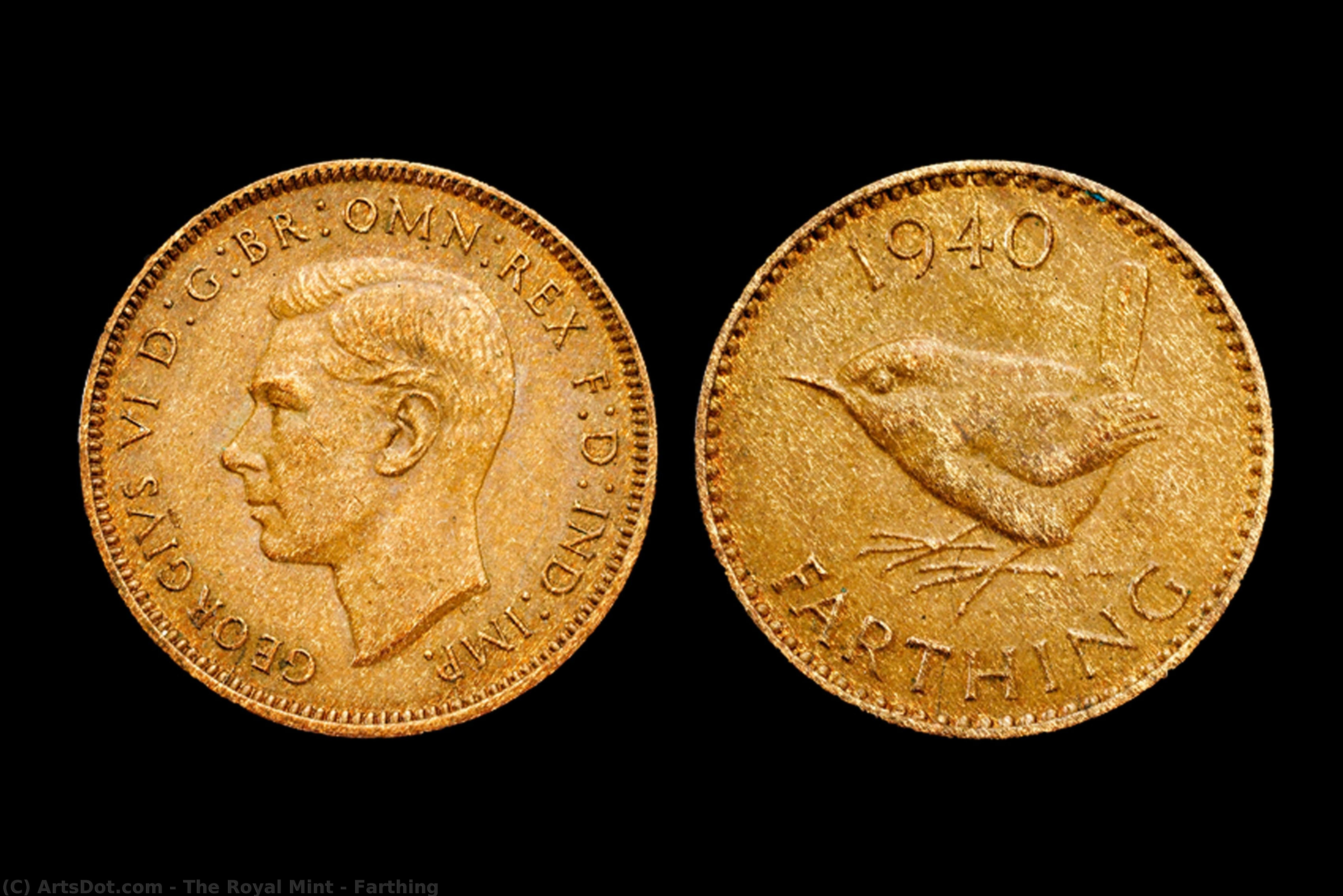
- Farthing
 Druck bestellen Gemälde kaufen
 Versenden
 Teilen
 Details anzeigen
 Zu Favoriten hinzufügen

 Herunterladen
 Ähnliche Objekte
 Röntgenaufnahme
 Diashow anzeigen
Farthing


 Weiterlesen
Erwerben Sie ein hochauflösendes, optimiertes digitales Bild, das der Online-Vorschau weit überlegen ist.
Jede Datei wird von unseren hauseigenen Spezialisten mit modernsten Werkzeugen und fachmännischer manueller Retusche sorgfältig vorbereitet. Wir stellen sicher, dass jedes Bild eine außergewöhnliche Klarheit, präzise Farbgenauigkeit und feinste Details aufweist.
Die endgültige Datei wird innerhalb von 72 Stunden per E-Mail zugestellt und ist für den sofortigen Einsatz in professionellen, redaktionellen und Druckumgebungen optimiert. Es handelt sich um dieselbe Qualität, der führende Designstudios, Verlage und Galerien vertrauen.
Digitales Kunstwerk
Laden Sie eine hochauflösende Datei für die persönliche Präsentation, den Druck und kreative Projekte herunter.
In jeder Bestellung digitaler Bilder enthalten
Professionelle digitale Bereitstellung, garantiert
Wenn Sie sich für OriginalUniqueArt.com entscheiden, erhalten Sie nicht nur ein Bild – Sie erhalten ein professionell aufbereitetes digitales Kunstwerk, das mit höchster Präzision erstellt und durch eine Zufriedenheitsgarantie abgesichert wird. Hier ist alles, was automatisch mit Ihrer Bestellung geliefert wird:

Schnelle E-Mail-Zustellung
Ihre hochauflösende digitale Bilddatei wird Ihnen innerhalb von 72 Stunden nach der Bestellung per E-Mail zugestellt – bereit zur sofortigen Verwendung.

KI-optimierte digitale Datei
Ihre Kunstwerke werden professionell mithilfe fortschrittlicher KI-Tools und manueller Bearbeitung optimiert, um maximale Detailtreue, Klarheit und Farbgenauigkeit zu gewährleisten.

Kostenloser lebenslanger erneuter Versand
Datei versehentlich gelöscht oder verloren? Keine Sorge – wir senden sie Ihnen jederzeit kostenlos erneut zu.

Keine Einfuhrgebühren – jemals
Genießen Sie Ihr Kunstwerk sofort ohne Zollgebühren, Einfuhrabgaben oder Versandkosten – digitale Downloads sind immer steuerfrei.

Garantierte Farbtreue
Wir garantieren, dass Ihr digitales Bild die Originalfarben mithilfe professioneller Werkzeuge und Farbmanagement so präzise wie möglich wiedergibt.

60-Tage-Zufriedenheitsgarantie
Sollten Sie mit Ihrem digitalen Bild nicht zufrieden sein, werden wir es überarbeiten oder Ihnen innerhalb von 60 Tagen 100% erstatten – ohne Wenn und Aber.

100% Geld-zurück-Garantie
Nicht zufrieden? Erhalten Sie innerhalb von 60 Tagen nach Erhalt Ihrer digitalen Datei eine vollständige Rückerstattung – ohne Angabe von Gründen.

Rabatte bei Großbestellungen
3 Bilder kaufen, 10% sparen – 5 Bilder kaufen, 15% sparen – Ab 10 Bildern 20% sparen. Ideal für kreative Projekte, Galerien und Agenturen.
Biografie des Künstlers
The Enduring Legacy of The Royal Mint
For over a millennium, the very notion of British currency has been inextricably linked to The Royal Mint. More than simply a producer of coins, it represents a continuous thread in the nation’s history – a tangible symbol of power, trade, and cultural identity. While today recognized for its modern facilities in Llantrisant, Wales, the story of The Royal Mint is one of remarkable evolution, originating not as a centralized institution but as a network of localized production centers scattered across the British Isles.
The earliest roots trace back to Celtic tribes imitating continental coinage around the 2nd century BC. However, it was with the Roman occupation that systematic minting began in Britain, though these operations were ultimately short-lived. Following the withdrawal of Roman forces, a fragmented system of regional mints emerged during the Anglo-Saxon period, reflecting the decentralized nature of early English kingdoms. The pivotal moment arrived in 1279 when Edward I consolidated these disparate operations under a single authority – the London Mint within the Tower of London. This marked the genesis of what would become The Royal Mint as we know it.
From Tower to Transformation
For centuries, the Tower of London served as the heart of British coinage. Within its formidable walls, skilled moneyers and engravers meticulously crafted coins that bore the likenesses of successive monarchs, each strike a declaration of sovereignty. The roles within the Mint became increasingly formalized during the medieval period, with positions like Master Worker, Warden, and Comptroller establishing a hierarchical structure responsible for overseeing production, quality control, and financial administration. The 15th and 16th centuries witnessed growing economic pressures on England, culminating in Henry VIII’s controversial “Great Debasement” – an attempt to alleviate financial woes by reducing the precious metal content of coins. This period highlights a crucial aspect of The Royal Mint's history: its inherent connection to the political and economic fortunes of the nation.
The 17th century brought further challenges, including periods of civil war and fluctuating monetary standards. However, the Mint continued to adapt, evolving alongside the changing needs of British commerce. A significant shift occurred in the late 19th and early 20th centuries with the rise of industrialization and the increasing demand for standardized coinage. This led to the development of more sophisticated machinery and techniques, paving the way for mass production.
George William De Saulles and Artistic Flourishes
While The Royal Mint is often viewed as a functional institution, it has also been a crucible for artistic talent. George William De Saulles (1862-1903) stands out as a particularly influential figure in this regard. A British medallist of exceptional skill, De Saulles was commissioned to design numerous coins and medals during the reigns of Queen Victoria and Edward VII. His work is characterized by its refined detail, classical elegance, and historical accuracy. De Saulles’s designs weren't merely representations of royal portraits; they were carefully considered artistic statements that reflected the prevailing aesthetic sensibilities of the era.
His contributions extend beyond standard coinage to include commemorative medals celebrating significant events and anniversaries. The Royal Mint Anniversary Medal, for example, showcases his mastery of relief sculpture and symbolic imagery. Even seemingly minor commissions, such as the Royal Mint Swimming Club medal (second place), demonstrate his dedication to craftsmanship and attention to detail. De Saulles’s legacy lies in elevating British coinage from a purely functional object to a form of portable art.
Modernization and Beyond
The 20th century witnessed the most dramatic transformation in The Royal Mint's history – its relocation from London to a purpose-built facility in Llantrisant, Wales, in 1968. This move coincided with Britain’s adoption of decimal currency, necessitating a complete overhaul of coin designs and production methods. The modern Mint embraced technological advancements, becoming a world leader in coinage technology and security features.
However, the story doesn't end there. Recognizing the decline in cash usage, The Royal Mint has strategically diversified its operations in recent years. It now encompasses precious metal investment, historic coin collecting, and luxury collectibles – including the innovative “886 by The Royal Mint” jewellery division utilizing sustainably sourced gold recovered from electronic waste. This forward-thinking approach ensures that The Royal Mint remains relevant and continues to shape the future of currency and beyond, building upon a legacy stretching back over a thousand years.


